



Carbon capture technology often sounds like something reserved for industrial facilities, energy companies, and large climate policy conversations. For many homeowners, it can feel technical, expensive, and far removed from everyday choices like replacing windows, selecting insulation, or planning a renovation. Yet the basic idea behind carbon capture is surprisingly easy to understand. At its core, it is about preventing carbon dioxide from entering the atmosphere or removing it after it is already there, then storing it in a way that keeps it out of the climate system for a long time.
Table Of Content
- What Is Carbon Capture Technology?
- Why Should Homeowners Care About Carbon Capture?
- How Does Carbon Capture Work?
- What Are the Main Types of Carbon Capture?
- Point Source Carbon Capture
- Direct Air Capture
- Nature Based and Material Based Carbon Storage
- Can Carbon Capture Be Used in Homes Directly?
- What Matters Most Before Carbon Capture at Home
- Practical Ways Homeowners Can Support Carbon Capture Goals
- Carbon Storing Materials in Residential Construction
- Landscaping as a Form of Carbon Management
- Indoor Air, Ventilation, and Common Misunderstandings
- What to Ask Builders, Architects, and Contractors
- The Limits of Carbon Capture and Why That Is Okay
- How to Build a Carbon Smarter Home Plan
- Looking Ahead: What the Future May Bring
- Final Thoughts
For eco conscious homeowners, that matters more than it may first appear. The homes we live in are connected to carbon in several ways, from the energy used to heat and cool them to the materials they are made from and the land that surrounds them. While most homeowners will not install industrial carbon capture equipment in a basement or garage, they can absolutely make housing decisions that align with the same goal. Those decisions can reduce emissions, support carbon storage, and prepare homes for a future where carbon management is built into mainstream living.
This guide takes a practical approach. Rather than treating carbon capture as a distant technology meant only for experts, we will look at what it is, how it works, where it may show up in residential settings, and what realistic steps individuals can take now. The goal is not to create pressure or perfection. It is to help you understand where carbon capture fits into the larger clean technology picture and how thoughtful housing choices can make a meaningful difference over time.
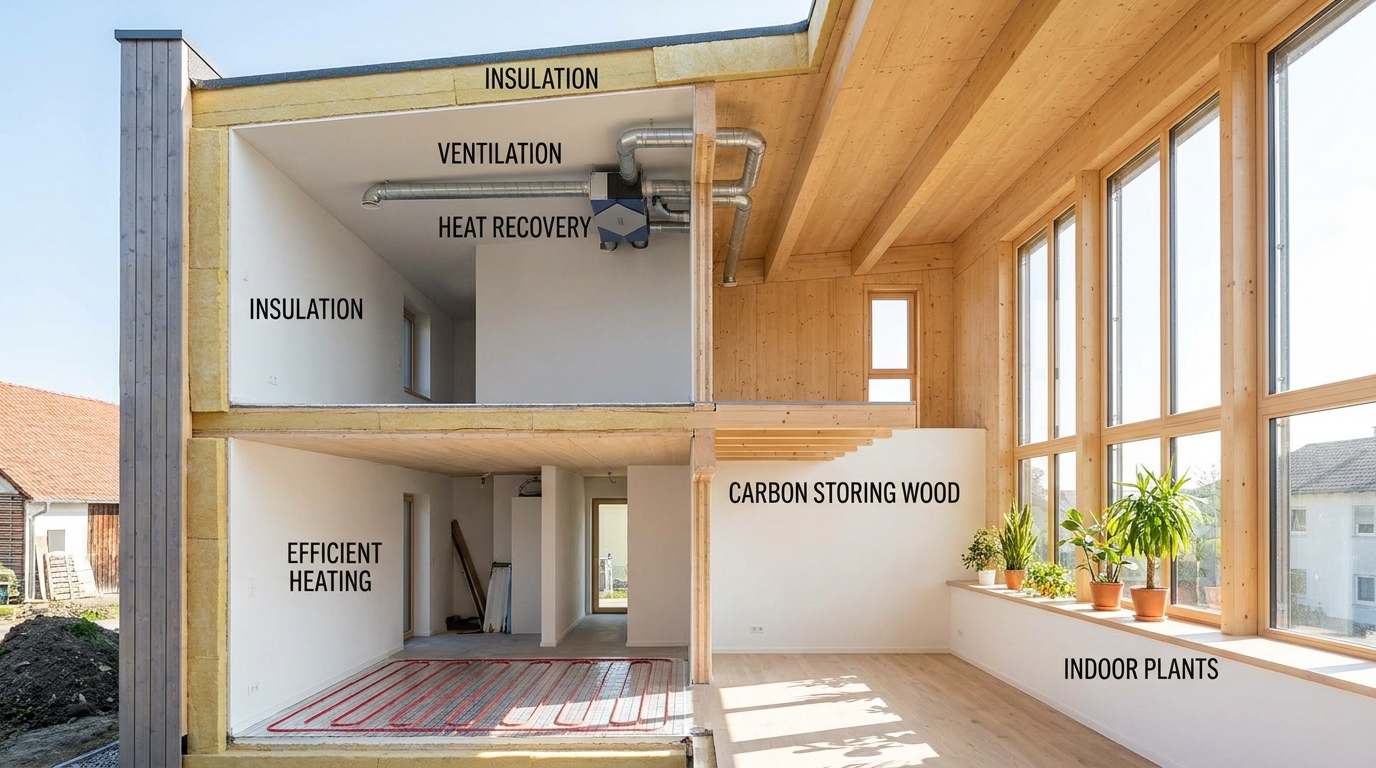
What Is Carbon Capture Technology?
Carbon capture technology refers to a group of processes that capture carbon dioxide (CO2) before it reaches the atmosphere, or remove it from the air after the fact, then transport and store it so it cannot contribute to climate warming. Captured CO2 is typically compressed and either used in industrial processes, injected deep underground into stable geological formations, or locked into durable materials like concrete. There are three broad categories: point source capture, which captures emissions where they are produced, such as at cement plants or factories; direct air capture, which uses machines to pull CO2 directly from ambient air; and biological or material-based storage, where trees, soils, and materials like mass timber hold carbon over time. The shared goal across all three is straightforward: keep as much heat-trapping carbon as possible from building up in the atmosphere.
Understanding these three categories helps make carbon capture feel less like a single mysterious technology and more like a family of related tools, each suited to different emissions sources. Point source and direct air capture are typically industrial in scale, while biological and material-based storage is where homeowners have the most direct, everyday influence, through the trees they plant, the soil they maintain, and the materials they choose for a build or renovation.
It is important to recognize that carbon capture is not a replacement for energy efficiency or renewable power. In a well designed climate strategy, it works alongside them. The most effective path is usually to reduce emissions first, improve efficiency wherever possible, and then address the harder to eliminate emissions through capture and long term storage. For homeowners, that perspective is useful because it keeps priorities in the right order and makes decision making much clearer.
Why Should Homeowners Care About Carbon Capture?
At first glance, carbon capture can seem too large scale to matter at the household level. Most people do not directly operate machinery that emits large quantities of carbon dioxide. However, homes are part of a much bigger ecosystem that includes electricity generation, construction materials, transportation, landscaping, and waste. Every home sits within that system, and every renovation or purchasing decision influences demand for lower carbon solutions.
Homeowners should care because the housing sector is a major source of emissions, not only through day to day energy use but also through what is known as embodied carbon. Embodied carbon refers to the emissions associated with manufacturing, transporting, and installing building materials like concrete, steel, insulation, drywall, and flooring. Some emerging carbon capture technologies are being used to lower the footprint of these materials. That means a homeowner choosing products for a renovation may indirectly support carbon capture even without installing any visible technology at home.
There is also a second reason homeowners should pay attention. Climate solutions are moving steadily from abstract policy ideas into real estate value, municipal codes, utility programs, and home improvement markets. Understanding carbon capture now helps you make better long term decisions. It allows you to evaluate new products with more confidence, ask more informed questions of builders and contractors, and recognize which innovations are genuinely useful versus which are mostly marketing language.
How Does Carbon Capture Work?
A practical way to think about carbon capture is to imagine three steps: capture, move, and store. In the capture step, a system separates carbon dioxide from other gases. This can happen through chemical reactions, filters, liquid solvents, or solid materials that selectively bind with CO2. Once the carbon dioxide is concentrated, it can be compressed so it takes up less space.
The second step is transportation or transfer. In industrial settings, captured CO2 may move through pipelines, trucks, or local process systems. In some material applications, there is no major transportation stage because the carbon is incorporated directly into a product such as cured concrete. For homeowners, this matters because many low carbon products on the market rely on upstream carbon capture processes that happen before materials ever arrive at a job site.
The final step is storage or use. Storage can mean injecting CO2 deep underground into stable geological formations, where it remains trapped for very long periods. It can also mean locking carbon into durable materials or storing it biologically in wood, soil, and plants. This wider view is especially helpful in a residential context because it reminds us that carbon management is not only about machines. It is also about landscapes, materials, and design choices that keep carbon out of the atmosphere for as long as possible.
What Are the Main Types of Carbon Capture?
Point Source Carbon Capture
Point source capture is the most established category. It targets emissions from places that release a concentrated stream of carbon dioxide, such as cement production, natural gas processing, and certain manufacturing operations. This is not something a homeowner installs directly, but it can still affect the products available to you. Lower carbon concrete, for example, may come from processes that capture or mineralize carbon during production.
This matters because construction materials play a major role in a home’s overall carbon footprint. If a local builder offers concrete with captured CO2, or insulation manufactured using cleaner industrial processes, that can be part of a more climate responsible project. The effect may feel indirect, but in practice this is how many clean technologies become relevant to consumers: first at the industrial level, then through product choices in the marketplace.
Direct Air Capture
Direct air capture removes carbon dioxide straight from the atmosphere. Because CO2 in air is much more diluted than it is in factory exhaust, this process tends to require more energy and more advanced materials. It is one of the most talked about carbon technologies because it offers the possibility of reducing legacy emissions that are already contributing to warming.
For homeowners, direct air capture is best understood as part of the wider clean technology landscape rather than as a mainstream home appliance. Some small consumer devices claim to capture indoor or outdoor carbon, but most do not yet offer meaningful climate scale impact compared with their cost and energy use. Still, the idea is important because it shapes future policy, utility partnerships, and possibly neighborhood or community scale carbon management systems in the years ahead.
Nature Based and Material Based Carbon Storage
The most accessible form of carbon capture for many households is not mechanical at all. Trees, healthy soils, wetlands, and long lasting wood products all store carbon. So do some newer building materials designed to absorb or mineralize CO2 during manufacturing. While these approaches differ from industrial capture systems, they contribute to the same overall objective by keeping carbon from circulating freely in the atmosphere.
This is where homeowners often have the most immediate influence. Planting and maintaining trees, preserving mature landscaping, improving soil health, choosing wood from responsibly managed forests, and selecting products that store or sequester carbon can all support a lower carbon home. These measures are not a substitute for reducing fossil fuel use, but they are practical ways to participate in carbon management through familiar decisions.
Can Carbon Capture Be Used in Homes Directly?
In most cases, carbon capture is not yet a standard residential system in the way that a heat pump, water heater, or solar panel is. There are pilot technologies, specialty air treatment concepts, and early stage devices aimed at indoor environments, but they remain far from common and are often not the best first investment for homeowners. If your goal is to reduce climate impact, there are usually more cost effective steps available before considering direct home carbon capture equipment.
That said, residential relevance is growing in indirect but meaningful ways. New building products may incorporate captured carbon. Concrete blocks, tiles, wall systems, and other materials can be manufactured with processes that inject or bind CO2 into the product itself. Over time, these innovations could become more common in home construction and remodeling, especially as building codes and market demand continue to evolve.
There is also growing interest in neighborhood scale and building cluster solutions. Multifamily buildings, mixed use developments, and eco districts may eventually be more likely than single family homes to adopt shared carbon management systems. Homeowners do not need to wait for that future to arrive, though. The practical takeaway is to focus on home upgrades that cut emissions now while staying aware of carbon storing materials and emerging options as they become more accessible.
What Matters Most Before Carbon Capture at Home
One of the most reassuring things for homeowners is that you do not need a complex carbon capture device to make your home more climate responsive. In fact, the smartest approach usually begins with a clear sequence of priorities. First reduce the amount of energy your home wastes. Then electrify major systems where practical. Then switch to cleaner energy sources. After that, look at materials, landscaping, and carbon storage opportunities.
This sequence matters because capturing carbon after emissions happen is generally harder and more expensive than avoiding those emissions in the first place. A drafty home with an outdated furnace will almost always benefit more from insulation improvements and efficient electric heating than from any speculative carbon removal gadget. The same principle applies to renovations. Choosing durable, low carbon materials and designing for longevity often creates more impact than focusing only on specialized technologies.
A calm rule of thumb: the greenest carbon is usually the carbon you never emit. Carbon capture becomes most useful when paired with efficiency, electrification, and durable design.
Practical Ways Homeowners Can Support Carbon Capture Goals
Even if you never install a machine that captures carbon dioxide, you can still align your home with carbon capture principles in concrete ways. These actions range from the visible, such as planting trees and preserving wood structures, to the less visible, such as choosing materials made with carbon mineralization or supporting utility programs linked to cleaner industrial systems. The key is to think in terms of carbon flows. Where is carbon being emitted, where can it be avoided, and where can it be stored?
Here are the most realistic areas to focus on when you want results without unnecessary complexity:
- Reduce operational emissions. Air sealing, insulation, efficient windows, heat pumps, induction cooking, and smart controls lower the carbon associated with daily energy use.
- Choose lower embodied carbon materials. Ask about recycled content, responsibly sourced wood, lower carbon concrete, and products made with captured carbon.
- Protect and expand biological carbon storage. Mature trees, shrubs, healthy lawns converted to native planting, and soil care all help store carbon while improving resilience.
- Design for longevity. Durable materials, adaptable spaces, and high quality workmanship reduce the need for frequent replacement, which lowers emissions over time.
- Support clean energy and carbon aware programs. Community solar, green utility tariffs, and climate focused renovation incentives can indirectly strengthen markets for carbon reduction and capture technologies.
What makes these steps powerful is that they are not all or nothing. A homeowner can start with one room, one system, or one landscape project. This is often the most sustainable path in the practical sense as well, because homes improve gradually and budgets have limits. Climate progress at home tends to look less like a grand gesture and more like a series of good decisions made consistently.
Carbon Storing Materials in Residential Construction
One of the most promising intersections between homeowners and carbon capture technology is the rise of carbon conscious building materials. These materials either avoid high emissions during production, incorporate captured carbon into the product, or store atmospheric carbon in biological form. For someone planning a renovation, addition, or new build, this area deserves real attention because material choices can shape emissions for decades.
Wood is perhaps the most familiar example. When sourced responsibly from well managed forests and used in long lasting applications, wood stores carbon absorbed during tree growth. That does not make every wood product automatically sustainable, since forestry practices, transport, adhesives, and durability all matter. Still, compared with many high emission materials, wood often offers a strong carbon advantage, especially when used thoughtfully and protected from premature replacement.
Concrete is another major area of innovation. Traditional cement production is carbon intensive, but newer technologies can reduce the footprint through supplementary cement materials, improved kiln processes, and carbon mineralization techniques that inject captured CO2 into concrete during curing. Homeowners considering foundations, patios, walkways, or slabs can ask contractors whether lower carbon concrete mixes are available locally. Availability varies by region, but the market is expanding.
Insulation, drywall alternatives, and interior finishes are also evolving. Products made from cellulose, wood fiber, cork, hemp, or agricultural residues can sometimes offer lower embodied carbon than conventional options, while also contributing to comfort and energy performance. The right choice depends on climate, moisture control, fire safety, code requirements, and budget. The practical mindset is not to chase novelty for its own sake, but to compare products through durability, performance, and carbon impact together.
Landscaping as a Form of Carbon Management
Landscaping is often overlooked in climate conversations, yet it can be one of the most visible and satisfying ways to support carbon storage at home. Trees and perennial plantings absorb carbon as they grow, while healthy soils can store significant amounts of organic carbon over time. A well designed yard also improves shade, stormwater control, biodiversity, and summer comfort, making it one of those rare upgrades that can feel both beautiful and deeply practical.
Not all landscaping choices have the same effect. Large mature trees generally offer more carbon storage and cooling value than shallow rooted ornamental annuals. Native and climate appropriate plants usually require less water, less fertilizer, and less maintenance, which reduces ongoing resource use. Minimizing unnecessary soil disturbance, using compost carefully, and avoiding overreliance on gas powered lawn equipment can also improve the overall carbon profile of an outdoor space.
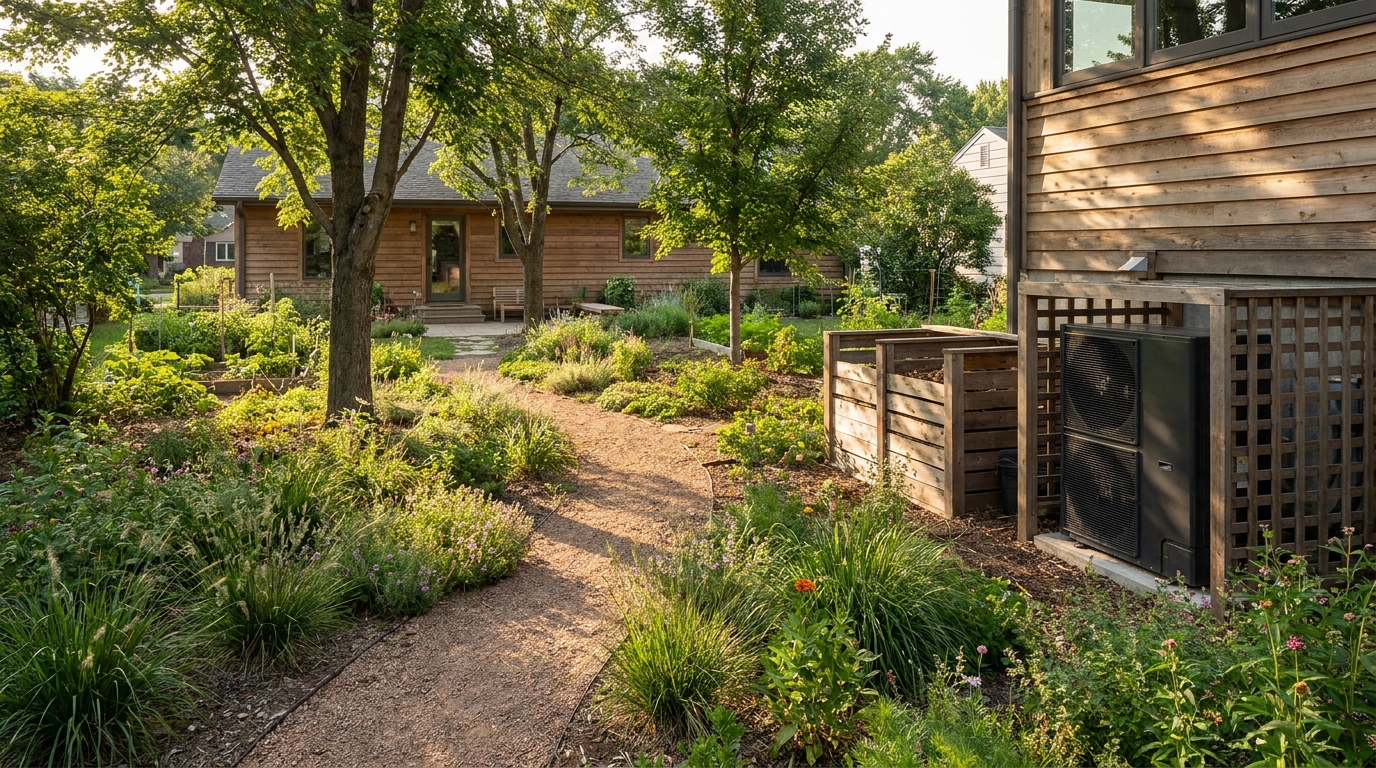
For homeowners who want a manageable starting point, begin by preserving what already stores carbon. Protect mature trees during renovations. Replace sections of high maintenance lawn with shrubs, native grasses, or layered planting beds. Improve soil health slowly through mulch and organic matter rather than aggressive chemical treatments. These choices may seem modest compared with advanced technology headlines, but in many neighborhoods they are among the most realistic forms of household carbon capture available today.
Indoor Air, Ventilation, and Common Misunderstandings
Some homeowners encounter carbon capture through indoor air quality products and become understandably confused. It helps to separate carbon dioxide management indoors from climate scale carbon capture. Ventilation systems, air purifiers, and sensors can improve indoor air quality, comfort, and health. They may help control CO2 levels inside occupied spaces, especially in airtight homes. But lowering indoor CO2 concentration is not the same thing as permanently removing atmospheric carbon from the climate system.
This distinction matters because some products can sound more climate active than they really are. A device that filters air in a room may have benefits, but unless the captured carbon is isolated and stored in a durable way, its broader climate impact may be limited. Homeowners should evaluate such claims carefully, paying attention to energy use, maintenance needs, and third party verification. Practical sustainability works best when performance is measurable and the benefits are clearly defined.
If your interest began with indoor air, the most valuable home steps are still usually straightforward: install balanced ventilation where needed, seal leaks thoughtfully, manage moisture, and choose low emission materials. A healthy home and a low carbon home often support each other, but they are not always achieved through the same products. Knowing the difference helps you invest wisely.
What to Ask Builders, Architects, and Contractors
As carbon conscious materials and technologies become more common, homeowners do not need to become engineers to make better choices. They do, however, benefit from asking more informed questions. Contractors and suppliers may not always lead with carbon information unless clients show interest. A calm, curious conversation can often reveal better options without adding conflict or complexity to a project.
When planning a renovation or new build, consider asking questions like these:
- Are there lower embodied carbon alternatives for the main materials in this project?
- Can we use wood or bio based products where they make sense for durability and code?
- Is lower carbon concrete available locally for this scope of work?
- Which upgrade would reduce the most emissions over the next ten to twenty years?
- Can this design improve longevity so fewer materials need replacing later?
- Are any products in this project made using captured carbon or carbon mineralization processes?
These questions are useful because they shift the conversation from abstract sustainability to practical decision making. Instead of asking for a perfect green solution, you are asking for the best available option within the project’s real constraints. That tends to produce better outcomes and more cooperative planning.
The Limits of Carbon Capture and Why That Is Okay
A balanced view of carbon capture includes its limitations. Some forms of capture are energy intensive. Some are expensive. Some depend on infrastructure that is not yet widely available. There are also valid concerns about relying too heavily on future carbon removal instead of cutting present day emissions. For homeowners trying to do the right thing, this can make the subject feel uncertain.
The encouraging reality is that you do not need carbon capture to be perfect in order for it to be useful. Many important climate solutions work best as part of a portfolio. Solar alone is not enough. Insulation alone is not enough. Electrification alone is not enough. Carbon capture belongs in that same picture. It is one tool among many, especially valuable for hard to decarbonize sectors and for addressing residual emissions that remain after strong reductions have already taken place.
For households, the main lesson is simple. Stay grounded. Focus first on the proven actions that reduce emissions and improve your home. Then look for opportunities to support carbon storing materials, resilient landscaping, and cleaner supply chains. You do not have to solve the entire climate challenge from your kitchen table. You can simply make your next few housing decisions more informed than your last few.
How to Build a Carbon Smarter Home Plan
If you want to translate this topic into action, it helps to create a home plan that is practical rather than idealized. Start by understanding your home’s current carbon profile. That includes energy bills, heating fuel, insulation levels, major appliances, and any planned renovations. If possible, schedule a home energy assessment. This gives you a baseline and helps you prioritize improvements that will actually matter.
Next, divide potential actions into three categories: reduce, replace, and store. Reduce refers to lowering energy demand through envelope upgrades, efficient lighting, and smart operations. Replace means swapping high emission systems or materials for cleaner alternatives over time, such as replacing a gas furnace with a heat pump or choosing lower carbon products during renovations. Store refers to preserving trees, improving soils, and selecting materials that keep carbon locked away for the long term.
A simple phased plan might look like this:
- Seal air leaks and improve insulation in the attic or walls where feasible.
- Upgrade to efficient electric heating and cooling when the existing system reaches end of life.
- Choose renewable electricity or install solar if the site and budget make sense.
- During renovations, ask for lower carbon concrete, durable wood products, or other reduced carbon materials.
- Plant shade trees, support soil health, and preserve mature landscape features.
- Track improvements over time rather than trying to accomplish everything at once.
This kind of phased thinking reduces overwhelm. It also reflects how most real homes evolve. Sustainability is rarely a single purchase. More often, it is a pattern of replacements and upgrades made with better information each time.
Looking Ahead: What the Future May Bring
Carbon capture technology is likely to become more visible in everyday life over the next decade, even if it remains largely behind the scenes. Homeowners may see more products labeled as carbon mineralized, carbon stored, or manufactured using captured emissions. Building codes may begin to account more directly for embodied carbon. Developers may market homes not only for energy efficiency but also for lower material emissions and carbon conscious site design.
It is also possible that carbon accounting will become more integrated into home buying, financing, and renovation planning. Just as energy performance certificates and appliance efficiency labels have become more familiar, carbon data may become easier for consumers to compare. That could make climate conscious decisions feel less niche and more routine, which is often when sustainable change becomes truly scalable.
For now, the most useful mindset is openness without urgency driven by hype. Carbon capture is a field worth watching, especially because it touches construction materials, urban planning, and climate policy in ways that can affect the housing market. But homeowners do not need to wait for some future breakthrough to participate. The path forward is already available through better energy decisions, smarter material choices, and landscapes that work a little harder on behalf of the climate.
Final Thoughts
Carbon capture technology is easier to understand when we stop imagining it as a mysterious machine and start seeing it as part of a broader effort to manage carbon responsibly. Some of that effort happens in factories and research facilities. Some of it happens in forests, soils, and building materials. And some of it happens in ordinary homes through choices about efficiency, electrification, renovation, and land care.
For homeowners, the message is hopeful. You do not need to master advanced engineering to contribute to carbon solutions. You can start with what is practical, durable, and within reach. Improve the performance of your home. Choose materials with care. Preserve and expand the living systems around your house. Ask better questions during your next project. These are not dramatic steps, but they are meaningful ones.
In the end, carbon capture is not only about removing emissions. It is also about building a way of living that leaves less carbon behind in the first place and stores more of it wisely where we can. That is a thoughtful, achievable goal for any homeowner, and one that fits naturally into a cleaner, calmer vision of home.



No Comment! Be the first one.