



Composite materials are no longer niche products that only show up in trade presentations or specialized engineering discussions. They are now part of real construction decisions in bridge repair, cladding systems, retrofit work, prefabricated assemblies, and select structural applications where traditional materials do not solve the problem as efficiently. For homeowners, builders, designers, and facility owners, the practical question is not whether composites are futuristic. The real question is where they make sense, where they do not, and how to evaluate them without getting caught up in marketing language.
Table Of Content
- What composite materials are in construction
- Why composites are getting more attention now
- The main benefits of composite materials in construction
- Lower weight and easier handling
- Corrosion resistance and durability
- Faster installation and less site disruption
- Design flexibility
- Potential sustainability gains through lifecycle performance
- Common types of composite materials and where they are used
- Fiber reinforced polymer systems
- Ultra high performance concrete
- Wood plastic composites
- Composite cladding and curtain wall components
- How composites compare with traditional materials
- Real world examples where composites create value
- Bridge deck replacement and rehabilitation
- Strengthening existing concrete structures
- High performance building envelopes
- Bridge preservation with UHPC
- What composites do not do well
- Cost factors and how to think about value
- Fire performance, approvals, and code compliance
- How to decide when composites are the right choice
- Common mistakes to avoid
- Where the market is headed
- Final thoughts
At the most basic level, a composite material is made by combining two or more different materials so they work together as a single system. The goal is to produce performance that one material on its own cannot deliver as effectively. In construction, that can mean better corrosion resistance, lower weight, better durability, faster installation, or improved flexibility in design. Common examples include fiber reinforced polymer systems, fiberglass reinforced components, wood plastic composites, fiber reinforced concrete, and ultra high performance concrete.
That sounds technical, but the practical value is easy to understand. A lightweight panel that installs faster can save labor and shorten a job schedule. A corrosion resistant reinforcement material can reduce the repair cycle in a harsh environment. A durable cladding product with good thermal and moisture performance can lower long term maintenance demands. Those are the reasons composites matter in construction today.
This article breaks the topic down in plain terms. It explains the main types of composite materials used in construction, their real benefits, their limits, the best applications for each, and how they differ from steel, wood, and conventional concrete. It also covers the code and product assessment side, which matters a lot in Canada and should never be treated as an afterthought when specifying newer or proprietary systems.
The most useful way to think about composites is as a toolkit, not a universal replacement category. They create value when their specific strengths line up with the actual job requirements.
What composite materials are in construction
In simple terms, composite materials combine a reinforcing element with a binding or surrounding matrix. The reinforcement provides strength or stiffness, while the matrix holds everything together, transfers loads, and protects the reinforcement. That arrangement can be built in different ways depending on whether the product is meant for structure, enclosure, finish, or repair. The exact chemistry and manufacturing process vary, but the construction logic stays the same.
One of the most important families is fiber reinforced polymer, usually shortened to FRP. These systems combine fibers such as glass or carbon with a polymer resin matrix. Glass fiber reinforced polymer, or GFRP, is common where corrosion resistance and lower weight are needed at a manageable cost. Carbon fiber reinforced polymer, or CFRP, offers very high strength and is often used in strengthening and retrofit work where performance matters more than low upfront cost.
Another important category is wood plastic composite, often called WPC. This blends wood fibers or flour with plastic to create products that can resist moisture and reduce maintenance compared with untreated wood in some applications. It is common in decking, trim, screens, and selected exterior products rather than primary structural framing. It fills a practical middle ground for owners who want a wood look without the same level of upkeep.
Then there are cement based composites, including fiber reinforced concrete and ultra high performance concrete, or UHPC. These materials use fibers and highly engineered mix designs to improve crack control, strength, durability, and service life. UHPC in particular has become important in bridge preservation and repair because its mechanical and durability properties go well beyond conventional concrete. In practice, that can mean longer lasting repair zones and thinner, tougher connections in precast and retrofit work.
Composite products also show up in cladding panels, curtain wall components, insulated assemblies, specialty structural shapes, formwork, and modular systems built offsite. Many of these are proprietary products, which means performance data, installation requirements, and code documentation must be reviewed carefully. That is where a lot of specification mistakes happen. People assume a product is acceptable because it looks advanced or because it has been used somewhere else, but building approval depends on the actual project conditions and governing authority.
Why composites are getting more attention now
Composite materials have been around in construction for decades, especially in infrastructure and specialty assemblies, but several market pressures have pushed them further into practical use. Labor is expensive, schedules are tighter, and owners are more sensitive to maintenance costs than they used to be. On top of that, many regions are dealing with aging infrastructure, corrosive environments, and stronger expectations around sustainability reporting. All of those factors favor materials that can improve lifecycle performance and reduce site time.
Prefabrication is another big driver. Lightweight composite components can often be manufactured offsite and installed quickly once they reach the project. That is especially valuable on bridge work, remote sites, occupied buildings, and any job where minimizing disruption matters. A system that reduces crane time, simplifies handling, and shortens closures can justify a higher material price if the overall project cost comes down.
Durability also matters more now because owners are paying closer attention to the full service life of a building or structure. A material that resists corrosion, moisture damage, or repeated repairs may save money well after the initial build. That does not mean all composites are automatically sustainable or economical. It means owners and designers are looking more carefully at lifecycle cost instead of just initial purchase price.
The main benefits of composite materials in construction
Lower weight and easier handling
One of the clearest advantages of many composites is their low weight relative to their strength. FRP systems are well known for high strength to weight ratios, which makes them useful in bridge decks, retrofit systems, panels, and components that need to be moved and installed efficiently. Lighter components can reduce transport demands, simplify staging, and make installation safer and faster in some job conditions. This is not just a convenience issue. It can directly affect labor hours, equipment selection, and project sequencing.
In bridge applications, transportation agencies have documented cases where lightweight deck replacement significantly reduced dead load. FHWA materials note that some composite deck systems can reduce superstructure weight by up to 80 percent in certain situations. That kind of reduction can change what is possible in rehabilitation work, especially when existing supports have limited reserve capacity. Instead of replacing major structural elements, teams may be able to solve the problem with a lighter deck system and targeted strengthening.
Corrosion resistance and durability
Corrosion is one of the most expensive long term problems in construction and infrastructure. Steel performs extremely well in many roles, but where deicing salts, marine exposure, moisture cycling, or chemical exposure are severe, corrosion can drive major repair costs. FRP materials offer a strong advantage in these environments because they do not rust in the way steel does. That makes them valuable in bridges, parking structures, waterfront projects, and exposed envelope components.
Durability is not only about avoiding rust. It is also about keeping performance over time with fewer interventions. A composite cladding panel that resists rot, moisture damage, and repeated refinishing can make sense for owners trying to reduce long term maintenance. A UHPC repair detail that holds up better than a conventional patch can save future mobilization, closures, and repeated repair cycles. The practical value of composites often shows up years after installation.
Faster installation and less site disruption
Speed matters on almost every job, but it matters even more on repair work and occupied sites. Composite systems often support prefabrication and modular replacement, which lets more work happen offsite in controlled conditions. FHWA guidance has highlighted how composite bridge applications can reduce traffic disruption because modules can be prepared in advance and installed faster than cast in place alternatives. The same logic applies to building envelope work where panelized systems can reduce weather exposure and compress schedules.
Fast installation is not just a matter of convenience for the contractor. It can reduce temporary protection costs, lower the duration of lane closures or shutdowns, and cut the risk that changing site conditions will affect quality. On projects where labor access is difficult or weather windows are narrow, installation speed can become one of the biggest decision factors. Composite materials are often strongest when they solve exactly that kind of practical problem.
Design flexibility
Because many composite products are manufactured rather than simply cut from standard stock materials, they can be shaped, layered, and detailed to meet specific performance goals. That gives designers more freedom in panel profiles, surface finishes, reinforcement strategies, and assembly integration. On envelope systems, composites can help create lighter facades with clean lines and lower support demands. On retrofit work, thin CFRP systems can strengthen existing members with minimal change to dimensions.
This flexibility does not remove the need for sound engineering. In fact, it increases the need for proper design because material behavior can be more specialized than conventional products. Still, when a project needs a custom solution, composites often offer options that would be difficult or inefficient with standard steel, wood, or concrete alone.
Potential sustainability gains through lifecycle performance
Sustainability claims around composites need to be handled carefully. Some products include recycled content, and some manufacturers use lower waste production methods or closed loop water systems. Those are positive features, but they do not tell the whole story. In construction, the better way to judge sustainability is through lifecycle performance, maintenance demands, service life, and verified documentation such as Environmental Product Declarations.
If a composite material lasts longer in a corrosive environment and avoids repeated repairs, that can be a meaningful sustainability gain. If a prefabricated system reduces waste, transport impacts, and site energy use, that matters too. But buyers should ask for real data, not just green language. Recycled content is useful, but it does not automatically make a product the best environmental choice if the product performs poorly, is difficult to maintain, or has unclear end of life pathways.
Common types of composite materials and where they are used
Fiber reinforced polymer systems
FRP is one of the most important composite families in modern construction. It combines reinforcing fibers with a polymer resin, creating a material with high strength relative to weight and strong corrosion resistance. In practical terms, FRP is used in bridge decks, reinforcement bars, strengthening wraps, panels, gratings, handrails, cladding supports, and selected structural elements. The exact application depends on whether the project needs load carrying capacity, confinement, corrosion resistance, or reduced weight.
GFRP is often chosen where corrosion resistance is important and budgets are tighter. CFRP is usually selected for high performance strengthening because carbon fibers provide very high tensile capacity. In retrofit work, CFRP sheets or laminates can be bonded to existing concrete or masonry elements to improve capacity without major demolition. That makes them useful in upgrades where access is limited or preserving existing geometry matters.
Still, FRP is not a direct one for one replacement for steel in every structural role. One key technical limitation is that its modulus of elasticity is generally lower than steel. In plain language, that means stiffness can be a concern in some beam and girder applications even when strength is adequate. This is why FRP performs especially well in decks, strengthening systems, and corrosion prone applications, while more conventional materials still dominate many primary framing roles.
Ultra high performance concrete
UHPC is a highly engineered, fiber reinforced cementitious composite with very dense microstructure, strong mechanical properties, and excellent durability. It is increasingly used for bridge preservation, joint connections, repairs, and specialized precast details. Compared with conventional concrete, UHPC can provide much better resistance to cracking, permeability, freeze thaw damage, and aggressive exposure. For repair work, that can translate into smaller sections with stronger long term performance.
The practical appeal of UHPC is not that it replaces all concrete. It does not. Its value is highest where severe exposure, thin sections, difficult detailing, or long service life justify the higher material cost. In bridge rehabilitation and connection design, it has proven especially useful because durability at joints and repair areas is often the make or break issue for long term performance.
Wood plastic composites
Wood plastic composites are widely known in residential and light commercial work for decking and trim, but they also matter in broader building conversations because they show how composites can improve maintenance performance. By combining wood fibers with plastic, these products can resist moisture and biological deterioration better than many untreated wood products in exposed conditions. They are often chosen by owners who want reduced repainting, staining, or board replacement over time.
That said, WPC is not the same as structural lumber, and it should not be treated that way. Its strengths are in finish and envelope related uses, not in replacing primary framing. Good product selection also matters because performance differs significantly between manufacturers and formulations. Surface temperature, expansion behavior, fastening details, and long term appearance should all be reviewed before specifying a product.
Composite cladding and curtain wall components
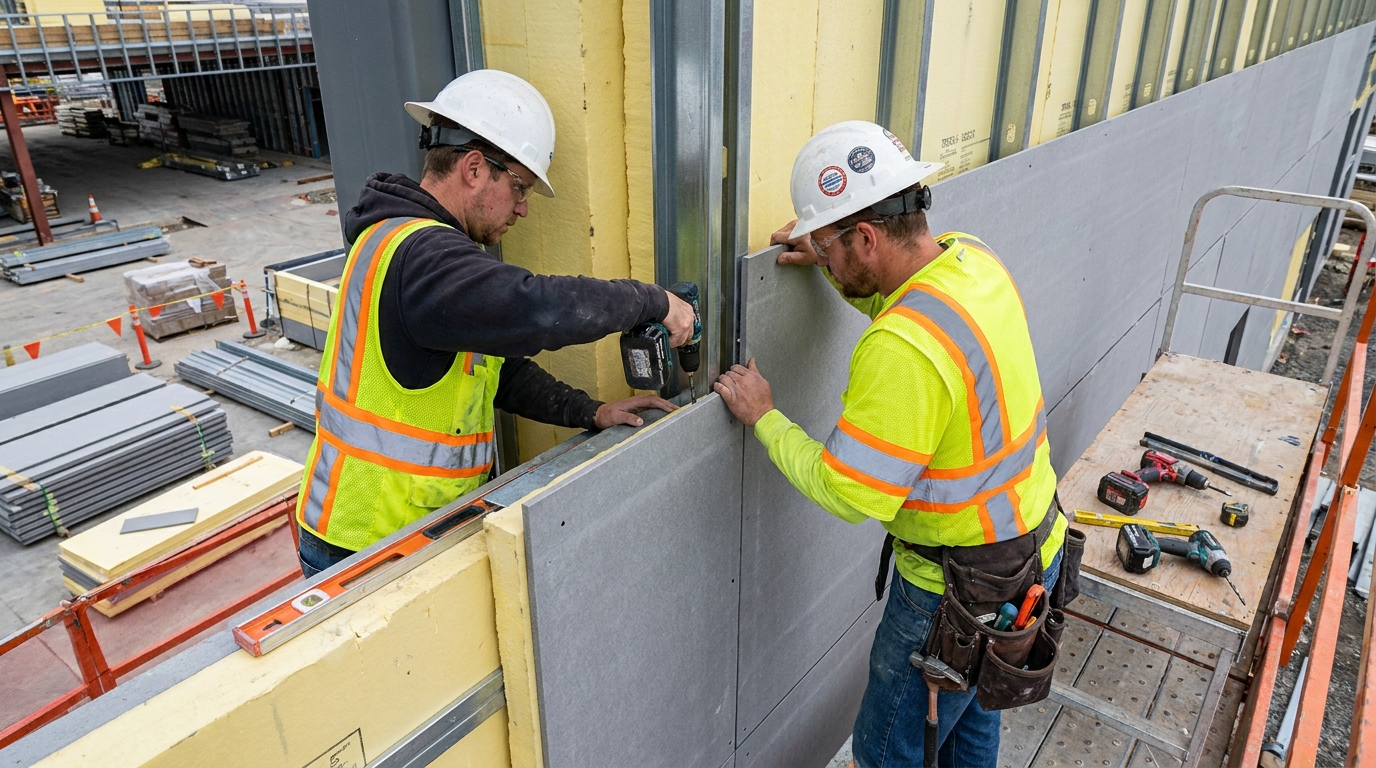
Building envelope systems are one of the strongest growth areas for composites. Composite cladding panels can be lightweight, dimensionally stable, and available in a wide range of finishes. They may also incorporate recycled inputs and efficient manufacturing processes, which is why they are frequently discussed in sustainability conversations. For modern facades, they offer designers a practical way to reduce support loads while maintaining a clean visual result.
From a construction standpoint, envelope composites are attractive because they can support panelization and prefabrication. Faster dry in times, reduced maintenance, and better integration with insulation systems can all improve project outcomes. But envelope performance depends on the whole assembly, not just the face panel. Moisture control, attachment design, fire performance, movement joints, and tested assembly data all need to be reviewed carefully.
How composites compare with traditional materials
Steel, wood, and concrete remain the backbone of most construction for good reasons. They are well understood, widely available, and supported by established codes, supply chains, labor practices, and design knowledge. Composite materials should be compared against these materials honestly, not promoted as if they automatically outperform them in every category. In many cases, traditional materials remain the best and most economical choice.
Compared with steel, composites often offer lower weight and better corrosion resistance. That can make them ideal in harsh environments or retrofit work where dead load matters. But steel usually offers greater stiffness, easier field familiarity, and broader acceptance for conventional framing. On projects where span behavior, connection familiarity, and straightforward procurement are the main concerns, steel may still be the better fit.
Compared with wood, composites can offer improved resistance to moisture, insects, and maintenance wear in selected products. They can also provide more uniform manufacturing and dimensional stability in some applications. But wood remains renewable, workable, and cost effective in many parts of North America. In framing and many finish applications, wood still makes perfect sense when detailed and protected properly.
Compared with conventional concrete, cement based composites such as UHPC can offer much better strength and durability in targeted applications. Yet standard concrete remains far more economical for most slabs, walls, and foundations. The choice should come down to exposure, geometry, repair cycle expectations, and structural requirements, not novelty.
Real world examples where composites create value
Bridge deck replacement and rehabilitation
Bridge work is one of the clearest real world examples of composite value. When an older bridge needs a deck replacement but the supporting structure cannot easily carry a heavy new deck, lightweight FRP deck systems can solve two problems at once. They reduce dead load and can be installed quickly, often with prefabricated modules. FHWA documentation has shown that these systems can improve load capacity and reduce construction time in the right situations.
This matters because bridge rehabilitation is rarely just about material strength. It is about traffic disruption, staging, worker access, and the condition of the existing structure. If a lighter system avoids major strengthening work and shortens closures, the value can extend far beyond material cost. That is a practical example of how composites work best when they solve a broader project problem.
Strengthening existing concrete structures
CFRP and other FRP strengthening systems are frequently used to upgrade existing structures without major reconstruction. A parking structure, beam, slab, or wall that needs extra capacity can sometimes be reinforced with bonded composite systems rather than large steel additions or demolition. This can be especially useful where headroom is limited, access is difficult, or the building must remain in service during the work.
For owners, the appeal is straightforward. A targeted retrofit can cost less and disrupt operations less than a full rebuild. For contractors, these systems require careful surface preparation and strict installation control, but they can greatly simplify logistics compared with heavier conventional strengthening methods. The quality of design and installation is critical here because performance depends on the full system, not just the material itself.
High performance building envelopes
Composite cladding and curtain wall components are increasingly used on institutional, commercial, and multifamily projects where owners want a combination of modern appearance, reduced weight, and lower maintenance. On these buildings, the benefit often comes from the whole assembly. Lightweight panels can reduce support demands, prefabrication can speed enclosure, and durable finishes can lower long term upkeep. In some cases, products also support sustainability goals through recycled content and manufacturing efficiency.
Again, the smart approach is to review the assembly as a complete system. Fire rating, movement, air and water control, and attachment details matter just as much as the panel material. Composite cladding can be excellent, but only when it is integrated properly with the rest of the wall.
Bridge preservation with UHPC
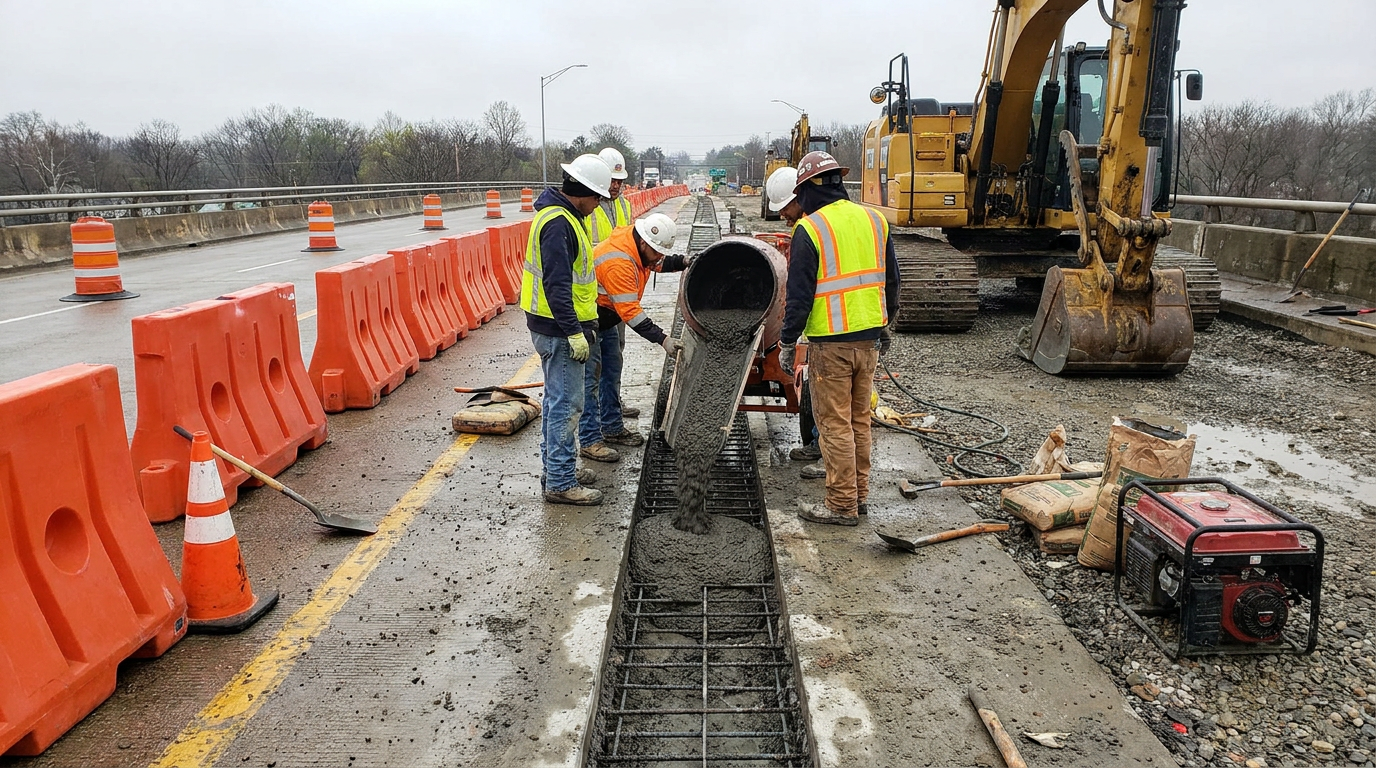
UHPC has become increasingly important in bridge preservation because traditional patch materials do not always hold up well in severe exposure. Repair zones, closure pours, and connections are often where deterioration starts. Using a more durable cementitious composite in those areas can improve long term performance and reduce repeated maintenance cycles. This is not just a materials story. It is a project durability story.
That same lesson applies more broadly in construction. The most successful composite use cases are often not full material substitutions. They are strategic uses in the parts of a project where failure is most likely or where maintenance is most disruptive.
What composites do not do well
There is a lot of hype around advanced materials, and composites are no exception. The first thing to understand is that they are not automatically better than conventional materials. They are better for certain problems. If the project does not need corrosion resistance, low weight, rapid installation, or a specialized performance profile, then the extra cost and complexity may not be justified.
FRP systems, for example, can be limited by lower stiffness compared with steel. That can affect serviceability and make them less suitable for some beams and girders. Some products are also proprietary, which means pricing can be less competitive and substitution options may be limited. Repair methods, fire protection requirements, UV exposure, and connection detailing may also need more careful review than a buyer expects.
Composites can also create procurement and approval challenges. A product may perform well technically but still require added documentation, testing, engineering review, or code acceptance before it can be used. That is not a flaw in the material. It is simply the reality of working with systems that are newer or more specialized than conventional assemblies.
Cost factors and how to think about value
One of the biggest mistakes in material selection is comparing only the unit price. Composite materials often cost more upfront than standard steel, wood, or conventional concrete products. If that is the only number being reviewed, composites can look hard to justify. But construction decisions should be based on installed cost and lifecycle value, not just material price.
For example, a lightweight prefabricated composite system may cost more per square foot than a conventional alternative, but if it cuts crane time, labor hours, lane closure duration, or temporary works, the total project cost may come down. A corrosion resistant component may have a higher purchase price but lower maintenance costs over its service life. Those are not theoretical advantages. They are the exact conditions where composites can earn their place.
Owners should ask practical questions. How long is the expected service life? What are the maintenance intervals? Does this reduce downtime or business interruption? Does it simplify installation enough to offset the higher material price? Are there code or approval costs that need to be factored in? If those answers are not clear, the material choice is not ready to be made.
Fire performance, approvals, and code compliance
Fire performance is one of the first serious review items for composite products, especially in building envelope and structural applications. Different composites behave differently under heat, and some systems need specific detailing, testing, or protective measures to meet code requirements. No one should assume that because a product is marketed for construction it is automatically suitable for every occupancy, height, or exposure condition. Fire performance must be checked against the actual assembly and code path.
In Canada, this issue sits inside a formal code environment. The National Building Code of Canada is the core technical code for new construction and major renovations, and provincial adoption and local authority requirements shape how projects are reviewed. For newer or proprietary products, code compliance evidence is often essential. That means specifiers should look for recognized documentation rather than relying on brochures or verbal claims.
The Canadian Construction Materials Centre, or CCMC, plays an important role here. It is the Government of Canada supported code compliance assessment service for construction products, and its evaluations are widely recognized by Canadian authorities. If a composite product is being considered for a Canadian project, checking for a CCMC assessment or equivalent accepted documentation is a smart step. It helps reduce approval risk and gives the project team a more reliable basis for specification.
Good material selection is not just about performance on paper. It is also about whether the product can move through approvals, procurement, and installation without creating avoidable risk.
How to decide when composites are the right choice
The best way to evaluate composites is to start with the problem, not the product. If the project is in a corrosive environment, weight sensitive condition, fast track schedule, or high maintenance exposure, composites may offer real advantages. If the project is routine framing in a dry interior environment with no unusual demands, conventional materials may be the smarter and cheaper option. The application drives the answer.
It helps to work through a short decision framework. First, define the main project pressure. Is it durability, schedule, maintenance, dead load, thermal performance, or access? Second, identify whether a composite system directly addresses that pressure better than standard materials. Third, review approvals, code documentation, fire performance, and manufacturer support. Fourth, compare installed and lifecycle costs rather than initial price alone.
For homeowners, the most likely composite decisions involve decking, trim, cladding, panels, and specialty retrofit products rather than primary structure. For professionals, the decision might extend to bridge rehabilitation, strengthening systems, prefabricated assemblies, and high performance envelope work. In both cases, the same rule applies. Use composites where their specific strengths solve a real project problem.
Common mistakes to avoid
-
Choosing a composite product just because it sounds advanced. Newer is not automatically better. The material should match the exposure, load, maintenance, and installation needs of the project.
-
Ignoring code and approval requirements. This is a common and expensive mistake, especially with proprietary systems. Check accepted evaluations and local approval pathways early.
-
Looking only at upfront cost. A cheaper material that causes more maintenance, longer closures, or heavier supporting work can end up costing more overall.
-
Assuming all composites perform the same way. FRP, WPC, UHPC, and composite cladding products are not interchangeable. Their properties, limits, and uses are very different.
-
Overlooking installation quality. Many composite systems depend on precise installation, surface preparation, curing, fastening, or environmental control. Good workmanship matters as much as the product itself.
Where the market is headed
Composite use in construction is growing alongside prefabrication, modular building, resilience planning, and more disciplined sustainability reporting. That does not mean every project will shift toward composites. It means more project teams are treating them as practical options instead of unusual exceptions. In infrastructure, the trend is especially clear in bridge rehabilitation, deck replacement, corrosion resistant components, and UHPC repair work.
In building construction, envelope systems are likely to remain one of the strongest areas for growth. Owners want lower maintenance, better performance, and cleaner installation. Composite panels and hybrid assemblies fit that demand well when properly tested and detailed. There is also rising interest in bio based and lower carbon materials that overlap with the broader composite conversation, although those products still need careful scrutiny on durability and code acceptance.
The market is also getting more disciplined about environmental claims. Buyers are increasingly asking for lifecycle analysis, EPDs, and clearer data on recycled content and end of life handling. That is a healthy change. It pushes manufacturers to support their claims with evidence and helps specifiers make decisions that hold up in the real world.
Final thoughts
Composite materials have earned a real place in construction, but they are at their best when used with clear purpose. They can reduce weight, improve corrosion resistance, speed installation, support prefabrication, and extend service life in the right applications. They can also cost more upfront, require careful approval review, and fall short if used where their strengths are irrelevant. That is why practical selection matters more than excitement.
If you are a homeowner, think of composites as smart options for certain exposed and maintenance heavy parts of a project. If you are a builder, designer, or facility owner, think of them as problem solving tools for durability, schedule, and specialized performance. In both cases, ask the same grounded questions. What problem is this material solving, what proof supports the claim, and what will it mean for installation, approvals, and long term maintenance?
That approach keeps the decision honest. And in construction, honest decisions usually lead to better buildings.


No Comment! Be the first one.