

Ten Houses, One Lesson: What This Month’s Global Architecture Says About the Future of the Home
Every so often a scattering of houses from across the globe arrives together, and instead of ten unrelated stories, you find a single conversation. That is exactly what happened this month, as a fresh round up of residential architecture surfaced projects from South London to the Brazilian hills, from a Tuscan watchtower to a Costa Rican courtyard. Read individually, each is a striking one off. Read together, they tell us something larger about where thoughtful design is heading.
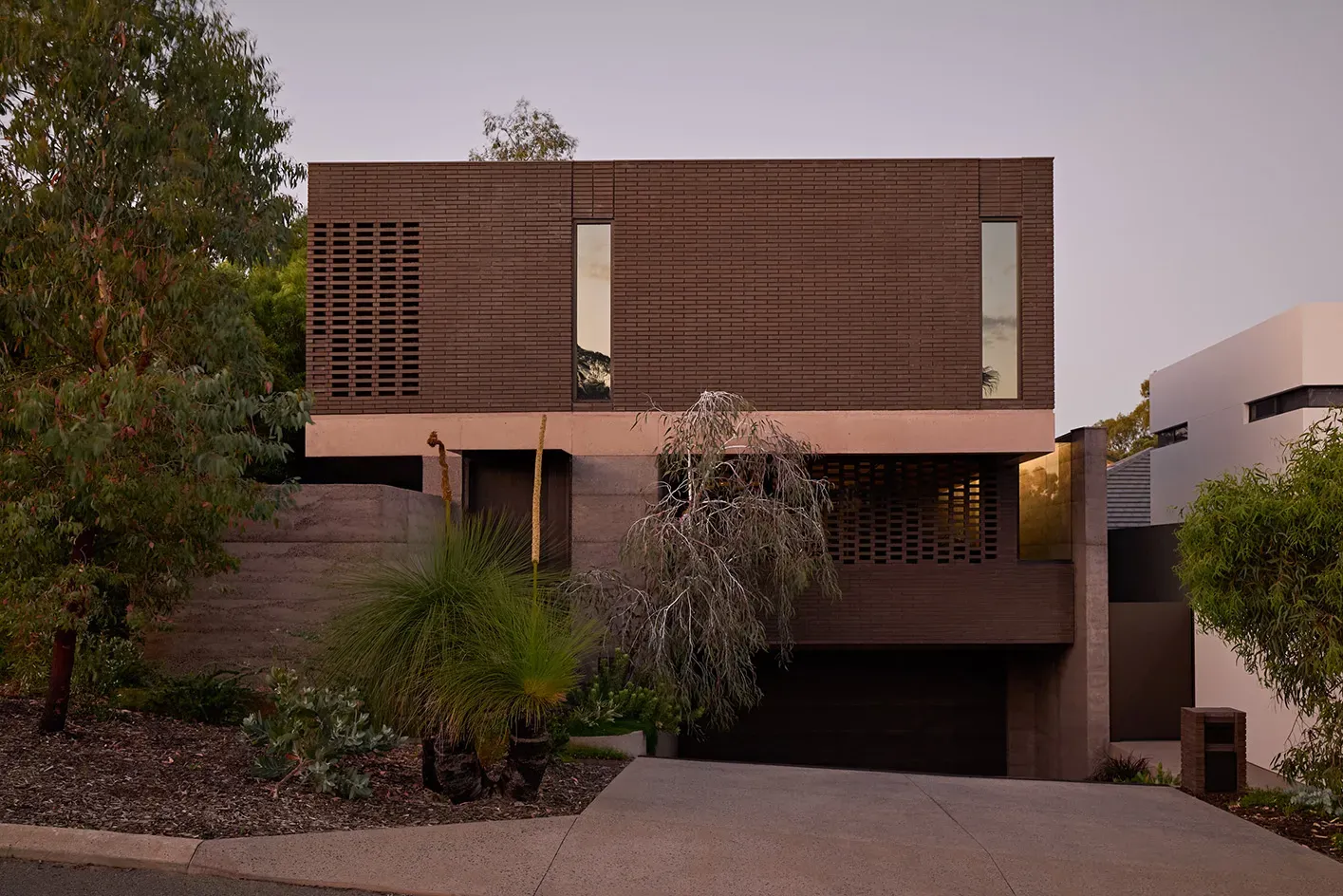
The first thread is restraint used as invention. In Roehampton, Stylus Architects faced an awkward plot behind a Victorian house and chose to dig down rather than build up, tucking bedrooms below grade and letting light fall through sunken courtyards and a stairwell roof light. It is a quiet solution to a loud problem, and it is precisely the kind of ingenuity that separates a merely functional renovation from a genuinely considered one. In Perth, Studio Gritt took the opposite approach to the same principle, using seven metre rammed earth walls and weathered brick to conjure the gorge textures of Karijini National Park, proving that a home can carry the memory of a landscape without imitating it literally.
The second thread is heritage treated as material, not decoration. A 55.6 square metre duplex atop Renée Gailhoustet and Jean Renaudie’s celebrated 1975 Paris brutalist complex reminds us that mass housing can still carry architectural ambition decades later, its stepped terraces and mature trees proof that green urbanism was never a modern invention. On the Tuscan coast, a 16th century Medici watchtower has been carefully restored by studio Tono, its stone, lime and travertine left intact, its Venetian terrazzo floors preserved rather than replaced. Neither project chased novelty. Both understood that the most sophisticated gesture is sometimes simply protecting what already works.
The most memorable spaces often speak quietly, but with complete confidence.
Then there is the sculptural gesture, unapologetic and site specific. Tetro Arquitetura’s Xingu House pinwheels around a central axis on six faceted concrete pillars above a Brazilian hilltop, while Young Projects carved a curved cut out form into the Canadian Rockies, its butterfly roof tracing a silhouette against the lake below. These are not houses built to disappear into their sites. They are houses built to converse with them, using raw concrete and dramatic form the way a sculptor uses negative space.
What ties a Prague barn conversion to a Costa Rican patio house drawn from a Roman impluvium is not style but discipline: proportion, material honesty and a refusal to over explain. That, more than any single trend, is the real takeaway from this month’s crop of houses. Good architecture rarely needs to shout. It simply needs to understand its site, its materials and its purpose, then get out of the way.
Source: Wallpaper*, “10 amazing houses that made an impression in June 2026”.