Scaling the Toronto Model: What Subway-Linked Communities Could Mean for Canadian Housing Supply
Every city eventually runs out of easy land. What separates the cities that keep growing well from the ones that stall is what they do next, and increasingly, the answer is building directly around the transit they already have. A recent op-ed making the rounds among planners and architects argues for scaling up what it calls the “Toronto Model” for subway-connected Transit-Oriented Communities, or TOCs. As someone who has spent a career watching land value and infrastructure move in lockstep, I think this conversation deserves more attention than it is currently getting.
The core argument is not new, and its authors do not pretend otherwise. Transit-oriented development has deep roots. Penn Station in New York, Buffalo’s Central Terminal, and Toronto’s own original TTC Line 1 stations were all built with the understanding that transit infrastructure and city life are not separate systems. They are the same system. Stations were never meant to be isolated boxes people pass through. At their best, they were meant to anchor neighbourhoods, and for a long stretch of the twentieth century, they did.
What makes this moment different is the scale of the opportunity in front of us. Canadian cities, Toronto chief among them, are in the middle of the largest transit build-out in a generation. New subway and light rail lines are being planned and constructed with housing pressure at historic highs. That combination rarely happens twice in the same city within a single career. If the land around new stations is planned reactively, piecemeal, station by station, the result is a missed opportunity that will not present itself again for decades. If it is planned as an integrated strategy from the outset, the payoff is different in kind: higher density where infrastructure already supports it, shorter commutes, stronger ridership, and housing supply added exactly where it does the most good.
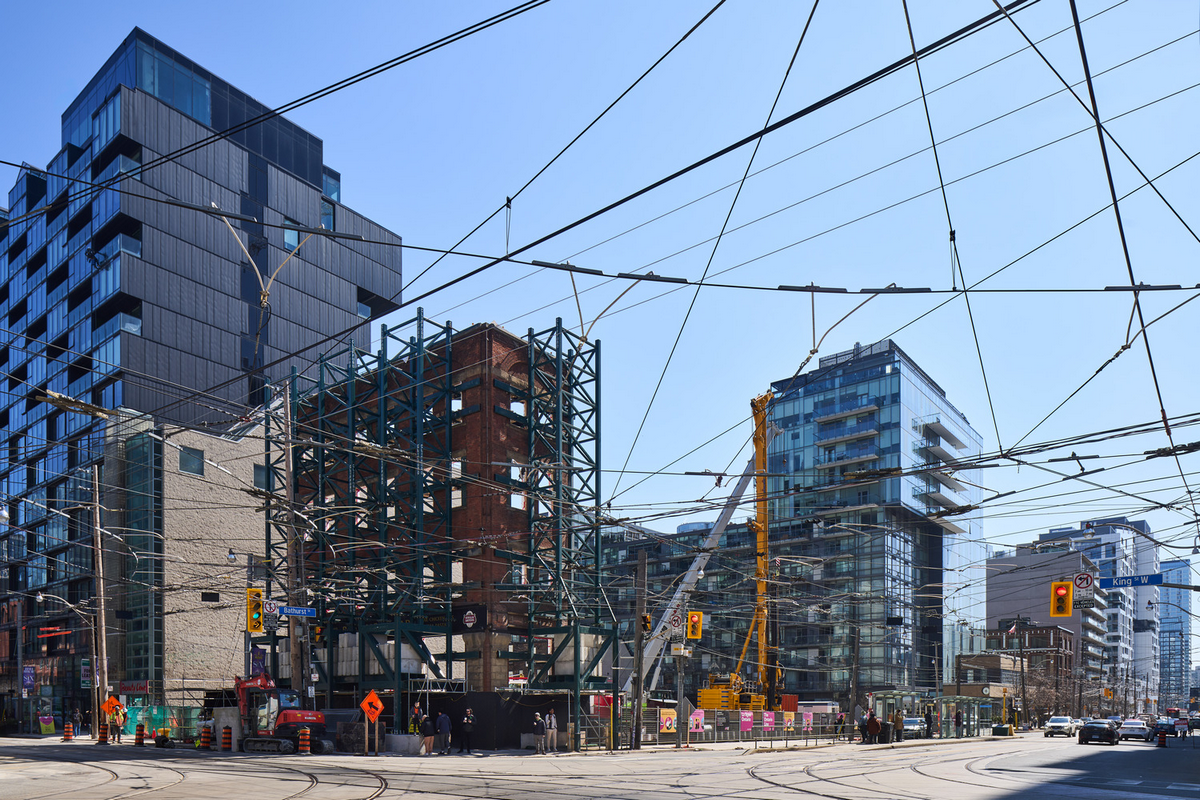
Transit infrastructure has long been a key part of urban development, when cities have had the discipline to treat it that way.
For developers and city builders watching this unfold, the “Toronto Model” being proposed is less about a single project and more about a repeatable framework, one that other Canadian cities with new transit lines in the pipeline could adapt rather than reinvent. That is the part I find most compelling. Development feasibility improves dramatically when land use planning, transit agency coordination, and housing targets are aligned before shovels go in the ground, not negotiated afterward. Cities that get this sequencing right will see it show up in land values, absorption rates, and long term community identity for decades.
The lesson from Penn Station and TTC Line 1 is not that transit-oriented development is a novel idea. It is that cities forget it, then have to relearn it at cost. The current window, with new lines under construction and housing demand at a breaking point, is a chance to skip that relearning curve entirely.