Agentic AI Is Turning CRE Deal Flow Into a Data Infrastructure Problem
Commercial real estate has never lacked information. It has lacked throughput. The signal in PlexAI’s emergence is not simply that another proptech startup is applying AI to underwriting. It is that deal evaluation itself is becoming an infrastructure layer, where documents, assumptions, market data, lender feedback, and investment committee logic can be organized into a repeatable system.
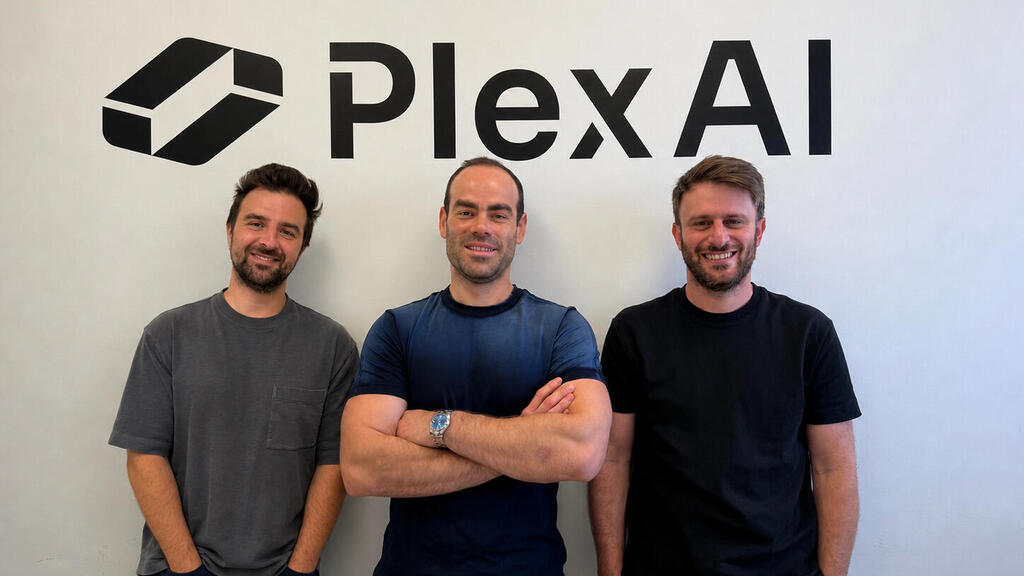
As reported by CTech, PlexAI was founded in 2025 by Ran Endelman, Amit Markovich, and Yaniv Schwartz to build an agentic AI platform for commercial real estate acquisition and origination teams. The company has raised $1.4 million in pre-seed funding and says it is already serving dozens of U.S. investment firms, including clients with more than $1 billion in assets under management.
The core market inefficiency is measurable. Acquisition teams may receive dozens or hundreds of opportunities each week, but only a fraction can be reviewed deeply. That creates a hidden selection bias in CRE portfolios. Firms are not only choosing among the best deals. They are choosing among the deals they had enough human capacity to evaluate. In a market where pricing, debt terms, rent assumptions, capex exposure, and local demand can shift quickly, missed review capacity becomes missed alpha.
PlexAI’s model is notable because it targets the full deal lifecycle rather than a single workflow. The platform is described as using multiple specialized AI agents for intake, document extraction, underwriting, market research, due diligence, and investment committee materials. That matters because most inefficiency in CRE is not located in one spreadsheet or one memo. It sits between systems, where analysts manually translate broker packages into models, then convert models into narratives, then reconstruct the same information for lenders and committees.
The competitive edge in CRE is moving from who has the most analysts to who can structure the most decision-ready data.
For KG Data readers, the more important question is not whether AI can read an offering memorandum. It can. The harder question is whether AI can preserve investment judgment while compressing the repetitive work around it. In CRE, small modeling assumptions can materially change a bid: exit cap rates, rent growth, concessions, insurance, taxes, replacement reserves, and refinance scenarios all carry local context. A useful AI system must therefore become less like a generic assistant and more like an operating model trained around a firm’s actual acquisition discipline.
This is where agentic AI may have an advantage. If the platform maps a firm’s sourcing, approval, underwriting, and committee process during onboarding, it can create consistency across deal review. That consistency is valuable in itself. Over time, firms could compare why they passed, why they bid, which assumptions proved wrong, and which markets repeatedly generated false positives. The data exhaust from deal screening becomes a forecasting asset.
The next layer is financing. PlexAI says it wants to connect buyers and lenders around the same AI-analyzed transaction data. If that works, it addresses another structural drag in CRE: duplicated underwriting. Buyers, brokers, debt funds, and banks often reprocess the same documents in parallel. A shared transaction layer could shorten financing cycles and make lender appetite more visible earlier in the acquisition process.
The market should now track three indicators: whether AI-assisted teams review materially more deals without lowering diligence quality, whether lender integrations reduce closing friction, and whether firms begin treating historical deal-screening data as proprietary intelligence. The strongest CRE operators will not outsource judgment to AI. They will use AI to make more of their judgment observable, testable, and scalable.
Source: CTech by Calcalist