What a Slowing June Means for Canada’s Housing Supply Pipeline
Every housing starts report is a snapshot of confidence, and the latest numbers from Canada Mortgage and Housing Corp. tell a story worth paying attention to. The national seasonally adjusted annual rate of housing starts fell to 238,971 units in June, down 6% from 253,083 in May. On its own, a single month is noise. But for those of us who think in terms of pipelines, timing, and long term supply, this is a data point that deserves context.
The six-month moving average, which smooths out the monthly swings and gives a clearer read on underlying momentum, came in at 248,123 units for June. That is down 2.8% from May. When both the monthly figure and the trend line move in the same direction, developers and municipal planners take notice. A single soft month can be weather, financing timing, or a permitting bottleneck. Two consecutive signals moving lower start to look like a pattern.
What I find more instructive than the starts figure is what is happening further down the pipeline. Units under construction in centres with populations of 50,000 or more totalled 375,469 in June, essentially flat, up just 0.2% from May. Completions, meanwhile, rose 8.4% to 18,298 units. That combination matters. Supply that was already in progress is finishing and hitting the market, while the number of new projects breaking ground is cooling. If that gap persists, it tells us the active project count is not being replenished at the pace it was earlier in the year.
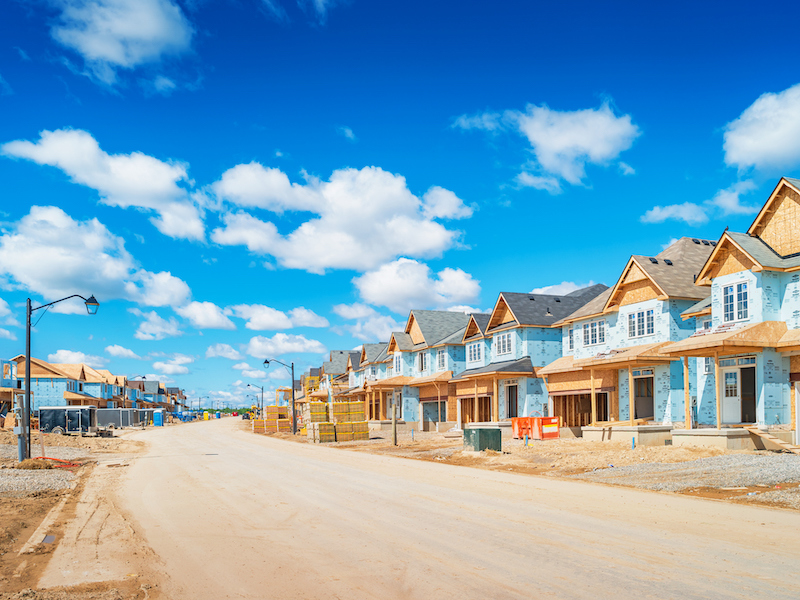
There is another figure buried in this release that deserves a developer’s attention: the number of units with approved permits but not yet started dropped 1.1% from May, to 137,324. That is the shadow inventory of projects sitting in the queue. When that number declines alongside a drop in starts, it suggests the slowdown is not simply a matter of proponents holding back on already-approved land. It points to a broader hesitation earlier in the process, likely tied to financing costs, labour availability, or shifting absorption expectations in specific markets.
Supply pipelines do not stall or accelerate for one reason. Timing, financing, permitting, and market confidence all move together, and a single monthly report is only ever one frame of a longer film.
Rural starts, estimated at a seasonally adjusted annual rate of 11,141 units in June, remain a smaller but relevant piece of the national picture, particularly for regions where large scale urban intensification is not the primary growth story. For municipalities and project sponsors watching feasibility right now, this report is a reminder that the supply conversation cannot be reduced to a single headline number. Starts, permits, construction volume, and completions each tell a different part of the story, and reading them together is how serious development strategy gets built.
Source: Investment Executive, “Annual rate of housing starts in June down 6% from May: CMHC”