
The Greater Golden Horseshoe’s Pipeline Is Expanding Faster Than Its Construction Capacity
The latest UTPro dashboard update points to a market that is still generating development ambition, even as delivery remains more measured. Across the Greater Golden Horseshoe, new pre-construction activity continues to rise faster than projects moving through active construction. For developers, planners, lenders, and municipalities, that gap is the real signal. The region is not short on proposed density. It is short on the conditions that turn entitled or proposed density into completed housing and employment space.
According to UrbanToronto’s UTPro data, the 10-region Greater Golden Horseshoe now has 3,693 projects in pre-construction, representing roughly 1.481 billion square feet of gross floor area. Within that, residential proposals account for about 1.168 billion square feet and 1.823 million dwelling units. By contrast, 718 projects are under construction, with approximately 199.7 million square feet of gross floor area and 238,958 dwelling units actively being built.
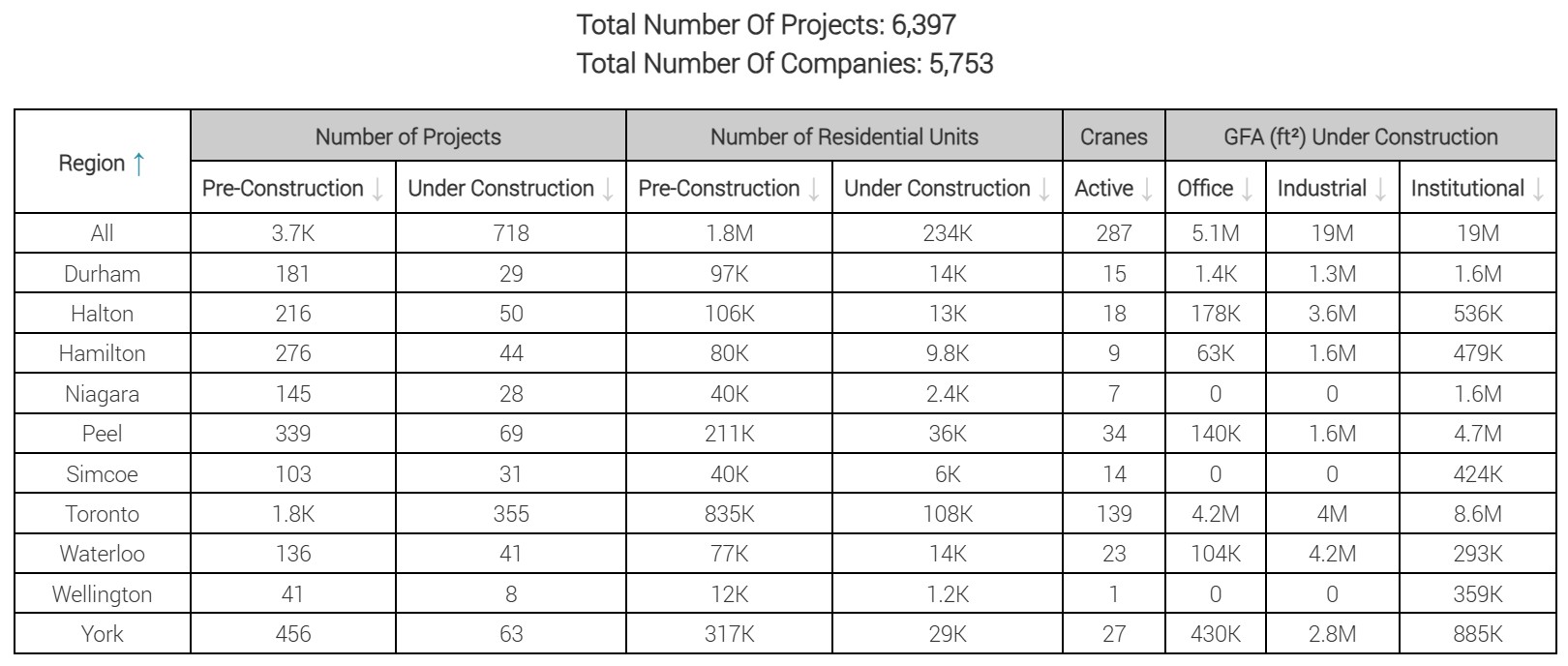
That imbalance is not simply a statistical curiosity. It reflects the structural challenge now defining growth in Southern Ontario. Municipal planning systems, provincial housing targets, and landowner expectations are pushing more projects into the formal pipeline. But construction starts remain constrained by financing costs, absorption uncertainty, servicing capacity, labour availability, approvals sequencing, and the widening gap between pro forma assumptions and market reality.
For landowners, the expanding pre-construction inventory supports the idea that well-located land remains strategically valuable, especially near transit, major corridors, and existing infrastructure. But it also raises the bar for execution. A site with theoretical density is not the same as a financeable project. The market is increasingly separating paper value from deliverable value. Sites that can move through servicing, zoning, design, phasing, and sales risk with fewer unknowns will command a different level of attention than sites relying only on long-term intensification logic.
For municipalities, the data should sharpen the focus on infrastructure alignment. A pipeline of 1.823 million proposed dwelling units is not useful if water, wastewater, transit capacity, roads, schools, parks, and community infrastructure remain out of sequence. The next phase of growth planning cannot be judged only by how many applications are filed or how much density is approved. The key question is whether local systems can convert planned growth into complete communities without overloading networks that were never designed for that scale of intensification.
The region does not have a shortage of proposed housing. It has a conversion problem between planning ambition and construction reality.
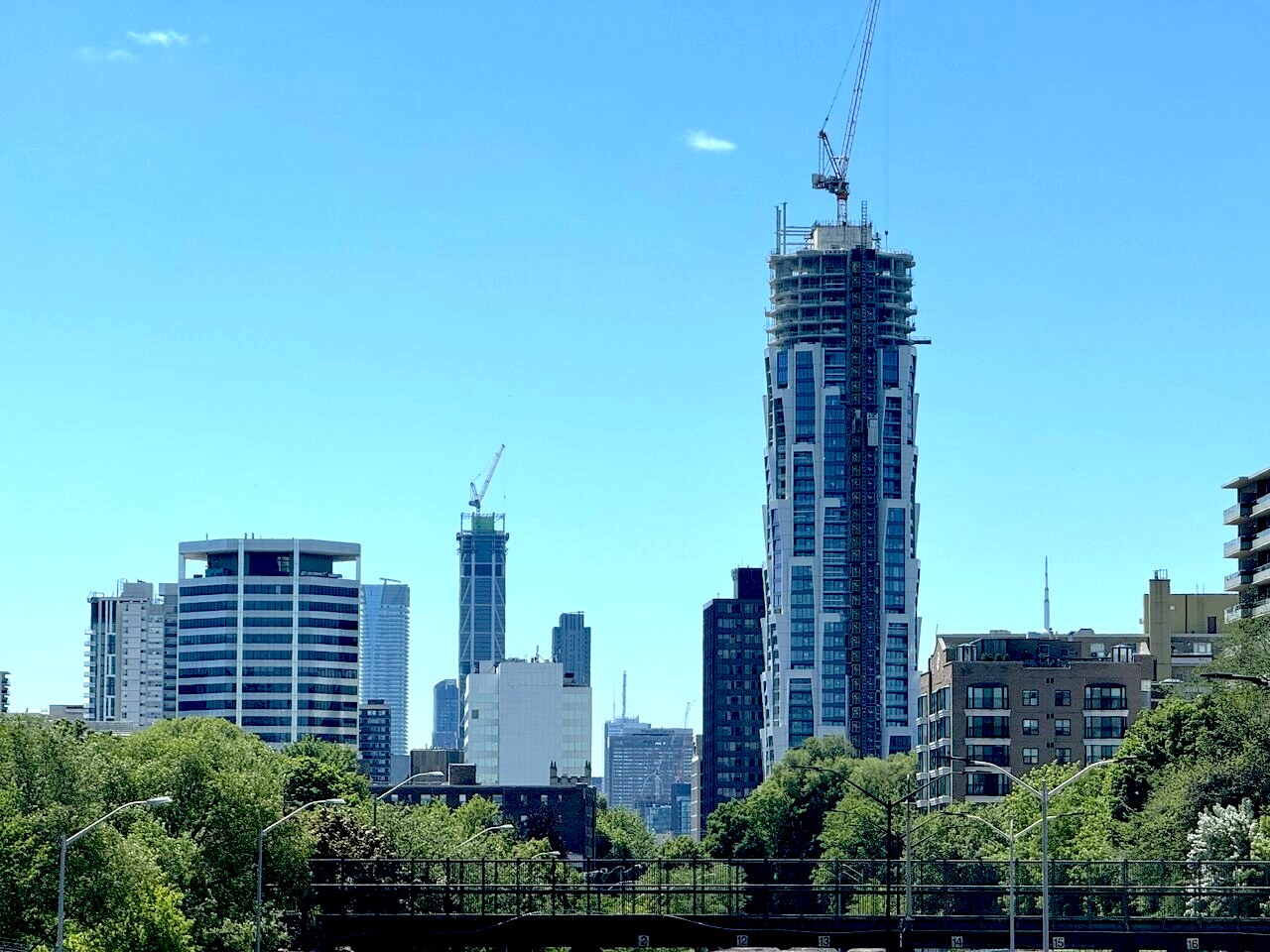
The rise in under-construction projects, from 705 to 718, is still positive. It shows that despite cost pressure and market caution, construction has not stalled. But the month-over-month increase in active residential units was modest compared with the broader growth of the pre-construction pipeline. That matters because housing targets are ultimately delivered by cranes, trades, servicing connections, and occupancy permits, not by applications sitting in review or approvals waiting for capital.
The strategic takeaway is clear. Developers should be stress-testing timelines, infrastructure dependencies, approval risk, and capital stack assumptions with more discipline than they did in the low-rate cycle. Planners should be tracking not only approvals, but conversion rates from proposal to permit to construction. Investors should look closely at submarkets where policy support, infrastructure readiness, and demand depth overlap. In the Greater Golden Horseshoe, the next advantage will not belong to those who merely control land. It will belong to those who can get land built.
Source: UrbanToronto