



Water efficiency has become one of the most practical parts of sustainable home design. For many homeowners, the conversation begins with low flow fixtures, shorter showers, and drought tolerant landscaping. Those changes still matter, but there is another strategy that deserves more attention because it sits in a useful middle ground between simple conservation and full scale infrastructure upgrades. Greywater recycling allows households to reuse lightly used water for non potable purposes, helping reduce demand on drinking quality water while supporting a more resilient home.
Table Of Content
- What Is Greywater Recycling?
- Why Greywater Recycling Matters Now
- The Main Benefits for Homeowners
- Greywater Is Not One Thing: Simple Systems and Advanced Systems
- How a Greywater System Works in Practice
- Where Greywater Can Be Reused Safely
- Safety, Health, and Why Treatment Matters
- What the Rules Say in the United States and Canada
- Greywater and Household Water Savings
- Common Misconceptions That Can Lead Homeowners Off Track
- How to Decide if Greywater Recycling Is Right for Your Home
- Best Practices for Homeowners Considering a System
- The Bigger Picture: Greywater as Part of Resilient Home Design
- Final Thoughts
What makes greywater especially interesting is that it is no longer just an off grid idea or a specialty feature for experimental eco homes. In both the United States and Canada, researchers, public agencies, and housing organizations increasingly describe greywater reuse as a realistic part of modern water sustainability. The US Environmental Protection Agency has highlighted onsite non potable reuse systems as a valuable way to capture and treat locally generated water for use in and around buildings. In Canada, Health Canada and CMHC have both contributed to a growing body of guidance that frames greywater reuse as a thoughtful household strategy rather than a fringe concept.
For homeowners, the appeal is straightforward. Greywater systems can reduce potable water use, support outdoor irrigation, supply toilet flushing in some designs, and help households respond more gracefully to drought or watering restrictions. Just as importantly, they encourage a more intentional relationship with water without demanding perfection. A well planned system can be elegant, efficient, and practical, which is exactly why greywater is increasingly part of the broader conversation about sustainable housing.
This guide explains what greywater recycling is, how it works, what benefits homeowners can realistically expect, and what safety and code considerations need to be respected. It also looks at the difference between simple diversion systems and more engineered setups, because not every home needs the same level of investment. The goal is not to make greywater sound effortless. It is to make it understandable, achievable, and grounded in good design.
Greywater recycling works best when it is treated as a fit for purpose water system. The water does not need to become drinking water, but it does need to be managed carefully for the way it will be used.
What Is Greywater Recycling?
Greywater is generally defined as lightly used household water that comes from sources such as showers, bathtubs, bathroom sinks, and laundry. This water has already served one purpose, but it may still be useful for another task that does not require drinking water quality. In many homes, that second use might be toilet flushing or subsurface irrigation, both of which can consume a meaningful share of a household water budget.
It is important to understand what greywater is not. Greywater does not include toilet waste, which is usually called blackwater and requires a different treatment approach entirely. In many cases, kitchen sink water is also excluded because it tends to contain grease, food particles, and a heavier contamination load. That distinction matters because the relative simplicity of greywater reuse depends on starting with water that is lighter in organic matter and easier to manage.
At its core, greywater recycling means collecting this lightly used water, moving it through some level of filtration or treatment, and sending it to a non potable end use. The exact design depends on local regulations and the household goal. Some homeowners use a very simple diversion approach for landscape irrigation. Others install a more advanced system that includes treatment, storage controls, disinfection, and dedicated plumbing for indoor reuse.
The idea may sound technical, but the principle is fairly intuitive. A large amount of water that enters our homes is treated to drinking quality, only to be used for tasks that do not actually require potable water. Greywater systems help correct that mismatch. They create a better alignment between water quality and water use, which is why greywater is often discussed alongside the broader concept of fit for purpose water treatment.
Why Greywater Recycling Matters Now
The case for greywater recycling becomes stronger when you look at how pressure on water systems is changing. Drought is no longer a rare, regional concern. The EPA noted that 48 US states experienced drought in 2024, which illustrates how widespread water stress can become even in places that do not traditionally think of themselves as water constrained. In that context, reusing water once before sending it away starts to look less like an environmental extra and more like a sensible design response.
Municipal water treatment is energy intensive, infrastructure heavy, and expensive to expand. Every time a household reduces demand for potable water, it eases some pressure on those systems. That does not mean a single home will transform regional water security on its own. It means that thousands of homes making modest improvements can collectively reduce strain on utilities, treatment plants, and distribution networks while helping communities become more resilient over time.
There is also a household resilience argument. During drought conditions or watering restrictions, a greywater system can support landscape health and maintain basic non potable uses with less dependence on fresh municipal supply. For homes on septic systems, strategic water reuse may also influence how water moves through the broader household system, although it needs to be designed with care. In practical terms, greywater offers a way to stretch water resources further without compromising comfort.
This shift is visible in policy and housing guidance. The EPA continues to invest in research on onsite non potable reuse systems, including greywater, stormwater, and roof collected rainwater. In 2026, the agency released Water Reuse Action Plan 2.0, reflecting continued momentum around reuse strategies. In Canada, CMHC climate resilience guidance now lists greywater reuse systems as a housing adaptation strategy, which signals a move from niche sustainability language toward mainstream resilient home design.
The Main Benefits for Homeowners
When homeowners first hear about greywater recycling, they often imagine a complicated mechanical system with uncertain payback. In reality, the benefits can be both immediate and long term, especially when the system is matched to the home’s layout and water use patterns. The most obvious advantage is a reduction in potable water demand. Water that would normally go straight to the drain can instead handle another task, reducing the amount of fresh treated water the home needs to pull from the municipal system or well.
That reduction can translate into lower water bills, although savings vary depending on local water rates, system cost, household size, and climate. The financial case is often strongest in areas with high water costs, seasonal shortages, or irrigation demand. Even when direct savings are moderate, many homeowners value the added resilience and lower environmental footprint that come with using high quality water more carefully.
Greywater recycling can also complement low water landscaping. If a household already has a drought tolerant garden, the next challenge is often how to maintain it sensibly through dry periods. A properly designed subsurface irrigation system can direct suitable greywater to plant roots, reducing dependence on potable outdoor watering. This is not a way to create a lush, water hungry lawn in an arid climate. It is a way to support planting choices that are already aligned with local conditions.
For indoor reuse, toilet flushing is one of the most promising applications. Toilets use a consistent and significant amount of water, which makes them a strong match for non potable supply in homes that can accommodate the plumbing and treatment requirements. Health Canada has published domestic reclaimed water guidance for toilet and urinal flushing that includes targets for water quality, disinfection, and monitoring. That guidance underscores an important point: the opportunity is real, but safe performance depends on treating greywater as a managed water system rather than a casual reroute.
Greywater Is Not One Thing: Simple Systems and Advanced Systems
One reason greywater can feel confusing is that the term covers systems of very different complexity. Some setups are straightforward diversion systems that send water from a shower or laundry source directly to subsurface landscape irrigation with minimal storage. Others are compact treatment systems that clean, disinfect, and redistribute water for indoor non potable uses like toilet flushing. Both fall under the greywater umbrella, but they involve different costs, risks, and code requirements.
A simple diversion system is often the most accessible entry point. In this approach, suitable greywater is redirected soon after use to an approved irrigation area, usually below the surface so people and pets do not come into contact with the water. These systems typically avoid long storage times because untreated greywater can develop odors and support microbial growth if it sits too long. The appeal is simplicity, but success still depends on proper filtration, appropriate soil and plant conditions, and compliance with local rules.
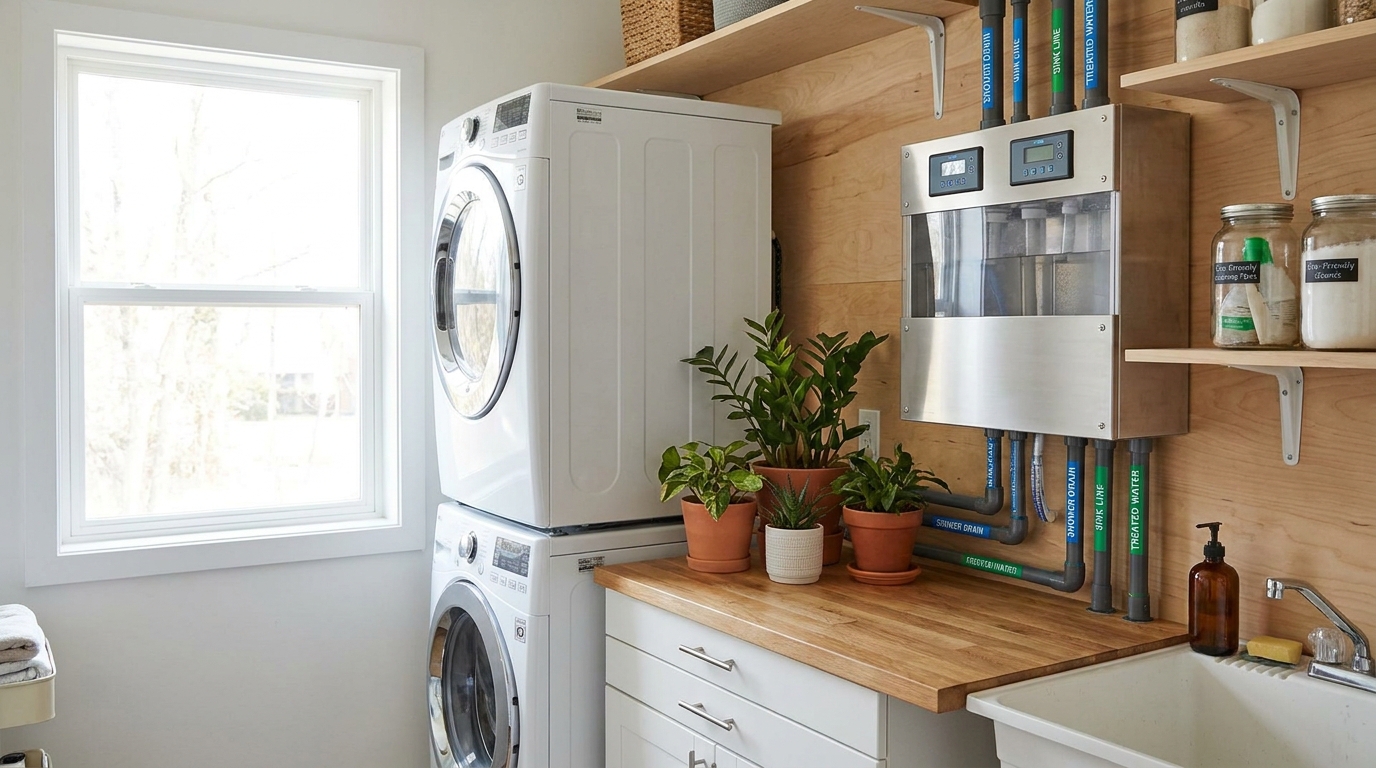
More advanced systems are designed for higher reliability and broader reuse options. They may include filtration, biological treatment, disinfection, controls, pumps, and dedicated storage tanks. These systems are more likely to support indoor uses such as toilet flushing, where consistent water quality matters and plumbing separation is essential. They are also more likely to require professional design, permitting, and ongoing maintenance.
Neither approach is inherently better. The right choice depends on the home, the climate, the household’s water goals, and local regulatory pathways. A small, well maintained irrigation diversion system can be a smart and effective solution. A more engineered treatment system can make sense in a renovation or new build where long term water efficiency and resilience are a clear priority. The key is understanding the level of system your goals actually require.
How a Greywater System Works in Practice
At a practical level, most greywater systems involve a sequence of steps: collection, conveyance, treatment or filtration, storage or immediate distribution, and end use. Water is first collected from approved fixtures, usually showers, bathtubs, bathroom sinks, and laundry. From there it travels through a separate plumbing route rather than entering the standard wastewater path immediately. This is one reason greywater planning is often easier in new construction or major renovations, though retrofits are still possible.
Once collected, the water usually needs at least some filtration to remove hair, lint, soap residues, and suspended solids. If the intended use is irrigation, the treatment approach may be relatively simple, depending on the system type and local code. If the intended use is toilet flushing, treatment requirements become more rigorous because indoor reuse requires stronger control over clarity, microbial levels, and overall system performance.
Disinfection is one of the most important elements in indoor non potable systems. Health Canada guidance for domestic reclaimed water used in toilet and urinal flushing recommends a multi barrier approach that includes treatment, disinfection, monitoring, and periodic testing for parameters such as turbidity or suspended solids, microbial indicators, and residual chlorine. This is a useful reminder that small household reuse systems function like miniature water treatment systems. They do not need to be intimidating, but they do need to be designed with discipline.
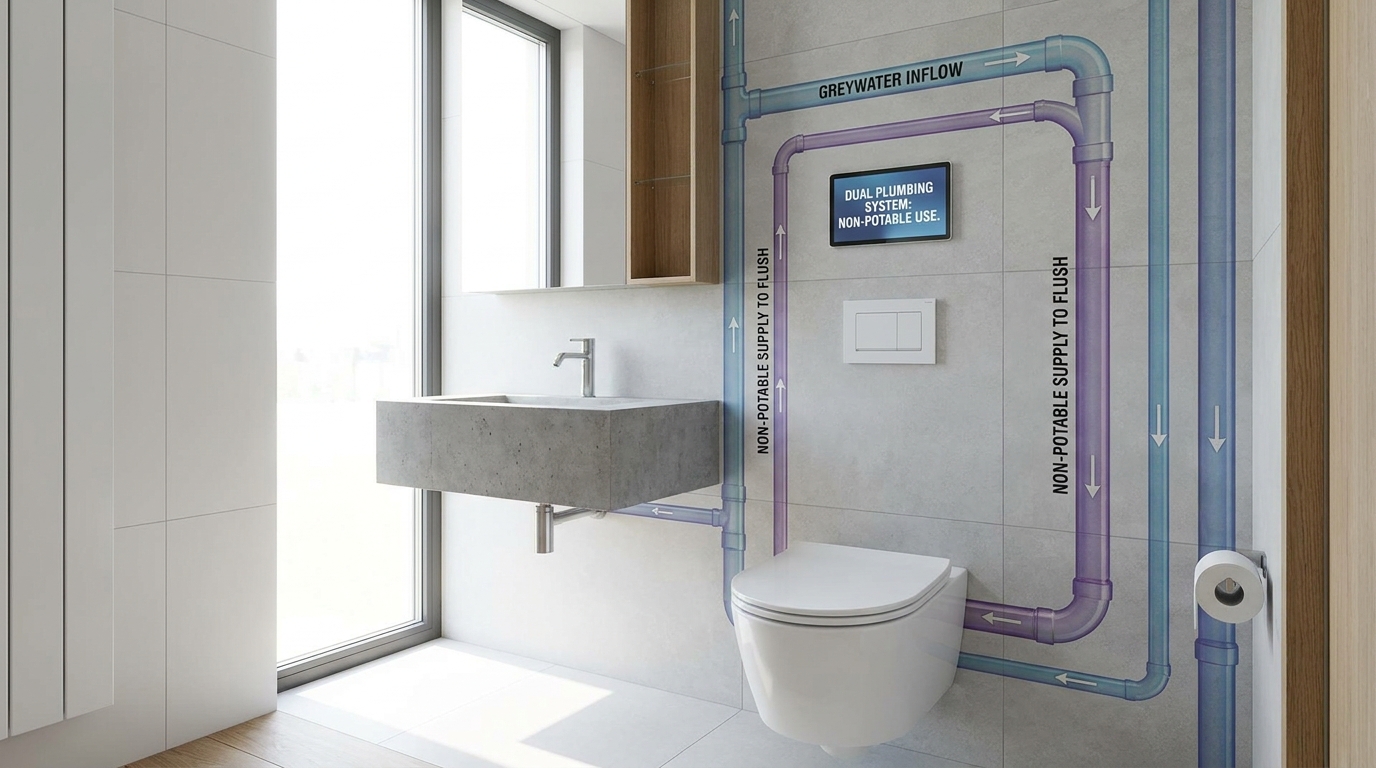
Finally, the treated greywater reaches the end use, either through a dedicated indoor plumbing loop or through a landscape distribution network such as subsurface irrigation. Signage, backflow protection, and clear separation from drinking water lines are all part of responsible system design. In well executed projects, most of this infrastructure sits quietly in the background. The homeowner experience can remain simple even when the system itself is carefully engineered.
Where Greywater Can Be Reused Safely
The most common and practical greywater uses in residential settings are toilet flushing and subsurface irrigation. These applications align well with the basic principle of matching water quality to water purpose. Toilet flushing uses a significant amount of water but does not require potable quality. Similarly, irrigation for ornamental or suitable landscape areas can often use non potable water when delivered in a controlled way that limits human exposure and protects public health.
Subsurface irrigation is often preferred because it keeps greywater below the surface rather than spraying it into the air. That reduces contact risks and helps direct moisture to plant roots where it is most useful. Even so, plant type, soil conditions, system loading, and detergent chemistry all matter. Homeowners need to think beyond the plumbing and consider what they are putting down the drain in the first place. Harsh chemicals, heavy salts, and certain cleaning products can affect soil health over time.
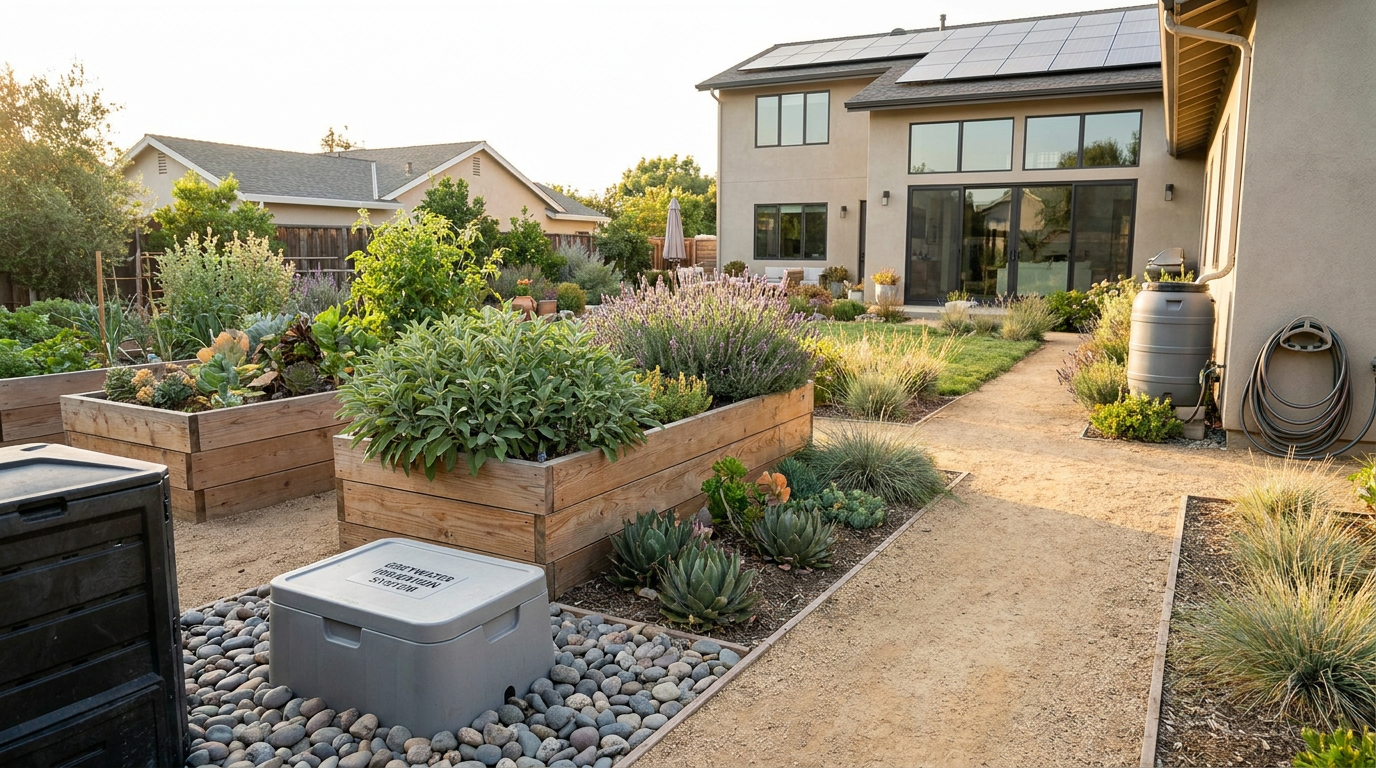
Indoor toilet flushing systems are especially appealing in homes where outdoor irrigation opportunities are limited, such as urban properties with small yards. In those cases, reclaimed greywater can offset a meaningful indoor demand category. However, this is also where homeowners need to be most attentive to professional design, treatment performance, and code compliance. Any cross connection risk between reclaimed water and potable supply is unacceptable, which is why engineered separation and backflow prevention are essential.
Most household greywater systems are not intended for drinking, bathing, cooking, or direct edible crop spraying. This is one of the most important misconceptions to clear up early. Greywater recycling at the residential scale is about non potable reuse. It can make a home more efficient and resilient, but it does not turn household wastewater into a universal water source for every purpose.
Safety, Health, and Why Treatment Matters
A calm, realistic approach to greywater starts with acknowledging that it is not automatically safe just because it came from a shower or sink. Greywater can contain soaps, skin cells, lint, organic matter, and microorganisms. Left unmanaged, it can smell unpleasant, clog pipes or emitters, and support microbial regrowth. That is why public health guidance consistently emphasizes treatment, disinfection, monitoring, and maintenance.
The phrase multi barrier approach is especially useful here. Instead of relying on one protective step, a good greywater system uses several layers of risk reduction. Those may include source control, filtration, disinfection, controlled storage, protected distribution, plumbing separation, routine inspection, and water quality monitoring. Each barrier reduces the chance that a single failure creates a larger problem.
Source control matters more than many homeowners expect. The products used in the home influence the water that enters the system. Mild, biodegradable, low salt soaps and detergents are often more compatible with reuse applications, especially irrigation. Avoiding contamination from inappropriate drains is equally important. If kitchen sink water or toilet wastewater enters a system not designed for it, performance and safety can deteriorate quickly.
Maintenance is where good intentions either become durable results or ongoing frustration. Filters need cleaning, pumps and valves need inspection, tanks may need servicing, and disinfection systems require verification. The more advanced the system, the more important routine maintenance becomes. That is not a reason to avoid greywater. It is simply part of treating water reuse with the same respect we would give any other home system that affects health and performance.
What the Rules Say in the United States and Canada
One of the most common questions homeowners ask is whether greywater is legal. The answer is often yes, but with conditions, and those conditions vary. In the United States, the EPA provides research and guidance on water reuse but generally does not require or restrict specific reuse types itself. Regulatory authority usually sits with states, tribes, and local governments under existing water laws and local frameworks. That means the details can change significantly depending on where a home is located.
In Canada, the situation is similarly local in practice. Health Canada provides important national guidance, including detailed recommendations for domestic reclaimed water used in toilet and urinal flushing, but provinces and municipalities determine how rules are implemented through building codes, plumbing standards, and approval processes. In both countries, homeowners should assume that permits, inspections, and professional sign off may be needed before installation.
This local variability is not a flaw. It reflects the fact that climate, infrastructure, soil conditions, public health priorities, and building traditions differ across regions. A sensible greywater policy in a dry, warm area may look different from one in a colder urban setting. The practical takeaway is simple: before buying equipment or rerouting plumbing, confirm what is allowed, what treatment level is required, and whether the system must be designed or installed by licensed professionals.
Homeowners are sometimes disappointed to learn that a system they saw online is not automatically compliant in their area. That is understandable, but local approval is part of what turns a water saving idea into a safe and durable home improvement. Done properly, code compliance protects the homeowner, future occupants, neighbors, and the wider water system.
Greywater and Household Water Savings
Not every home will save the same amount of water with greywater recycling, but the potential can be meaningful. Health Canada notes that simple changes in household habits and equipment can reduce domestic water consumption by up to 40 percent. Greywater reuse can sit alongside those measures, adding another layer of efficiency by making use of water that has already completed one task. In other words, greywater is usually best viewed as part of a broader water strategy rather than a standalone solution.
For some households, the most effective path may begin with efficiency upgrades such as low flow showerheads, WaterSense fixtures, leak repair, and smarter irrigation controls. These measures reduce water demand at the source and often improve the economics of any future reuse system by making water use more intentional overall. After that foundation is in place, greywater can help address the remaining non potable demand more strategically.
The water savings profile also depends on the balance between supply and demand inside the home. A family with frequent laundry and daily showers may generate enough greywater to support landscape irrigation or a portion of toilet flushing needs. A smaller household may produce less reusable water, especially if it has already installed highly efficient fixtures. This is why a basic water audit can be useful before committing to any system design.
Even when absolute savings are modest, homeowners often value the mindset shift that greywater introduces. It changes water from an invisible utility into a resource with gradients of quality and purpose. That shift tends to support other smart choices throughout the home, from efficient appliances to climate responsive landscaping and better maintenance habits.
Common Misconceptions That Can Lead Homeowners Off Track
Greywater systems are often misunderstood in ways that make them seem either easier or stranger than they really are. One misconception is that greywater recycling means turning household wastewater into drinking water. It does not. Residential greywater systems are typically for non potable uses only, and their treatment standards should be matched to those uses.
Another common misconception is that any used water from the house can go into the system. In reality, source selection matters a great deal. Toilet waste is excluded, and kitchen sink water is often excluded as well because of grease, food particles, and higher contamination levels. A successful system begins with appropriate source water, not with the broadest possible collection strategy.
Homeowners also sometimes assume that a greywater system is basically a plumbing shortcut. That framing can be risky. Greywater systems require filtration, distribution controls, and in many cases treatment and disinfection. Without those elements, problems such as odors, clogging, microbial growth, and poor system reliability become much more likely.
Finally, there is the misconception that greener automatically means easier approval. In practice, permitting can be quite specific because water reuse intersects with plumbing safety and public health. That may feel bureaucratic, but it is also part of what makes the technology credible and scalable. The more mainstream greywater becomes, the more it needs clear standards and dependable performance.
How to Decide if Greywater Recycling Is Right for Your Home
The best greywater system is not the most advanced one. It is the one that fits the home, the household, and the local context. A good starting point is to ask what problem you are trying to solve. Are you hoping to reduce summer irrigation demand in a dry climate? Are you renovating and want to include non potable toilet flushing? Are you building a resilience strategy that includes rainwater, efficient fixtures, and drought tolerant planting? Different goals lead to different system types.
Next, consider the practical conditions of the property. Existing plumbing layout, available space for equipment, climate, soil, and landscape design all shape what is feasible. A compact urban renovation may be better suited to an engineered indoor reuse system, if local code allows it. A larger property with planting beds may benefit more from a simpler landscape diversion approach. The right answer often emerges from the building itself rather than from abstract ideals.
Budget and maintenance comfort also matter. Some homeowners are happy to own a system that needs periodic checks and filter servicing. Others prefer lower touch solutions, even if the water savings are somewhat smaller. Being honest about long term maintenance capacity is not a compromise. It is part of sustainable design. A simpler system that is consistently maintained is far better than a more ambitious one that is neglected.
It is usually wise to speak with qualified local professionals early in the process. That may include plumbers, water reuse specialists, landscape designers, or builders familiar with local code requirements. In some regions, especially where rules are still evolving, the value of informed guidance is difficult to overstate. A thoughtful early conversation can prevent expensive redesigns and make the final system far more effective.
Best Practices for Homeowners Considering a System
If you are exploring greywater recycling, a measured approach will serve you well. Begin with a household water assessment to understand where your water goes now. Then confirm local rules before deciding on equipment or system type. Once you know what is permitted, focus on a design that matches your intended use instead of collecting more water than you can realistically reuse.
-
Start by reducing water demand with efficient fixtures, leak repair, and smart irrigation practices so your reuse system supports an already efficient home.
-
Identify suitable greywater sources such as showers, bathtubs, bathroom sinks, and laundry, while confirming whether local rules exclude any of these sources.
-
Match treatment to end use, with stronger treatment and disinfection for indoor applications like toilet flushing and carefully controlled distribution for irrigation.
-
Choose products used in the home with reuse in mind, especially detergents and soaps that are gentler on soil and system components.
-
Plan for maintenance from the start, including filter cleaning, inspections, and any monitoring or testing required by the system design or local authority.
It is also worth remembering that greywater does not have to do everything. Some of the best home sustainability strategies are layered rather than singular. A home might pair efficient fixtures with drought tolerant planting, rainwater harvesting for outdoor use, and a modest greywater irrigation system. Another might prioritize indoor reuse during a major renovation. Water sustainability tends to work best when choices are integrated thoughtfully over time.
The Bigger Picture: Greywater as Part of Resilient Home Design
Greywater recycling is ultimately about more than saving a few litres or gallons. It reflects a broader shift in how housing is being designed for a future shaped by climate variability, resource constraints, and rising expectations for efficiency. Homes are increasingly expected to do more with less while remaining comfortable, healthy, and practical. In that context, water reuse is becoming part of the same long term conversation that already includes electrification, insulation, heat pumps, and resilient landscaping.
What makes greywater especially compelling is its grounded nature. It does not require a homeowner to adopt an extreme lifestyle or retreat from modern comfort. It simply asks whether all water in a home needs to be used only once, and whether some of it can be managed more intelligently before it leaves the property. That is a reasonable question, and one with increasingly practical answers.
The momentum around reuse suggests this topic will only become more relevant. EPA research continues to advance onsite non potable reuse, and policy interest is clearly growing. In Canada, the inclusion of greywater in climate resilience housing guidance points to a future where reuse systems are considered a normal design option in the right settings. As codes, products, and professional experience mature, greywater will likely feel less like a special feature and more like a smart building choice.
For homeowners, that is encouraging news. Sustainable living is often most effective when it feels integrated rather than performative. Greywater recycling, when approached with care, offers exactly that kind of integration. It is practical, purposeful, and adaptable to many kinds of homes.
Final Thoughts
Greywater recycling is one of the clearest examples of sustainability becoming more useful, more elegant, and more grounded in everyday life. By reusing lightly used household water for non potable purposes such as toilet flushing or subsurface irrigation, homeowners can reduce potable water demand and support a more resilient home. The concept is simple, but safe execution depends on fit for purpose design, appropriate treatment, and respect for local rules.
If you are considering a greywater system, the smartest first step is not to buy equipment. It is to understand your household water use, your local regulations, and your actual goals. From there, a well matched system can become part of a broader water efficiency plan that includes good fixtures, thoughtful landscaping, and sensible maintenance. That kind of layered approach is often where sustainability becomes both achievable and lasting.
In the end, greywater recycling is not about doing everything at once. It is about making one thoughtful improvement in how a home uses resources. For many households, that may be enough to lower water use, strengthen resilience, and make sustainable living feel a little more practical every day.



No Comment! Be the first one.