

Tourism developments are entering a new era. For decades, many large destination projects were conceived as isolated places, often defined by a resort, a convention venue, a waterfront attraction, or a cluster of hotels. Today, that model is being challenged by a broader understanding of what large scale development actually does to a city or region. A major tourism project affects land values, transportation demand, housing supply, public infrastructure, labour markets, cultural identity, and environmental performance. In that sense, tourism development is no longer just a hospitality conversation. It is an urban development conversation.
Table Of Content
- Tourism Development Has Become a City Building Tool
- Why the Next Generation of Mega Projects Must Be Mixed Use
- Transit Oriented Tourism Will Define the Most Competitive Projects
- Climate Resilience Is Now a Core Development Requirement
- Indigenous Led Tourism Is Reshaping the Development Conversation
- The Risks Are Real: Overtourism, Housing Pressure, and Community Pushback
- What Sustainable Tourism Mega Projects Should Actually Include
- Airport Districts, Waterfronts, and Urban Regeneration Corridors
- How Cities and Developers Can Align on a Better Model
- A Strategic Vision for the Next Decade
That shift matters because tourism is large enough to shape real estate and public investment decisions at scale. Statistics Canada reported that visitors from abroad made 29.8 million trips to Canada in 2024, while tourism spending rose 3.6 percent, tourism GDP increased 3.8 percent, and tourism jobs grew 1.8 percent. In the fourth quarter of 2024 alone, tourism spending increased 1.5 percent quarter over quarter and tourism’s nominal share of GDP rose to 1.78 percent. Those are not fringe numbers. They show a national economic sector with enough weight to influence how cities plan growth, allocate infrastructure, and evaluate development priorities.
The question is no longer whether tourism developments create growth. The better question is what kind of growth they create. Poorly planned tourism mega projects can intensify congestion, strain housing supply, increase land speculation, and detach economic gains from local communities. Well planned projects can do the opposite. They can unlock transit improvements, support workforce and mixed income housing, improve parks and public spaces, strengthen local businesses, and create year round economic resilience. The difference is not scale alone. The difference is strategy.
This is where sustainable mega projects become especially important. Sustainability in this context is not limited to green buildings or low energy operations. It includes whether a project supports a healthy urban form, whether local residents can still afford to live nearby, whether employment benefits are durable, whether Indigenous communities have ownership and voice, whether infrastructure is climate resilient, and whether a destination remains livable as visitor demand grows. If tourism is going to help shape the next generation of city building, it must be integrated into a larger framework of community value and long term development feasibility.
Across Canada and North America, the future likely belongs to compact, connected, mixed use tourism districts that link hospitality, housing, mobility, culture, and public realm investment. This article examines that future through a mega project lens. It explores why tourism developments matter to urban growth, what mistakes to avoid, and how strategic planning can produce destinations that work for both visitors and residents.
Tourism projects succeed over the long term when they are designed as places people can live in, work in, move through, and take pride in, not simply places they pass through.
Tourism Development Has Become a City Building Tool
One of the most important changes in the industry is conceptual. Tourism is increasingly being treated as a tool of urban development rather than as a standalone economic silo. International institutions have moved firmly in this direction. The World Bank has emphasized tourism’s role in urban revitalization, cultural heritage, skills development, and more livable cities, and notes that it has mobilized more than US$10 billion in tourism development support across 80 countries over the past decade. The OECD has similarly stressed that sustainable tourism policy must be coordinated with transport, conservation, climate action, and social development. In other words, the global policy conversation has already evolved. The development industry is now catching up.
For planners, developers, and municipalities, this means tourism assets should be evaluated as part of the broader urban system. A convention centre does not only attract conferences. It changes peak transit patterns, supports hotel demand, affects restaurant viability, and can catalyze surrounding land values. A waterfront attraction does not only drive visitation. It can justify public realm upgrades, reshape shoreline infrastructure, influence nearby residential interest, and create pressure on mobility networks. An airport corridor hotel and entertainment district does not simply support travelers. It may become an employment hub, a logistics node, a housing pressure point, and a strategic growth area all at once.
The old development model often separated these pieces. Hospitality uses were approved in one stream, residential planning in another, transit in another, and community benefits much later if they appeared at all. That fragmentation tends to produce underperforming places. It also creates avoidable public resistance because residents can see the impact on their neighbourhoods before they see the value. A more integrated model starts from a different premise. If a tourism development will alter the city, then it should be planned as a complete district, not a disconnected asset.
This is especially relevant in Canada, where growth pressures are tied not only to tourism demand but also to chronic housing challenges, infrastructure deficits, and climate adaptation needs. Federal sustainable development priorities have increasingly emphasized healthy, accessible, sustainable communities and the need for quality housing. The 2025 Build Canada Homes initiative, with its focus on public land, flexible financing, modern construction methods, and low carbon climate resilient building, points toward a development environment where public interest outcomes matter more than ever. Tourism heavy districts cannot remain exempt from that shift. They will increasingly be expected to contribute to housing and infrastructure solutions rather than merely benefiting from them.
Why the Next Generation of Mega Projects Must Be Mixed Use
Mega projects succeed when they create multiple forms of value from the same land base. That is why mixed use development is becoming central to the future of tourism. A single use resort or attraction may generate short term excitement, but it often creates dead zones outside peak periods, concentrates risk in one revenue stream, and does little to solve surrounding urban challenges. By contrast, a mixed use district can balance visitor activity with resident life, support businesses year round, and make public infrastructure investments more efficient.
In practical terms, this means future tourism developments should increasingly include a deliberate combination of hospitality, residential, employment, retail, culture, recreation, and public space. The right mix will vary by market, but the principle is consistent. If a major project brings people into an area, there should also be reasons for people to remain there, work there, and build community there. That creates economic resilience and strengthens the case for long term public investment.
The housing dimension is especially important. Tourism and housing are often treated as separate policy areas, yet major destination districts directly affect rental markets, land values, labour supply, and community retention. Workers in hospitality, food service, transportation, maintenance, security, and cultural programming need places to live within a reasonable commute. If development captures land value for visitor uses while displacing workforce housing, the project may look successful in promotional material but function poorly in reality. Labour shortages rise, congestion worsens, and local support erodes.
A more strategic approach is to integrate housing into tourism districts from the start. That can include market rental, purpose built rental, mixed income housing, and dedicated workforce housing near employment nodes. It can also include community facilities such as childcare, healthcare access, local retail, and schools where district scale warrants them. This is not mission drift. It is what makes a district operationally and politically sustainable over time.
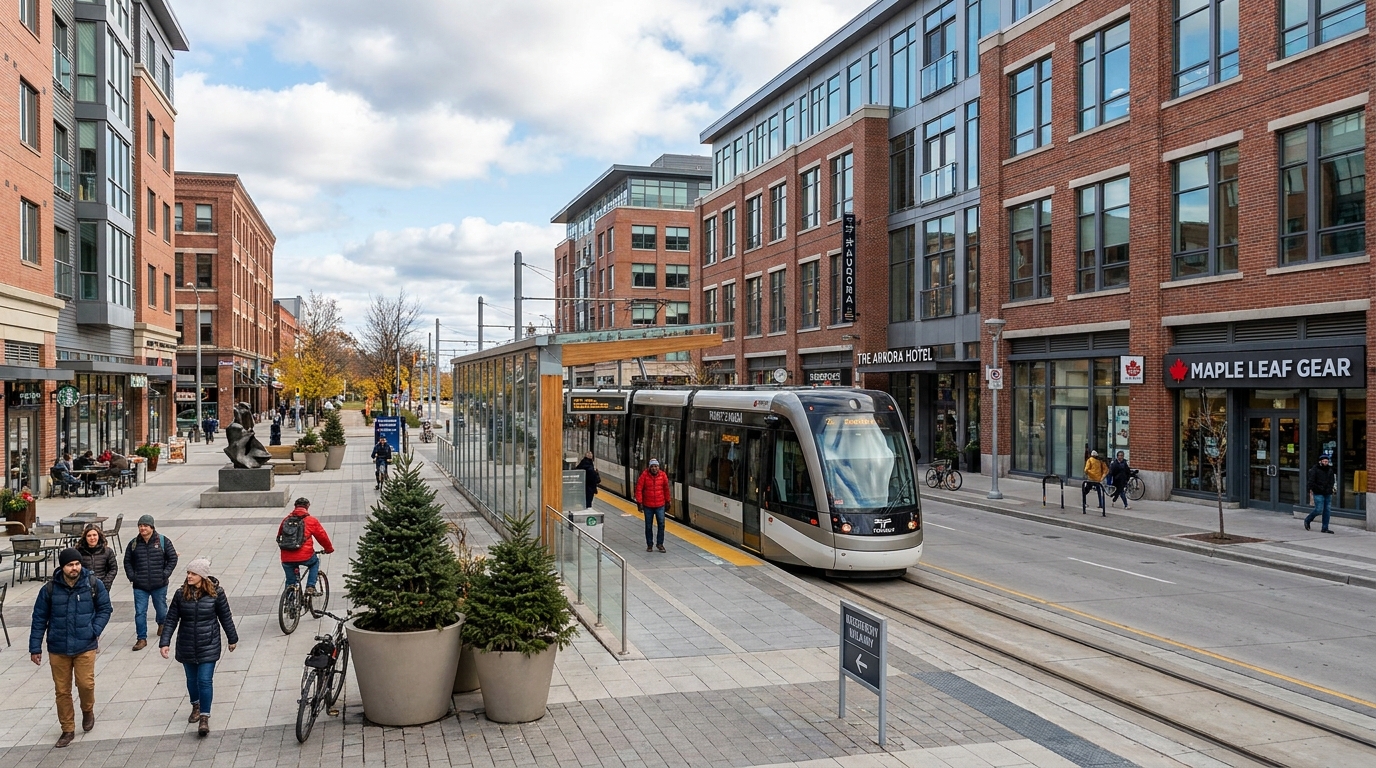
There is also a land efficiency argument. In high growth urban regions, developable land is too scarce and too valuable to be used in simplistic ways. Every major site must carry more than one responsibility. It must create tax value, social value, transportation value, climate value, and economic value at the same time. Tourism can absolutely be part of that equation, but only if it is designed to support complete communities rather than stand apart from them.
Transit Oriented Tourism Will Define the Most Competitive Projects
Mobility is becoming one of the clearest dividing lines between outdated tourism models and future ready ones. A destination that relies primarily on private vehicles is increasingly vulnerable. It consumes more land for parking, creates heavier infrastructure demands, worsens congestion, and often undermines the visitor experience it is trying to sell. By contrast, transit oriented tourism districts are more compact, more accessible, and more aligned with climate and livability goals.
This trend is likely to strengthen through 2025 and 2026. Airport linked development, intermodal hubs, rail connected entertainment districts, and walkable waterfront precincts all point in the same direction. Transport Canada has emphasized long term infrastructure investment that supports sustainability and economic performance, and airports are becoming increasingly important as development anchors rather than simply transportation facilities. In many regions, the next major tourism district may not revolve around a remote resort model. It may revolve around a mobility node.
The implications are significant. Transit access expands labour catchment areas and reduces dependence on expensive parking infrastructure. It improves the feasibility of mixed use development by making residential and hospitality uses more compatible on the same site. It also enables more equitable access to amenities for nearby communities. A district that can only be comfortably accessed by car tends to function as a private enclave. A district integrated with transit has a better chance of becoming part of the city.
There is also a brand advantage. More visitors are now evaluating destinations through the lens of convenience, walkability, and environmental responsibility. A place that allows a traveler to arrive by air or rail, connect to local transit, walk through attractive public spaces, stay in a low carbon building, and access authentic cultural experiences without excessive car dependence will increasingly outperform fragmented and inconvenient alternatives. Sustainability and competitiveness are no longer opposing ideas. They are converging.
For municipalities, this means transportation planning cannot trail tourism approvals. It must shape them. The strongest projects will be those that align site density, visitor capacity, event programming, road management, active transportation, and transit service from the earliest concept phases. When transportation is left as a downstream issue, the result is usually a district that costs more to fix than it did to build.
Climate Resilience Is Now a Core Development Requirement
Sustainable tourism can no longer be defined by marketing language or superficial environmental features. Climate resilience now sits at the center of serious project feasibility. Many of the locations most attractive for tourism development, including waterfronts, mountain regions, forested landscapes, and high amenity urban districts, are also exposed to climate related risks such as flooding, extreme heat, wildfire impacts, water stress, and infrastructure disruption. A project that ignores those risks is not visionary. It is financially and socially fragile.
This is where urban development discipline matters. Climate resilient tourism projects must think in systems. Buildings matter, but so do district energy, stormwater management, shaded public realm, emergency access, ecological buffers, and durable utility infrastructure. Low carbon construction also plays a growing role, both because governments increasingly expect it and because lifecycle costs and climate accountability are becoming more material in investment decisions.
The federal policy direction in Canada supports this transition. Build Canada Homes has been framed around modern methods of construction and low carbon climate resilient materials and methods. While the initiative is housing focused, its broader message is that large scale development supported by public policy will increasingly be judged on resilience, emissions, and long term value. Tourism projects operating in major urban regions will not be insulated from those expectations. If anything, they may face even greater scrutiny due to their visibility and land use impact.
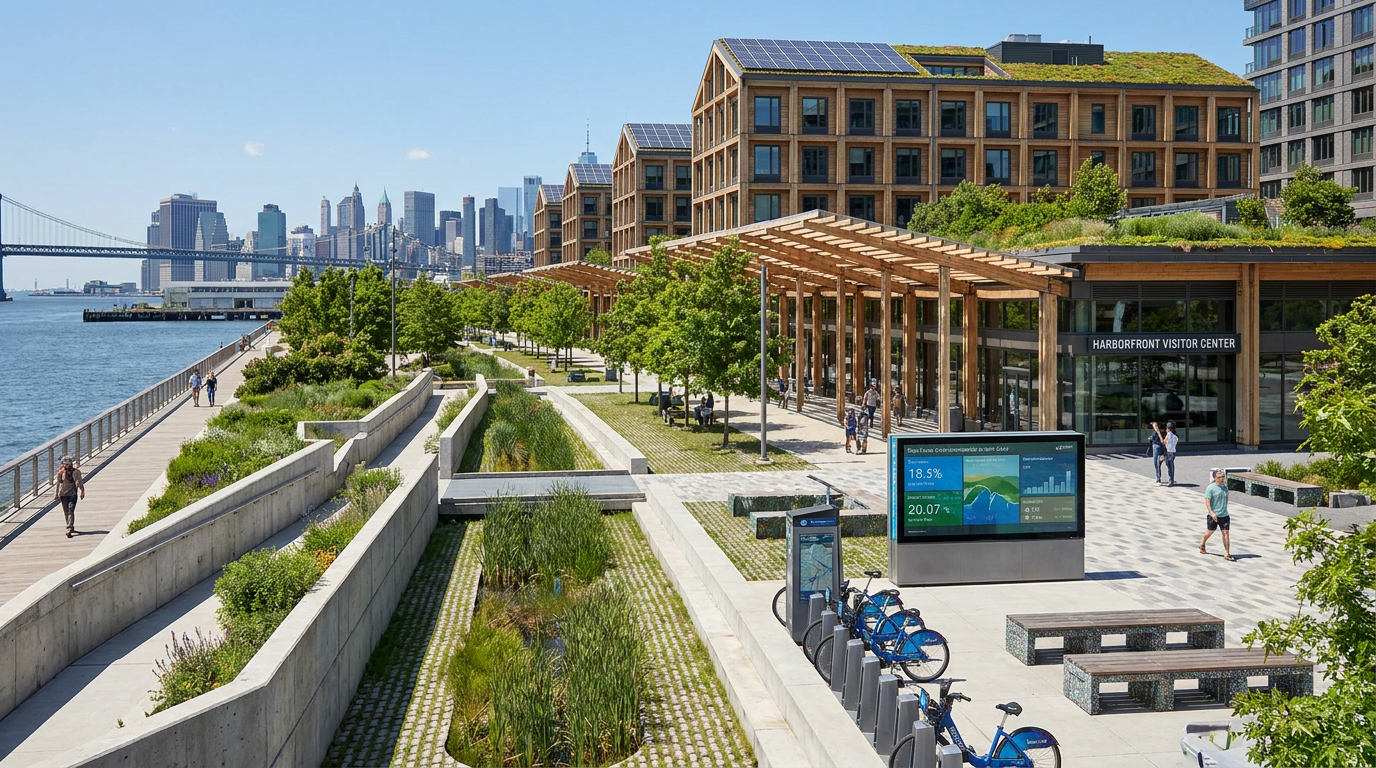
Developers who understand this early will be better positioned. Climate resilience should be embedded in site selection, master planning, engineering, phasing, and operating strategy. It should also be visible to the public. A resilient district does not only protect asset value. It builds trust by showing that long term stewardship has been taken seriously. In an era of growing environmental risk, that kind of credibility will matter more in entitlement, financing, and public acceptance.
Indigenous Led Tourism Is Reshaping the Development Conversation
One of the most important opportunities in Canadian tourism development is the rise of Indigenous tourism and community led destination building. This is not a niche side story. The federal government has stated that Indigenous tourism generated an estimated $3.7 billion in revenue, contributed $1.6 billion to GDP, and supported about 34,700 jobs in Canada. Those figures make it clear that Indigenous tourism is already a meaningful part of the economy and a major area of future growth.
What makes this especially relevant to sustainable mega projects is that Indigenous tourism often advances a fundamentally different development model. Rather than treating local culture as a design motif layered onto externally controlled real estate, community led tourism places ownership, narrative, stewardship, and benefit sharing closer to the people whose place based identity gives the project real meaning. That distinction matters economically, culturally, and ethically.
For major projects, this creates a powerful lesson. Authenticity cannot be manufactured through architecture alone. It emerges from governance, partnership, land relationships, employment pathways, cultural authority, and long term community participation. A tourism district that incorporates Indigenous design elements without Indigenous leadership may look progressive in branding. A district that builds real partnership, revenue sharing, procurement opportunities, and cultural governance creates lasting value.
There is also a broader national significance. As Canada continues to think more seriously about economic reconciliation, tourism developments provide a visible platform for doing things differently. They can support Indigenous entrepreneurship, interpretation, land based programming, public education, and destination differentiation in ways that conventional development often misses. In many cases, these partnerships can also improve environmental stewardship because they reconnect development decisions to longer time horizons and place based knowledge.
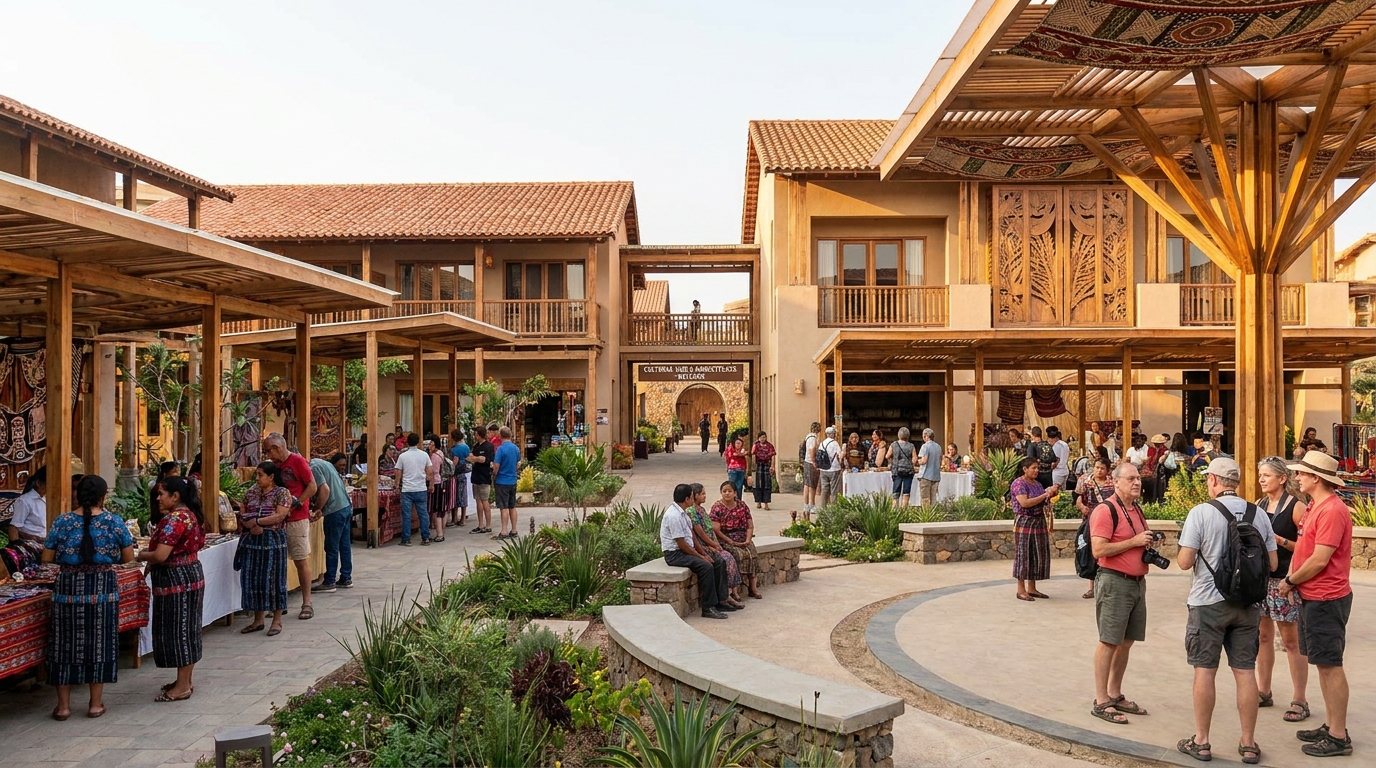
Future mega projects should therefore think beyond consultation and move toward co creation where appropriate. That may include Indigenous led components within larger districts, joint ventures, cultural destination anchors, stewardship roles in public realm design, and direct economic participation. In a competitive market, this is not only the right approach. It is also a stronger one, because places with genuine identity outperform places built on generic formulas.
The Risks Are Real: Overtourism, Housing Pressure, and Community Pushback
It would be a mistake to present tourism development as inherently beneficial. Public skepticism exists for real reasons. Across global urban markets, weakly planned tourism growth has been associated with housing affordability pressures, short term rental distortions, congestion, public space overcrowding, environmental degradation, and the erosion of local commercial character. North American cities are not immune to those concerns. In fact, many are entering the same debates as visitor volumes recover and urban land competition intensifies.
What matters is that these outcomes are not inevitable. They are governance outcomes. The UNWTO and related research on city tourism performance has increasingly emphasized that destination success should be measured through sustainability criteria, resident experience, and management quality rather than simple visitor growth. That is an important shift because it reframes the objective. The goal is not to maximize arrivals at any cost. The goal is to optimize value while protecting place.
From a development perspective, this requires better controls and better metrics. Zoning must anticipate visitor pressure and land use conflicts. Short term accommodation rules must align with housing policy. Infrastructure capacity must be assessed honestly, not assumed. Environmental review must account for cumulative effects. Public consultation must happen early enough to influence form and program, not after the concept is effectively locked. Benefit sharing mechanisms should be tangible and trackable so communities can see what they are receiving in return for growth.
Carrying capacity also needs to be taken more seriously. Bigger projects are not always better. A successful mega project is not simply the one with the tallest hotel tower, the largest entertainment offer, or the biggest annual attendance target. It is the one that fits the capacity of the site, transportation network, environment, and surrounding neighbourhoods while still generating strong returns. Scale without fit creates backlash. Scale with alignment creates durability.
Developers and governments should be candid about this. The future of tourism development will not be secured by promising that every project is a universal good. It will be secured by demonstrating that tradeoffs have been measured, that mitigation is funded, and that local communities are not being treated as an afterthought in the pursuit of visitor revenue.
What Sustainable Tourism Mega Projects Should Actually Include
If the industry is serious about a better model, then the content of that model has to be clear. Sustainable tourism mega projects need to move beyond slogans and into specific design and governance choices. While every market is different, there are several recurring elements that will likely define the strongest projects in Canada and North America over the next decade.
-
Mixed use land planning that combines hospitality with residential, employment, retail, recreation, and public amenities. This reduces single use risk and supports year round activity.
-
Transit and mobility integration through rail, bus rapid transit, airport connections, active transportation, and demand management strategies that reduce auto dependence.
-
Housing integration including workforce housing, purpose built rental, and where feasible mixed income or affordable components that support labour stability and community retention.
-
Climate resilient design that addresses flood risk, heat, water management, energy efficiency, emissions, and durable infrastructure performance over time.
-
Community benefit structures such as public space delivery, local hiring commitments, procurement pathways, cultural programming, and measurable resident outcomes.
-
Indigenous partnership models that move beyond symbolism and toward real participation, ownership, stewardship, and long term economic value creation.
-
Strong governance and data with metrics for visitor impact, resident satisfaction, transportation performance, environmental outcomes, and local economic benefit.
These elements are not abstract ideals. They are practical responses to the realities of modern development. Investors need resilience. Municipalities need infrastructure efficiency. Residents need livability. Employers need labour access. Visitors need quality experiences. The best projects are the ones that understand these needs are interconnected rather than competing.
Airport Districts, Waterfronts, and Urban Regeneration Corridors
Looking ahead, several project typologies appear particularly well suited to this integrated approach. Airport linked districts are one of them. Historically, many airport zones were dominated by low density hotels, parking, warehousing, and road infrastructure. That pattern is changing. As airports become stronger economic anchors and transport nodes, surrounding land can support more ambitious combinations of hospitality, office, entertainment, logistics, residential uses, and convention functions. If transit connections improve, these districts may evolve into major regional gateways rather than peripheral service areas.
Waterfronts are another major opportunity, though also one of the most sensitive. Tourism often gravitates to waterfront sites because they offer identity, visibility, and public appeal. But they also demand careful climate adaptation, ecological stewardship, and public access protection. The strongest waterfront tourism developments will be those that prioritize flood resilience, continuous public realm, mixed use intensity, and cultural programming rather than privatized spectacle. In many cities, the waterfront is too important to be left to a single purpose development logic.
Urban regeneration corridors also deserve attention. Former industrial lands, underused rail precincts, obsolete commercial zones, and aging event districts can all be repositioned through tourism linked development if the plan is ambitious enough. In these contexts, tourism can serve as the catalyst that makes broader regeneration financially feasible. A cultural venue, destination attraction, or event program can help unlock the demand needed to support housing, parks, and infrastructure renewal. But again, the principle is integration. The tourism component should be the spark, not the entire fire.
These typologies are especially relevant in a Canadian context because many high growth metropolitan regions are searching for ways to intensify land use while improving quality of life. Large tourism linked developments can help meet that challenge if they are positioned as complete district strategies. If they are conceived only as visitor magnets, they may miss the larger opportunity.
How Cities and Developers Can Align on a Better Model
Too often, public and private sectors approach tourism projects with mismatched timelines and incentives. Developers may focus on entitlement speed, capital stack certainty, and anchor tenant commitments. Municipalities may focus on infrastructure burden, community reaction, and political optics. Both perspectives are valid, but if they remain disconnected, projects become slower, more contentious, and less coherent.
A better model begins with shared framing. Before debating individual building envelopes or use permissions, cities and proponents should agree on what the district is meant to achieve. Is the objective to increase year round economic activity in an underperforming area? Is it to leverage transit investment? Is it to support housing delivery while building a new destination? Is it to regenerate public waterfront access? Once those goals are explicit, the conversation becomes more strategic and less reactive.
Phasing is also critical. Many mega projects fail not because the vision is wrong, but because early phases do not establish the public trust needed to sustain later phases. If the first delivery only captures private upside while delaying parks, transit, housing, or cultural amenities to an uncertain future, skepticism hardens quickly. By contrast, early visible public benefits can build momentum. That may include a transit improvement, a waterfront promenade, a cultural venue, a community market space, or the first phase of housing alongside hospitality uses.
Financial tools matter as well. Public land strategies, tax increment approaches, infrastructure partnerships, and flexible financing can all improve the feasibility of integrated development. The key is making sure these tools support clear public outcomes. If a project receives public support, then the public should be able to identify what it is receiving in return, whether that is affordable housing, mobility upgrades, resilient infrastructure, or community amenities.
The final ingredient is measurement. The future of tourism governance is moving toward smarter metrics and stronger accountability. Cities and project sponsors should track not only visitation and spending, but also resident sentiment, local business participation, mode share, housing outcomes, emissions, and public space performance. What gets measured gets managed. In this sector, that principle is no longer optional.
A Strategic Vision for the Next Decade
The future of tourism developments will belong to projects that understand place as a long term asset rather than a short term product. That means shifting from isolated attractions to integrated districts, from visitor counts to value creation, from image driven sustainability to operational resilience, and from externalized benefits to community centered growth. In practical terms, it means that tourism mega projects must increasingly function as urban strategy.
Canada is well positioned for this shift. Visitor activity is recovering. Tourism spending and GDP are growing. Indigenous tourism is gaining strength. Federal policy is placing more emphasis on sustainable communities, housing delivery, and climate conscious development. At the same time, cities are under pressure to do more with scarce land, rising infrastructure costs, and public demand for better growth outcomes. These conditions create a clear imperative. Future tourism developments must contribute to complete communities, not compete with them.
There is a real opportunity here. A well planned tourism mega project can be more than a destination. It can be a catalyst for transit, public realm, housing integration, cultural visibility, and regional economic diversification. It can make a neighbourhood more connected, a waterfront more accessible, an airport district more productive, or an underused corridor more vibrant. It can create local jobs while improving the quality of place. But that outcome is earned through discipline, not assumed through scale.
For developers, the strategic takeaway is straightforward. The most valuable tourism projects of the future will be those that solve multiple urban problems at once. For governments, the takeaway is equally clear. Approvals and policy support should favor projects that align tourism with housing, mobility, resilience, and local benefit. For communities, the opportunity is to demand more from growth and to insist that destination development strengthens the places where people actually live.
The next generation of mega developments will not be judged only by skyline impact or visitor volume. They will be judged by whether they leave cities better than they found them. That is the standard sustainable tourism should meet. It is also the clearest path to building destinations with lasting economic and civic value.



No Comment! Be the first one.