



Cities across Canada and the United States are confronting the same structural challenge: population growth is outpacing the delivery of housing that is both attainable and well-located. For years, the conversation around housing focused heavily on ownership, suburban expansion, and the pace of detached home construction. That framework is no longer sufficient. In today’s market, multi-family developments have become central to any serious urban housing strategy because they provide the scale, flexibility, and land efficiency required to address shortages in growing metropolitan regions.
Table Of Content
- What Multi-Family Development Really Means
- Why Multi-Family Housing Is Now Central to Urban Housing Supply
- The Strategic Case: Land Efficiency, Portfolio Resilience, and Long-Term Growth
- Multi-Family as an Infrastructure Strategy
- The Rising Importance of Purpose-Built Rental Housing
- The Missing Middle Opportunity
- Design Matters: Unit Mix, Livability, and Community Fit
- Policy, Zoning, and the Feasibility Problem
- Market Timing and the Current Development Cycle
- How Multi-Family Development Affects Local Communities
- What Strong Multi-Family Strategy Looks Like
- The Long-Term Outlook for Multi-Family Development
From an executive perspective, the importance of multi-family housing goes beyond simple unit counts. It sits at the intersection of land economics, municipal planning, infrastructure efficiency, and long-term portfolio resilience. The strongest multi-family markets are supported by durable fundamentals such as urbanization, changing household formation, a sustained shortage of rental housing, and affordability barriers that continue to put detached ownership out of reach for many households. In practical terms, this means that multi-family housing is no longer a niche segment or a secondary product class. It is a strategic asset category that helps cities grow more intelligently and helps developers respond to demand with a more scalable model.
The numbers reinforce that shift. In Canada’s six largest census metropolitan areas, apartment starts reached 49,172 units in the first half of 2024 and represented 72 percent of all new home construction in those markets. Rental apartments accounted for a record 47 percent of apartment starts during that same period, showing how sharply development has moved toward higher-density and more tenure-flexible housing. CMHC has also reported that rental construction drove growth in 2025, with rentals accounting for more than 80 percent of all housing starts nationally. Those figures are not short-term anomalies. They reflect a structural realignment in how new housing supply is being delivered.
This article looks at multi-family development through a strategic lens. It explains what multi-family housing actually includes, why it has become so important to urban housing solutions, how policy and financing shape project feasibility, and what local communities should understand about its long-term impact. The central point is straightforward: well-planned multi-family development is one of the most effective ways to expand housing choice, support infrastructure efficiency, and build more resilient cities over time.
Multi-family housing is not only a response to a housing shortage. It is a long-term urban growth strategy that aligns land use, infrastructure, transportation, and economic resilience.
What Multi-Family Development Really Means
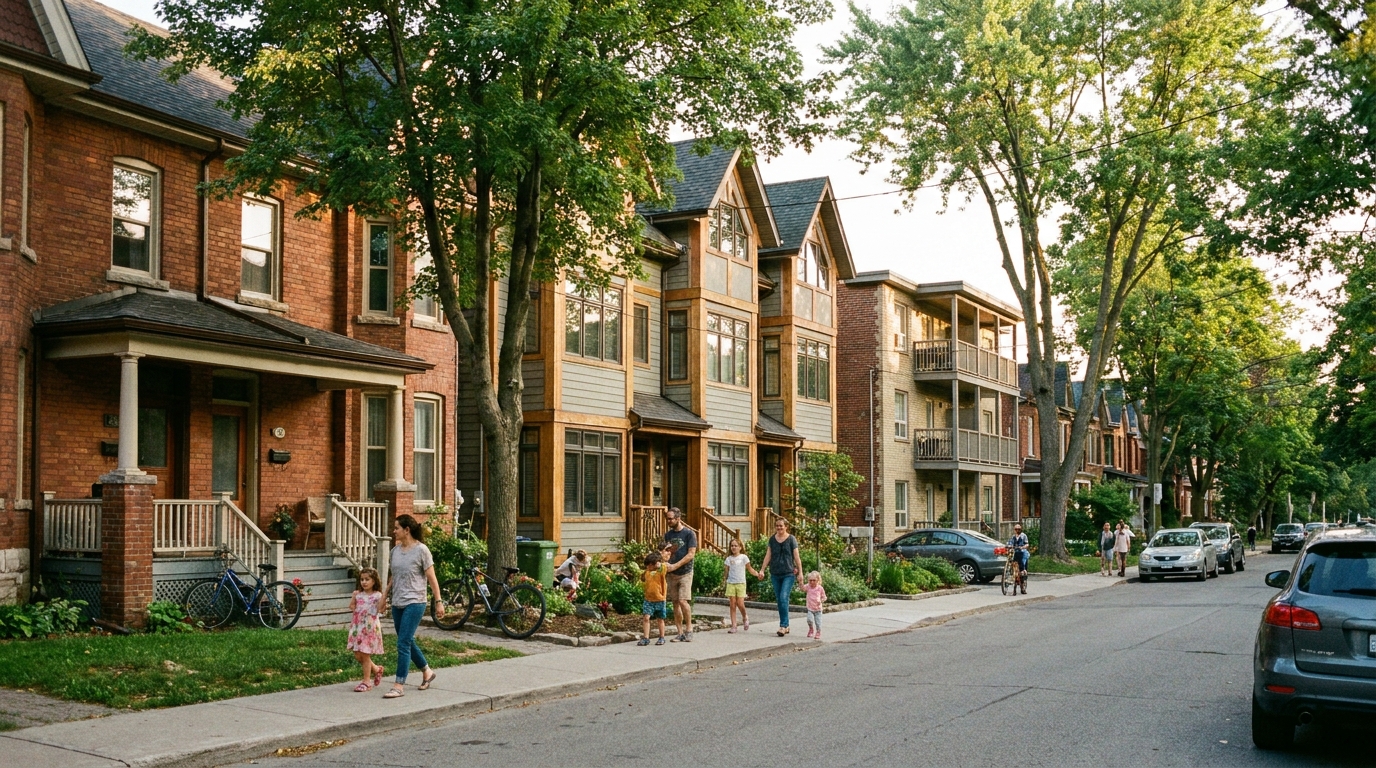
One of the most persistent misconceptions in housing debates is that multi-family development means high-rise towers only. That assumption narrows the conversation and makes urban growth seem more disruptive than it needs to be. In reality, multi-family housing includes a broad range of building forms and scales, many of which fit naturally into existing neighborhoods when planned well. The term covers everything from duplexes and multiplexes to stacked townhouses, row homes, low-rise apartments, mid-rise rental buildings, and larger urban towers.
CMHC’s 2025 analysis of the missing middle is especially useful here because it clarifies what many communities overlook. Missing-middle housing includes accessory suites, multiplexes, row homes, stacked townhouses, and low-rise apartments of four storeys or less. These forms matter because they offer a bridge between detached housing and high-rise living. They can deliver more homes on expensive urban land while still providing family-sized layouts, direct entries, outdoor space, and neighborhood-scale design that feels compatible with existing streetscapes.
That distinction is strategically important. A healthy city does not rely on a single housing product type. It needs a spectrum of choices for students, young professionals, newcomers, families with children, seniors, and households in transition. Studio apartments near transit will serve one segment well, but they will not solve the broader housing challenge on their own. A resilient housing system includes rental apartments, ownership condominiums, family-sized units, accessible units, and lower-rise multi-family forms that can be integrated into established urban areas.
When leaders frame multi-family housing too narrowly, they often create avoidable resistance. Residents imagine only skyline change, congestion, and large-scale intensification. A more accurate picture shows something much broader: courtyard apartments on underused corridors, row homes replacing obsolete lots, adaptive reuse of commercial buildings, and mid-rise rental projects near transit or employment nodes. These are not fringe interventions. They are the practical building blocks of a more balanced urban future.
Why Multi-Family Housing Is Now Central to Urban Housing Supply
The strongest argument for multi-family development is scale. Detached housing can add supply at the margin, but it cannot address urban housing shortages at the speed or volume required in major metropolitan areas where land is scarce, infrastructure is expensive, and demand is persistent. Multi-family projects use land more efficiently, allow more homes to be delivered in high-opportunity locations, and create a supply model that is better aligned with contemporary population growth.
CMHC estimates that restoring affordability to 2019 levels by 2035 will require between 430,000 and 480,000 new housing units per year in Canada over the next decade. That level of output is not realistic if cities rely primarily on low-density forms. The supply response must include a large pipeline of apartments, purpose-built rental, and missing-middle housing. This is one reason apartment construction now represents such a large share of new starts in the country’s largest urban markets. The demand for urban housing has simply become too large, and the cost of well-located land too high, for lower-density forms to carry the burden alone.
The same broad pattern can be seen in the United States. Federal data show that 608,000 multifamily units were completed in 2024, the highest level in decades. That tells us two things. First, the development industry continues to see multifamily as a viable long-term response to demand, even in a more difficult financing environment. Second, cities across North America are moving through a period where higher-density housing is becoming a defining part of the urban growth model rather than an occasional supplement to it.
There is also a deeper market logic behind this shift. Affordability constraints have changed household behavior. More people are renting for longer periods, delaying ownership, living in smaller households, or seeking homes closer to employment and transit rather than larger homes farther from the urban core. Multi-family housing aligns with those realities because it can support a range of household sizes and income bands while placing more residents near jobs, services, and public transportation.
The Strategic Case: Land Efficiency, Portfolio Resilience, and Long-Term Growth
Executives evaluating multi-family opportunities tend to focus on one question above all others: does the product hold its value across multiple market cycles? In urban housing, multi-family has become compelling because its long-term demand drivers are broad and durable. Population growth, immigration, household formation, ownership affordability challenges, and constrained rental supply create a foundation that is difficult to ignore. While short-term conditions may fluctuate, the underlying need for well-located multi-family housing remains strong.
Land efficiency is one of the most important contributors to that resilience. In high-cost urban markets, land is too valuable to be underutilized indefinitely. A well-conceived multi-family development spreads land cost across more units, which can improve the viability of a site while also supporting municipal goals around density and infrastructure efficiency. This does not mean every parcel should become a tower. It means cities and developers must be realistic about matching land use intensity to market demand, transit access, servicing capacity, and long-term growth plans.
There is also a portfolio advantage to multi-family housing, especially in purpose-built rental. Rental assets can provide more stable long-term income streams than for-sale product cycles, assuming the project is properly capitalized and the location fundamentals are sound. Condominium and rental apartments are not interchangeable because they have different economics and risk profiles, yet both can play useful roles in the market. From a strategic standpoint, developers that understand tenure mix, unit mix, and absorption timing are better positioned to build resilient urban portfolios.
Finally, multi-family development supports city growth without requiring the same rate of outward expansion. That matters because urban sprawl creates long-term infrastructure obligations that are often expensive to service and difficult to maintain. Sewer, water, roads, schools, and transit all become more costly on a per-unit basis when growth is dispersed. Multi-family development, particularly in infill and transit-oriented settings, allows cities to accommodate more residents while leveraging existing or planned infrastructure more effectively.
Multi-Family as an Infrastructure Strategy
Housing and infrastructure are often treated as separate policy conversations, but they are deeply connected. A city’s ability to grow efficiently depends on how well it aligns land use with transportation, utilities, schools, healthcare access, parks, and public services. In that context, multi-family development should be understood not only as a housing solution but also as an infrastructure strategy. It puts more households in locations where public investment can serve more people with greater efficiency.
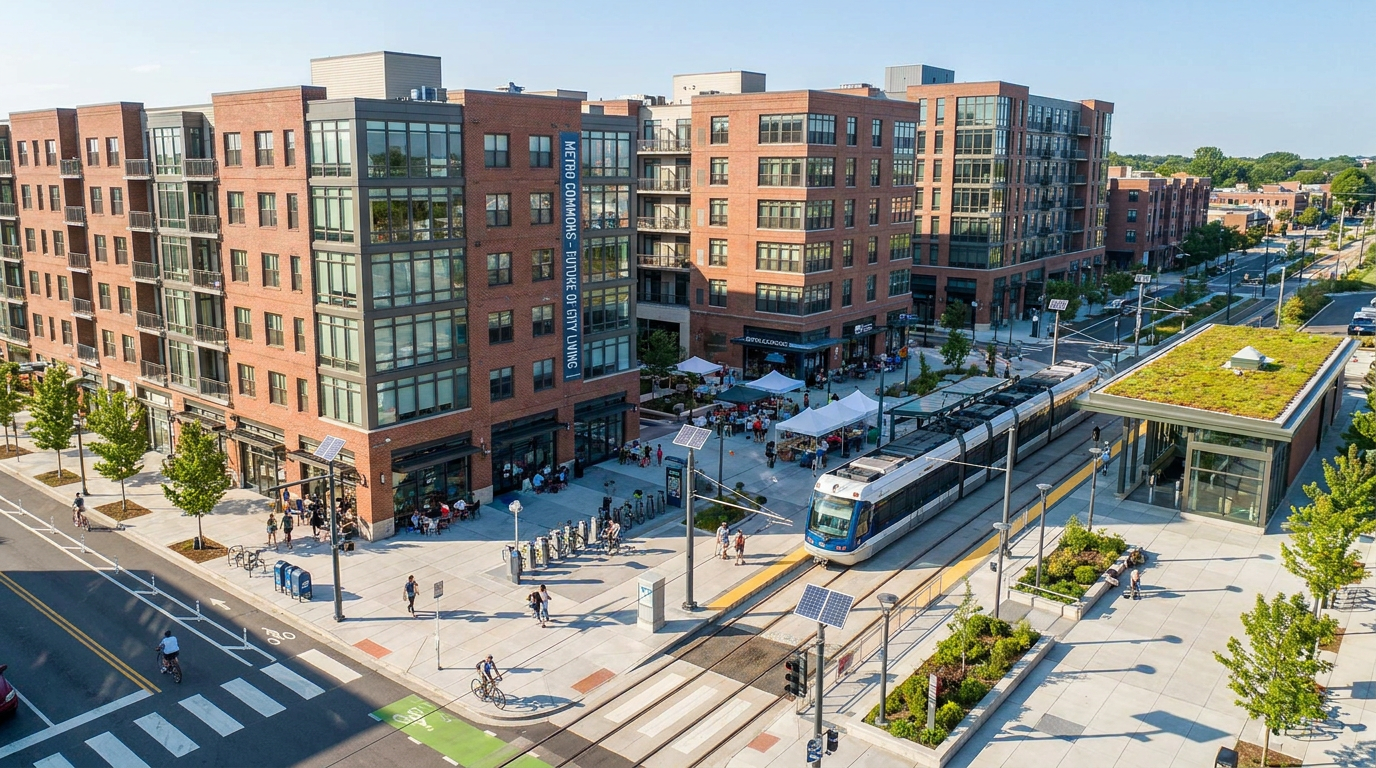
This is especially true in transit-oriented development. When mid-rise or higher-density residential projects are concentrated near rapid transit stations, major bus corridors, or walkable employment nodes, the city benefits in several ways. Transit ridership becomes more reliable, commuting distances may fall, local retail can strengthen, and the public return on infrastructure investment improves. For residents, the benefits are equally tangible: lower transportation costs, better access to jobs and services, and more daily convenience.
There is a climate and sustainability dimension as well. Higher-density housing in well-connected locations can reduce per-unit land consumption and support lower-carbon travel patterns. That does not automatically make every project sustainable, but it does create the conditions for better environmental performance than a growth model built primarily around long-distance car dependency. In other words, planning for multi-family housing is often planning for a city that can function more efficiently over the long term.
The Rising Importance of Purpose-Built Rental Housing
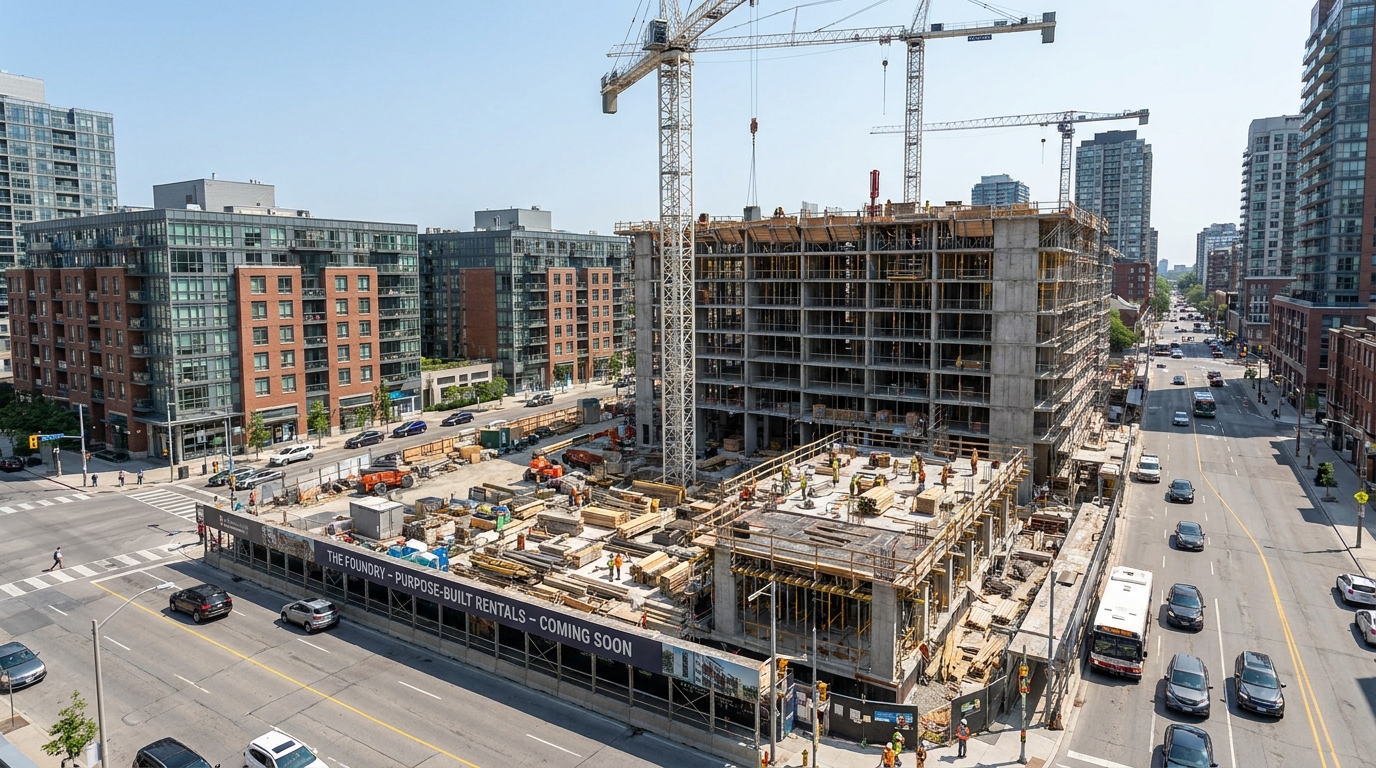
One of the clearest shifts in the market is the growing importance of purpose-built rental housing. This trend is particularly significant in Canada, where rental supply has lagged demand for years and where affordability pressures have pushed more households into the rental market for longer durations. The fact that rental construction made up the highest share of apartment starts on record in the six largest Canadian metropolitan areas in the first half of 2024 speaks to a major change in development priorities.
Purpose-built rental is important because it offers a more durable rental supply base than units that enter the market through investor-owned condominiums. While condominium rentals can help fill gaps, they are not a complete substitute for professionally managed rental buildings designed specifically for long-term occupancy. Purpose-built rental typically brings more predictable operations, better retention planning, and more structured asset management. For growing cities, that stability is essential.
Public financing has also become a major determinant of what gets built. Since 2017, more than 200,000 new purpose-built rental apartment units in Canada have been funded through CMHC’s multi-unit mortgage loan insurance products and the Apartment Construction Loan Program. That level of support demonstrates how financing programs can materially shape the project pipeline. In markets where private economics are strained by land costs, development charges, or interest rates, public lending tools and incentives can be the difference between a project moving ahead or remaining stalled.
Still, the market is not uniform. Conditions for purpose-built rental have improved in some regions as construction cost growth moderates and government support remains in place, but cities such as Toronto and parts of British Columbia continue to be challenging because of high land and development costs. This is a reminder that rental demand alone does not guarantee feasibility. Strong fundamentals must be matched by workable approvals, realistic municipal cost structures, and financing conditions that allow projects to pencil out.
The Missing Middle Opportunity
If high-rise apartments represent one pillar of multi-family strategy, missing-middle housing represents another. This category deserves far more attention because it addresses one of the market’s biggest blind spots: the shortage of housing options between detached homes and towers. Many families need more space than a studio or one-bedroom apartment, but cannot afford detached ownership in core urban markets. Missing-middle housing offers a practical answer by combining moderate density with more flexible layouts and lower per-unit land costs than detached homes.
CMHC found that missing-middle starts across Canada’s six major cities rose by an average of 5 percent annually from 2018 to 2023, then surged 44 percent from 2023 to 2024. That acceleration is strategically significant because it suggests policy reforms and market adaptation are beginning to open the door to more diverse housing forms. Cities such as Calgary and Edmonton have seen particularly strong activity in this area, reinforcing the idea that lower-rise density can be an effective supply tool when land-use rules permit it.
Missing-middle projects often have another advantage: they can be faster and less capital-intensive to deliver when rezoning is not required. Smaller building forms may face fewer technical and structural complexities than large towers, and they can be integrated into infill sites, corridors, and neighborhood edges with less disruption. For developers, this can create a more manageable execution profile. For municipalities, it offers a way to add supply incrementally across many sites rather than concentrating all growth pressure into a limited number of major redevelopment parcels.
That said, the opportunity only materializes when planning systems allow it. If every multiplex or low-rise apartment proposal triggers a prolonged approval process, the supposed advantage disappears. The lesson for policymakers is clear: legalizing a housing form on paper is not enough. The full system, including zoning, servicing, parking requirements, development charges, and permitting timelines, must support feasible delivery.
Design Matters: Unit Mix, Livability, and Community Fit
Multi-family success is not measured by density alone. Good projects are also defined by livability, design quality, and how well they respond to the needs of actual households. That begins with unit mix. A city that produces only micro-units may increase supply numerically but still fail to meet family housing demand. A more strategic approach includes a range of unit sizes, from smaller homes for singles and couples to larger two-bedroom and three-bedroom units for families, multi-generational households, and long-term renters.
Design also matters at the street level. Multi-family developments that engage the public realm through quality entrances, active frontages, landscaping, and pedestrian-friendly design tend to generate better long-term outcomes than projects that turn inward or treat the surrounding neighborhood as an afterthought. Residents do not simply occupy units; they inhabit blocks, corridors, and communities. The quality of that broader experience influences perception, desirability, and neighborhood acceptance.
There is a common fear that density inevitably undermines community character. In practice, the opposite can be true when design is handled well. Thoughtful massing, transitions between building heights, durable materials, and attention to public space can help new development strengthen a neighborhood rather than weaken it. This is one reason missing-middle and mid-rise forms are so valuable. They allow density to increase in a way that often feels more gradual, contextual, and accessible to the public.
At a strategic level, adaptable design is increasingly important. Projects that can accommodate different household sizes, tenure structures, or evolving demographics may offer stronger long-term performance. In uncertain market conditions, flexibility is a competitive advantage. Buildings designed with durable layouts, efficient floorplates, and market-responsive unit mixes are more likely to remain relevant across changing cycles.
Policy, Zoning, and the Feasibility Problem
For all the demand supporting multi-family housing, the sector still faces serious constraints. In many cities, the main issue is not whether multi-family housing is needed. It is whether the regulatory and financial environment allows it to be delivered at scale. Zoning restrictions, approval delays, infrastructure bottlenecks, development charges, and community opposition can all undermine feasibility, even in neighborhoods where demand is obvious.
This is where executive realism matters. It is easy to speak enthusiastically about density and supply, but projects only move forward when entitlement, construction, and financing conditions align. In high-cost markets, even a strong rental outlook may not offset elevated land values, borrowing costs, labor shortages, and municipal fees. That helps explain why some markets show robust demand but relatively weak new project viability. Housing need does not automatically translate into buildable economics.
Policymakers therefore have a critical role. Upzoning, parking reform, faster approvals, and coordinated servicing investments can materially change the supply pipeline. Inclusionary requirements and affordability goals may be important, but they must be structured carefully so they do not unintentionally prevent projects from being built at all. The most effective housing policy is usually not the most symbolic. It is the policy that consistently turns viable sites into completed homes.
There is also a sequencing issue that cities must address. If growth is encouraged without corresponding investments in transit, utilities, schools, and public amenities, resistance becomes more likely and project quality can suffer. On the other hand, if infrastructure is planned with realistic assumptions about density, multi-family housing can be integrated more smoothly into long-term growth frameworks. The best urban strategies treat housing and infrastructure as co-dependent rather than separate silos.
Market Timing and the Current Development Cycle
One of the more important realities in 2025 is that multi-family development is moving through a supply-heavy phase in several North American markets. Completions have risen, developer sentiment has become more cautious, and some regions are seeing slower rent growth or higher vacancy rates as new inventory is absorbed. That has led some observers to question whether the sector is weakening. Strategically, that interpretation is too simplistic.
Short-term softening does not invalidate the long-term thesis for multi-family housing. In fact, it often reinforces the importance of disciplined underwriting and phased execution. When a market moves from extreme undersupply toward a more balanced condition, some moderation in rents or vacancies is a healthy sign. It suggests supply is beginning to catch up, even if affordability remains strained in the most expensive neighborhoods. A more balanced market is generally better for cities, residents, and long-term institutional confidence than one defined by chronic scarcity.
The more relevant lesson is that not all projects should be delivered the same way or on the same timeline. Developers need strong local market analysis, realistic assumptions about absorption, and enough flexibility to adapt product positioning as conditions evolve. Labor constraints, financing costs, and municipal delays remain real risks. The winners in this cycle are likely to be groups that combine conviction in long-term urban demand with discipline in capital structure, execution timing, and product-market fit.
For investors and city builders alike, this is a period that rewards patience and selectivity. The sector remains essential, but not every site is viable and not every market is synchronized. Strategic planning matters more than ever.
How Multi-Family Development Affects Local Communities
Public discussion about multi-family housing often centers on disruption, yet the long-term community benefits are substantial when projects are planned well. First, additional housing supply creates more choice. That matters not only for new residents but also for existing community members at different life stages. Young adults can remain in the neighborhoods where they grew up, seniors can downsize without leaving familiar areas, and families can find homes closer to schools, transit, and support networks.
Second, multi-family development can strengthen local commercial corridors and service ecosystems. More residents create demand for shops, childcare, restaurants, healthcare services, and neighborhood amenities. In many urban areas, the viability of main streets depends on having enough nearby households to sustain businesses year-round. Density, in this sense, is not just a housing issue. It is part of the economic foundation of vibrant communities.
Third, added supply can improve market balance over time, even if the effect is uneven across submarkets. One of the most important misconceptions in housing is that more supply should immediately reduce rents everywhere. Markets do not work that way, especially in expensive cities with persistent demand. However, rising vacancies and slower rent growth in some areas are meaningful signs that supply is having an impact. Over the long term, a city that consistently builds more housing is typically better positioned than one that constrains supply and allows scarcity to intensify.
Community concern should not be dismissed, but it should be addressed with evidence and design quality rather than broad resistance to change. The real question is not whether neighborhoods will evolve. They will. The question is whether that evolution will be managed in a way that expands opportunity, supports infrastructure, and makes room for future residents as well as current ones.
What Strong Multi-Family Strategy Looks Like
The most effective multi-family strategy is not simply to build more units anywhere possible. It is to build the right mix of housing in the right places under a framework that supports long-term value and livability. That means targeting transit corridors, underused commercial sites, infill parcels, and established urban areas where services already exist or can be expanded efficiently. It also means matching product type to local need, whether that is family-sized rental, missing-middle ownership, seniors housing, or mixed-income urban apartments.
At the development level, strong strategy includes several core principles:
- Disciplined site selection based on transit access, servicing capacity, neighborhood demand, and realistic entitlement risk.
- Thoughtful unit mix that responds to actual household needs rather than relying too heavily on a narrow product type.
- Flexible design that can adapt across tenure structures or changing market conditions.
- Conservative underwriting that reflects interest-rate risk, construction cost volatility, and absorption timing.
- Policy alignment with municipal planning goals, infrastructure capacity, and available incentive programs.
At the city level, strong strategy is equally clear. Municipalities need to legalize more housing forms, accelerate approvals, coordinate infrastructure planning, and reduce unnecessary friction that inflates project risk. They also need to communicate more effectively with residents about why multi-family development is essential. The goal is not density for its own sake. The goal is a housing system that can support economic growth, social mobility, and long-term urban resilience.
The Long-Term Outlook for Multi-Family Development
The long-term outlook for multi-family development remains strong because the structural forces behind it are not going away. Urban populations will continue to grow. Housing affordability challenges will continue to shape household choices. Transit-oriented and infill growth will remain central to climate and infrastructure goals. And cities that fail to add diverse, well-located housing will continue to face worsening shortages, economic strain, and reduced competitiveness.
That does not mean the path forward will be easy. Feasibility remains fragile in many markets, particularly where land costs, development charges, and approval delays make even strong sites difficult to execute. But that is precisely why multi-family housing deserves strategic attention. The sector is too important to leave to fragmented policy, outdated zoning, or short-term thinking. It requires coordinated action from governments, lenders, planners, and developers who understand that the housing question is also a city-building question.
For the development industry, the message is equally clear. Multi-family housing should be approached not only as a response to present demand, but as a long-term platform for urban value creation. The best projects will combine economic discipline with design quality, policy awareness, and a realistic understanding of community context. The best portfolios will balance near-term caution with conviction about where cities are heading over the next decade.
Ultimately, multi-family development is one of the few housing strategies capable of operating at the scale modern cities now require. It adds supply more efficiently, supports rental stability, creates more housing choice, and helps urban growth align with infrastructure and transportation systems. In a market defined by scarcity and rising complexity, that makes multi-family housing not just relevant, but essential.
For city leaders, investors, and communities, the strategic question is no longer whether multi-family developments should be part of the solution. The question is how quickly and how intelligently they can be integrated into a long-term housing vision that is equal to the scale of urban demand. The answer will shape affordability, mobility, and economic opportunity for years to come.


No Comment! Be the first one.