


Modern luxury living has changed in a meaningful way. It is no longer only about impressive square footage, glossy finishes, or rooms that look beautiful but feel distant from everyday life. The most compelling luxury homes today are the ones that support real routines, soothe the senses, and reflect the identity of the people who live there. They feel grounded, graceful, and deeply personal. This is the heart of modern luxury living: it is less about performance and more about presence, and about creating a home that feels like a sanctuary shaped by texture, light, materials, wellness, and the small choices that make daily life easier and more beautiful. In this new vision of luxury, comfort is not a compromise and softness is not an afterthought — a home can be polished and elevated while still feeling warm, quiet, and emotionally restorative.
Table Of Content
- Luxury Today Is About Feeling, Not Just Appearance
- The Rise of Wellness in Modern Luxury Living
- Biophilic Design and the Emotional Value of Nature
- Designing for the Senses Creates True Luxury
- The Power of a Personal Color Palette
- Luxury Kitchens Are About Ritual, Not Just Display
- The Restorative Bedroom as a Luxury Priority
- Spa-Inspired Bathrooms and Everyday Recovery
- Flexible Layouts Reflect Real Life
- Smart Home Comfort Should Be Invisible
- Materials Matter More Than Ever
- How to Avoid Wellness-Washing in Luxury Design
- Creating a Luxury Home That Reflects Your Lifestyle
- Thoughtful Investment in a Changing Market
- Final Thoughts on Modern Luxury Living
That shift is especially relevant across North America, where many homeowners are investing in renovation and remodeling instead of chasing showpiece grandeur. Harvard’s Joint Center for Housing Studies projected a 1.2% increase in U.S. home renovation and repair spending in 2025, while Statistics Canada reported residential renovation costs rose 0.9% in the second quarter of 2025 nationally, with noticeable regional variation. Those numbers tell an important story. People are still willing to invest in their homes, but they are doing so with more thought, more intention, and often a clearer understanding that luxury should improve the experience of living.
It can be sophisticated without becoming sterile. It can be luxurious because of how the morning light enters the bedroom, how a bathroom helps you unwind at night, or how a kitchen encourages family rituals that make the whole home feel alive.
Luxury Today Is About Feeling, Not Just Appearance
For many years, luxury interiors were associated with obvious visual signals. Oversized chandeliers, formal rooms, ornate finishes, and dramatic statements often stood in for status. While those elements still have a place in some homes, the broader definition of luxury has become more emotional and more intimate. Homeowners increasingly want spaces that feel calm and lived in, not just admired from a distance.
This is one reason the idea of quiet luxury resonates so strongly. Quiet luxury is not a fixed style. It is a mindset that favors quality over noise, intention over excess, and depth over display. It might show up as beautifully crafted millwork, exceptional bedding, a hand-finished plaster wall, or a perfectly placed reading lamp beside a favorite chair. None of these choices need to shout in order to feel rich.
The misconception that luxury living is only about expensive finishes is fading. A truly luxurious home can be small, restrained, and practical as long as it feels deeply considered. Proportion matters. Flow matters. Acoustic comfort matters. A room that invites you to exhale can feel more luxurious than one filled with expensive objects that do not support the way you actually live.
Modern luxury succeeds when it reduces friction, supports routines, and creates a sensory experience of ease.
That perspective is particularly powerful now, when so many homeowners want more from their interiors than visual impact. They want homes that help them rest better, connect more easily, host more naturally, and feel more emotionally settled. In other words, they want homes that do something beautiful for their lives.
The Rise of Wellness in Modern Luxury Living
One of the defining ideas shaping luxury home design in 2025 and beyond is wellness. Not wellness as a trend label attached to a few decorative details, but wellness as a real design principle that influences how a home functions and feels. Better sleep, cleaner air, softer acoustics, natural light, and less visual stress are now central to what many people consider luxury.
Research supports this shift. Studies on biophilic design have linked nature-connected environments with measurable emotional and psychological benefits. Health guidance from agencies such as the CDC and NIOSH also reinforces the importance of sleep quality, light exposure, and indoor environmental conditions for health and performance. When translated into home design, these findings suggest something very simple and very profound. A luxurious home should help you feel better in your body and calmer in your mind.
This is why spa-inspired bathrooms, restorative bedrooms, and flexible retreat spaces are becoming such strong expressions of modern luxury. They align beauty with well-being. They also feel relevant to real life. A serene shower with warm lighting and natural stone can be more transformative than a formal entertaining room that sits unused most of the year.
There is also an important distinction to make here. Wellness design is not the same as wellness styling. Adding a few plants or choosing a beige paint color does not automatically create a restorative home. Real wellness-oriented design considers the whole environment, including daylight, air quality, acoustics, thermal comfort, ergonomics, and layout. The most luxurious homes often get these invisible details right.
Biophilic Design and the Emotional Value of Nature
Among the strongest influences on modern luxury living is biophilic design. At its core, biophilic design is about strengthening the relationship between people and the natural world within built spaces. In a luxury home, this can be expressed in elegant, subtle ways that feel refined rather than theme-driven.
Natural materials are often the first layer. Wood with visible grain, linen with gentle movement, stone with organic variation, wool, clay, and leather all contribute to a space that feels tactile and grounded. These materials create emotional warmth because they carry the visual complexity of nature. They age beautifully, and they invite touch in a way that synthetic perfection often does not.
Daylight is another essential element. A home that maximizes natural light tends to feel more expansive, healthier, and more uplifting. Window placement, sheer drapery, reflective surfaces, and thoughtful room orientation can completely transform a space without making it feel overdesigned. In luxury interiors, daylight often becomes one of the most important materials in the room.
Biophilic design also includes visual connection to the outdoors, indoor-outdoor transitions, natural views, soft movement, and sensory calm. A dining room that opens toward a garden, a bedroom with filtered morning light, or a bath placed near a private window all create a sense of emotional expansion. The result is not just a beautiful room but a room that feels alive and regulating.
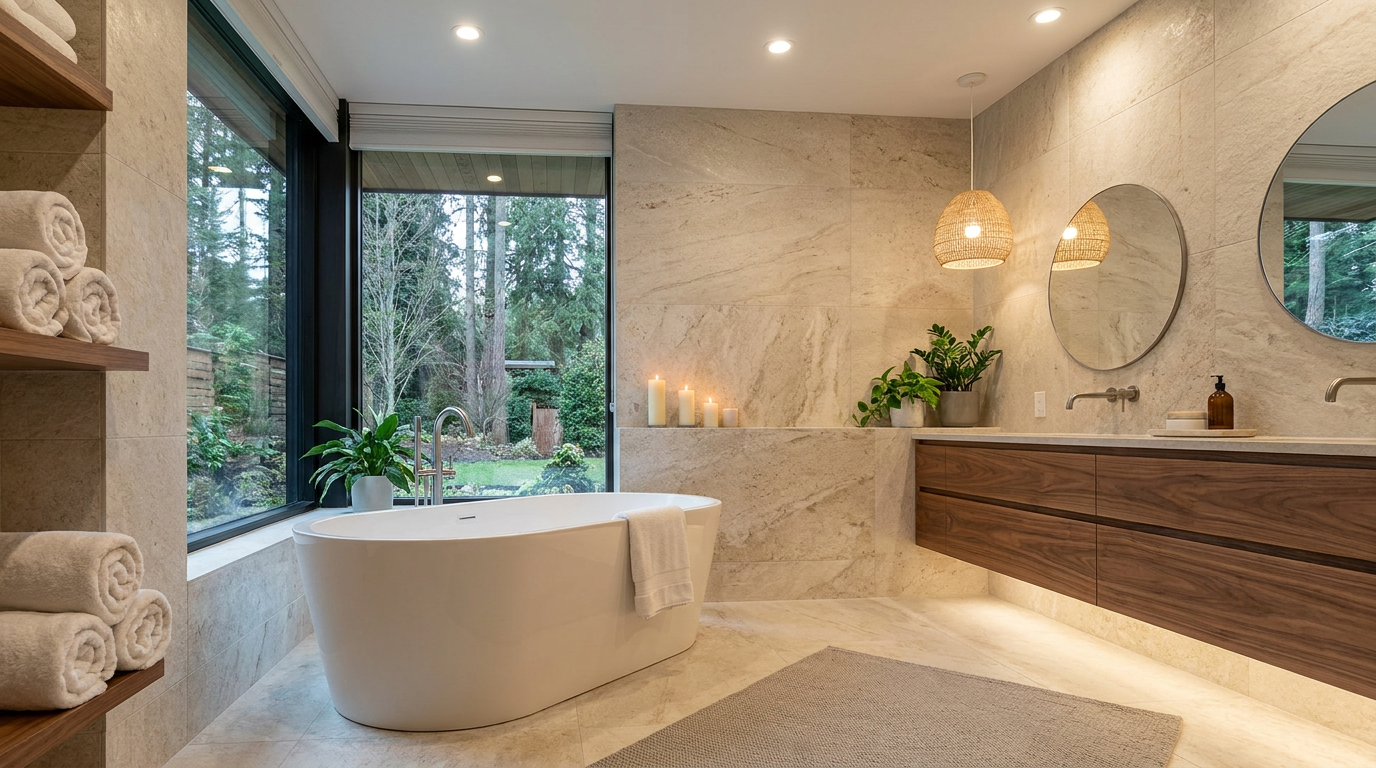
It is worth noting that biophilic design is often misunderstood. It is not merely decorating with greenery. In a truly thoughtful home, nature is reflected through light, air, proportion, view, material honesty, and a sense of refuge. This is why the most successful luxury interiors feel restorative even when they are highly edited and architecturally modern.
Designing for the Senses Creates True Luxury
Luxury is deeply sensory. You notice it in the softness of upholstery, the quiet close of cabinetry, the temperature of the bathroom floor on a winter morning, and the glow of dimmable lighting at the end of the day. These details may not always photograph dramatically, but they are what make a home feel extraordinary to live in.
Texture plays a central role in this experience. Modern luxury interiors are moving away from hard, cold perfection and toward layered tactility. Boucle, velvet, brushed oak, limewash, handmade tile, matte stone, woven shades, and plush rugs all contribute to an atmosphere that feels welcoming and emotionally rich. Even in a minimalist home, texture prevents the space from feeling flat or clinical.
Sound matters too. Acoustic comfort is one of the most underrated components of luxury. A beautiful home that echoes, buzzes, or amplifies every household sound can quickly feel exhausting. Upholstered furnishings, drapery, area rugs, wall treatments, and thoughtful spatial zoning can soften noise and create a much more peaceful environment. This matters even more in open concept homes, where visual openness needs to be balanced with acoustic ease.
Scent and air quality also influence how a home is experienced. Cleaner indoor air, good ventilation, low-toxicity materials, and subtle natural fragrance can shift the entire mood of a space. Many homeowners are becoming more conscious of healthier materials as part of long-term luxury value. This reflects a broader understanding that living well is inseparable from the environment that surrounds you every day.
The Power of a Personal Color Palette
Color is one of the most emotional tools in interior design, and in modern luxury homes it is used with nuance rather than spectacle. The goal is not always to impress with boldness. Very often, it is to create a tone of life that feels supportive, timeless, and quietly expressive. The best palette is not necessarily the trendiest one. It is the one that complements your routines, your architecture, and your sense of comfort.
Soft neutrals remain enduring because they allow texture, light, and form to take center stage. Warm whites, taupes, mushroom, sand, camel, soft greys, and muted earth tones create a calm backdrop that feels expansive and elegant. They also pair beautifully with natural materials, helping the entire home feel coherent and layered rather than busy.
That said, a luxurious home should still carry personality. Deep olive, smoky blue, oxblood, dusty plum, or charcoal can add intimacy and depth when used thoughtfully. A library or den painted in a saturated color can feel cocooning and sophisticated. A powder room with dramatic stone or rich pigment can provide an emotional shift within the home. Luxury does not require colorlessness. It requires confidence and harmony.
One helpful principle is to think of color in terms of emotional rhythm. Where do you want energy, where do you want stillness, and where do you want softness. Bedrooms often benefit from gentle, low-contrast palettes that support sleep and quiet. Kitchens may feel best with a bit more brightness and clarity. Personalizing these choices is what makes a home feel distinctly yours.
Luxury Kitchens Are About Ritual, Not Just Display
The kitchen remains one of the most important spaces in any home, but modern luxury has changed the way we think about it. Instead of chasing a purely showpiece kitchen designed for photographs, many homeowners now want a kitchen that supports gathering, nourishment, and daily ease. This does not mean sacrificing beauty. It means allowing beauty to be shaped by function and feeling.
A luxurious kitchen often includes materials that wear well and feel substantial underhand. Natural stone with soft veining, warm wood cabinetry, integrated storage, and quiet appliances all contribute to a more seamless experience. The room should feel intuitive. Lighting should work for both meal preparation and evening ambiance. Seating should invite people to linger rather than simply pass through.
There is also an emotional difference between a kitchen designed to impress visitors and one designed to enrich daily rituals. A home that makes room for morning coffee by the window, homework at the island, late dinners with friends, or weekend baking with children is expressing a form of luxury that is deeply human. This is especially important for families, where comfort and elegance need to coexist rather than compete.
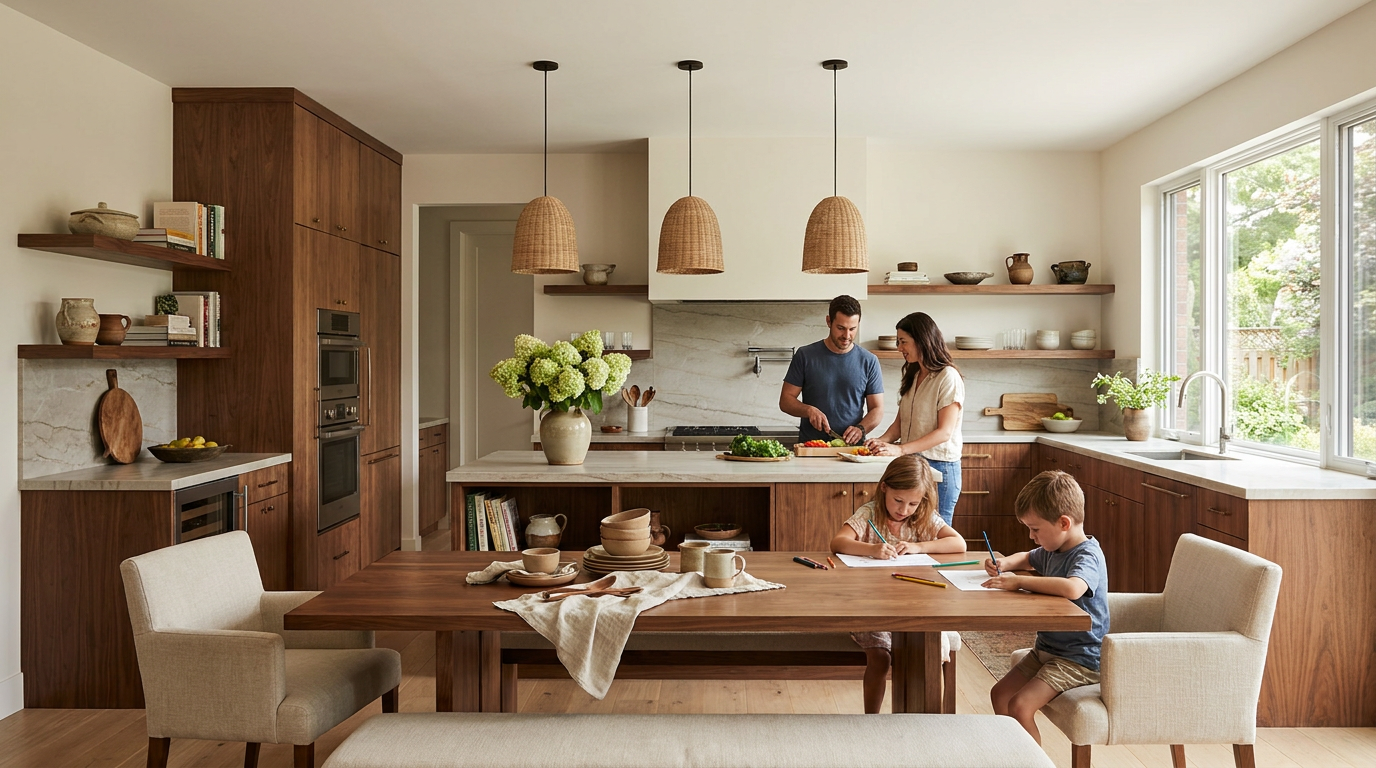
In some homes, this also means embracing flexibility. Secondary prep spaces, hidden pantries, breakfast banquettes, and integrated dining corners can make the kitchen more useful and more luxurious at once. The room becomes less performative and more supportive, which is exactly why it feels so elevated.
The Restorative Bedroom as a Luxury Priority
Perhaps no room captures the new meaning of luxury better than the bedroom. For years, bedrooms were often treated as visually coordinated spaces with less attention given to actual sleep quality. Today, the most thoughtful luxury homes recognize the bedroom as a wellness space. It is where recovery happens, where the nervous system resets, and where design can quietly improve daily life in a profound way.
Exceptional bedding is one of the clearest examples of comfort-led luxury. Natural fibers, breathable layers, supportive pillows, and a mattress suited to your body can dramatically change the way a room feels. This is not indulgence for its own sake. It is a practical investment in rest. When a bedroom supports sleep well, everything else in the home feels more effective and more nurturing.
Lighting is equally important. Layered lighting that includes soft bedside lamps, warm dimmable fixtures, blackout drapery, and gentle morning light supports healthier rhythms. Because light exposure affects sleep and performance, a bedroom that allows for darkness at night and natural brightness in the morning is not only more pleasant but more aligned with wellness.
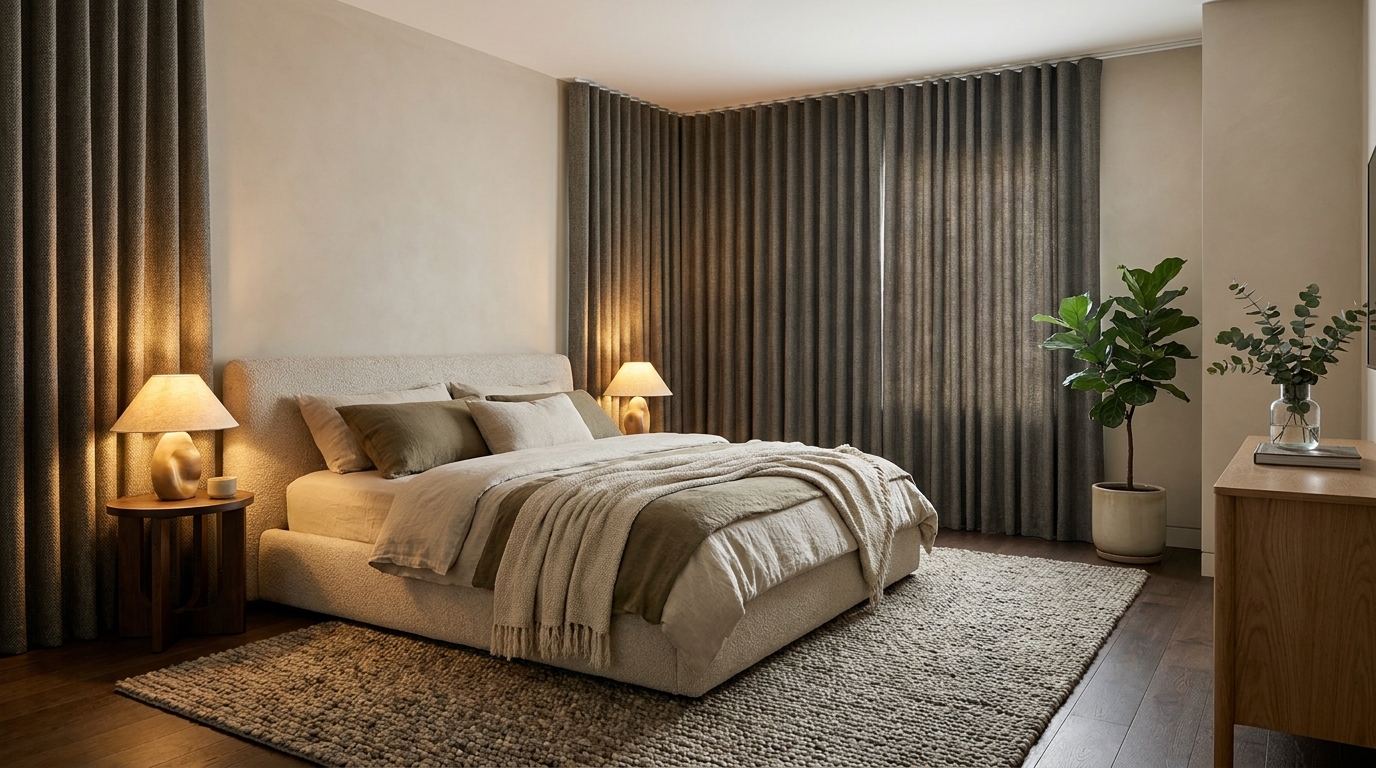
The mood of the room matters too. A luxurious bedroom should feel edited, soft, and emotionally quiet. This does not mean empty. It means free from unnecessary visual strain. Upholstered headboards, textured curtains, calming colors, low-clutter surfaces, and a few meaningful personal objects can create a room that feels deeply restorative. Luxury, here, is the ability to fully let go at the end of the day.
Spa-Inspired Bathrooms and Everyday Recovery
Bathrooms have become one of the strongest expressions of modern luxury because they offer such immediate sensory reward. A well-designed bathroom can turn ordinary routines into moments of recovery. It can slow the pace of the morning and soften the transition into evening. That emotional value is why spa-inspired bathrooms remain one of the most desired features in luxury living.
Natural stone, warm metals, wood accents, plush textiles, and layered lighting all help create a sense of calm. A freestanding tub can be beautiful, but the deeper luxury is how the entire room functions. Is the lighting flattering and soft. Is there enough storage to keep surfaces clear. Does the shower feel enveloping and warm. Are the materials pleasant to touch when the room is quiet and still.
Even relatively modest bathrooms can feel luxurious when the details are thoughtfully chosen. Heated floors, high-quality towels, integrated niches, quiet ventilation, and simple material restraint often have more impact than overly decorative features. This is where the modern definition of luxury becomes especially clear. Opulence alone does not guarantee comfort. Comfort, however, often feels opulent.
For homeowners considering renovation, this is also an area where practical planning matters. Rising renovation costs in Canada, as tracked by Statistics Canada’s Residential Renovation Price Index, and ongoing market monitoring through the Canadian Home Builders’ Association Renovation Market Index, make it even more important to invest in elements that truly improve experience and long-term value. A bathroom that supports wellness every day is a far more meaningful luxury than a trend-heavy space that ages quickly.
Flexible Layouts Reflect Real Life
Another defining feature of modern luxury living is flexibility. A home that adapts to changing needs feels more valuable than one designed around a rigid idea of status. This has become especially relevant as households think more carefully about multigenerational living, guest accommodations, work-from-home routines, and private retreat space.
Recent market coverage in Canada has pointed to greater interest in secondary suites in some luxury builds, reflecting a broader understanding that flexibility itself is a luxury. A beautifully designed guest suite can support family visits, aging parents, live-in help, or future rental potential. A media room can double as a cocooning evening retreat. A study can become a reading room, creative space, or quiet home office depending on the season of life.
What makes these spaces feel luxurious is not only that they are multifunctional. It is that they do not feel compromised while doing more than one job. A flexible home should still feel elegant, tailored, and emotionally coherent. Built-in storage, sliding partitions, layered lighting, and furniture with graceful utility help achieve that balance.
This approach also supports a more realistic and sustainable form of aspiration. Not every home needs to be larger to feel more luxurious. Often, it simply needs to be better planned. A thoughtfully proportioned home that offers privacy, connection, calm, and adaptability can feel richer than a sprawling home that lacks intimacy.
Smart Home Comfort Should Be Invisible
Technology has a place in luxury living, but the most elegant smart home features are the ones you barely notice. Modern luxury is not about gadgets on display. It is about using technology to create a smoother, more comfortable environment. Smart lighting, climate control, motorized shades, integrated audio, and air quality monitoring can all contribute to a home that feels more responsive and serene.
When done well, these systems disappear into the background. The lights adjust naturally through the day. The bedroom becomes dark and cool at night. The living room shades soften afternoon glare without interrupting the view. Music fills the kitchen during dinner prep without visible clutter. This is the kind of innovation that supports lifestyle instead of distracting from it.
Wellness-focused smart systems are especially aligned with current luxury priorities. Circadian lighting, cleaner air management, and personalized climate zones all contribute to comfort and well-being in ways that feel both modern and deeply practical. They also support a more holistic definition of luxury because they improve how the home works, not just how it looks.
The key is restraint. Technology should never overwhelm the atmosphere of the home. A truly luxurious interior still feels warm, tactile, and emotionally grounded. The role of smart integration is to remove friction and support ease, allowing the human experience of the space to remain at the center.
Materials Matter More Than Ever
In a luxury home, materials are never just a visual decision. They shape the emotional temperature of a room, the way surfaces age, and the quality of everyday interactions. As homeowners become more attentive to wellness and sustainability, materials are also being evaluated through a broader lens that includes durability, health, ethics, and long-term value.
There is a growing interest in healthier materials with lower emissions, greater authenticity, and longer life spans. Natural stone, solid wood, limewash, handmade ceramics, wool textiles, and artisan finishes all appeal not just because they are beautiful, but because they feel real. They bring variation, depth, and a sense of craftsmanship that mass perfection often lacks.
This is part of what gives a luxury interior its emotional richness. You can see the grain in the oak, the movement in the marble, the softness in the woven fabric. These qualities make a home feel lived in and elevated at the same time. They also often age more gracefully, which is increasingly important in an era when thoughtful investment matters.
Choosing better materials does not mean every surface has to be precious. In fact, modern luxury often depends on balance. A durable family-friendly performance fabric can sit comfortably beside a sculptural stone side table. A hardworking mudroom can still be beautiful if the cabinetry, tile, and lighting are chosen with care. Luxury should support life, not require constant protection from it.
How to Avoid Wellness-Washing in Luxury Design
Because wellness has become such a powerful design conversation, it is also vulnerable to becoming superficial. This is where homeowners benefit from a more thoughtful eye. A home is not automatically restorative because it features neutral colors, expensive candles, or a handful of oversized plants. True wellness design goes deeper and asks whether the space genuinely improves how you live.
That means considering practical questions. Does the bedroom promote real rest. Does the home have enough natural light at the right times of day. Are there quiet zones where you can recover from stimulation. Is air quality supported through good ventilation and thoughtful materials. Are family routines made easier by the layout. These questions may sound simple, but they often reveal the difference between a curated image and a truly luxurious environment.
One of the most useful ways to think about modern luxury is as a holistic experience. Every room contributes to your nervous system, your habits, your comfort, and your sense of identity. If a home looks expensive but leaves you drained, cluttered, or uncomfortable, it is not delivering the kind of luxury that matters most today.
The most meaningful luxury is not decorative excess. It is a home that helps you feel more like yourself.
Creating a Luxury Home That Reflects Your Lifestyle
The most memorable luxury homes are not generic. They are personal. They carry the habits, preferences, and values of the people inside them. This is why modern luxury can look minimalist in one home, warm traditional in another, and coastal contemporary in a third. There is no single visual formula. The common thread is alignment between the home and the lifestyle it supports.
For one person, luxury may mean a quiet reading nook with impeccable light and a cashmere throw. For another, it may mean a generous mudroom that keeps family life calm and organized. For a couple who loves to entertain, it may mean a dining space with beautiful acoustics, flattering lighting, and a kitchen that allows for easy hosting. For a wellness-focused homeowner, it may mean a bedroom that feels like a boutique retreat and a bathroom that encourages nightly decompression.
To define your own version of luxury, it helps to look beyond aesthetics and consider emotional priorities. Think about where your days feel rushed, where your home could hold you more gently, and which routines matter most. Often the most transformative luxury upgrades are the ones that make those routines smoother, quieter, and more enjoyable.
It can also help to evaluate your home through a few key lenses:
- Comfort: Are the furnishings, lighting, and materials inviting enough to support real relaxation?
- Function: Does the layout reduce friction and support the way you move through the day?
- Sensory balance: Are sound, light, texture, and temperature working together harmoniously?
- Identity: Does the home feel like an honest reflection of your taste, values, and rituals?
- Longevity: Are your choices built for lasting beauty rather than short-lived impact?
When these layers come together, luxury stops being abstract. It becomes tangible in the everyday moments that matter most.
Thoughtful Investment in a Changing Market
It is impossible to talk about luxury living today without acknowledging the practical realities behind it. Renovation costs, labor availability, and region-specific pricing all shape what is possible. In both Canada and the United States, the home improvement market remains active, but homeowners are navigating that activity with greater awareness. This context makes thoughtful decision-making even more important.
Rather than trying to replicate every trend, it is often wiser to invest in foundational qualities that endure. Better windows, improved insulation, quality flooring, custom storage, layered lighting, and healthier materials may not be the flashiest choices at first glance, but they often create the strongest long-term return in comfort and satisfaction. They also align with the current understanding that luxury should improve experience, not just appearance.
There is something reassuring about this version of aspiration. It is elegant without being disconnected from reality. It respects budgets, acknowledges market conditions, and still leaves room for beauty, craftsmanship, and emotional pleasure. In many ways, that is exactly what modern luxury living is all about. It is about making wise choices that elevate daily life in lasting ways.
Final Thoughts on Modern Luxury Living
Embracing modern luxury living means letting go of outdated ideas about what a beautiful home must prove. The most resonant homes today are not defined by excess for its own sake. They are defined by atmosphere, comfort, wellness, and a strong sense of self. They make life feel softer, calmer, and more supported.
Whether you are renovating a city condo, refining a suburban family home, or designing a custom retreat, the guiding question is not simply what looks luxurious. It is what feels luxurious to you. The answer may be better sleep, warmer materials, more natural light, quieter rooms, a spa-like bath, or a kitchen that brings everyone together with ease. These are the details that turn design into experience.
Modern luxury living is ultimately an act of personal expression. It allows your home to become more than attractive. It becomes restorative. It becomes intuitive. It becomes a place that reflects not only your taste, but your rhythms, your values, and the life you want to feel every day.
And that, more than anything opulent or obvious, is what makes a home truly luxurious now.



No Comment! Be the first one.