What Humbold’s GTA Sell-Down Says About Patient Capital
When a long-standing family developer brings most of its portfolio to market, investors should look beyond the transaction itself. The real signal is not simply that assets are available. It is that mature private capital may be testing where today’s buyers will price income, land, and optionality across the Greater Toronto Area.
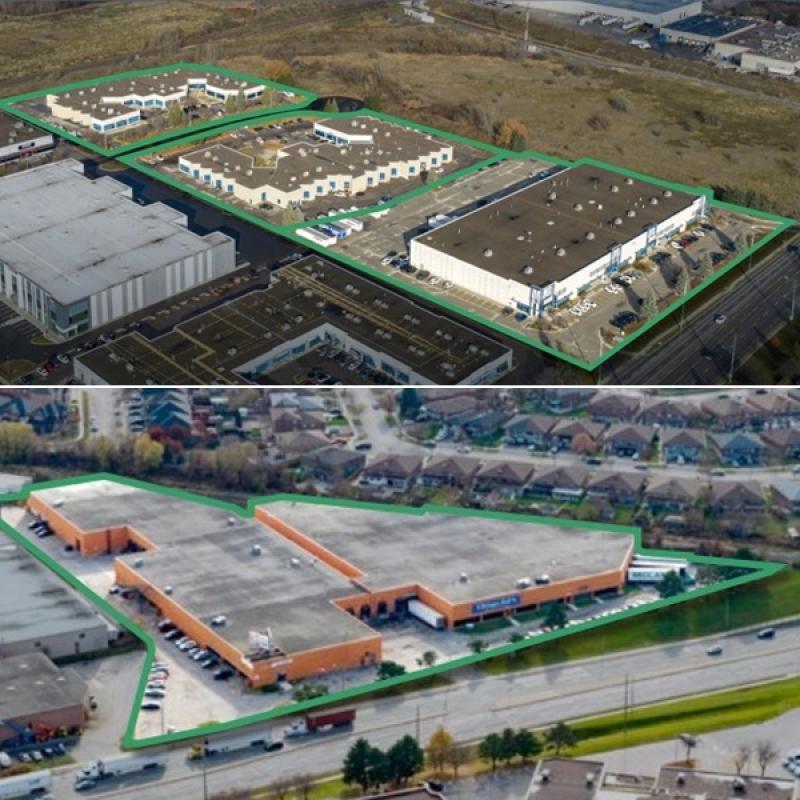
According to RENX, Toronto-based Humbold Properties has listed an additional eight GTA properties through CBRE, following two major listings last year. The new offering totals 647,544 square feet across industrial, retail, office, mixed-use, and development land. It is being marketed on an unpriced basis and can be purchased individually or as a portfolio.
For investors, the most important number may be occupancy. CBRE’s brochure, as reported by RENX, indicates the portfolio is 92 percent leased to 93 tenants. That creates a different investment profile from vacant land or speculative development. Buyers are being offered current income, tenant diversification, and potential upside through leasing, redevelopment, rent resets, and intensification.
The industrial component is likely to draw the deepest pool of capital. Sites in Toronto and Markham, including the Steeles Avenue property and the Citizen Court and 14th Avenue assets, offer a combination of in-place income and long-term land scarcity. Industrial vacancy across the GTA has normalized from its pandemic-era tightness, but well-located urban industrial land remains difficult to replace. For buyers with a long horizon, these assets are not only buildings. They are control positions in constrained submarkets.
The retail assets tell a different but equally relevant story. Grocery-anchored and necessity-based retail has regained institutional credibility because it can provide stable cash flow in a higher-rate environment. Vellore Corners in Vaughan, fully leased and anchored by Loblaws and Scotiabank, fits that defensive income profile. The Mississauga plaza with Staples also adds the kind of future intensification angle that can support value beyond current rent rolls.
In today’s market, the premium is no longer paid for possibility alone. It is paid for income that can carry the possibility.
The more complex assets are the mixed-use and development properties. The Finch Avenue West complex, at 235,388 square feet and 79 percent leased, offers scale but also execution risk. A weighted average lease term of 3.3 years gives a buyer room to reposition rents, yet it also requires active asset management. The Adelaide Street West parking lot has approval for a 22-storey office building, but office development approvals are not the same as immediate liquidity in a market still adjusting to hybrid work, construction costs, and financing discipline.
The broader read is that GTA commercial real estate is entering a more selective phase. Sellers with legacy portfolios may be willing to surface value, while buyers will underwrite more carefully than they did during the low-rate cycle. Unpriced offerings are useful in this environment because they allow the market to reveal depth, pricing tension, and where capital still has conviction.
For private investors, the lesson is clear: do not evaluate this kind of portfolio by asset class alone. Study lease durability, replacement cost, zoning, tenant rollover, debt assumptions, and land optionality. The best opportunities will be the ones where income protects the downside while location quietly compounds the upside.
Source: RENX