
Why Pearson’s $1.5 Billion Terminal Overhaul Is a Signal for the Whole GTA Growth Corridor
Big infrastructure decisions rarely stay contained to the site where the concrete gets poured. Toronto Pearson International Airport has just awarded contracts worth 1.5 billion CAD to modernise Terminal 1 and Terminal 3, and while the headlines will focus on gate counts and baggage systems, the real story for anyone watching land value and regional growth is what this commitment says about the corridor around it.
The airport has brought in NORR-DIALOG, a joint venture between two established Canadian architecture and engineering firms, to lead planning and design, with PCL Construction acting as Construction Manager at Risk. That kind of governance structure, pairing a design joint venture with a CM-at-risk delivery model, is what you build when you expect a program to run for years and need cost certainty locked in early. This is not a renovation. It is a long horizon capital commitment, and long horizon capital commitments around a hub airport tend to pull surrounding land use decisions along with them.
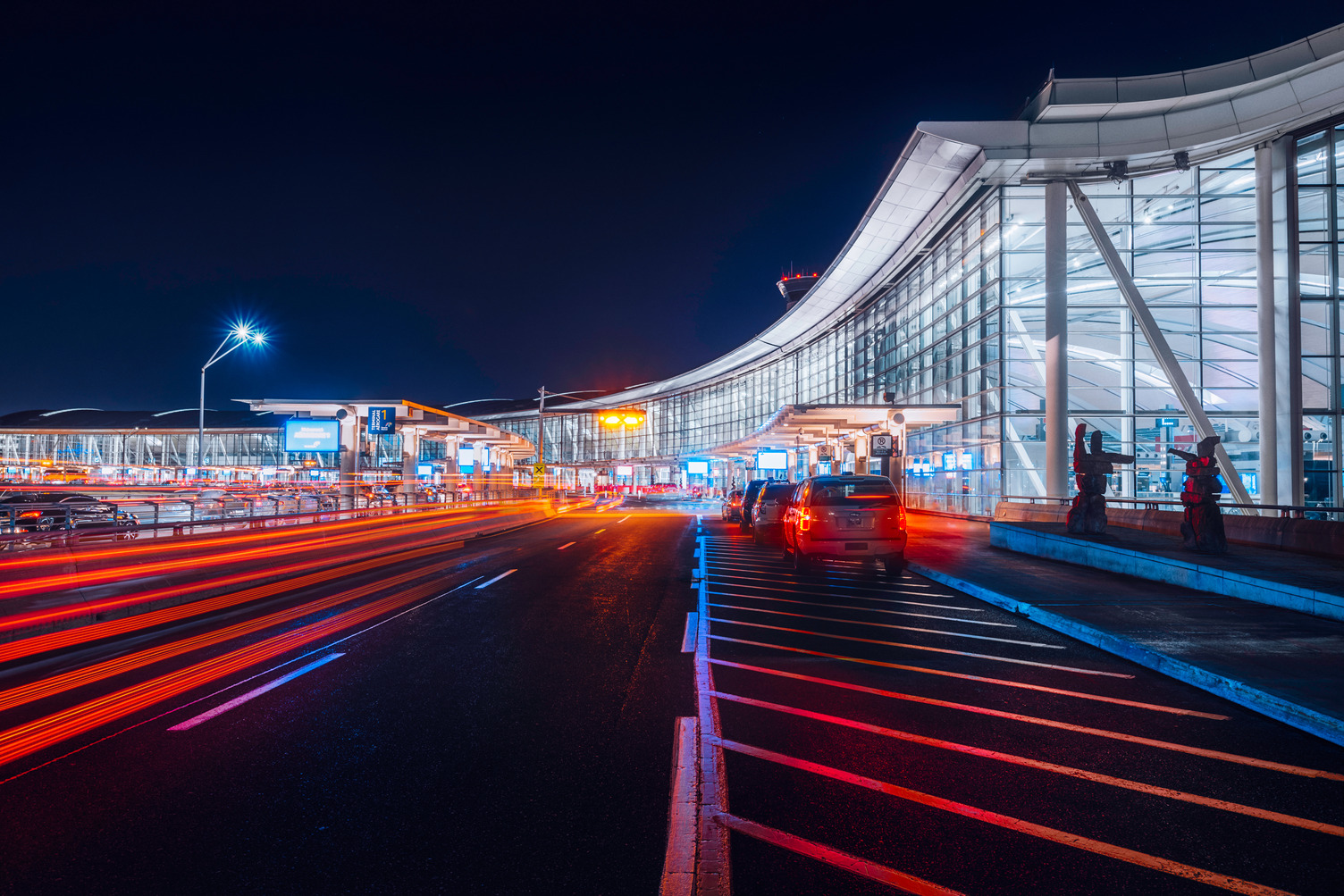
The scope itself, expanded terminal space, upgraded security and customs facilities, modernised check-in and improved baggage processing, points to an airport planning for sustained passenger growth, not just aging infrastructure repair. That matters for developers and municipal planners in Mississauga, Brampton, and the western GTA employment lands, where airport-adjacent logistics, hospitality, and office space have long tracked the confidence level of Pearson itself. When an airport operator commits at this scale, it is effectively underwriting demand for the region around it for the next decade.
Strong infrastructure decisions rarely stand alone. They reshape the timing, confidence, and feasibility of everything built around them.
This is also the second major program under the airport’s broader Pearson LIFT initiative. A separate 3 billion CAD investment in airside infrastructure and baggage handling systems already broke ground in May 2026. Two capital programs of this size running concurrently tell developers something important: the airport authority is planning for Pearson to remain the anchor of the GTA’s connectivity for the long term, not managing decline or treading water. That kind of certainty is exactly the input land economists look for when assessing whether nearby industrial, logistics, and mixed-use parcels justify accelerated timelines.
None of this means every parcel near the airport suddenly becomes prime real estate. Feasibility still depends on zoning, transit access, and municipal appetite for density. But infrastructure of this scale changes the baseline assumption planners work from. Phased construction that keeps the airport fully operational throughout the build, as described by Pearson’s leadership, also signals a level of operational discipline that reduces risk for anyone timing a project against the airport’s growth curve.
For anyone building a development strategy in the western GTA, the terminal contracts are less a story about travel and more a data point about where sustained public and private capital is flowing. Watching how quickly surrounding municipalities respond with their own infrastructure and zoning moves will be the real test of whether this investment becomes a growth catalyst or simply keeps the airport itself current.
Source: Airport Industry News