Pearson’s $1.5 Billion Renewal Is a Land Value Signal for the Western GTA
Toronto Pearson’s decision to award $1.5 billion in revitalization contracts for Terminal 1 and Terminal 3 is not only an airport story. It is an infrastructure signal for the western GTA, where transportation capacity, employment density, logistics demand, and housing pressure are already colliding. As reported by Canadian Architect, the program is intended to modernize aging terminal infrastructure and improve the passenger experience for millions of travellers. For developers and planners, the larger question is what this level of capital commitment says about the long-term role of Pearson as a growth anchor.
Airports shape cities far beyond their property lines. Pearson sits inside one of the most economically important land corridors in the country, touching Mississauga, Brampton, Etobicoke, and the broader 400-series highway network. A major terminal renewal reinforces the airport’s position as a permanent employment and mobility node. That has direct consequences for surrounding industrial land, hotel sites, office repositioning, last-mile logistics, transit-oriented development, and residential intensification in nearby communities.
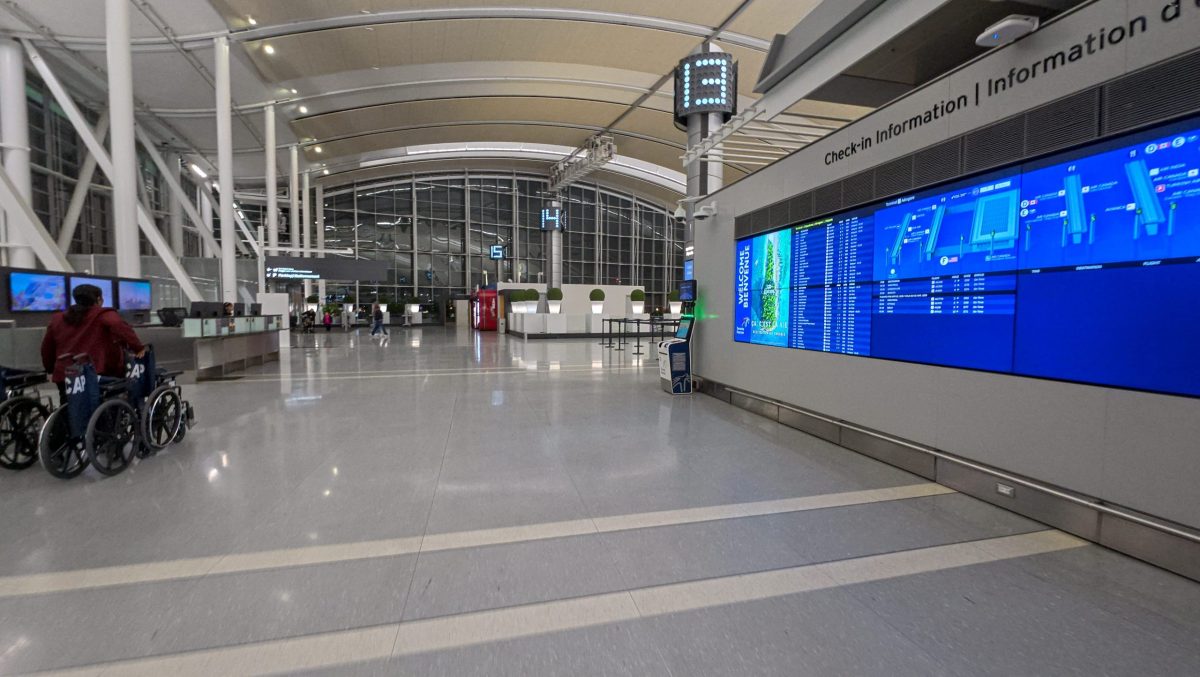
The development implication is straightforward: when a critical piece of regional infrastructure receives this scale of reinvestment, adjacent land does not remain static. Sites with access to airport employment, regional transit, highways, and goods movement become more defensible. Older commercial and industrial parcels near key corridors may face renewed pressure for higher-value uses, especially where municipalities are trying to reconcile employment protection with housing targets and intensification mandates.
Pearson’s modernization also raises the importance of coordination between airport investment and municipal growth planning. Terminal upgrades can improve passenger flow, but the surrounding urban system still has to move workers, visitors, goods, and service vehicles efficiently. Road capacity, bus priority, rapid transit connections, parking strategy, stormwater systems, and utility resilience all become part of the feasibility equation. If the airport grows more efficient internally while access remains constrained externally, the value of nearby land will be shaped as much by bottlenecks as by demand.
Major infrastructure spending does not just improve an asset. It changes the development assumptions around every strategic parcel connected to it.
For housing, the signal is more complex. Pearson is not a conventional residential growth node, given noise contours, flight paths, employment land protections, and industrial adjacency. But housing demand from airport-linked employment will continue to land in nearby municipalities. That means planners should expect stronger arguments for rental supply, workforce housing, and mixed-use intensification along transit-connected edges rather than within core airport-adjacent industrial districts. The question is not whether the airport area becomes residential. The question is where the workforce housing pressure is absorbed without weakening the employment base.
For institutional investors and large-scale developers, the practical takeaway is to watch the secondary effects. Terminal renewal may lift confidence in hotels, logistics facilities, service commercial, mobility infrastructure, and redevelopment of underperforming parcels within the airport economic zone. It may also sharpen municipal debates over zoning permissions, employment conversion requests, and infrastructure cost-sharing. Pearson’s $1.5 billion program should be read as a long-horizon growth marker. In a region where land scarcity and infrastructure capacity increasingly define feasibility, airport reinvestment is a signal worth pricing into strategy now.
Source: Canadian Architect