Why Toronto’s Transit Neighbourhoods Are Building Geothermal In From Day One
There is a quiet shift happening beneath some of Toronto’s biggest transit-oriented developments, and it says a lot about where sustainable building is heading. Rather than treating clean energy systems as an add-on decided late in a project’s timeline, a growing number of developers are designing geothermal infrastructure into their plans from the very start, and doing it across entire portfolios rather than one building at a time.
That distinction matters more than it might first appear. When geothermal is considered project by project, every development effectively starts from zero: new engineering, new financing conversations, new education for the owner. When it is considered at the portfolio or district level, the lessons compound. Developers get better at planning it, contractors get better at installing it, and the economics improve with each project. This is exactly the kind of practical, repeatable thinking that makes sustainability durable rather than symbolic.
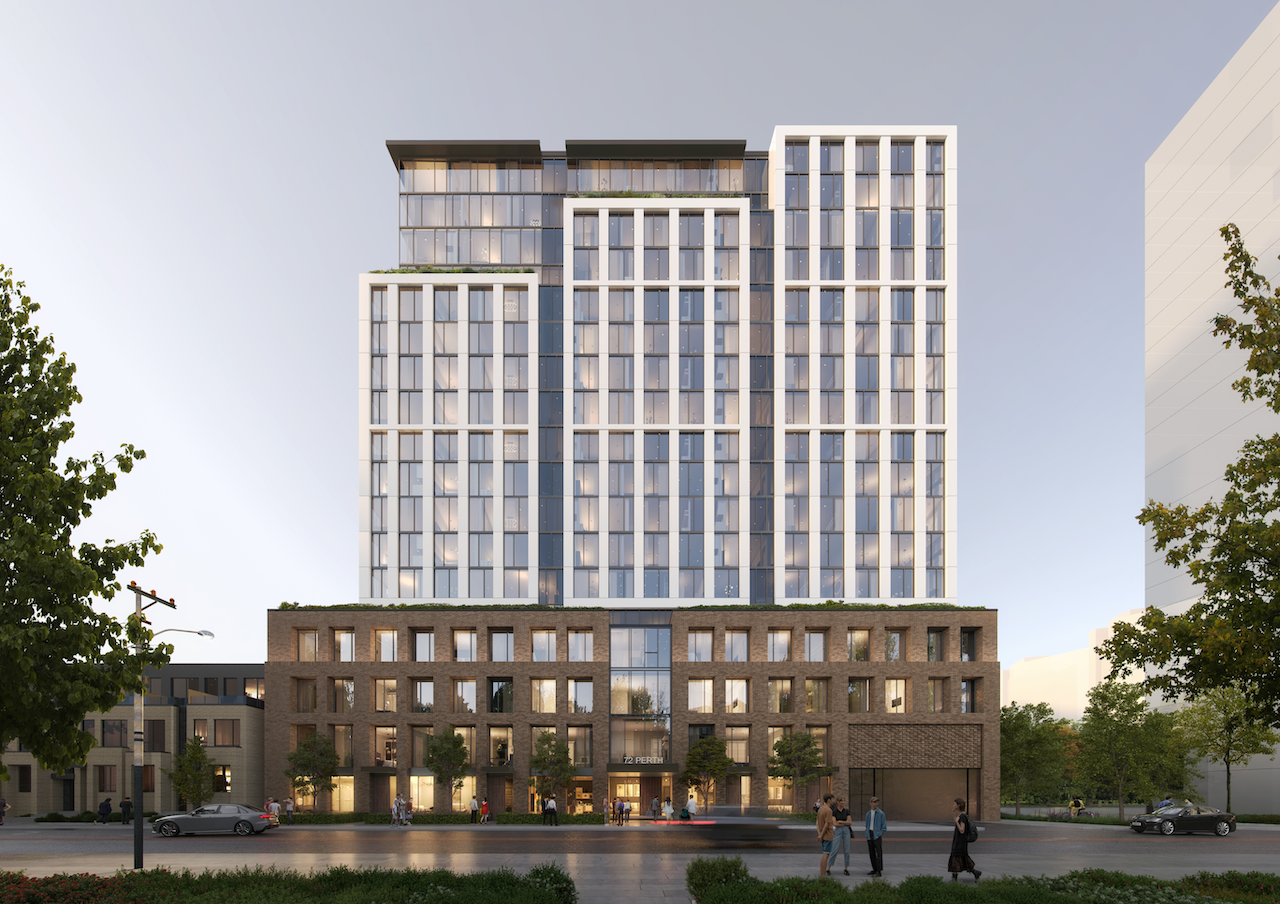
Several projects around the GTA are putting this into practice. At 72 Perth Avenue, next to the Bloor GO and UP Express stations, a former industrial site is becoming an 18-storey purpose-built rental community with an affordable housing component, supported by geoexchange infrastructure beneath the building. Similar thinking is shaping 2444 Eglinton East near Kennedy Station and the mixed-income community planned at 50 Wilson Heights beside Wilson Station. Different partners, different sites, but the same underlying logic: buildings near higher-order transit are being planned as long-term assets, and their energy systems are being treated as part of that long-term value rather than a construction line item.
What makes this genuinely encouraging from a sustainability standpoint is the removal of the upfront cost barrier. A subscription-style utility model, where a company owns the geothermal system and delivers heating and cooling as a service, takes away the single biggest obstacle developers cite when weighing clean energy against conventional systems. That kind of structure is what turns a good idea into an adopted one.
Geothermal is increasingly being considered not as a feature, but as a foundation, because it supports stable operating costs and fits naturally with buildings meant to be owned and operated for decades.
For homeowners and renters, the appeal of geothermal has always been steady, predictable heating and cooling costs without the volatility of fossil fuel markets. Seeing that same logic scale up to entire transit-oriented neighbourhoods is a meaningful signal. It suggests that energy stability, durability, and lower environmental impact are no longer treated as competing priorities against affordability and growth. When infrastructure decisions are made early, alongside architecture and mobility planning rather than after them, the resulting communities tend to perform better for the people living in them, for far longer.
This is sustainability at the scale where it counts most: not a single green building, but a repeatable model for how an entire city grows.
Source: UrbanToronto