Why a Pedestrian Scramble at Yonge and Eglinton Signals the Next Phase of Midtown Growth
Every intersection tells you something about the neighbourhood around it. Yonge and Eglinton has told a difficult story for the better part of a decade: years of construction, lane closures, and pedestrian bottlenecks tied to the Eglinton Crosstown LRT build and its connection to Line 1. Now, with a new motion before Toronto City Council, that story is starting to shift toward something more constructive.
City Councillor Josh Matlow, seconded by Mike Colle, has put forward a motion calling for a pedestrian priority phase, commonly known as a scramble crossing, at Yonge and Eglinton, along with the nearby Roehampton Avenue and Orchard View Boulevard intersection. For readers tracking urban growth, this is not a minor traffic tweak. It is a signal about how the city intends to manage density in one of its most transit-connected corridors.
A scramble crossing stops vehicle movement entirely and lets pedestrians cross in any direction, including diagonally. Toronto has already implemented this design at four intersections, among them Yonge and Dundas and Yonge and Bloor, both similarly high-volume nodes anchored by subway access. Yonge and Eglinton fits the same profile. The motion cites an average of 4,500 pedestrians per hour moving through the intersection, a volume that reflects the sheer scale of residential and commercial intensification that has landed on this corridor over the past decade.
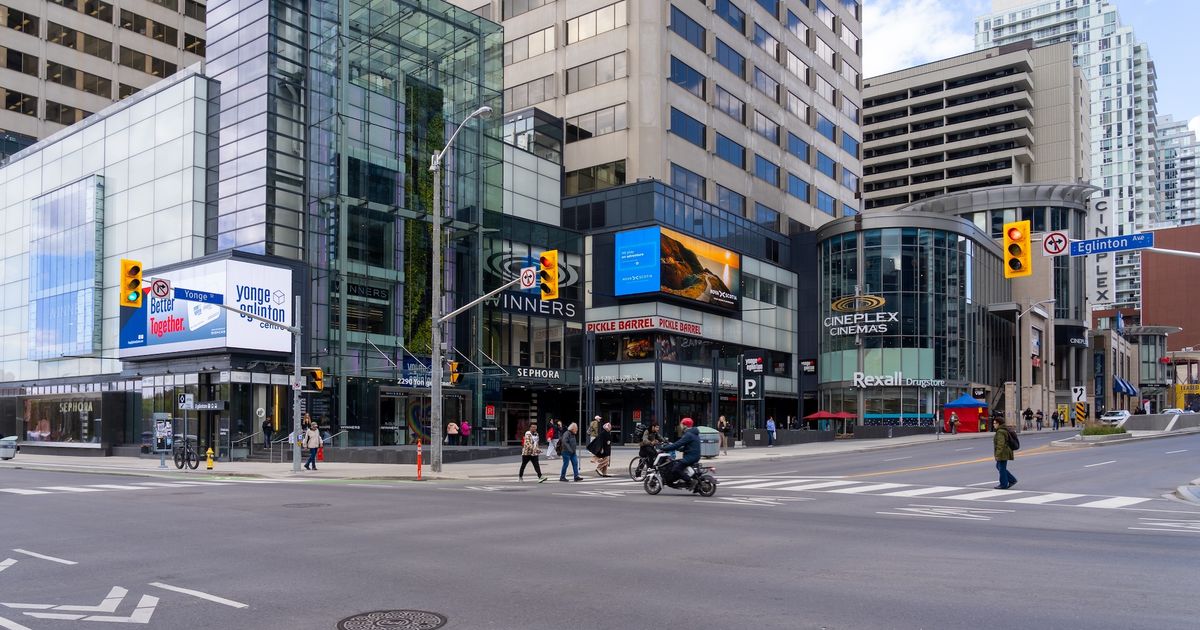
This is where the development lens matters most. Infrastructure decisions like this one rarely happen in isolation. They tend to follow, and then justify, the density that surrounds them. Yonge and Eglinton has absorbed years of vertical growth, tower construction, and LRT integration, and the pedestrian volume is simply catching up to what was planned around it. When a city retrofits an intersection for pedestrian priority rather than vehicle throughput, it is effectively acknowledging that the neighbourhood has matured into a transit-first environment. That has real implications for how future projects nearby get evaluated, financed, and marketed.
This motion represents a rare win-win: an opportunity to improve pedestrian safety and convenience at two of Toronto’s busiest pedestrian intersections without sacrificing commuter travel times.
The motion directs city staff to complete a detailed design and operational analysis, with implementation targeted for 2027 and an effectiveness report due in the first quarter of 2028. That timeline matters for anyone underwriting long-term projects in the area. A multi-year runway between approval and reporting is typical for major intersection redesigns, and it gives developers a reasonably clear window to plan around rather than react to sudden disruption, a welcome change after years of unpredictable construction impacts.
The broader lesson for anyone watching Toronto’s growth corridors is that pedestrian infrastructure and land value move together. A neighbourhood that earns a scramble crossing has usually already justified it through years of density approvals, transit investment, and foot traffic. Yonge and Eglinton’s next chapter will likely be defined less by construction cranes and more by how efficiently the city can move the people those cranes brought in.
Source: blogTO