170 Roehampton Shows Midtown’s Rental Density Model Moving From Policy to Concrete
The rise of 170 Roehampton is more than another construction update in Toronto’s Midtown skyline. It is a clear signal that high-density, purpose-built rental housing remains feasible in the city’s most infrastructure-rich nodes when land, approvals, transit access, and scale align. As UrbanToronto reports, the 50-storey tower by Capital Developments and Metropia has reached roughly 12 storeys, with cladding now underway and the project moving into a repeatable tower-floor construction cycle.
For developers and planners, the strategic value of this site is obvious. Roehampton and Redpath sit within walking distance of Yonge Line 1 and the Eglinton Crosstown corridor, placing the project inside one of Toronto’s strongest transit-oriented growth areas. That proximity is not cosmetic. It is the economic foundation for the density. A 160.85-metre rental tower with 599 apartments can only be understood through the combined value of rapid transit access, existing urban services, high land demand, and a planning framework that has increasingly accepted vertical growth around Midtown’s transit spine.
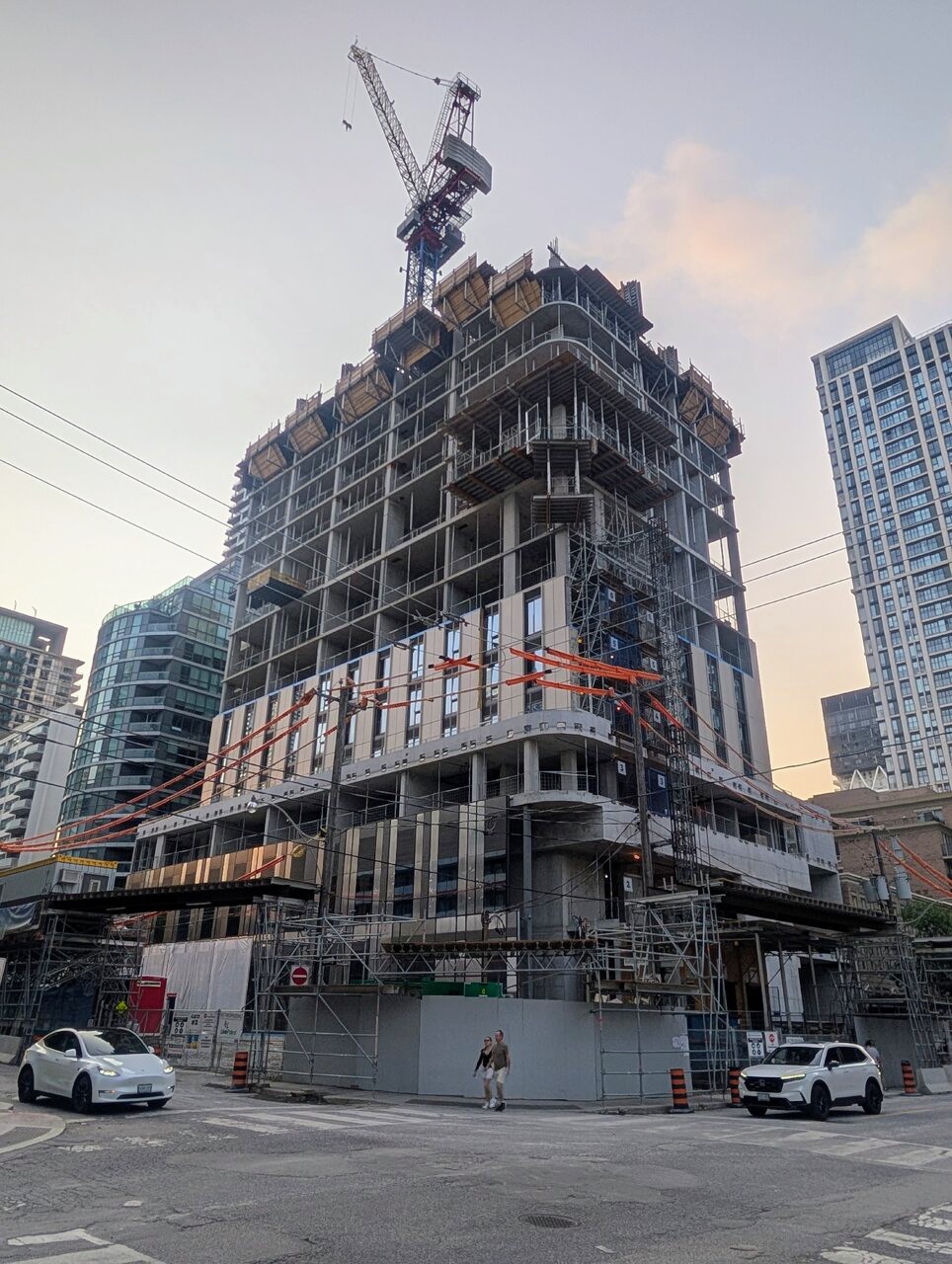
The project also reflects a larger shift in how Toronto is absorbing rental demand. Older mid-rise rental and apartment sites in Midtown are increasingly being repositioned into much higher-yield assets, but not without policy obligations. The inclusion of 15 rental-replacement units matters. It shows the balancing act now embedded in Toronto development: preserve tenant protections and replacement housing while still unlocking substantial net new supply. That model is complicated, slower, and more expensive than greenfield development, but in built-out transit nodes, it is often the only politically and spatially viable path to meaningful rental growth.
From a feasibility perspective, 170 Roehampton demonstrates why height has become a central tool in the purpose-built rental equation. Rental construction carries different capital expectations than condominium development. Longer hold periods, financing sensitivity, operating cost exposure, and rent absorption risk all place pressure on the pro forma. In that context, 599 units are not simply a planning outcome. They are part of the financial architecture that allows a project of this type to proceed through demolition, replacement obligations, excavation, podium construction, tower forming, and envelope installation.
In Midtown, density is no longer an abstract planning principle. It is the mechanism that converts expensive, constrained urban land into long-term rental supply.
The construction sequencing also tells a market story. Once a tower clears the complexity of below-grade work, podium transfers, and early structural transitions, the weekly floor cycle becomes the visible proof of execution. At 170 Roehampton, the podium is formed, the tower is climbing, and the first cladding is being installed. That progression reduces delivery uncertainty and begins to shift the project from entitlement risk to completion risk, a meaningful distinction for lenders, partners, and institutional observers tracking rental supply in Toronto.
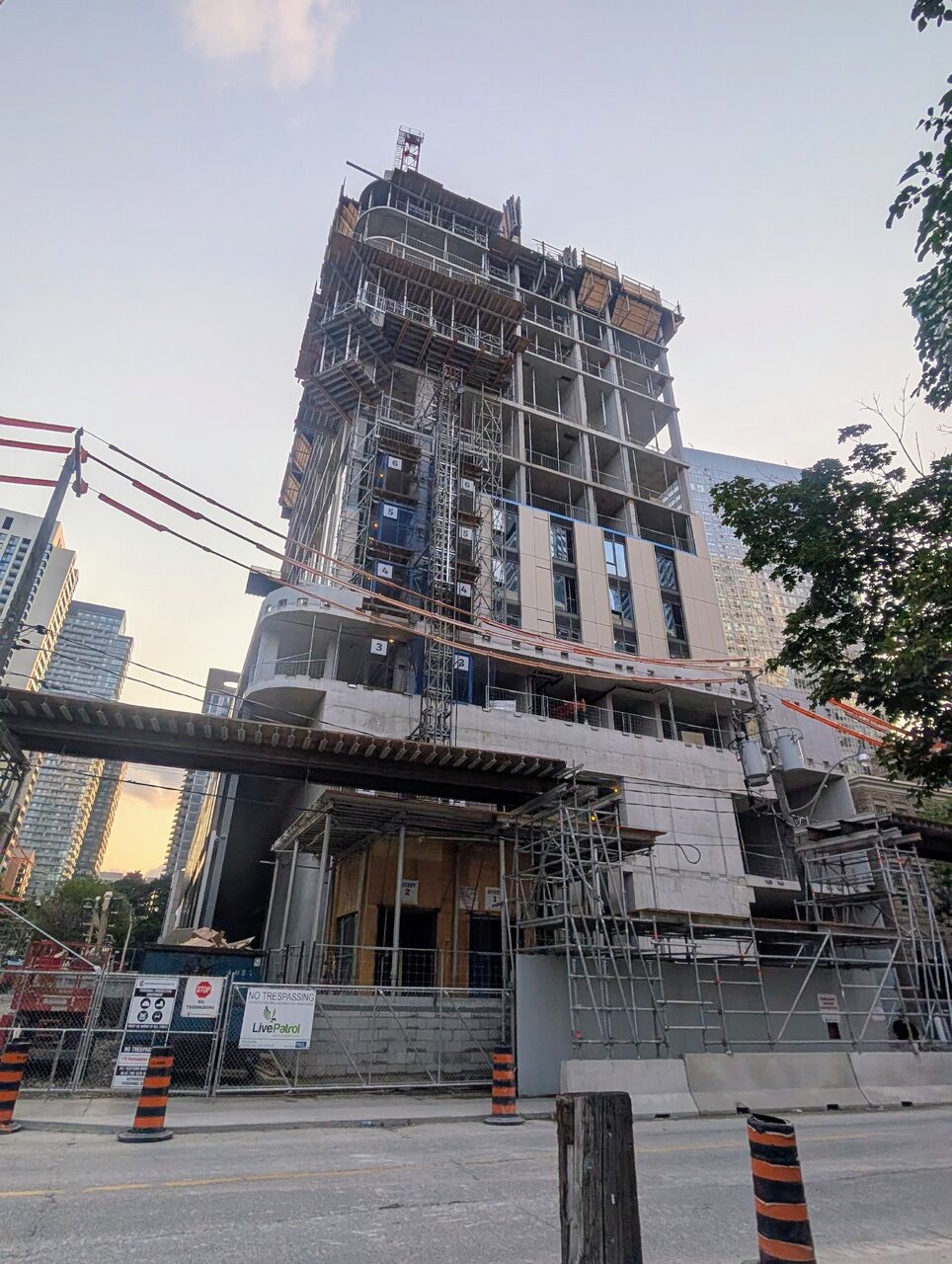
The broader urban question is whether Midtown’s infrastructure can keep pace with this level of intensification. Transit access gives projects like this their planning logic, but density also leans on sidewalks, parks, schools, servicing capacity, community facilities, and curbside operations. The next generation of Midtown approvals will be judged not only by height and unit count, but by how well they contribute to a more complete high-density district.
For developers, 170 Roehampton reinforces the importance of securing well-located rental sites near fixed transit, especially where policy already supports intensification. For planners, it is another reminder that housing targets will be met through many decisions like this one, not through isolated landmark projects. The key variable to watch is whether Toronto can continue converting underbuilt transit-adjacent land into rental supply while keeping infrastructure investment, public realm quality, and tenant protection aligned with the scale of growth.
Source: UrbanToronto