



Virtual tours have moved from a helpful extra to a central feature of digital real estate. In a market where buyers research almost everything online before they commit time, travel, and money, the ability to explore a property remotely has become a practical advantage rather than a novelty. What once felt innovative now feels increasingly expected, especially as consumers bring the habits of ecommerce, streaming, and on-demand services into the housing search. Real estate is adapting to that shift, and virtual tours are one of the clearest signs of how the industry is changing.
Table Of Content
- Why Virtual Tours Matter More in a Digitized Economy
- How Virtual Tours Improve Accessibility in Real Estate
- What a Virtual Tour Actually Is and Why the Difference Matters
- The Technology Behind Modern Real Estate Virtual Tours
- Why Buyers Use Virtual Tours and What They Actually Gain
- What Sellers and Agents Gain from Better Virtual Showcases
- How Virtual Tours Fit into the Broader PropTech Stack
- Common Misconceptions About Virtual Tours
- How to Create an Effective Virtual Tour That Actually Helps Buyers
- Practical Elements of a Strong Virtual Tour Package
- Where Virtual Tours Are Headed Next
- The Real Role of Virtual Tours in the Future of Housing Decisions
For buyers, virtual tours offer a faster and more informed way to decide which homes deserve an in-person visit. For sellers, they create a listing that can work around the clock, reaching local, relocating, and even cross-border audiences with less friction. For agents and property marketers, they add efficiency to the pipeline by reducing unqualified showings and helping serious prospects arrive better prepared. In a digitized economy, that efficiency matters because attention is limited, travel is expensive, and decision cycles are increasingly shaped by digital convenience.
The numbers support this transition. Zillow’s 2025 prospective-buyer report found that 20% of prospective buyers ranked 3D or virtual tours among the most important home-search tools, while 68% said they had viewed for-sale homes on a real estate website. The National Association of Realtors reported in 2025 that 41% of buyers used virtual tours during their home search, which places virtual experiences firmly in the mainstream. Yet the same broader research landscape also shows something important about buyer behavior: virtual tours are powerful, but they work best as part of a larger decision process rather than a full replacement for physical visits.
This is the most useful way to understand the future of virtual tours in property. They are not simply a visual upgrade over listing photos. They are part of a larger intelligence layer in real estate, one that combines spatial data, broadband access, digital marketing, analytics, and buyer behavior into a more efficient housing search. The future of real estate is not only about seeing homes online. It is about understanding homes online well enough to make smarter, faster, and more accessible decisions.
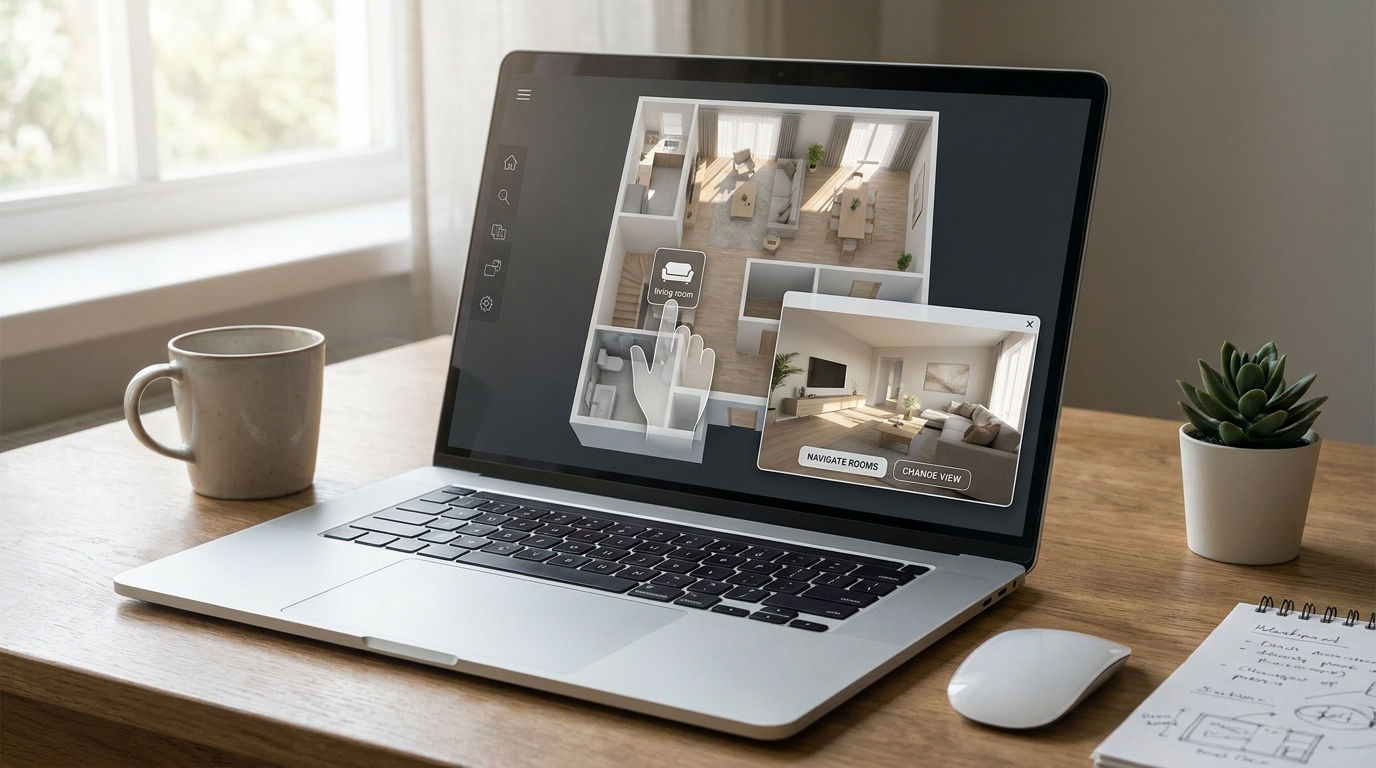
Why Virtual Tours Matter More in a Digitized Economy
Real estate has historically depended on in-person activity. Open houses, private showings, printed brochures, and neighborhood driving tours all played a central role in how buyers assessed homes. That model still matters, but the first stage of decision-making now happens online for most consumers. Buyers compare neighborhoods, financing options, school zones, commute patterns, rental yields, and listing media long before they contact an agent. Virtual tours fit naturally into that environment because they reduce uncertainty early in the search process.
In a digitized economy, consumers expect information to be searchable, visual, immediate, and available outside business hours. That expectation applies to housing just as much as it applies to retail or travel. A buyer who can compare floor plans, step through rooms, and understand circulation between spaces from a phone or laptop is more likely to move forward confidently. A buyer who sees only a few static photos may hesitate, make incorrect assumptions, or request a showing that ultimately wastes time for everyone involved.
Efficiency is the strongest argument in favor of virtual tours. Buyers can eliminate properties that do not fit their needs without coordinating travel or appointments. Agents can spend less time on low-intent showings and more time advising serious clients. Sellers can attract better-qualified interest by helping prospects understand the home clearly before they ever step inside. These are not minor operational improvements. They influence scheduling, marketing costs, listing momentum, and even how quickly a transaction progresses from discovery to offer.
The data reflects this practical use case. While only a relatively small share of buyers complete a purchase based solely on a virtual tour, the National Association of Realtors’ REALTORS® Confidence Index notes that 5% of buyers did purchase a home based only on a virtual tour. That figure is still niche, but it matters because it confirms that fully remote behavior is real, especially in relocation, investor, and urgency-driven scenarios. The more important takeaway, however, is broader: virtual tours are now a normal and scalable filter that shortens the discovery phase of home search.
How Virtual Tours Improve Accessibility in Real Estate
Accessibility is one of the most valuable and often underappreciated benefits of virtual tours. In the traditional model, seeing enough homes to make a confident decision can require flexible work hours, reliable transportation, childcare coordination, and physical mobility. That creates friction for many households. Virtual tours help remove part of that burden by allowing people to screen homes on their own time, at their own pace, and from any location with a stable internet connection.
This is especially helpful for out-of-town buyers and people relocating for work, education, or family reasons. A move across provinces, states, or national borders can make repeated in-person showings unrealistic. Virtual tours create a clearer first impression than photos alone, helping these buyers narrow options before booking travel or relying on someone else’s opinion. In practical terms, this means better use of time, lower search costs, and fewer rushed decisions made under pressure.
Accessibility also matters for older adults and people with mobility constraints. Physically touring multiple listings over several days can be tiring or difficult, particularly when properties involve stairs, long drive times, or crowded open houses. A virtual tour does not solve every accessibility challenge, but it can reduce the number of unnecessary trips and help people focus their energy on homes that are genuinely worth an in-person visit. It gives more control to the buyer, and that control improves the overall experience.
Busy households benefit too. Parents balancing work and caregiving responsibilities may not be able to attend several weekday showings. Shift workers, self-employed buyers, and households with long commutes often face the same limitation. A virtual tour extends access beyond office hours and allows multiple decision-makers to review the property independently before discussing next steps together. That collaborative flexibility is increasingly important in family purchases where several people influence the final decision.
Canada’s digital infrastructure supports this shift. Statistics Canada reported that 96.4% of Canadian households had access to unlimited broadband coverage meeting the 50/10 benchmark in 2024, and the country had 13.8 million residential broadband subscriptions in 2024, up from 13.5 million the year before. Those figures matter because high-quality real estate media requires bandwidth. As broadband access improves, immersive listing formats become more usable for everyday consumers, not just a digitally advanced minority.
Virtual tours do more than market a property. They expand who can realistically participate in the search process and how efficiently they can do it.
What a Virtual Tour Actually Is and Why the Difference Matters
The phrase virtual tour is often used loosely, and that can create confusion. Not every virtual property experience offers the same level of value. Some listings feature a slideshow of photos with background music and call it a tour. Others use 360-degree panoramic images that let viewers rotate within a room. The most advanced versions are true 3D digital twins that allow users to move through space, understand room relationships, and sometimes access measurements, floor plans, and embedded property details.
This distinction matters because spatial understanding is one of the biggest challenges in home search. Buyers frequently struggle to understand layout from photos alone. A wide-angle image can make a room seem larger than it is, and a carefully selected photo sequence can hide awkward circulation or unusual room connections. A stronger virtual tour reduces that ambiguity. A user can see how the kitchen opens to the living room, how bedrooms are positioned relative to the main hall, or whether a home office actually has privacy.
Basic 360 walkthroughs still have value, especially for lower-cost production, rentals, or quick-turn listings. They offer more immersion than static imagery and can help people identify key features. But they are not the same as a high-quality 3D experience built from spatial capture data. A digital twin can often support floor plans, room labels, measurement layers, guided navigation, and integration into larger property marketing workflows. For buyers who care about layout logic and livability, those differences are meaningful.
As the category matures, more platforms are emphasizing that spatial data layer. This is where the technology moves from visual media into PropTech intelligence. The future is not only a better-looking listing. It is a more informative listing that can generate assets, support analytics, and connect with distribution systems automatically. That makes virtual tours more strategic for professionals and more useful for consumers.
The Technology Behind Modern Real Estate Virtual Tours
Modern virtual tours are powered by a mix of capture hardware, image stitching, spatial mapping, cloud processing, and publishing software. Depending on the production method, a property may be captured with a dedicated 3D camera, a 360 camera, a smartphone with depth-sensing capabilities, or a professional scanning system. The raw data is then processed into an interactive environment that viewers can navigate through a web browser or mobile device. The quality of the final tour depends on lighting, scan coverage, room preparation, and the platform’s rendering capabilities.
What makes current virtual tours especially important is how closely they now connect to other real estate tools. A tour may feed into automated floor plans, still photography exports, short-form video assets, room labels, approximate measurements, and listing description workflows. Matterport’s 2025 launch of Marketing Cloud is a clear example of this trend. The platform bundles 3D tours, photos, videos, floor plans, AI descriptions, and MLS-ready publishing into a single workflow, which reduces fragmentation for agents and marketing teams.
Zillow has also continued to invest in 3D and adjacent visualization tools, reflecting a larger platform-level belief that richer digital property understanding improves engagement. This broader category is moving toward convergence. Instead of isolated media files, listings are becoming integrated information environments that combine virtual tours with 3D floor plans, aerial views, location context, scheduling tools, and buyer collaboration features. That shift matters because real estate decisions are never based on one input alone. Buyers want a connected view of the property, the area, and the next steps.
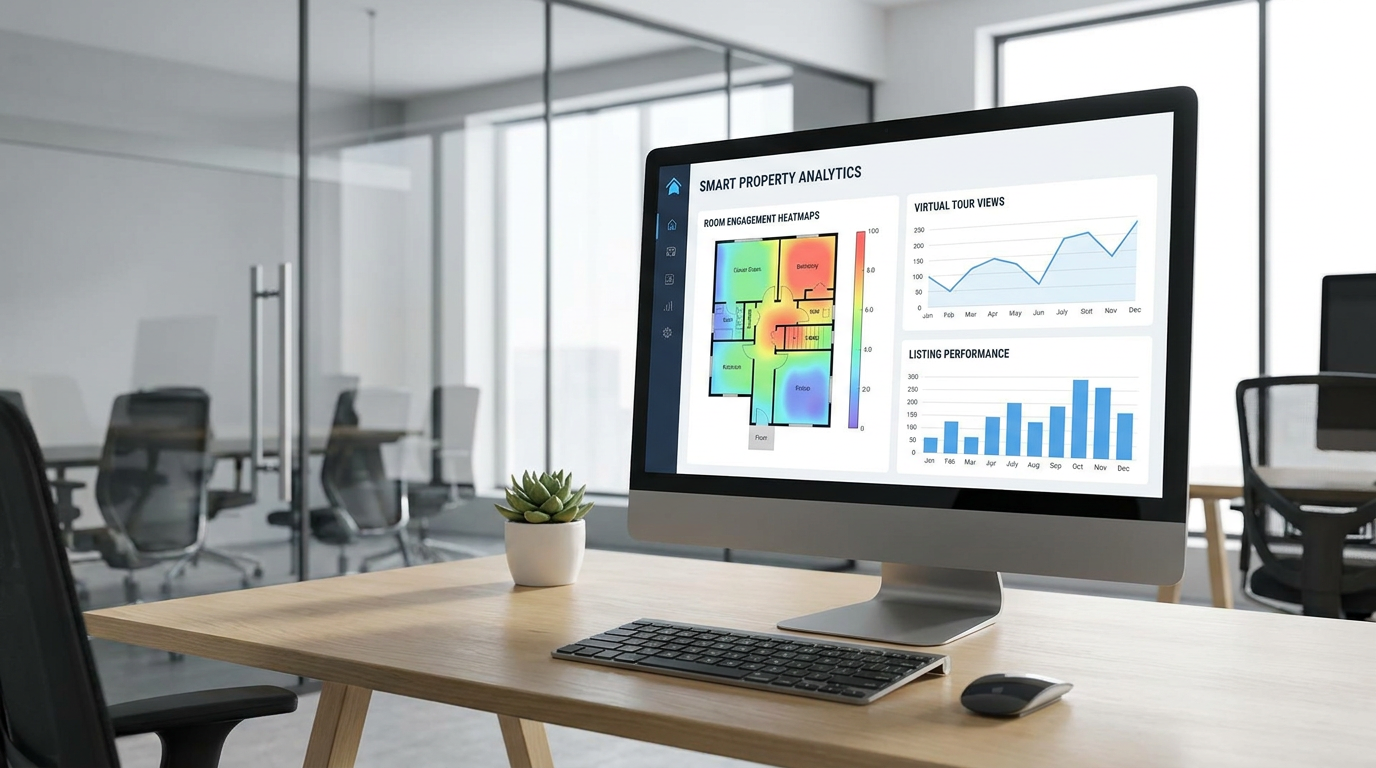
Another important development is analytics. As digital tours become more embedded in the buyer journey, platforms can begin measuring room-level engagement, time spent in the tour, repeat visits, and comparative interactions across listings. These insights will not replace professional judgment, but they can help agents identify what buyers care about most. If one room consistently receives longer engagement, or if viewers repeatedly stop exploring after a certain area, marketers can refine both the presentation and the positioning of the property.
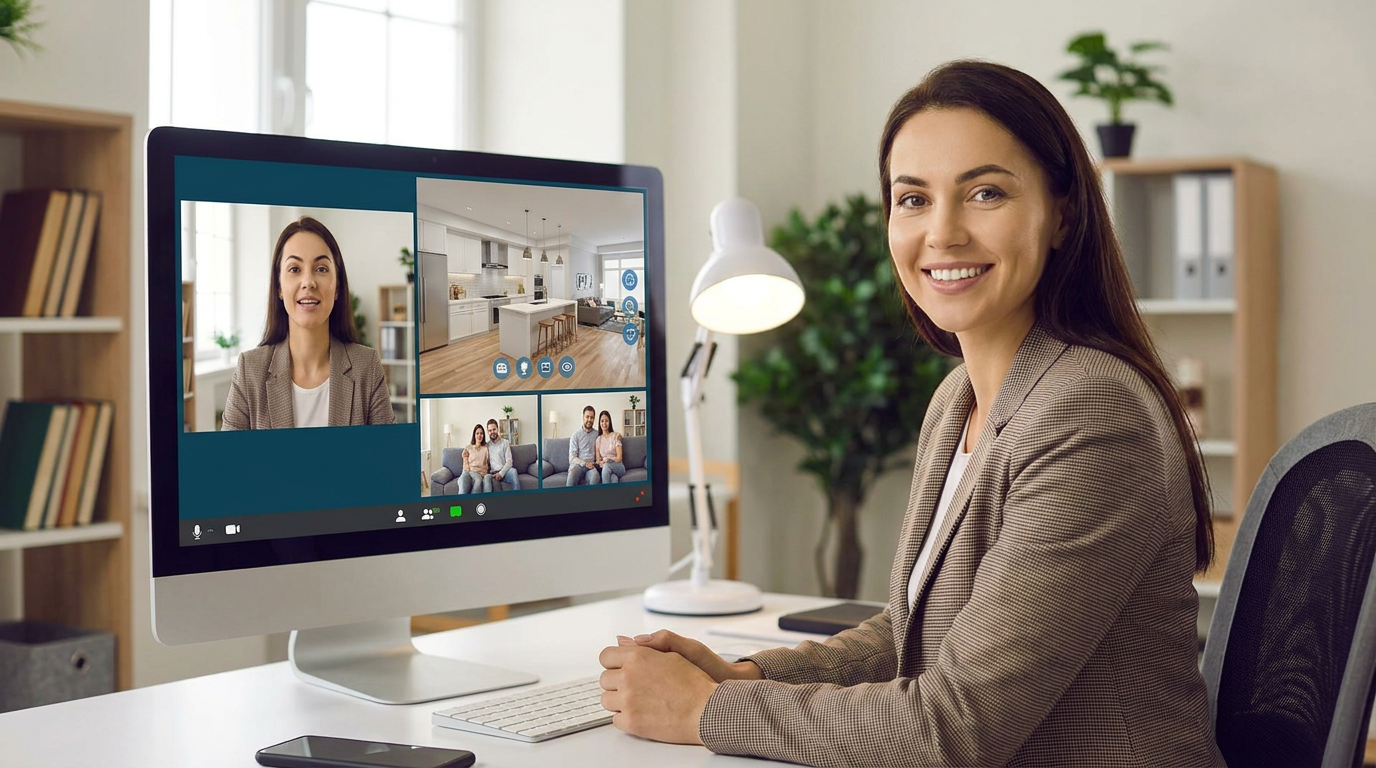
Why Buyers Use Virtual Tours and What They Actually Gain
For buyers, the biggest benefit of virtual tours is clarity. A listing with strong visual depth answers practical questions earlier. Does the dining area feel separate or squeezed into the kitchen? Is the secondary bedroom large enough for both a bed and a desk? How directly does the front entry open into the main living area? These are the kinds of layout questions that static photos often fail to answer. A virtual tour helps reduce guesswork before a buyer invests more energy.
Virtual tours also support comparison. Buyers rarely look at one home in isolation. They compare trade-offs across price, square footage, finishes, storage, lot shape, renovation history, and neighborhood. A good tour allows them to revisit a property digitally after seeing others, which improves recall and reduces the chance that one listing blends into another. That repeatability is useful in fast-moving markets where decisions must be made quickly and emotional impressions can blur.
There is also a confidence effect. When buyers understand a property more accurately, they can approach the next step with better questions. They can ask about age of systems, renovation permits, condo rules, utility costs, or school catchment details rather than spending the first ten minutes of a showing just trying to decode the floor plan. This leads to better conversations with agents and more informed in-person visits. The process becomes more analytical without becoming less human.
At the same time, buyers need to use virtual tours correctly. A digital walkthrough can reveal layout and condition cues, but it cannot fully communicate smell, ambient noise, natural light variation across the day, street traffic, neighboring structures, or the intangible feel of a home. Zillow’s 2024 buyer survey noted that buyers were less likely than in earlier years to prefer virtual tours over in-person viewings. That is a useful reminder that virtual experiences generally complement physical showings rather than replace them.
What Sellers and Agents Gain from Better Virtual Showcases
For sellers, a virtual tour turns a listing into a more durable digital asset. Instead of relying only on a brief showing window or an open house weekend, the property remains continuously available for exploration. This matters because many buyers search late at night, during work breaks, or across time zones. A virtual tour gives them immediate access without requiring someone to unlock the door. In practical marketing terms, the listing becomes active twenty-four hours a day.
Reach is another major benefit. Virtual tours can attract remote buyers who otherwise might not engage with a property until much later in the process. That includes people relocating for employment, investors assessing opportunities from another market, families coordinating a move before school enrollment deadlines, and international buyers looking for a clearer understanding of North American layouts and finishes. The broader the qualified audience, the stronger the listing’s opportunity to generate meaningful demand.
Agents gain operational efficiency. Instead of scheduling multiple low-intent showings, they can encourage prospects to review the tour first and then move forward with targeted questions or a private visit. This can improve time management, reduce friction for occupants, and create a smoother experience for everyone. Virtual tours do not remove the need for agents. In many cases, they increase the value of the agent’s time by filtering for more committed and better-prepared buyers.
Industry reporting also shows that virtual media is no longer outside the standard listing process. The National Association of Realtors’ staging research tracks photos, videos, and virtual tours as part of listing preparation, reinforcing that digital presentation is now a normal marketing category. In other words, the conversation is shifting away from whether a tour is worth considering and toward what level of quality and integration a property should have.
How Virtual Tours Fit into the Broader PropTech Stack
Virtual tours are most powerful when they are not treated as a standalone gimmick. Their strategic value increases when they connect to the rest of the PropTech workflow. A well-executed tour can support MLS syndication, online scheduling, AI-generated listing descriptions, virtual staging, buyer journey analytics, and remote communication between agents and clients. This is where the efficiency gains become easier to measure because the media is no longer isolated from the operational process.
Consider the path of a modern listing. A property is captured once, then multiple assets are generated from the same source material. The team may publish still photos, a virtual walkthrough, a schematic floor plan, a short teaser video, room labels, and draft listing copy. Those assets are distributed across portals, brokerage sites, social channels, and client presentations. Instead of managing each element as a separate production task, integrated platforms are beginning to reduce duplication and compress turnaround time.
This bundled approach also improves consistency. Buyers receive a more coherent story when the photos, floor plan, dimensions, and walkthrough all align. That consistency reduces confusion and increases trust. It also creates cleaner data for downstream analytics, which can help professionals understand where users engage, what media drives inquiries, and which types of listings perform best with immersive formats.
As AI becomes more embedded in real estate marketing, virtual tours will likely feed even more automated workflows. Listing descriptions can be generated from captured spaces, room types can be labeled automatically, and measurement data can support floor plan creation and internal asset tagging. None of this removes the need for human review. Accuracy still matters deeply in housing. But these tools can reduce repetitive work and allow marketers to spend more time on strategy, pricing, and client communication.
Common Misconceptions About Virtual Tours
The first misconception is that virtual tours eliminate the need for in-person visits. They do not. Even the best digital twin cannot fully convey smell, temperature, traffic noise, street activity, lighting changes across the day, or how finishes feel in person. Buyers still need inspections, due diligence, and physical confirmation before making major decisions. A virtual tour should be seen as a decision accelerator, not a total substitute for reality.
The second misconception is that every 360 product is equally informative. As noted earlier, there is a meaningful difference between simple panoramic experiences and full 3D models with floor plan logic and deeper interactivity. Sellers and agents should understand what they are paying for and what the buyer will actually experience. A low-quality tour with poor navigation or bad lighting can do less good than expected, and in some cases may even reduce confidence.
The third misconception is that virtual tours are only for luxury homes or dense urban markets. In reality, they are increasingly useful across price points and property categories. Rentals, multifamily units, suburban resale homes, new construction developments, and relocation-driven purchases all benefit from stronger digital visibility. In some mid-market segments, the efficiency gains may be even more important because time and travel constraints are sharper.
A fourth misconception is that more digital views automatically mean more offers. Visibility matters, but it does not fix weak pricing, poor condition, limited demand, or inaccurate listing information. Virtual tours improve transparency and help match the right buyers to the right homes faster. They are not a guarantee of conversion. Like every real estate tool, they work best when paired with realistic pricing, strong presentation, and thoughtful positioning.
How to Create an Effective Virtual Tour That Actually Helps Buyers
Creating a strong virtual tour starts well before the camera is turned on. The property should be prepared with the same discipline used for professional photography. Surfaces need to be clean, clutter should be reduced, lights should be working and turned on where appropriate, blinds or curtains should be adjusted intentionally, and personal distractions should be minimized. A virtual tour is immersive, which means it captures more than carefully framed photos do. Every visible detail contributes to the impression.
Flow matters just as much as image quality. A useful tour should help viewers understand how spaces connect in a natural sequence. If navigation feels disjointed, users may struggle to interpret the layout even if the visuals are sharp. The best tours balance freedom with guidance. Buyers should be able to move independently, but they also benefit from a default path that mirrors how someone might experience the home in person. This creates orientation rather than confusion.
Lighting deserves special attention. Dark corners, harsh window blowout, and inconsistent color temperature make rooms harder to evaluate. In a digital environment, these technical issues can exaggerate uncertainty because buyers cannot recalibrate their perception by physically stepping into the room. Professional capture or at least careful planning can solve much of this problem. The goal is not to make the property look artificially perfect. The goal is to make it legible and credible.
Context also improves performance. A tour becomes more valuable when paired with floor plans, room dimensions where available, neighborhood information, and straightforward listing remarks. Some platforms allow labels, feature tags, or guided points of interest. Used well, these can clarify upgrades, storage areas, smart-home features, or circulation details. Used poorly, they can become clutter. Effective virtual tours are not overloaded. They are designed to answer the buyer’s next question before it is asked.
Practical Elements of a Strong Virtual Tour Package
-
Accurate spatial capture that reflects the true layout rather than a stitched experience that feels distorted.
-
Clean, staged, and well-lit rooms that make the environment easy to understand without over-editing reality.
-
Floor plan support so buyers can connect immersive navigation to a clear top-down layout.
-
Consistent listing information across the tour, photos, description, and MLS details to build trust.
-
Mobile-friendly performance because many users will first encounter the property on a phone.
-
Clear next steps such as booking a showing, requesting disclosures, or contacting the listing agent.
Where Virtual Tours Are Headed Next
The future of virtual tours is likely to be less about spectacle and more about integration. The most important innovation will not necessarily be flashier graphics. It will be a smoother connection between property visualization, buyer behavior data, listing distribution, and transaction workflows. As digital twins become more common, a single capture may support marketing, renovation planning, insurance documentation, asset management, and post-sale use cases. The same property model can become useful across the life cycle of the asset.
We can also expect stronger analytics. Room-level engagement, repeat visitor patterns, and comparative media performance will become more valuable as platforms learn how to translate browsing behavior into actionable insight. This will not make the buying process mechanical. Housing decisions remain emotional, personal, and financially complex. But better analytics can help professionals understand where confusion appears, what features drive curiosity, and how digital presentation influences follow-through.
Another likely direction is deeper collaboration. Buyers increasingly shop as teams, whether that means spouses, parents, co-investors, or relocation advisors. Virtual tour platforms may continue to add shared notes, saved views, measurement annotations, and integrated communication features that make group decision-making easier. The more a digital tour supports discussion, not just viewing, the more useful it becomes during the actual purchase journey.
Accessibility should also remain central. As housing search becomes more digital, the quality of access will matter as much as the quantity of features. Fast-loading tours, intuitive controls, compatibility across devices, and support for a wider range of users will define which platforms feel truly modern. The best real estate technology does not simply impress. It removes friction in ways that respect how different people search, compare, and decide.
The Real Role of Virtual Tours in the Future of Housing Decisions
Virtual tours are reshaping real estate because they solve a real problem. Buyers need better information earlier. Sellers need broader exposure. Agents need more efficient workflows. In a digitized economy, any tool that shortens the path from curiosity to clarity has structural value, and virtual tours do exactly that. They help people understand space remotely, compare homes with more confidence, and focus physical visits where they matter most.
The strongest evidence for their future is not hype. It is adoption. With Zillow reporting strong online home-viewing behavior and the National Association of Realtors showing that 41% of buyers used virtual tours during their search, the category has clearly entered the mainstream. Meanwhile, broadband growth and integrated PropTech platforms make richer listing media more practical to produce and consume. This is no longer a fringe format for only premium properties. It is becoming part of the standard digital architecture of housing search.
Still, the future of virtual tours should be understood with precision. They are not perfect replacements for in-person inspection, and they are not interchangeable across all technologies. The best way to think about them is as a bridge between listing discovery and physical decision-making. They improve transparency, increase accessibility, and create efficiency across the transaction pipeline. In that role, they are not simply reshaping marketing. They are reshaping how people move through the housing market itself.
For anyone working in PropTech, brokerage, development, rentals, or property marketing, the message is clear. Virtual tours are no longer optional decoration on top of a listing. They are part of the intelligence layer behind modern real estate decisions. As platforms continue to combine 3D capture, AI workflows, floor plans, analytics, and distribution, the listings that perform best will be the ones that help buyers understand a property before they ever cross the threshold. That is the real future of virtual tours, and it is already taking shape.



No Comment! Be the first one.