

Why Housing Delivery Now Depends on Procurement, Not Just Permits
Toronto just got a reminder that the biggest obstacle to housing supply is rarely the construction site itself. At Canada Builds Modern 2026, held October 7 and 8 at the Globe and Mail Centre, the conversation among housing leaders kept circling back to the same point: the machinery around construction, financing, procurement, and approvals, is what actually determines whether targets turn into completed homes.
Hosted by The Keesmaat Group with Collecdev-Markee Developments, the Summit put CEO Jennifer Keesmaat in direct conversation with Ana Bailão of Build Canada Homes and federal Minister of Housing and Infrastructure Gregor Robertson. For anyone tracking large scale housing strategy, this is the kind of room where direction gets set, not just debated. The core argument was that housing needs to be treated as infrastructure, assessed for its contribution to economic productivity and community stability, not simply priced as a market commodity.

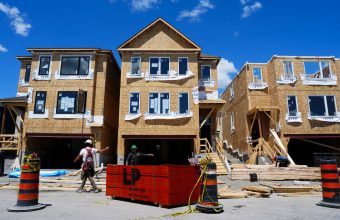
That reframing matters most where I spend most of my attention: land, feasibility, and the sequencing of approvals, financing, and construction. The Summit’s panel on Modern Methods of Construction laid out a problem that any developer who has tried to use off-site manufacturing will recognize. Canada already has the factory capacity. What it lacks is a steady pipeline of work, because procurement happens project by project instead of in a way that lets manufacturers plan ahead. Conventional construction loans and bonding were never built for off-site production schedules, and that mismatch alone has quietly stalled projects that looked good on paper.
The fixes discussed, payment milestones tied to factory output, lenders able to secure manufactured components, clearer risk allocation, and longer procurement commitments, are not glamorous. But they are exactly the kind of structural change that separates a housing target from a housing outcome. I have said before that strong projects come from understanding the full chain: timing, access, infrastructure, policy, and demand. This Summit added financing structure to that list in a way that developers cannot afford to ignore.
A reliable stream of projects could give manufacturers the confidence to invest and plan production at scale.
There is also a longer term vision embedded in the discussions that development leaders should watch closely: a push to recapitalize Build Canada Homes, growth in co-operative and non-market housing as a durable supply strategy, and a call, from figures like Dr. Andrew Boozary citing Toronto’s Dunn House, to weigh the broader social return of housing investment rather than its market price alone. Add in the attention given to energy performance and universal design from speakers like Brent Gilmour and Rick Hansen, and the picture that emerges is a development sector being asked to build not just faster, but smarter and more durably.
A post-conference roadmap is expected in the coming months, and it should give the industry something more concrete to plan around. Until then, the message from this Summit stands on its own: housing supply growth will depend less on any single construction innovation and more on whether governments and developers can align procurement, financing, and policy around a steady, predictable pipeline of projects.
Source: UrbanToronto