


Real estate investors spend substantial time analyzing price trends, cap rates, financing conditions, and neighborhood momentum. Yet one of the most powerful drivers of long term property value often sits behind those visible market signals. Infrastructure economics explains how investments in transport, utilities, broadband, water systems, energy networks, and civic capacity shape productivity, accessibility, development feasibility, and ultimately property prices. For investors who want a sharper edge, it is not enough to ask whether an area is growing. The better question is why that growth is becoming more durable, more attractive, and more valuable.
Table Of Content
- What Infrastructure Economics Actually Means in Real Estate
- Why Property Values Respond to Infrastructure Investment
- The Main Infrastructure Categories Investors Should Track
- Transportation Infrastructure
- Utilities and Service Capacity
- Digital Infrastructure
- Climate Resilience and Protective Infrastructure
- How Infrastructure Influences Rents, Vacancy, and Investment Returns
- Infrastructure Alone Is Not Enough: The Role of Zoning, Supply, and Policy
- How to Analyze Infrastructure Like a Strategic Investor
- A Practical Due Diligence Framework
- Where Investors Tend to Find the Best Infrastructure-Linked Opportunities
- Common Mistakes Investors Make
- The Bigger Strategic Picture
- Conclusion: Infrastructure as an Investment Signal
At its core, infrastructure changes the economic map. A new rail line shortens commute times and expands labor-market access. A road interchange improves logistics and reduces friction for both residents and businesses. Water and sewer expansion can turn underutilized land into developable land. Broadband rollout can increase tenant appeal, support remote work, and widen business activity. These are not abstract benefits. They are practical improvements that investors can often trace directly to rents, occupancy, absorption, development timing, and resale pricing.
The investment significance is straightforward. When infrastructure improves the functionality of a place, the market often capitalizes those gains into land values and income potential. In strong cases, this can happen before a project is completed, as buyers begin pricing in future accessibility and future density. In weaker cases, the effect is delayed or muted because zoning, demand, supply constraints, or execution issues limit the value that can actually be realized. This is exactly why infrastructure economics matters. It gives investors a framework for separating headlines from real value creation.
This article examines the connection between infrastructure spending and property investment from a strategic standpoint. It will explore how infrastructure creates value, where the strongest opportunities tend to emerge, why not every project produces the same outcome, and how investors can apply infrastructure thinking to acquisitions, development, and portfolio positioning. For anyone evaluating real estate with a long term lens, infrastructure is not a side topic. It is often the hidden engine behind superior returns.

What Infrastructure Economics Actually Means in Real Estate
Infrastructure economics is the study of how public and quasi-public investment in essential systems affects productivity, land use, economic growth, and social welfare. In real estate, this translates into a practical question: how does infrastructure change the income potential and risk profile of specific properties or submarkets? The answer is usually through accessibility, reliability, capacity, and resilience. Properties become more valuable when they are easier to reach, cheaper to operate, better served, and less exposed to disruption.
Consider transport first. Transit, highways, bridges, ports, and airports influence how people and goods move. In residential markets, this affects commuting convenience, access to employment centers, and quality of life. In commercial markets, it affects customer traffic, labor access, supply chains, and distribution economics. In industrial real estate, transport infrastructure can be one of the most decisive value variables because every minute and every kilometer can affect operating efficiency.
Utilities matter just as much, even if they are less visible in marketing brochures. Water, wastewater, electricity, and stormwater systems determine whether a site can support higher density, industrial use, or modern commercial occupancy. A parcel that looks attractive on a map may still be constrained by servicing limitations. Likewise, a market with strong demand may not be able to respond with new supply if utility capacity is insufficient. Investors who overlook these physical constraints often misread the true growth ceiling of a location.
Digital infrastructure has become increasingly important. Broadband, mobile coverage, and data connectivity now affect homebuyer preferences, office competitiveness, and tenant retention. In some markets, especially suburban and secondary growth corridors, digital quality has moved from convenience to necessity. As work patterns evolve and service-based businesses spread beyond core downtowns, digital infrastructure increasingly supports property demand in ways that can be measured in rent and occupancy performance.
The World Bank has consistently emphasized that infrastructure is a foundational input for productivity, inclusion, and regional growth. That matters to real estate because property demand ultimately follows economic activity. Infrastructure is not simply an expense carried by governments. It is a form of economic capacity that can support trade, mobility, labor participation, and business formation. Once investors start viewing infrastructure as a driver of growth rather than a budget line item, the link to property performance becomes much clearer.
Why Property Values Respond to Infrastructure Investment
Property values respond to infrastructure because real estate is highly sensitive to place-based advantages. A building is fixed in location, so anything that improves or weakens the usefulness of that location tends to influence value. Infrastructure can improve usefulness in several ways at once. It can reduce travel time, increase service reliability, unlock new development rights, lower environmental risk, and attract employers or households that previously overlooked the area.
One of the clearest examples comes from transit investment. A major NBER study of New York City’s Second Avenue Subway found roughly an 8 percent increase in local property prices and about $6 billion in new property value. That is a powerful case study because it demonstrates how the market capitalizes future transportation benefits into nearby real estate. It also shows that infrastructure effects are not merely theoretical. In the right context, they are measurable, significant, and investable.
The economics behind this are often explained through bid-rent theory and accessibility pricing. When a location becomes more convenient relative to competing locations, households and businesses are often willing to pay more to occupy it. Shorter commutes, broader labor access, improved foot traffic, and stronger network effects all increase willingness to pay. As a result, rents may rise, occupancy may tighten, and asset values may reprice even before redevelopment fully occurs.
Agglomeration effects add another layer. Infrastructure does not just help people move faster. It can intensify economic clustering. Better transit and stronger road connectivity can bring businesses, workers, customers, and services into closer and more productive interaction. This clustering can support higher wages, more employment density, and stronger business performance, all of which reinforce demand for nearby real estate. In premium urban districts, that process can support both income growth and lower long term vacancy risk.
However, values do not rise evenly across all assets. Proximity alone is not enough. A luxury condo near a station, a small industrial property near a logistics corridor, and a low density parcel near a future mixed use node may each respond very differently to the same project. The best outcomes usually depend on a mix of improved access, supportive zoning, solid end-user demand, and realistic timelines. This is why infrastructure economics rewards investors who can interpret local context rather than relying on broad assumptions.
Infrastructure does not create value simply because money was spent. It creates value when that spending materially improves the way a location works for residents, businesses, and future development.
The Main Infrastructure Categories Investors Should Track
Transportation Infrastructure
Transportation tends to receive the most attention because its effects are highly visible and often quickly understood by the market. Rail lines, subway expansions, bus rapid transit, highway improvements, ports, airports, and bridge upgrades can all alter the economics of a district. Transportation improvements are especially powerful where existing connectivity gaps are large. The World Bank’s recent framework notes that transportation investments often generate especially high returns in these conditions because they produce major gains in accessibility and market integration.
For residential investors, transport can influence commute-time economics, tenant demand, and resale liquidity. For office and retail assets, it can change customer reach and employee access. For logistics and industrial property, it can directly affect tenant operating efficiency. In many cases, transportation investment is also the catalyst for transit-oriented development, where higher density mixed use growth clusters around major stations and corridors.
Utilities and Service Capacity
Water, sewer, electricity, drainage, and waste systems are often underestimated by inexperienced investors because they are less visible than trains or roads. Yet these systems determine whether new housing, commercial projects, or industrial facilities can actually be built. A promising parcel may remain underutilized for years if utility capacity is constrained. Conversely, a utility expansion can open a new wave of development and sharply change the future value of a corridor.
There is also a cost dimension. Development charges, impact fees, and servicing costs affect project feasibility and final home prices. CMHC has noted that development charges can reach up to 16 percent of home price in some contexts. That matters because infrastructure financing affects the economics of new supply, and those economics influence land values, pricing, and competitive positioning across both new and resale markets.
Digital Infrastructure
Digital connectivity now plays a larger role in real estate underwriting than it did a decade ago. Reliable broadband can support home-based work, improve office functionality, attract professional tenants, and increase the appeal of suburban and secondary locations. In multifamily property, digital quality can shape leasing decisions and retention. In industrial and commercial property, it can support inventory systems, security, communication, and modern operating standards.
Investors should be especially attentive to digital infrastructure when evaluating markets that are transitioning from peripheral to mainstream demand. Areas that combine improving transport access with strong digital capacity can outperform because they support both physical mobility and modern work patterns. This dual advantage can create a broader tenant pool and reduce location-related friction.
Climate Resilience and Protective Infrastructure
Resilience has become a critical component of infrastructure economics. Flood defenses, stormwater systems, wildfire mitigation, heat adaptation, and grid hardening all affect property risk. These investments may not always produce dramatic short term appreciation, but they can influence insurance availability, financing terms, long term operating costs, and cap rates. In a market increasingly focused on risk-adjusted returns, resilience infrastructure is no longer a secondary consideration.
This shift is particularly important in coastal, wildfire-prone, flood-exposed, or heat-stressed regions. A location with strong nominal growth can still underperform if infrastructure does not keep risk under control. Investors who focus only on upside while ignoring resilience may discover that premium pricing becomes difficult to sustain when insurance, maintenance, or lender scrutiny intensifies.

How Infrastructure Influences Rents, Vacancy, and Investment Returns
Most investors ultimately care about returns, not theory. Infrastructure matters because it can influence the full performance chain of an asset, from acquisition pricing to rent growth to exit value. The first and most direct impact is often on demand. If a new project makes a neighborhood more convenient, more visible, or more functional, more tenants and buyers may want to be there. If supply remains limited or takes time to respond, that increase in demand can strengthen pricing.
Rent growth often follows accessibility gains, especially when infrastructure unlocks a location that was previously discounted. Residential properties near new transit can benefit from stronger leasing demand and lower turnover. Retail assets can capture improved footfall and longer customer reach. Industrial assets can benefit from tenant willingness to pay for better logistics performance. In each case, infrastructure acts as a value enhancer because it improves the utility of the property to its end user.
Vacancy can also be affected, although the direction is not always the same. In strong submarkets, infrastructure can tighten vacancy by boosting attractiveness. In growing corridors, it can initially lead to more vacancy if new infrastructure triggers a wave of development and new supply arrives faster than demand. CMHC data illustrates how housing outcomes can shift materially over a short period. Its 2025 survey found national average rents rose about 16 percent for one-bedroom units and 22 percent for two-bedroom units from 2019 to 2024, while vacancy rates also increased from 1.6 percent to 2.9 percent. The lesson is that infrastructure must always be read within the broader interaction of supply, affordability, and demand.
Return expectations improve when infrastructure supports both income growth and lower perceived risk. If a location becomes more resilient, better connected, and more institutionally favored, investors may accept lower cap rates because the cash flow appears more durable. That repricing can be just as important as rent growth. In practice, some of the strongest real estate returns come not only from higher income but from a shift in how the market values that income stream.
This is why infrastructure economics belongs in underwriting. Investors should not treat new projects as a generic positive. Instead, they should ask how the project changes future cash flow, tenant demand, replacement economics, and risk perception. A disciplined approach can reveal opportunity well before the broader market fully reprices the area.
Infrastructure Alone Is Not Enough: The Role of Zoning, Supply, and Policy
A common misconception is that infrastructure automatically raises property values everywhere. It does not. The gains are highly location-specific and depend on timing, baseline accessibility, zoning, local demand, and the ability of the market to translate public investment into usable private development. A station built in a low demand corridor with restrictive land use rules may produce only modest pricing gains. The same station in a supply constrained urban market with strong employment demand may catalyze substantial value creation.
Zoning and density regulation are often the difference between potential value and realized value. If infrastructure improves access but local rules prevent additional housing, mixed use intensification, or commercial adaptation, the upside may be capped. This is one reason housing policy has increasingly linked supply, zoning, and infrastructure capacity. Public spending can create opportunity, but policy determines whether that opportunity can be converted into actual homes, businesses, and taxable value.
Recent Canadian data reinforces this point. CMHC reported in 2026 that if Canada’s housing supply responsiveness had matched the U.S. level from 2006 to 2024, housing starts could have been about 30 percent higher and house prices about 10 percent lower. For investors, this underscores a critical principle. Infrastructure works best when it is paired with responsive land use systems and practical delivery capacity. Without that alignment, accessibility improves, but affordability worsens and supply remains constrained.
Financing structures matter as well. Infrastructure can raise nearby land values, but governments do not always fully recover that value. The same NBER study on the Second Avenue Subway found that only about 30 percent of the private value created was captured through higher property tax revenue. This has major implications for policy and investment. It explains why cities increasingly explore value capture tools, special assessments, tax increment financing, and public-private partnerships to fund major projects.
For real estate investors, this policy layer can affect both opportunity and cost. A corridor with major public investment may also face rising development contributions, revised zoning requirements, or affordable housing obligations. These do not necessarily eliminate opportunity, but they do change feasibility. Smart investors look at the full equation, not just the headline announcement.
How to Analyze Infrastructure Like a Strategic Investor
Investors do not need to be engineers to benefit from infrastructure economics, but they do need a structured process. The first step is to identify which type of infrastructure is most relevant to the asset. A downtown apartment building may be most sensitive to transit and streetscape upgrades. A suburban land parcel may depend on water, sewer, and road capacity. A logistics asset may depend on highway access, intermodal links, and grid reliability. Relevance comes before enthusiasm.
The second step is to assess the baseline condition. Value is usually created when infrastructure closes a meaningful gap. If an area is already highly connected and fully serviced, a marginal upgrade may have limited pricing power. If a corridor is underconnected, underserviced, or operationally constrained, the same dollar of investment may produce a much larger real estate effect. Investors should compare current accessibility, service levels, and risk factors against likely post-project conditions.
The third step is timing. Markets often price in expected improvements long before ribbon cutting, especially when project certainty is high. In other cases, delays, political changes, or phased construction can defer value realization for years. This makes it important to distinguish between announced projects, funded projects, approved projects, and delivered projects. The risk profile of each stage is different, and acquisition pricing should reflect that.
The fourth step is to evaluate market translation. Investors should ask whether the local market can convert infrastructure gains into stronger rents or land values. This requires looking at employment growth, demographics, housing demand, inventory levels, competing supply, and development constraints. Strong infrastructure in a weak demand market can remain underutilized. Strong infrastructure in a high demand market can become a force multiplier.
The fifth step is policy alignment. Zoning, permitting speed, development charges, environmental regulation, and political priorities all affect the payoff timeline. A corridor designated for mixed use intensification may present a very different opportunity than a corridor with similar transport upgrades but limited entitlement flexibility. In practice, much of the best real estate investing lies in identifying where infrastructure and policy are moving in the same direction.
A Practical Due Diligence Framework
When evaluating infrastructure-driven opportunity, investors should build a framework that includes both numbers and negotiation. The following checklist provides a practical starting point:
- Project status: Is the infrastructure planned, approved, funded, under construction, or complete?
- Distance and relevance: How directly does the asset benefit from the project in terms of access, servicing, or risk reduction?
- Zoning and density: Can the site or submarket actually absorb more value through redevelopment or improved use?
- Demand fundamentals: Are population, jobs, incomes, and tenant demand strong enough to convert better infrastructure into stronger pricing?
- Supply response: Will new infrastructure unlock too much competing supply, or is the market still undersupplied?
- Cost structure: Are development charges, utility connection costs, taxes, or compliance obligations changing?
- Resilience profile: Does the infrastructure reduce exposure to flood, heat, outage, congestion, or insurance risk?
- Exit narrative: Will future buyers clearly understand and price the infrastructure advantage?
This type of framework helps investors avoid simplistic assumptions. It also improves acquisition discipline because it forces a connection between public investment and private return. In many cases, the best investment decision is not the most obvious site beside a major project, but the slightly overlooked site where the infrastructure benefit is material, the zoning is supportive, and current pricing still lags future utility.
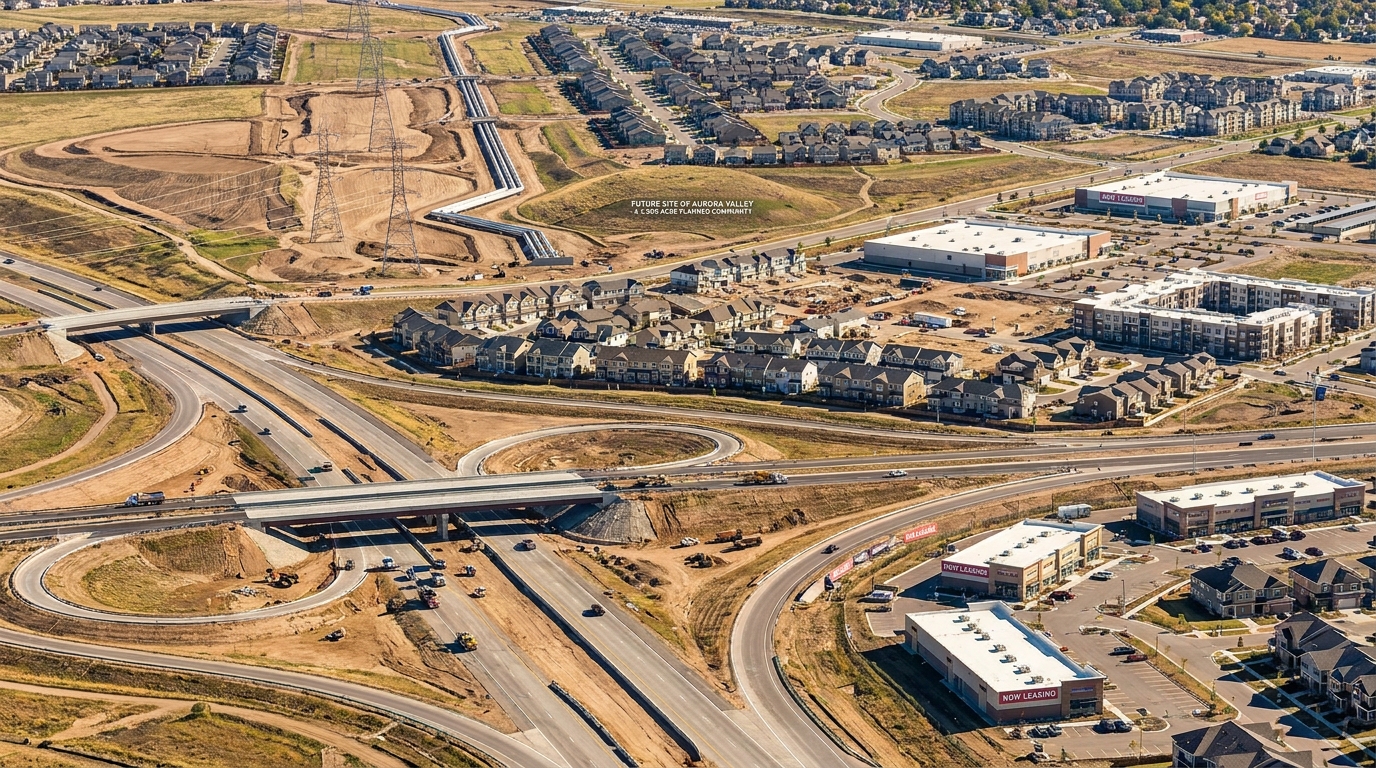
Where Investors Tend to Find the Best Infrastructure-Linked Opportunities
Transit-oriented development remains one of the most watched areas for good reason. New stations and mobility corridors can support higher density residential, mixed use projects, and retail concentration. These areas often benefit from a strong planning tailwind because policymakers want to direct growth toward connected nodes. For investors, the key is to distinguish between locations that already fully price in the future and those where execution is likely but valuation still leaves room for upside.
Suburban growth corridors can also present compelling opportunities, especially where road upgrades, utility expansion, and school or civic investment support the next stage of community formation. These locations may appeal to families, logistics users, and service businesses seeking a lower cost base with improving accessibility. In many cases, early investors benefit as these corridors mature from edge markets into established submarkets.
Industrial and logistics assets deserve special attention. Infrastructure economics is often exceptionally clear in this segment because transport time, energy reliability, and network access directly affect tenant productivity. Highway interchanges, port expansion, rail connectivity, and power upgrades can materially improve lease demand and tenant stickiness. In a world where supply chains and delivery expectations remain central, infrastructure-supported logistics real estate can offer durable strategic value.
Secondary cities can also outperform when infrastructure improves connectivity to larger economic regions. Better airports, rail links, highways, and broadband can reduce the friction that once kept firms and households concentrated in major cores. As affordability pressures push demand outward, secondary markets with improving infrastructure can attract both population and capital. Investors willing to study these transitions carefully may find a favorable balance between growth potential and entry price.
Brownfield redevelopment is another area where infrastructure analysis matters. Former industrial lands can become attractive mixed use or residential projects when remediation, transit access, and utility capacity align. These projects carry complexity, but they can also offer outsized returns because the market often undervalues land that appears difficult before the enabling infrastructure puzzle is solved.
Common Mistakes Investors Make
The first mistake is assuming all infrastructure is positive for all nearby properties. Some projects improve one type of asset while creating nuisance, noise, or competitive pressure for another. A highway expansion may help logistics users but reduce residential appeal on adjacent sites. A transit station may increase density and value for redevelopment parcels but put pressure on older assets that are no longer the highest and best use. Investors must think in terms of asset-specific impact.
The second mistake is paying too early without enough certainty. Markets often become excited about announcements that remain years away from funding or delivery. If pricing already reflects a perfect outcome while political, engineering, or legal risk remains high, the margin of safety shrinks. Good infrastructure investing requires realism on timing and execution.
The third mistake is ignoring complementary policy constraints. Infrastructure can create powerful demand, but if zoning prevents intensification or if approvals are too slow, the investment thesis may stall. The reverse can also happen. Investors may fear development charges or infrastructure fees without recognizing that those same investments can support long term value creation by enabling a more functional and scalable urban environment.
The fourth mistake is overlooking resilience. In the past, many investors treated protective infrastructure as a public issue rather than an underwriting issue. That view is outdated. Climate risk increasingly influences insurance costs, lender behavior, tenant preferences, and capitalization rates. Ignoring resilience can turn a seemingly attractive growth story into a fragile one.
The Bigger Strategic Picture
Infrastructure economics ultimately teaches a simple but powerful lesson. Real estate returns do not come only from buying buildings. They come from understanding how places evolve. Infrastructure is one of the clearest signals of that evolution because it reflects both capital allocation and long term intent. When governments and institutions invest in transport, utilities, resilience, and connectivity, they are often shaping where future demand will concentrate and which corridors will support higher productivity.
For investors, this creates an opportunity to move beyond reactive decision-making. Instead of following price momentum alone, they can evaluate the structural drivers beneath the market. They can ask whether a neighborhood is becoming more connected, more serviceable, more resilient, and more capable of supporting density or business activity. These are the kinds of questions that often separate speculative buying from strategic investing.
It is also important to remember that infrastructure does not eliminate risk. Public projects can run over budget, face delays, or deliver less value than expected. Some gains may already be capitalized into pricing. Some benefits may be diluted by oversupply. But when analyzed with discipline, infrastructure can help investors identify where future cash flow is likely to become stronger and where risk is likely to become lower. That combination is at the heart of intelligent real estate allocation.
Conclusion: Infrastructure as an Investment Signal
Understanding infrastructure economics gives real estate investors a more sophisticated lens on value. It explains why some neighborhoods reprice faster than others, why some land parcels suddenly become strategic, and why risk can compress in one corridor while rising in another. More importantly, it ties public investment to private outcomes in a way that is measurable and actionable.
The strongest investors are rarely focused on property in isolation. They study the systems that make property more useful, more resilient, and more in demand over time. Transit, roads, utilities, broadband, and climate adaptation each shape the future earning power of real estate in different ways. When these forces align with zoning, supply constraints, and healthy demand, the result can be significant appreciation, stronger rental growth, and more durable returns.
For prospective buyers, developers, and long term investors, infrastructure should be treated as a core part of market analysis rather than an afterthought. The question is not simply whether a project is being built. The deeper question is how that investment changes accessibility, development capacity, risk, and competitiveness for the specific asset under review. Investors who can answer that with precision are far more likely to make smart real estate decisions in an increasingly complex market.



No Comment! Be the first one.