



Health and wellness have become central to how people choose where to live, work, age, and spend time. That shift is now reshaping real estate at a meaningful scale. What was once treated as a luxury add-on is increasingly becoming a core investment theme, driven by demographics, consumer preferences, healthcare access concerns, and a growing understanding that building design directly affects quality of life.
Table Of Content
- Why health-focused real estate is moving into the mainstream
- The market size and momentum behind wellness real estate
- What qualifies as a health-focused development
- The difference between wellness branding and real value
- The strongest investment segments within health-focused real estate
- Seniors housing
- Medical outpatient buildings
- Active-adult communities
- Healthy mixed-use and residential communities
- How health-focused developments create financial value
- Where the health premium is most credible
- The role of certifications and healthy-building standards
- Risk factors investors should not ignore
- What investors should evaluate before committing capital
- Why Canada and North America remain attractive for this theme
- The future of health-focused developments
- Final investment perspective
Health-focused developments are real estate projects designed and operated around occupant well-being, not just aesthetics. The category spans seniors housing, active-adult communities, medical outpatient buildings, healthy mixed-use neighborhoods, and residential projects built around indoor air quality, natural light, accessibility, walkability, and access to care. For investors, this is more than a lifestyle trend — it is a structural market evolution with direct implications for occupancy, rent resilience, tenant retention, operating costs, and long-term asset relevance. Across North America, these projects are moving from a niche premium offering into the mainstream, driven by aging demographics, healthcare access pressures, and growing consumer demand for buildings that support daily well-being rather than undermine it. That shift is already measurable, with wellness real estate now expanding faster than the broader construction market, a signal of durable rather than short-lived demand.
The scale of the opportunity is becoming difficult to ignore. Global Wellness Institute data show wellness real estate reached $584 billion in 2024 and is forecast to grow to about $1.1 trillion by 2029. Earlier Global Wellness Institute figures also showed the segment rising from $225 billion in 2019 to $548 billion in 2024, making it one of the fastest-growing parts of the wider wellness economy. Research also suggests wellness real estate is expanding faster than the construction market overall, with reported growth of 23% from 2024 to 2025 compared with about 3% for overall global construction.
That growth matters because it reflects real demand, not just branding. Buyers and tenants increasingly care about air quality, daylight, noise control, accessibility, green space, mobility, and social connection. Aging populations are creating durable demand for age-friendly housing and healthcare-adjacent property types. Institutional investors are also paying closer attention to resilience and defensibility, especially in sectors where income performance is supported by long-term demographic tailwinds rather than short-term market cycles.
This article looks at why health-focused developments are emerging as a compelling real estate opportunity, where the most investable segments are, what actually drives financial performance, and how investors can distinguish between genuine value creation and superficial wellness marketing.
Why health-focused real estate is moving into the mainstream
Real estate has always responded to social priorities, but health has become unusually powerful because it touches nearly every stage of the customer journey. It affects how people evaluate a home, how employers think about workplace productivity, how seniors plan for aging, and how cities think about community design. In practical terms, that means buildings and neighborhoods that support physical and mental well-being are earning greater attention from both consumers and capital.
There are several reasons this trend has gained momentum. First, consumers have become more aware of how the built environment shapes daily life. Indoor air quality, natural light, temperature stability, acoustics, and access to green space are no longer invisible technical issues. They are now part of the value equation. Second, health systems across North America are under pressure, which makes proximity to care and preventive wellness amenities more relevant to residents and investors alike.
Third, demographic change is creating a long-duration demand base. In Canada, CMHC research shows the aging population is materially affecting housing demand and how senior households interact with the real estate market. This matters because older populations tend to place a premium on accessibility, convenience, community support, and healthcare access. These are not fleeting preferences. They are persistent demand drivers that can shape absorption and occupancy over many years.
Finally, investors are becoming more disciplined in how they think about risk. A healthy building is often a more usable building. A well-located, well-operated, health-oriented asset can support stronger tenant satisfaction, lower turnover, and better competitive positioning. In a market where buyers and renters have more choices, differentiation that improves daily living can translate into measurable financial outcomes.
Health-focused real estate is no longer just about luxury amenities. The real investment case rests on whether a development improves livability, supports demand, and stays relevant as demographics and consumer expectations evolve.
The market size and momentum behind wellness real estate
The numbers around wellness real estate help explain why more investors are paying attention. A market worth hundreds of billions of dollars is no longer experimental. It is large enough to influence land use, development pipelines, lending conversations, and institutional portfolio strategies. When the Global Wellness Institute reports a rise to $584 billion in 2024 and projects roughly $1.1 trillion by 2029, it signals sustained global momentum rather than a short-lived enthusiasm cycle.
Importantly, this momentum does not only apply to one format. It spans residential buildings with healthier design standards, resort and hospitality projects with long-stay wellness positioning, healthcare-linked real estate, age-friendly housing, and neighborhood-scale developments built around walkability and preventive health. The broad nature of the trend reduces reliance on one buyer profile and makes the category more relevant across multiple investment strategies.
North America is especially important in this conversation because the core drivers are deeply established. Healthcare spending is high, urban and suburban communities are adapting to aging populations, and there is rising interest in quality-of-life metrics among households with spending power. Investors do not need to rely on speculative assumptions. The demand base already exists, and the property market is responding to it.
That does not mean every health-labeled project will perform well. It means the overall market backdrop is supportive for developments that align design, operations, and location with actual demand. In other words, the category is attractive, but disciplined underwriting still matters.
What qualifies as a health-focused development
One of the biggest misconceptions in this space is that health-focused real estate means expensive spa features, rooftop yoga, and luxury branding. Those elements may be part of some projects, but they are not the core definition. A truly health-focused development is one that improves the experience of living, aging, working, or receiving care through design choices and operational systems that have practical, measurable benefits.
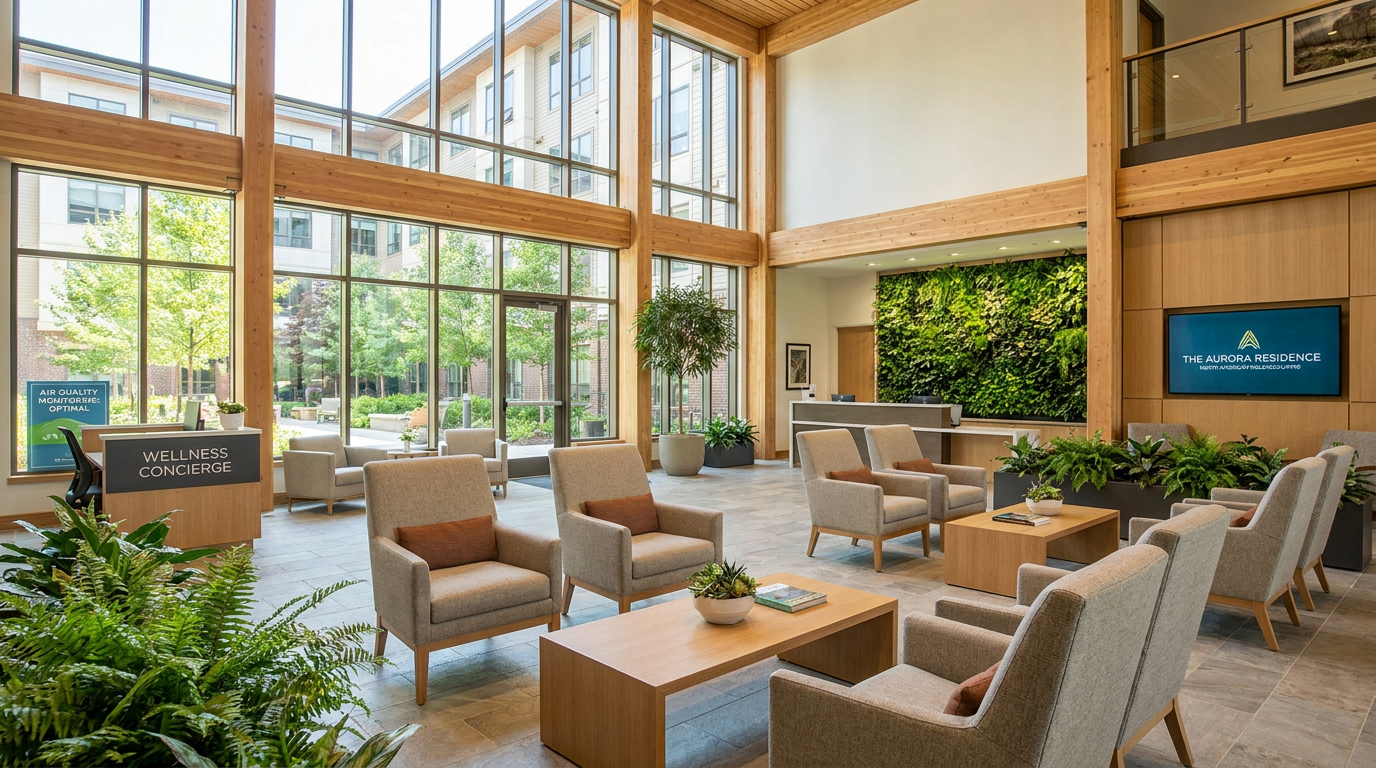
That often begins with indoor environmental quality. Better ventilation, stronger air filtration, low-toxicity materials, moisture control, and effective thermal comfort can all improve occupant experience. Daylight access and acoustic comfort also matter because they influence stress levels, sleep quality, productivity, and overall daily well-being. These features are not cosmetic. They shape how a space performs over time.
Accessibility is another major factor. Wider corridors, smoother circulation, safer entries, mobility support, thoughtful lighting, and age-friendly design can expand the useful life of a property for residents and visitors. In mixed-use and community settings, walkability and proximity to essentials become equally important. A development that allows residents to reach groceries, clinics, parks, and social spaces without depending entirely on a car can deliver meaningful lifestyle and resilience benefits.
Health-focused real estate also includes sectors where the use itself is directly tied to well-being. Seniors housing, active-adult communities, and medical outpatient buildings are obvious examples. So are workforce housing and middle-market residential projects that prioritize healthier interiors and safer community design. The key point is that this trend extends well beyond premium urban condos. It is increasingly relevant across institutional and mass-market property types.
The difference between wellness branding and real value
Investors should be careful not to confuse a wellness narrative with a wellness asset. A building can market itself as healthy while offering little beyond high-end finishes and vague lifestyle language. Real value tends to come from features that improve occupancy, user satisfaction, and operating performance. That includes cleaner indoor air, better circulation, safer mobility, stronger natural light, access to nature, practical amenity programming, and a location that supports healthier routines.
Proximity to a gym or hospital alone does not automatically make a project health-focused. Those can be useful advantages, but they are incomplete without thoughtful design and community integration. Likewise, sustainability features are not always the same as health features. There is growing overlap between low-carbon design and human well-being, but an energy-efficient building is not necessarily a healthy one if it underperforms on ventilation, comfort, or usability.
The best-performing developments usually combine three elements. They are in locations where health-related demand is durable. They are designed with functional features that matter to occupants. They are operated in a way that reinforces the original concept. Without all three, the health premium can be weaker than expected.
The strongest investment segments within health-focused real estate
Not every segment offers the same balance of yield, risk, and growth. Some areas of health-focused real estate are better suited to income-focused investors, while others offer stronger appreciation or development upside. The most compelling sectors tend to be those where health-related demand drivers are visible, measurable, and supported by long-term demographic trends.
Seniors housing
Seniors housing is one of the clearest examples of health-focused real estate with structural demand support. Canada’s aging population is reshaping the housing market, and older households are increasingly influencing what types of homes and communities are needed. Cushman & Wakefield Canada points to robust demand, muted supply growth, and expectations for strong deal activity in the seniors housing sector. That combination tends to attract investors because it suggests an improving balance between demand and available inventory.
The investment case here is not simply that more people are getting older. It is that many are seeking environments that support mobility, social connection, convenience, and varying levels of care. Well-located seniors housing can benefit from steady demand, particularly when it offers design that supports independence while reducing friction in daily life. Features such as accessible layouts, community programming, transportation support, healthcare partnerships, and quality food and wellness services can materially affect occupancy and resident retention.
There are risks, of course. Operations are more complex than in conventional multifamily. Labor costs, service quality, and regulatory factors matter. Yet for investors willing to understand the operating model, seniors housing can offer exposure to one of the most durable demographic trends in North America.
Medical outpatient buildings
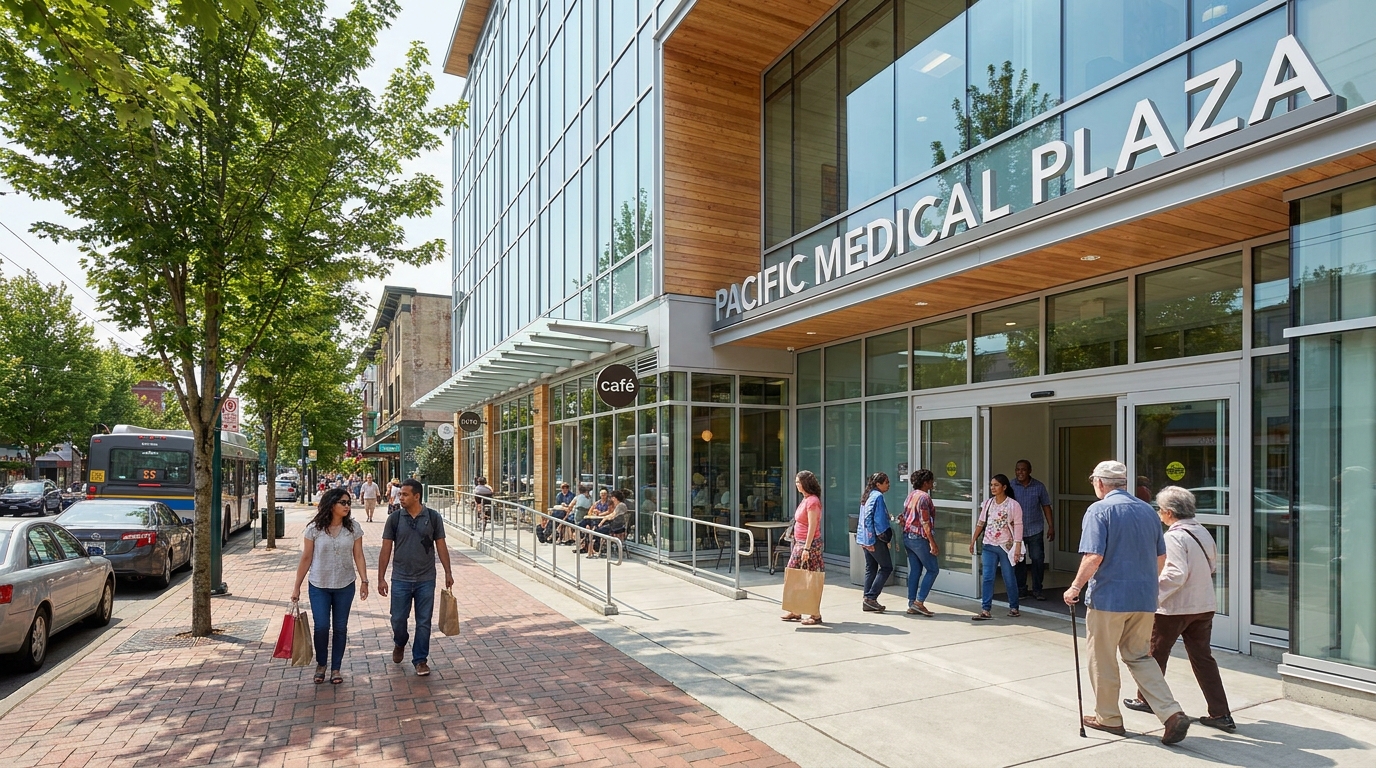
Medical outpatient buildings, often called MOBs, occupy an important position within health-focused investing because they connect real estate income to healthcare demand. CBRE’s 2025 U.S. healthcare real estate outlook says aging populations, rising healthcare spending, and new technologies are major demand drivers for this property type. Those forces are relevant across North America because outpatient care is becoming more central to the healthcare delivery model.
MOBs can be attractive because they often feature durable tenancy, specialized fit-outs, and strong location logic near hospitals, major intersections, or growing residential corridors. As more healthcare services move outside large hospital campuses into distributed outpatient settings, real estate owners can benefit from stable user demand. For investors seeking resilience, this can be appealing because healthcare use is less discretionary than many retail or office categories.
The best opportunities tend to be in properties that combine convenience with quality. Accessible parking, public transit options, clear wayfinding, modern systems, and integration with surrounding services can improve tenant appeal. From an underwriting perspective, lease terms, tenant mix, reimbursement dynamics, and regional healthcare patterns all matter. Still, the sector offers a strong example of how health demand can underpin commercial real estate performance.
Active-adult communities
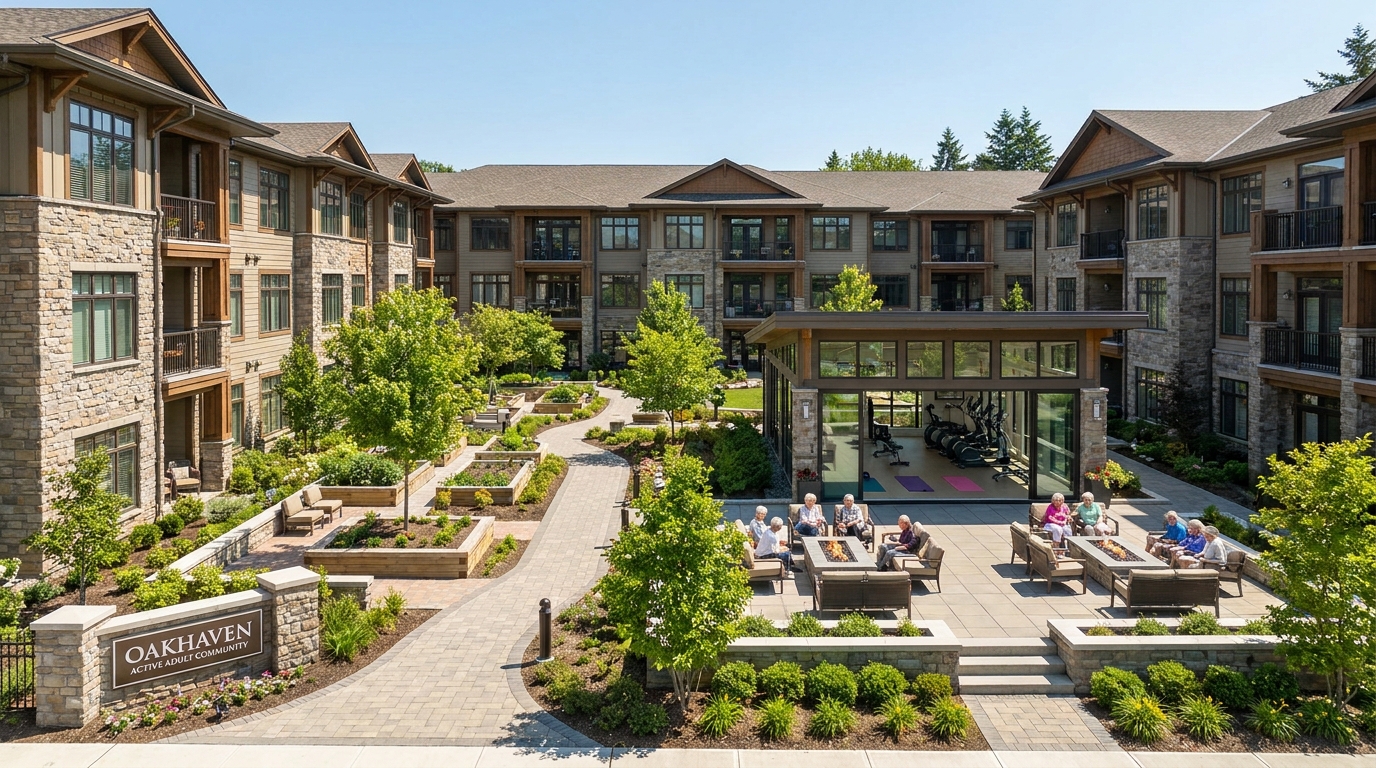
Active-adult communities sit between conventional residential living and higher-care seniors housing. They are designed for older residents who want independent lifestyles, lower-maintenance living, and wellness-oriented environments. Cushman & Wakefield’s investor commentary in the United States has highlighted growing momentum in this category, supported by stable occupancy and favorable rent growth.
These communities are compelling because they respond to a very specific buyer and renter profile. Residents often want social connection, fitness access, nature, safety, and convenience without the institutional feel of traditional senior care settings. Projects that provide trails, gathering spaces, clubhouses, flexible unit layouts, and nearby healthcare or retail can create a sticky resident base.
For investors, the appeal lies in a demographic segment with growing scale and relatively clear preferences. The challenge is execution. A project that overbuilds luxury amenities without matching local pricing power can struggle. A project that gets the lifestyle proposition right, however, can command meaningful demand and differentiate itself from generic multifamily stock.
Healthy mixed-use and residential communities
Health-focused investing also extends to broader residential and mixed-use formats. This includes projects built around the idea of the complete community, where residents can access daily needs within a short walk or transit trip. In these developments, health value is created through neighborhood design as much as through the building itself.
Walkability, parks, cycling infrastructure, grocery access, clinics, childcare, and social spaces all support healthier routines. When combined with better indoor air quality, natural light, acoustic performance, and strong building management, these communities can become more attractive to families, professionals, and downsizers alike. The investment advantage is that healthy design can broaden demand rather than narrowing it to a niche audience.
Middle-market housing should not be overlooked in this category. As awareness of healthy living environments spreads, there is a growing case for practical upgrades that improve livability without relying on premium luxury pricing. In some markets, this can be a more scalable and durable opportunity than high-concept wellness branding.
How health-focused developments create financial value
The financial logic behind health-focused developments is strongest when the features translate into measurable market performance. Investors should think in terms of occupancy support, pricing power, retention, operating efficiency, and exit appeal. A healthy building is valuable when it performs better, leases faster, retains users longer, or faces lower friction than competing stock.
Tenant retention is a useful starting point. People are less likely to leave a property that makes daily life easier, more comfortable, and more predictable. Better daylight, cleaner air, quieter interiors, easier mobility, and access to social and wellness spaces can create a higher-quality experience that reduces turnover. Lower turnover can help preserve income and limit leasing costs.
There can also be a rent resilience effect. In competitive markets, properties that clearly differentiate themselves may have stronger ability to defend pricing, especially if their health-oriented benefits are noticeable and practical. This does not mean every healthy feature commands a direct rent premium. It means the asset may hold value better through market softness because users perceive it as more functional and more desirable.
Operationally, healthier buildings may also reduce certain lifecycle costs. CMHC’s healthy-homes research and earlier healthy housing materials have highlighted links between housing quality, physical and mental health, and lower maintenance implications over the life of a building. For owners, better moisture management, more durable materials, and thoughtful ventilation strategies can reduce some recurring problems that erode margins over time.
Exit value matters as well. Buyers increasingly care about asset differentiation, certification, resilience, and demographic relevance. A property with strong health credentials, practical design, and proven market demand may attract a wider pool of interest, particularly from institutional capital looking for long-term themes rather than cyclical bets.
Where the health premium is most credible
The health premium is most credible when it is tied to usability and local demand. A building near healthcare nodes, parks, and retail essentials with strong air quality systems and accessible design has a clearer investment case than a generic luxury property with wellness branding layered on top. Investors should look for features that improve how the space functions every day.
Examples include superior filtration and ventilation, strong daylight access, acoustic comfort, mobility support, safe circulation, green space integration, age-friendly layouts, and community programming that encourages connection. These attributes can make a property more attractive without making it dependent on a passing trend. The more practical the benefit, the more defensible the value proposition.
The role of certifications and healthy-building standards
As the market matures, investors need ways to evaluate quality consistently. That is where certification frameworks such as Fitwel, WELL, and Green Globes become useful. They provide structured approaches for owners and developers to implement and benchmark health and wellness strategies. They also help communicate to tenants, buyers, and capital partners that a project’s health positioning has some level of discipline behind it.
Fitwel describes its certification as a way for building owners to implement and benchmark health and wellness strategies. In Canada and across North America, organizations linked to Green Globes and broader green building frameworks are also placing greater emphasis on human health and well-being. This is important because standardized validation can reduce skepticism around wellness claims.
Certification alone does not create investment success. It should be seen as a signal, not a substitute for fundamentals. A poorly located building with weak operations will not outperform simply because it holds a plaque in the lobby. But in competitive markets, credible standards can support leasing narratives, investor confidence, and a more disciplined development process.
There is also an important overlap between sustainability and health. Lower-carbon buildings, resilient systems, and climate-conscious design increasingly intersect with occupant well-being. Better materials, natural ventilation strategies, access to nature, and energy-efficient comfort systems can strengthen both environmental and human performance. For investors, this convergence may improve long-term relevance as regulatory and consumer expectations continue to evolve.
Risk factors investors should not ignore
Health-focused real estate is promising, but it is not risk-free. Specialized amenities can raise development costs and add operating complexity. If the local market does not value the features enough to support absorption or pricing, the return profile can weaken. Investors should be especially cautious about projects that spend heavily on visible wellness concepts while underinvesting in the less glamorous systems that actually improve indoor living conditions.
Another risk is assuming broad demand without segment-specific analysis. Seniors housing, active-adult communities, and medical outpatient buildings all respond to different user needs, lease structures, and operational realities. A strong macro trend does not remove the need for local due diligence. Investors still need to assess neighborhood demographics, competitive supply, service availability, and affordability.
Operational execution is particularly important. In health-focused real estate, the experience of the building often matters as much as the design itself. Poor maintenance, weak property management, or inconsistent programming can quickly undermine the concept. The more service-intensive the asset, the more essential it is to understand management quality.
There is also reputational risk tied to overclaiming. As the category grows, users and investors are becoming more sophisticated. A project that markets wellness aggressively but fails to deliver tangible benefits can lose credibility. Long term, the strongest assets will be those that can demonstrate practical health outcomes and user satisfaction rather than relying on marketing language alone.
What investors should evaluate before committing capital
Investing in health-focused developments requires the same discipline as any other real estate strategy, but with a more nuanced lens on use and design. Before committing capital, investors should examine whether health-oriented features are aligned with genuine demand drivers and whether the concept is supported by the local market. It helps to think beyond aesthetics and ask what actually improves usability and revenue durability.
- Location quality: Is the project close to healthcare, parks, retail essentials, transit, and daily services that support healthier routines?
- Demographic fit: Does the surrounding population support the intended user base, whether seniors, active adults, families, or healthcare providers?
- Functional design: Are indoor air quality, daylight, acoustics, circulation, and accessibility meaningfully addressed?
- Operational model: Can management consistently deliver the wellness promise in a cost-effective way?
- Capital efficiency: Are the health-focused features likely to improve leasing, retention, or pricing enough to justify their cost?
- Certification and validation: Is there credible third-party benchmarking or a clear strategy for documenting building performance?
These questions help separate durable opportunities from concept-heavy developments that may struggle once the marketing phase ends. The strongest projects usually score well across several dimensions rather than depending on one standout amenity.
Why Canada and North America remain attractive for this theme
Canada and the broader North American market offer a compelling setting for health-focused real estate because the demand drivers are both structural and increasingly visible. Aging demographics are not a short-term phenomenon. Neither is the pressure on healthcare systems or the growing awareness of how housing quality affects physical and mental well-being. These are long-run forces that can shape how capital is allocated for years ahead.
CMHC’s healthy-homes research adds another layer to the conversation by emphasizing that housing adequacy frameworks do not always fully capture conditions that affect health, including issues like infestation and broader indoor quality concerns. That suggests a future in which healthier housing standards receive more policy attention, more consumer awareness, and potentially more regulatory backing. For investors, early positioning in better-quality healthy housing could prove advantageous.
At the same time, the region has the income base, institutional interest, and healthcare infrastructure to support specialized property types. Medical outpatient buildings can benefit from healthcare system evolution. Seniors housing and active-adult communities can benefit from aging trends. Mixed-use healthy neighborhoods can benefit from urban planning shifts that favor walkability and complete communities. Few themes connect so clearly across residential, healthcare, and lifestyle investing.
The future of health-focused developments
Looking ahead, the category is likely to become broader, more data-driven, and less dependent on luxury positioning. Longevity-focused communities will probably continue to gain attention as people seek to extend independent, healthy living rather than simply plan for later-stage care. Mixed-use neighborhoods that combine healthcare access, mobility, green space, and social infrastructure are also likely to become more valuable as cities rethink what quality housing should deliver.
Technology will play a role, but probably as a support tool rather than the main attraction. Monitoring systems for air quality, touchless access, smart ventilation, and health-supportive building management can improve operations, yet they will be most effective when paired with sound design fundamentals. The market may also continue moving toward stronger disclosure and certification standards as investors demand clearer proof of health-related performance.
Perhaps the most important development is that health-focused real estate is becoming less niche and more universal. Buyers and tenants are not just seeking prestige. They are seeking comfort, safety, access, resilience, and spaces that support daily life. As that expectation spreads, healthier development principles may become standard across much of the market. If that happens, investors who understand the theme early will be better positioned to identify assets that stay relevant as the baseline rises.
Final investment perspective
Health-focused developments represent a meaningful evolution in real estate investing because they combine lifestyle demand with practical wealth-building potential. The sector’s rapid growth, reinforced by Global Wellness Institute data, shows that this is not a fringe idea. It is a market with scale, momentum, and cross-sector relevance. In North America, the case is strengthened by aging demographics, healthcare demand, and a growing focus on housing quality and building performance.
The opportunity is strongest where health-related features are functional rather than decorative. Investors should prioritize developments that improve air quality, accessibility, daylight, walkability, social connection, and proximity to care or daily essentials. Whether the asset is a seniors housing community, a medical outpatient building, an active-adult project, or a mixed-use residential development, the same principle applies. Real value comes from usability, demand alignment, and operational execution.
For wealth-oriented investors, this is ultimately a strategy about owning assets that fit the next era of consumer priorities. Health and wellness are becoming embedded in how people evaluate property, not just how they spend discretionary income. That makes health-focused developments more than a trend. It makes them a serious lens for finding resilient, differentiated, and potentially rewarding real estate opportunities in the years ahead.



No Comment! Be the first one.