West Toronto’s Rail Corridor Is Quietly Rewriting the Value of the Junction Triangle
Cities rarely announce their turning points with fanfare. More often, the shift shows up first as a fourth rail track, a pedestrian tunnel, or a reopened bike path. That is exactly what is happening right now across Toronto’s West End, where a cluster of infrastructure projects around the Junction Triangle, Bloor GO, and Dundas West is quietly setting the stage for the next chapter of neighbourhood growth.
The headline item is the completion of a 2.5-kilometre fourth track along the Kitchener GO corridor between Lansdowne Avenue and Dupont Street, announced by the Province of Ontario on July 30. This is not a minor engineering footnote. Quad-tracking has been the long-term precondition for running the Union Pearson Express as often as every 7.5 minutes and the Kitchener Line every 15 minutes, service levels that fundamentally change how attractive a neighbourhood is to live in without a car. Infrastructure of this scale takes decades to deliver, and this piece of it follows nearly twenty years of continuous investment tracing back to the 2011 Georgetown South Expansion.
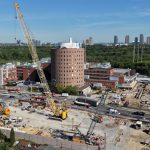
What strikes me as a development story is the second project running in parallel: the pedestrian tunnel connecting Bloor GO and Dundas West subway station, which will finally link two transit stations sitting less than 200 metres apart, more than fifty years after Bloor GO opened without any direct connection at all. That gap persisted for decades in part because the owner of the adjacent Crossways apartment complex resisted the below-grade easement needed for the most direct route. Metrolinx ultimately expropriated the space, and excavation began through the building’s own parking garage in May 2024. Structural work is now well advanced, even though no completion date has been published.
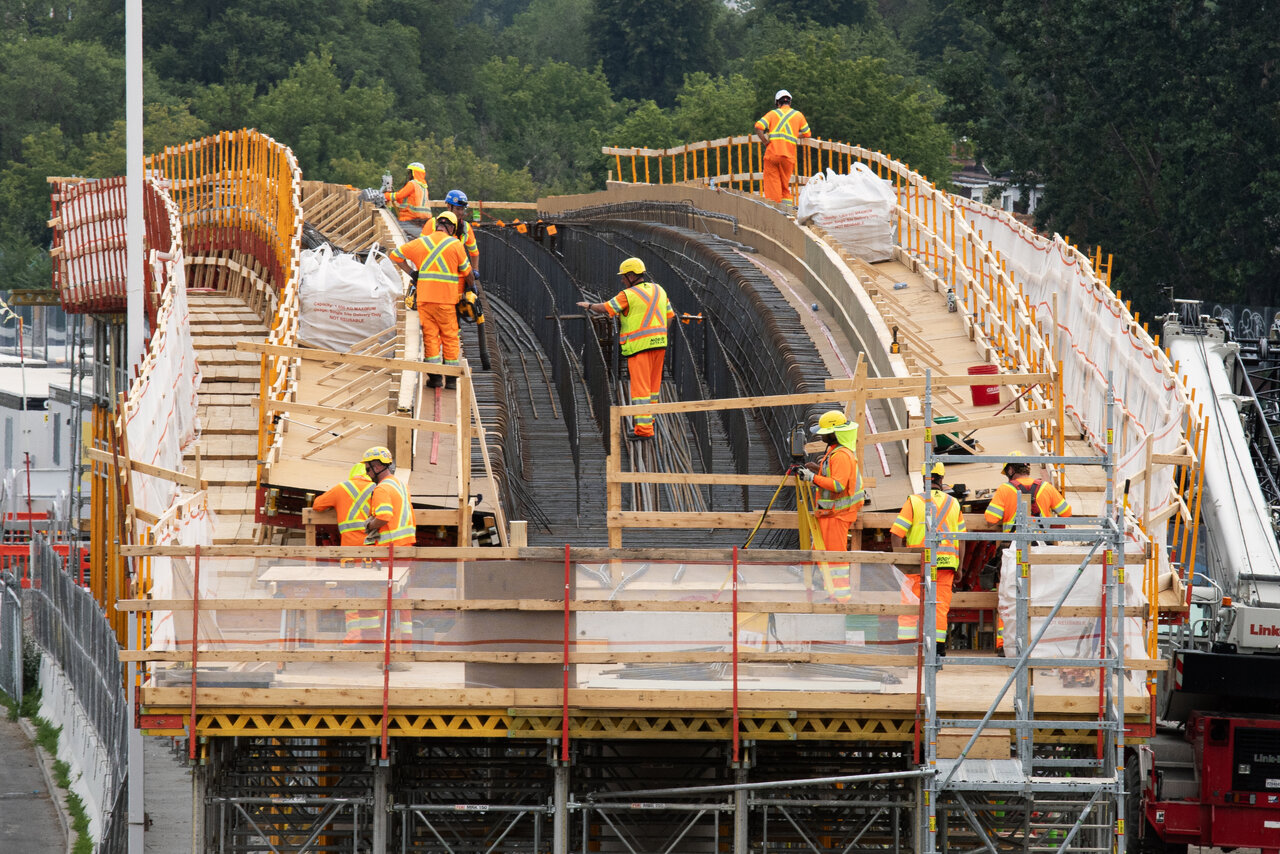
For anyone tracking where the next wave of West End housing demand will land, this matters more than any single condo announcement. Active transportation is also catching up. The central section of the West Toronto Rail Path, closed since 2022 for corridor widening, reopened on July 31, restoring a continuous car-free route from Cariboo Avenue to Dundas Street West. The larger prize, a two-kilometre southeastern extension toward King Street West, has been delayed since projections first pointed to a 2022 start. That project finally went to tender this year, with a winning bid expected in fall 2026.
Every grade separation, tunnel, and trail extension in this corridor is a quiet signal about where accessibility, and therefore land value, is heading next.
Metrolinx’s own Barrie-Downtown Corridor Multi-Use Path, extending the Davenport Diamond Greenway south toward the rail path extension, rounds out the picture. None of these projects are glamorous on their own. Together, they represent the kind of unglamorous, expensive, multi-decade groundwork that developers watch closely, because transit access and walkable connectivity are what ultimately justify density. The Junction Triangle has waited a long time for these pieces to click into place. Land strategy in this corridor should account for the fact that they finally are.
Source: UrbanToronto, “West End Connections: Construction Updates on Transit and Trails”