Scarborough’s Next Growth Corridor Takes Shape as Subway Construction Advances
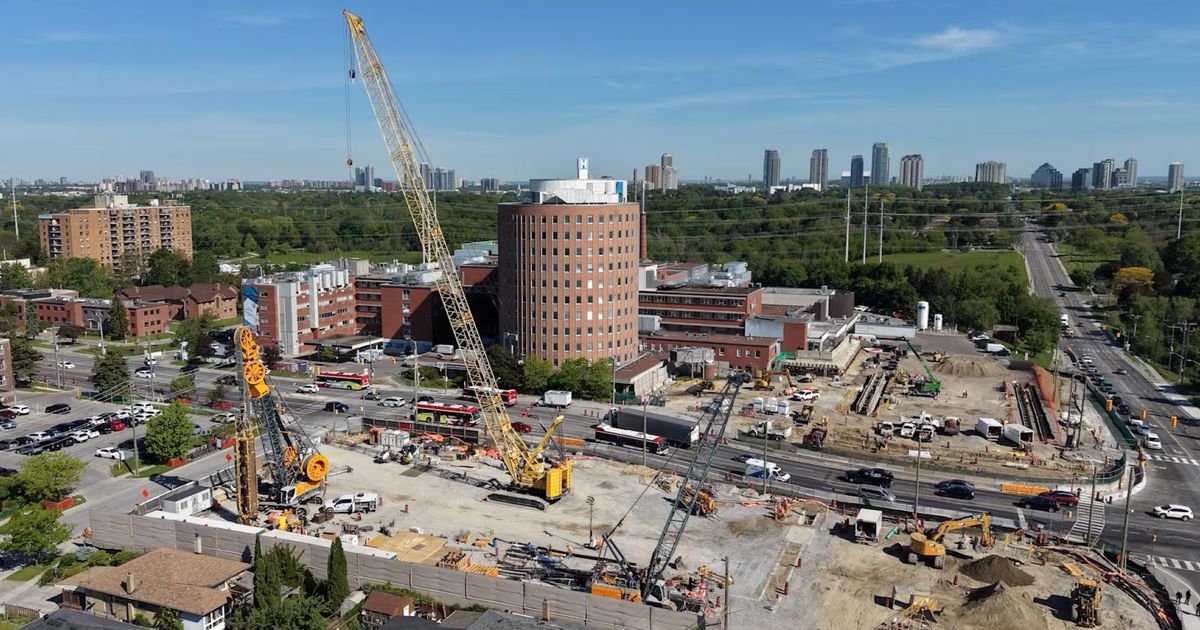
Every major transit line eventually becomes a land value story, and the Scarborough Subway Extension is no exception. Metrolinx has now broken ground on the future station at Lawrence Avenue and McCowan Road, and the images released this week show a project moving from planning documents into physical reality. For those of us who study how cities grow, this is the moment worth paying attention to, well before the trains ever run.
The extension will carry Line 2 another 7.8 kilometres into Scarborough, replacing the retired Line 4 Scarborough RT with a three-stop connection ending north of Highway 401 at Sheppard Avenue East and McCowan Road. The price tag, north of $10 billion, is significant, and the projected ridership at Lawrence and McCowan, roughly 5,000 riders in the morning peak, is modest next to a station like Bloor-Yonge. But judging a station purely on day-one ridership misses the actual development logic at play here.
Transit infrastructure of this scale is rarely justified by the demand that exists today. It is justified by the demand, density, and land use it makes possible tomorrow. A station connecting residents to roughly 3,500 nearby jobs, paired with a new bus terminal drawing riders from across Scarborough, is effectively a foundation for intensification. Land near future stops tends to attract precisely the kind of mid and high density housing that Toronto needs more of, provided municipal zoning and provincial planning keep pace with the infrastructure investment.
What stands out from an engineering and feasibility standpoint is the tunnel itself, now roughly 75 percent complete and built as the widest single-bore subway tunnel in the country, wide enough to fit a three storey building inside. That single-bore approach, carrying trains in both directions through one tunnel rather than twin bores, reflects a deliberate cost and construction strategy for a corridor that runs through lower density suburban terrain rather than the dense downtown core.
Strong projects are built from a wider understanding of timing, access, infrastructure, and the future identity of a community, not just the ridership numbers on opening day.
Five years into construction, with piling and excavation now underway at Lawrence and McCowan and roughly 3,000 workers active across the line, the project has crossed the point where it exists mainly on paper. For developers and planners watching Scarborough, the real work starts now: aligning zoning, community infrastructure, and housing supply plans around a transit spine that will define this part of the city for decades. Premier Doug Ford framed the extension as a way to connect residents to jobs, schools, and appointments. The more consequential outcome may be what gets built around these stations once the tunnels are finished and the land around them starts to move.
Source: blogTO