Regina’s Affordability Edge Is Real, But the Supply Math Still Has to Catch Up
Regina holding the title of Canada’s most affordable city for housing is not an accident of the market. It is the temporary result of a supply and demand balance that the city’s own growth data shows is starting to tighten. When I look at a report like Regina’s 2026 Growth Monitoring Report alongside the RBC Housing Trends and Affordability figures, I do not just see a snapshot of low prices today. I see a runway with a clock on it.
The numbers are worth sitting with. A benchmark home price of 356,400 dollars as of June 2026 is the lowest among major Canadian cities, and an affordability measure of 26 per cent of income needed for essential ownership costs is enviable territory for anyone who has watched Toronto or Vancouver buyers stretch past 60 per cent. But benchmark prices in Regina have still climbed more than 50,000 dollars since 2023, and the rental vacancy rate has fallen from 6.8 per cent in 2021 to 2.6 per cent in 2025. That is the signature of a market where demand is outpacing the pipeline, even if it has not yet caught up to the sticker shock of larger metros.
This is where land development strategy becomes the real story, more than the price tag. Regina is projecting a population of 370,000 by 2051, which the city says will require 56,900 additional housing units starting from 2024. Against that target, 2025 delivered roughly 1,700 approved units, split between infill in established neighbourhoods and greenfield construction. Building permits hit a five-year high, which is genuinely good news, but the math is unforgiving: the city needs to average close to 2,000 units a year for the next twenty-six years to hit its own target. A five-year high in permits is a good headline. It is not yet a sustained pace.
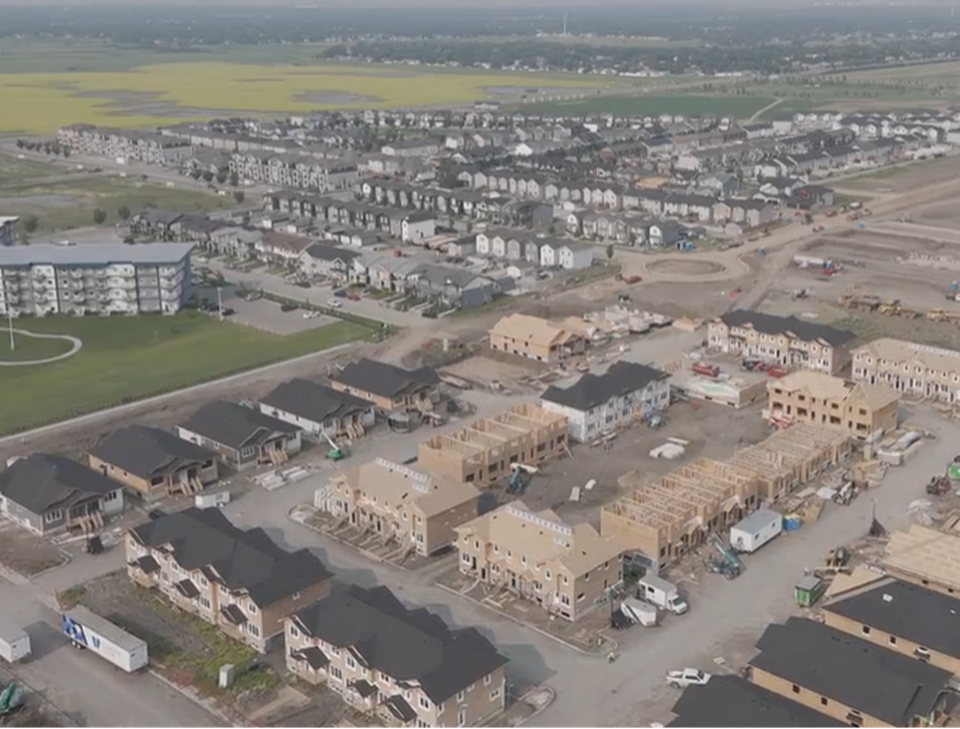
What gives Regina a genuine structural advantage is that it is not waiting for a single silver bullet. The city already has more than 5,000 units in the pipeline through named greenfield developments including Coopertown phase 1, Hawkstone, Kensington Greens, and Harbour Landing South, and that figure does not even count longer-horizon neighbourhoods like Foxtail and Tower Crossing, Riverside, and Harbour Landing West. Add in vacant lot development, which quietly added 411 dwelling units between 2020 and 2025, and you have a city treating supply as a layered problem rather than a single project to greenlight.
Affordability is not a feature a city keeps by default. It is a position a city has to keep building toward.
For anyone thinking about where the next phase of Prairie growth lands, Regina’s pipeline of named projects and its willingness to combine infill with greenfield expansion is the part of this report that matters most. Affordability got the headline. Land strategy is what will decide whether Regina still owns that headline in five years.