Elsewhere on the list, residential work continues to prove itself the most demanding of all architectural categories. Patkau Architects appear twice, with the Arbour House in Victoria and the Kìwekì Point project in Ottawa, and 5468796 Architecture is recognized both for the Veil House in Winnipeg and for a parkade reimagined with Kasian Architecture in Calgary. Even something as utilitarian as a parking structure, it seems, can be treated as a design problem worth solving with care rather than defaulted to concrete indifference. That is the throughline across this year’s winners: nothing here was allowed to be an afterthought, not the fire hall, not the parkade, not the small cottage in New Brunswick from MacKay-Lyons Sweetapple Architects.
Table Of Content
- Canada’s Governor General’s Medals Prove Restraint Is Still the Boldest Design Move
- Canada’s Governor General’s Medals Prove Restraint Is Still the Boldest Design Move
- Canada’s Governor General’s Medals Prove Restraint Is Still the Boldest Design Move
- Canada’s Governor General’s Medals Prove Restraint Is Still the Boldest Design Move
- Canada’s Governor General’s Medals Prove Restraint Is Still the Boldest Design Move
- Canada’s Governor General’s Medals Prove Restraint Is Still the Boldest Design Move
- Canada’s Governor General’s Medals Prove Restraint Is Still the Boldest Design Move
Architecture shapes the everyday experience of Canadians and leaves a lasting legacy for future generations.
That line from RAIC president Jonathan Bisson is the closest thing to a mission statement this program has, and the winning projects live up to it without needing to say so themselves. For readers who care about the aesthetics of a home, a hotel lobby, or a civic building, this is the real takeaway: the most enduring design decisions are rarely the loudest ones. They are the ones made with patience, with respect for context, and with a willingness to let a building belong to the people who will actually use it.
Source: Archinect, “Best new architecture by Canadian architects honored by RAIC”.
A fire station in Edmonton sits on the same list as a Montreal residential building, a Toronto hotel, and a powwow arbour raised with the Muscowpetung Saulteaux Nation in Saskatchewan. On paper, these projects have almost nothing in common. In practice, each one reveals a country of architects who have stopped chasing spectacle for its own sake and started asking harder, quieter questions about place, material honesty, and who a building is actually for.
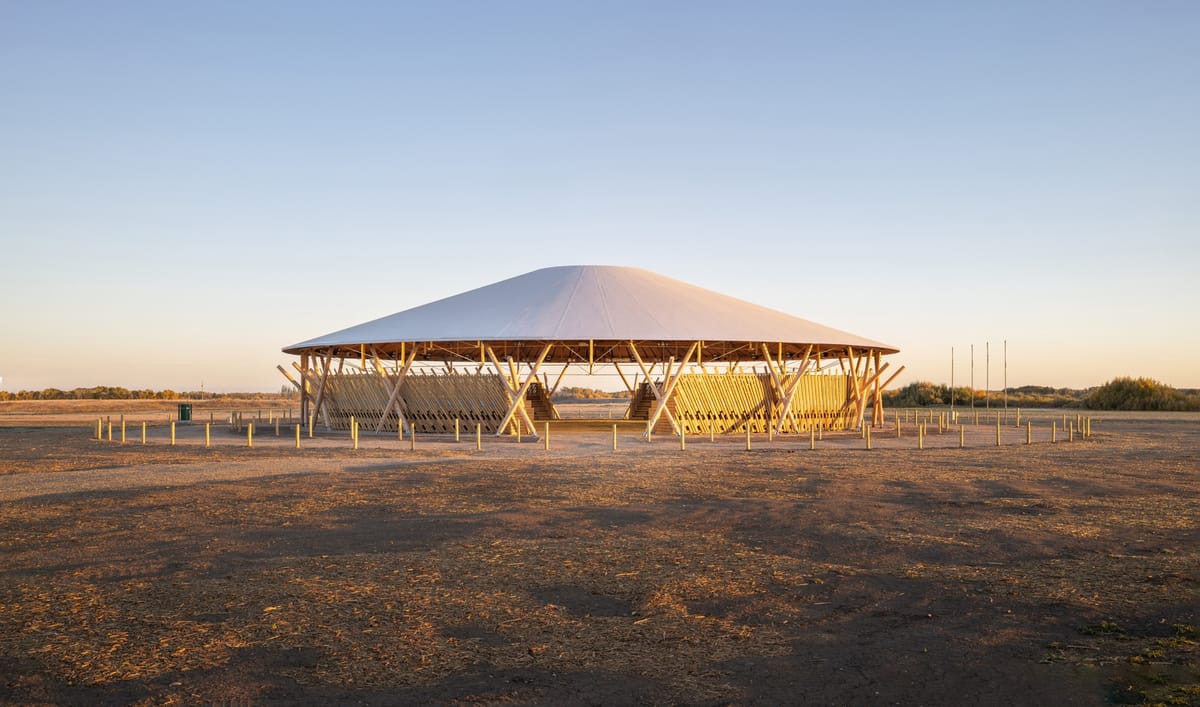
The Muscowpetung Powwow Arbour, designed by Oxbow Architecture with Richard Kroeker, is the clearest expression of that shift. It is not a monument in the conventional sense. It is a structure built in partnership with the Nation it serves, shaped by ceremony rather than spectacle, and it earns its place among the medals precisely because it resists the instinct to perform. There is a lesson in that for anyone who thinks luxury design must always announce itself. Sometimes the most refined gesture is the one that steps back and lets the site, the community, and the ritual lead.
Elsewhere on the list, residential work continues to prove itself the most demanding of all architectural categories. Patkau Architects appear twice, with the Arbour House in Victoria and the Kìwekì Point project in Ottawa, and 5468796 Architecture is recognized both for the Veil House in Winnipeg and for a parkade reimagined with Kasian Architecture in Calgary. Even something as utilitarian as a parking structure, it seems, can be treated as a design problem worth solving with care rather than defaulted to concrete indifference. That is the throughline across this year’s winners: nothing here was allowed to be an afterthought, not the fire hall, not the parkade, not the small cottage in New Brunswick from MacKay-Lyons Sweetapple Architects.
Architecture shapes the everyday experience of Canadians and leaves a lasting legacy for future generations.
That line from RAIC president Jonathan Bisson is the closest thing to a mission statement this program has, and the winning projects live up to it without needing to say so themselves. For readers who care about the aesthetics of a home, a hotel lobby, or a civic building, this is the real takeaway: the most enduring design decisions are rarely the loudest ones. They are the ones made with patience, with respect for context, and with a willingness to let a building belong to the people who will actually use it.
Source: Archinect, “Best new architecture by Canadian architects honored by RAIC”.
Every two years, the Royal Architectural Institute of Canada and the Canada Council for the Arts pause to ask a quiet but important question: which buildings, among everything raised across this vast country, actually deserved to be built. The 2026 Governor General’s Medals in Architecture answer that question with eleven projects, and what strikes me most is how little they share in program, yet how much they share in sensibility.
A fire station in Edmonton sits on the same list as a Montreal residential building, a Toronto hotel, and a powwow arbour raised with the Muscowpetung Saulteaux Nation in Saskatchewan. On paper, these projects have almost nothing in common. In practice, each one reveals a country of architects who have stopped chasing spectacle for its own sake and started asking harder, quieter questions about place, material honesty, and who a building is actually for.
The Muscowpetung Powwow Arbour, designed by Oxbow Architecture with Richard Kroeker, is the clearest expression of that shift. It is not a monument in the conventional sense. It is a structure built in partnership with the Nation it serves, shaped by ceremony rather than spectacle, and it earns its place among the medals precisely because it resists the instinct to perform. There is a lesson in that for anyone who thinks luxury design must always announce itself. Sometimes the most refined gesture is the one that steps back and lets the site, the community, and the ritual lead.
Elsewhere on the list, residential work continues to prove itself the most demanding of all architectural categories. Patkau Architects appear twice, with the Arbour House in Victoria and the Kìwekì Point project in Ottawa, and 5468796 Architecture is recognized both for the Veil House in Winnipeg and for a parkade reimagined with Kasian Architecture in Calgary. Even something as utilitarian as a parking structure, it seems, can be treated as a design problem worth solving with care rather than defaulted to concrete indifference. That is the throughline across this year’s winners: nothing here was allowed to be an afterthought, not the fire hall, not the parkade, not the small cottage in New Brunswick from MacKay-Lyons Sweetapple Architects.
Architecture shapes the everyday experience of Canadians and leaves a lasting legacy for future generations.
That line from RAIC president Jonathan Bisson is the closest thing to a mission statement this program has, and the winning projects live up to it without needing to say so themselves. For readers who care about the aesthetics of a home, a hotel lobby, or a civic building, this is the real takeaway: the most enduring design decisions are rarely the loudest ones. They are the ones made with patience, with respect for context, and with a willingness to let a building belong to the people who will actually use it.
Source: Archinect, “Best new architecture by Canadian architects honored by RAIC”.
Every two years, the Royal Architectural Institute of Canada and the Canada Council for the Arts pause to ask a quiet but important question: which buildings, among everything raised across this vast country, actually deserved to be built. The 2026 Governor General’s Medals in Architecture answer that question with eleven projects, and what strikes me most is how little they share in program, yet how much they share in sensibility.
A fire station in Edmonton sits on the same list as a Montreal residential building, a Toronto hotel, and a powwow arbour raised with the Muscowpetung Saulteaux Nation in Saskatchewan. On paper, these projects have almost nothing in common. In practice, each one reveals a country of architects who have stopped chasing spectacle for its own sake and started asking harder, quieter questions about place, material honesty, and who a building is actually for.
The Muscowpetung Powwow Arbour, designed by Oxbow Architecture with Richard Kroeker, is the clearest expression of that shift. It is not a monument in the conventional sense. It is a structure built in partnership with the Nation it serves, shaped by ceremony rather than spectacle, and it earns its place among the medals precisely because it resists the instinct to perform. There is a lesson in that for anyone who thinks luxury design must always announce itself. Sometimes the most refined gesture is the one that steps back and lets the site, the community, and the ritual lead.
Elsewhere on the list, residential work continues to prove itself the most demanding of all architectural categories. Patkau Architects appear twice, with the Arbour House in Victoria and the Kìwekì Point project in Ottawa, and 5468796 Architecture is recognized both for the Veil House in Winnipeg and for a parkade reimagined with Kasian Architecture in Calgary. Even something as utilitarian as a parking structure, it seems, can be treated as a design problem worth solving with care rather than defaulted to concrete indifference. That is the throughline across this year’s winners: nothing here was allowed to be an afterthought, not the fire hall, not the parkade, not the small cottage in New Brunswick from MacKay-Lyons Sweetapple Architects.
Architecture shapes the everyday experience of Canadians and leaves a lasting legacy for future generations.
That line from RAIC president Jonathan Bisson is the closest thing to a mission statement this program has, and the winning projects live up to it without needing to say so themselves. For readers who care about the aesthetics of a home, a hotel lobby, or a civic building, this is the real takeaway: the most enduring design decisions are rarely the loudest ones. They are the ones made with patience, with respect for context, and with a willingness to let a building belong to the people who will actually use it.
Source: Archinect, “Best new architecture by Canadian architects honored by RAIC”.
Canada’s Governor General’s Medals Prove Restraint Is Still the Boldest Design Move
Every two years, the Royal Architectural Institute of Canada and the Canada Council for the Arts pause to ask a quiet but important question: which buildings, among everything raised across this vast country, actually deserved to be built. The 2026 Governor General’s Medals in Architecture answer that question with eleven projects, and what strikes me most is how little they share in program, yet how much they share in sensibility.
A fire station in Edmonton sits on the same list as a Montreal residential building, a Toronto hotel, and a powwow arbour raised with the Muscowpetung Saulteaux Nation in Saskatchewan. On paper, these projects have almost nothing in common. In practice, each one reveals a country of architects who have stopped chasing spectacle for its own sake and started asking harder, quieter questions about place, material honesty, and who a building is actually for.
The Muscowpetung Powwow Arbour, designed by Oxbow Architecture with Richard Kroeker, is the clearest expression of that shift. It is not a monument in the conventional sense. It is a structure built in partnership with the Nation it serves, shaped by ceremony rather than spectacle, and it earns its place among the medals precisely because it resists the instinct to perform. There is a lesson in that for anyone who thinks luxury design must always announce itself. Sometimes the most refined gesture is the one that steps back and lets the site, the community, and the ritual lead.
Elsewhere on the list, residential work continues to prove itself the most demanding of all architectural categories. Patkau Architects appear twice, with the Arbour House in Victoria and the Kìwekì Point project in Ottawa, and 5468796 Architecture is recognized both for the Veil House in Winnipeg and for a parkade reimagined with Kasian Architecture in Calgary. Even something as utilitarian as a parking structure, it seems, can be treated as a design problem worth solving with care rather than defaulted to concrete indifference. That is the throughline across this year’s winners: nothing here was allowed to be an afterthought, not the fire hall, not the parkade, not the small cottage in New Brunswick from MacKay-Lyons Sweetapple Architects.
Architecture shapes the everyday experience of Canadians and leaves a lasting legacy for future generations.
That line from RAIC president Jonathan Bisson is the closest thing to a mission statement this program has, and the winning projects live up to it without needing to say so themselves. For readers who care about the aesthetics of a home, a hotel lobby, or a civic building, this is the real takeaway: the most enduring design decisions are rarely the loudest ones. They are the ones made with patience, with respect for context, and with a willingness to let a building belong to the people who will actually use it.
Source: Archinect, “Best new architecture by Canadian architects honored by RAIC”.
A fire station in Edmonton sits on the same list as a Montreal residential building, a Toronto hotel, and a powwow arbour raised with the Muscowpetung Saulteaux Nation in Saskatchewan. On paper, these projects have almost nothing in common. In practice, each one reveals a country of architects who have stopped chasing spectacle for its own sake and started asking harder, quieter questions about place, material honesty, and who a building is actually for.
The Muscowpetung Powwow Arbour, designed by Oxbow Architecture with Richard Kroeker, is the clearest expression of that shift. It is not a monument in the conventional sense. It is a structure built in partnership with the Nation it serves, shaped by ceremony rather than spectacle, and it earns its place among the medals precisely because it resists the instinct to perform. There is a lesson in that for anyone who thinks luxury design must always announce itself. Sometimes the most refined gesture is the one that steps back and lets the site, the community, and the ritual lead.
Elsewhere on the list, residential work continues to prove itself the most demanding of all architectural categories. Patkau Architects appear twice, with the Arbour House in Victoria and the Kìwekì Point project in Ottawa, and 5468796 Architecture is recognized both for the Veil House in Winnipeg and for a parkade reimagined with Kasian Architecture in Calgary. Even something as utilitarian as a parking structure, it seems, can be treated as a design problem worth solving with care rather than defaulted to concrete indifference. That is the throughline across this year’s winners: nothing here was allowed to be an afterthought, not the fire hall, not the parkade, not the small cottage in New Brunswick from MacKay-Lyons Sweetapple Architects.
Architecture shapes the everyday experience of Canadians and leaves a lasting legacy for future generations.
That line from RAIC president Jonathan Bisson is the closest thing to a mission statement this program has, and the winning projects live up to it without needing to say so themselves. For readers who care about the aesthetics of a home, a hotel lobby, or a civic building, this is the real takeaway: the most enduring design decisions are rarely the loudest ones. They are the ones made with patience, with respect for context, and with a willingness to let a building belong to the people who will actually use it.
Source: Archinect, “Best new architecture by Canadian architects honored by RAIC”.
Canada’s Governor General’s Medals Prove Restraint Is Still the Boldest Design Move
Every two years, the Royal Architectural Institute of Canada and the Canada Council for the Arts pause to ask a quiet but important question: which buildings, among everything raised across this vast country, actually deserved to be built. The 2026 Governor General’s Medals in Architecture answer that question with eleven projects, and what strikes me most is how little they share in program, yet how much they share in sensibility.
A fire station in Edmonton sits on the same list as a Montreal residential building, a Toronto hotel, and a powwow arbour raised with the Muscowpetung Saulteaux Nation in Saskatchewan. On paper, these projects have almost nothing in common. In practice, each one reveals a country of architects who have stopped chasing spectacle for its own sake and started asking harder, quieter questions about place, material honesty, and who a building is actually for.
The Muscowpetung Powwow Arbour, designed by Oxbow Architecture with Richard Kroeker, is the clearest expression of that shift. It is not a monument in the conventional sense. It is a structure built in partnership with the Nation it serves, shaped by ceremony rather than spectacle, and it earns its place among the medals precisely because it resists the instinct to perform. There is a lesson in that for anyone who thinks luxury design must always announce itself. Sometimes the most refined gesture is the one that steps back and lets the site, the community, and the ritual lead.
Elsewhere on the list, residential work continues to prove itself the most demanding of all architectural categories. Patkau Architects appear twice, with the Arbour House in Victoria and the Kìwekì Point project in Ottawa, and 5468796 Architecture is recognized both for the Veil House in Winnipeg and for a parkade reimagined with Kasian Architecture in Calgary. Even something as utilitarian as a parking structure, it seems, can be treated as a design problem worth solving with care rather than defaulted to concrete indifference. That is the throughline across this year’s winners: nothing here was allowed to be an afterthought, not the fire hall, not the parkade, not the small cottage in New Brunswick from MacKay-Lyons Sweetapple Architects.
Architecture shapes the everyday experience of Canadians and leaves a lasting legacy for future generations.
That line from RAIC president Jonathan Bisson is the closest thing to a mission statement this program has, and the winning projects live up to it without needing to say so themselves. For readers who care about the aesthetics of a home, a hotel lobby, or a civic building, this is the real takeaway: the most enduring design decisions are rarely the loudest ones. They are the ones made with patience, with respect for context, and with a willingness to let a building belong to the people who will actually use it.
Source: Archinect, “Best new architecture by Canadian architects honored by RAIC”.
Every two years, the Royal Architectural Institute of Canada and the Canada Council for the Arts pause to ask a quiet but important question: which buildings, among everything raised across this vast country, actually deserved to be built. The 2026 Governor General’s Medals in Architecture answer that question with eleven projects, and what strikes me most is how little they share in program, yet how much they share in sensibility.
A fire station in Edmonton sits on the same list as a Montreal residential building, a Toronto hotel, and a powwow arbour raised with the Muscowpetung Saulteaux Nation in Saskatchewan. On paper, these projects have almost nothing in common. In practice, each one reveals a country of architects who have stopped chasing spectacle for its own sake and started asking harder, quieter questions about place, material honesty, and who a building is actually for.
The Muscowpetung Powwow Arbour, designed by Oxbow Architecture with Richard Kroeker, is the clearest expression of that shift. It is not a monument in the conventional sense. It is a structure built in partnership with the Nation it serves, shaped by ceremony rather than spectacle, and it earns its place among the medals precisely because it resists the instinct to perform. There is a lesson in that for anyone who thinks luxury design must always announce itself. Sometimes the most refined gesture is the one that steps back and lets the site, the community, and the ritual lead.
Elsewhere on the list, residential work continues to prove itself the most demanding of all architectural categories. Patkau Architects appear twice, with the Arbour House in Victoria and the Kìwekì Point project in Ottawa, and 5468796 Architecture is recognized both for the Veil House in Winnipeg and for a parkade reimagined with Kasian Architecture in Calgary. Even something as utilitarian as a parking structure, it seems, can be treated as a design problem worth solving with care rather than defaulted to concrete indifference. That is the throughline across this year’s winners: nothing here was allowed to be an afterthought, not the fire hall, not the parkade, not the small cottage in New Brunswick from MacKay-Lyons Sweetapple Architects.
Architecture shapes the everyday experience of Canadians and leaves a lasting legacy for future generations.
That line from RAIC president Jonathan Bisson is the closest thing to a mission statement this program has, and the winning projects live up to it without needing to say so themselves. For readers who care about the aesthetics of a home, a hotel lobby, or a civic building, this is the real takeaway: the most enduring design decisions are rarely the loudest ones. They are the ones made with patience, with respect for context, and with a willingness to let a building belong to the people who will actually use it.
Source: Archinect, “Best new architecture by Canadian architects honored by RAIC”.
Canada’s Governor General’s Medals Prove Restraint Is Still the Boldest Design Move
Every two years, the Royal Architectural Institute of Canada and the Canada Council for the Arts pause to ask a quiet but important question: which buildings, among everything raised across this vast country, actually deserved to be built. The 2026 Governor General’s Medals in Architecture answer that question with eleven projects, and what strikes me most is how little they share in program, yet how much they share in sensibility.
A fire station in Edmonton sits on the same list as a Montreal residential building, a Toronto hotel, and a powwow arbour raised with the Muscowpetung Saulteaux Nation in Saskatchewan. On paper, these projects have almost nothing in common. In practice, each one reveals a country of architects who have stopped chasing spectacle for its own sake and started asking harder, quieter questions about place, material honesty, and who a building is actually for.
The Muscowpetung Powwow Arbour, designed by Oxbow Architecture with Richard Kroeker, is the clearest expression of that shift. It is not a monument in the conventional sense. It is a structure built in partnership with the Nation it serves, shaped by ceremony rather than spectacle, and it earns its place among the medals precisely because it resists the instinct to perform. There is a lesson in that for anyone who thinks luxury design must always announce itself. Sometimes the most refined gesture is the one that steps back and lets the site, the community, and the ritual lead.
Elsewhere on the list, residential work continues to prove itself the most demanding of all architectural categories. Patkau Architects appear twice, with the Arbour House in Victoria and the Kìwekì Point project in Ottawa, and 5468796 Architecture is recognized both for the Veil House in Winnipeg and for a parkade reimagined with Kasian Architecture in Calgary. Even something as utilitarian as a parking structure, it seems, can be treated as a design problem worth solving with care rather than defaulted to concrete indifference. That is the throughline across this year’s winners: nothing here was allowed to be an afterthought, not the fire hall, not the parkade, not the small cottage in New Brunswick from MacKay-Lyons Sweetapple Architects.
Architecture shapes the everyday experience of Canadians and leaves a lasting legacy for future generations.
That line from RAIC president Jonathan Bisson is the closest thing to a mission statement this program has, and the winning projects live up to it without needing to say so themselves. For readers who care about the aesthetics of a home, a hotel lobby, or a civic building, this is the real takeaway: the most enduring design decisions are rarely the loudest ones. They are the ones made with patience, with respect for context, and with a willingness to let a building belong to the people who will actually use it.
Source: Archinect, “Best new architecture by Canadian architects honored by RAIC”.
Every two years, the Royal Architectural Institute of Canada and the Canada Council for the Arts pause to ask a quiet but important question: which buildings, among everything raised across this vast country, actually deserved to be built. The 2026 Governor General’s Medals in Architecture answer that question with eleven projects, and what strikes me most is how little they share in program, yet how much they share in sensibility.
A fire station in Edmonton sits on the same list as a Montreal residential building, a Toronto hotel, and a powwow arbour raised with the Muscowpetung Saulteaux Nation in Saskatchewan. On paper, these projects have almost nothing in common. In practice, each one reveals a country of architects who have stopped chasing spectacle for its own sake and started asking harder, quieter questions about place, material honesty, and who a building is actually for.
The Muscowpetung Powwow Arbour, designed by Oxbow Architecture with Richard Kroeker, is the clearest expression of that shift. It is not a monument in the conventional sense. It is a structure built in partnership with the Nation it serves, shaped by ceremony rather than spectacle, and it earns its place among the medals precisely because it resists the instinct to perform. There is a lesson in that for anyone who thinks luxury design must always announce itself. Sometimes the most refined gesture is the one that steps back and lets the site, the community, and the ritual lead.
Elsewhere on the list, residential work continues to prove itself the most demanding of all architectural categories. Patkau Architects appear twice, with the Arbour House in Victoria and the Kìwekì Point project in Ottawa, and 5468796 Architecture is recognized both for the Veil House in Winnipeg and for a parkade reimagined with Kasian Architecture in Calgary. Even something as utilitarian as a parking structure, it seems, can be treated as a design problem worth solving with care rather than defaulted to concrete indifference. That is the throughline across this year’s winners: nothing here was allowed to be an afterthought, not the fire hall, not the parkade, not the small cottage in New Brunswick from MacKay-Lyons Sweetapple Architects.
Architecture shapes the everyday experience of Canadians and leaves a lasting legacy for future generations.
That line from RAIC president Jonathan Bisson is the closest thing to a mission statement this program has, and the winning projects live up to it without needing to say so themselves. For readers who care about the aesthetics of a home, a hotel lobby, or a civic building, this is the real takeaway: the most enduring design decisions are rarely the loudest ones. They are the ones made with patience, with respect for context, and with a willingness to let a building belong to the people who will actually use it.
Source: Archinect, “Best new architecture by Canadian architects honored by RAIC”.
Canada’s Governor General’s Medals Prove Restraint Is Still the Boldest Design Move
Every two years, the Royal Architectural Institute of Canada and the Canada Council for the Arts pause to ask a quiet but important question: which buildings, among everything raised across this vast country, actually deserved to be built. The 2026 Governor General’s Medals in Architecture answer that question with eleven projects, and what strikes me most is how little they share in program, yet how much they share in sensibility.
A fire station in Edmonton sits on the same list as a Montreal residential building, a Toronto hotel, and a powwow arbour raised with the Muscowpetung Saulteaux Nation in Saskatchewan. On paper, these projects have almost nothing in common. In practice, each one reveals a country of architects who have stopped chasing spectacle for its own sake and started asking harder, quieter questions about place, material honesty, and who a building is actually for.
The Muscowpetung Powwow Arbour, designed by Oxbow Architecture with Richard Kroeker, is the clearest expression of that shift. It is not a monument in the conventional sense. It is a structure built in partnership with the Nation it serves, shaped by ceremony rather than spectacle, and it earns its place among the medals precisely because it resists the instinct to perform. There is a lesson in that for anyone who thinks luxury design must always announce itself. Sometimes the most refined gesture is the one that steps back and lets the site, the community, and the ritual lead.
Elsewhere on the list, residential work continues to prove itself the most demanding of all architectural categories. Patkau Architects appear twice, with the Arbour House in Victoria and the Kìwekì Point project in Ottawa, and 5468796 Architecture is recognized both for the Veil House in Winnipeg and for a parkade reimagined with Kasian Architecture in Calgary. Even something as utilitarian as a parking structure, it seems, can be treated as a design problem worth solving with care rather than defaulted to concrete indifference. That is the throughline across this year’s winners: nothing here was allowed to be an afterthought, not the fire hall, not the parkade, not the small cottage in New Brunswick from MacKay-Lyons Sweetapple Architects.
Architecture shapes the everyday experience of Canadians and leaves a lasting legacy for future generations.
That line from RAIC president Jonathan Bisson is the closest thing to a mission statement this program has, and the winning projects live up to it without needing to say so themselves. For readers who care about the aesthetics of a home, a hotel lobby, or a civic building, this is the real takeaway: the most enduring design decisions are rarely the loudest ones. They are the ones made with patience, with respect for context, and with a willingness to let a building belong to the people who will actually use it.
Source: Archinect, “Best new architecture by Canadian architects honored by RAIC”.
A fire station in Edmonton sits on the same list as a Montreal residential building, a Toronto hotel, and a powwow arbour raised with the Muscowpetung Saulteaux Nation in Saskatchewan. On paper, these projects have almost nothing in common. In practice, each one reveals a country of architects who have stopped chasing spectacle for its own sake and started asking harder, quieter questions about place, material honesty, and who a building is actually for.
The Muscowpetung Powwow Arbour, designed by Oxbow Architecture with Richard Kroeker, is the clearest expression of that shift. It is not a monument in the conventional sense. It is a structure built in partnership with the Nation it serves, shaped by ceremony rather than spectacle, and it earns its place among the medals precisely because it resists the instinct to perform. There is a lesson in that for anyone who thinks luxury design must always announce itself. Sometimes the most refined gesture is the one that steps back and lets the site, the community, and the ritual lead.
Elsewhere on the list, residential work continues to prove itself the most demanding of all architectural categories. Patkau Architects appear twice, with the Arbour House in Victoria and the Kìwekì Point project in Ottawa, and 5468796 Architecture is recognized both for the Veil House in Winnipeg and for a parkade reimagined with Kasian Architecture in Calgary. Even something as utilitarian as a parking structure, it seems, can be treated as a design problem worth solving with care rather than defaulted to concrete indifference. That is the throughline across this year’s winners: nothing here was allowed to be an afterthought, not the fire hall, not the parkade, not the small cottage in New Brunswick from MacKay-Lyons Sweetapple Architects.
Architecture shapes the everyday experience of Canadians and leaves a lasting legacy for future generations.
That line from RAIC president Jonathan Bisson is the closest thing to a mission statement this program has, and the winning projects live up to it without needing to say so themselves. For readers who care about the aesthetics of a home, a hotel lobby, or a civic building, this is the real takeaway: the most enduring design decisions are rarely the loudest ones. They are the ones made with patience, with respect for context, and with a willingness to let a building belong to the people who will actually use it.
Source: Archinect, “Best new architecture by Canadian architects honored by RAIC”.
Every two years, the Royal Architectural Institute of Canada and the Canada Council for the Arts pause to ask a quiet but important question: which buildings, among everything raised across this vast country, actually deserved to be built. The 2026 Governor General’s Medals in Architecture answer that question with eleven projects, and what strikes me most is how little they share in program, yet how much they share in sensibility.
A fire station in Edmonton sits on the same list as a Montreal residential building, a Toronto hotel, and a powwow arbour raised with the Muscowpetung Saulteaux Nation in Saskatchewan. On paper, these projects have almost nothing in common. In practice, each one reveals a country of architects who have stopped chasing spectacle for its own sake and started asking harder, quieter questions about place, material honesty, and who a building is actually for.
The Muscowpetung Powwow Arbour, designed by Oxbow Architecture with Richard Kroeker, is the clearest expression of that shift. It is not a monument in the conventional sense. It is a structure built in partnership with the Nation it serves, shaped by ceremony rather than spectacle, and it earns its place among the medals precisely because it resists the instinct to perform. There is a lesson in that for anyone who thinks luxury design must always announce itself. Sometimes the most refined gesture is the one that steps back and lets the site, the community, and the ritual lead.
Elsewhere on the list, residential work continues to prove itself the most demanding of all architectural categories. Patkau Architects appear twice, with the Arbour House in Victoria and the Kìwekì Point project in Ottawa, and 5468796 Architecture is recognized both for the Veil House in Winnipeg and for a parkade reimagined with Kasian Architecture in Calgary. Even something as utilitarian as a parking structure, it seems, can be treated as a design problem worth solving with care rather than defaulted to concrete indifference. That is the throughline across this year’s winners: nothing here was allowed to be an afterthought, not the fire hall, not the parkade, not the small cottage in New Brunswick from MacKay-Lyons Sweetapple Architects.
Architecture shapes the everyday experience of Canadians and leaves a lasting legacy for future generations.
That line from RAIC president Jonathan Bisson is the closest thing to a mission statement this program has, and the winning projects live up to it without needing to say so themselves. For readers who care about the aesthetics of a home, a hotel lobby, or a civic building, this is the real takeaway: the most enduring design decisions are rarely the loudest ones. They are the ones made with patience, with respect for context, and with a willingness to let a building belong to the people who will actually use it.
Source: Archinect, “Best new architecture by Canadian architects honored by RAIC”.
Canada’s Governor General’s Medals Prove Restraint Is Still the Boldest Design Move
Every two years, the Royal Architectural Institute of Canada and the Canada Council for the Arts pause to ask a quiet but important question: which buildings, among everything raised across this vast country, actually deserved to be built. The 2026 Governor General’s Medals in Architecture answer that question with eleven projects, and what strikes me most is how little they share in program, yet how much they share in sensibility.
A fire station in Edmonton sits on the same list as a Montreal residential building, a Toronto hotel, and a powwow arbour raised with the Muscowpetung Saulteaux Nation in Saskatchewan. On paper, these projects have almost nothing in common. In practice, each one reveals a country of architects who have stopped chasing spectacle for its own sake and started asking harder, quieter questions about place, material honesty, and who a building is actually for.
The Muscowpetung Powwow Arbour, designed by Oxbow Architecture with Richard Kroeker, is the clearest expression of that shift. It is not a monument in the conventional sense. It is a structure built in partnership with the Nation it serves, shaped by ceremony rather than spectacle, and it earns its place among the medals precisely because it resists the instinct to perform. There is a lesson in that for anyone who thinks luxury design must always announce itself. Sometimes the most refined gesture is the one that steps back and lets the site, the community, and the ritual lead.
Elsewhere on the list, residential work continues to prove itself the most demanding of all architectural categories. Patkau Architects appear twice, with the Arbour House in Victoria and the Kìwekì Point project in Ottawa, and 5468796 Architecture is recognized both for the Veil House in Winnipeg and for a parkade reimagined with Kasian Architecture in Calgary. Even something as utilitarian as a parking structure, it seems, can be treated as a design problem worth solving with care rather than defaulted to concrete indifference. That is the throughline across this year’s winners: nothing here was allowed to be an afterthought, not the fire hall, not the parkade, not the small cottage in New Brunswick from MacKay-Lyons Sweetapple Architects.
Architecture shapes the everyday experience of Canadians and leaves a lasting legacy for future generations.
That line from RAIC president Jonathan Bisson is the closest thing to a mission statement this program has, and the winning projects live up to it without needing to say so themselves. For readers who care about the aesthetics of a home, a hotel lobby, or a civic building, this is the real takeaway: the most enduring design decisions are rarely the loudest ones. They are the ones made with patience, with respect for context, and with a willingness to let a building belong to the people who will actually use it.
Source: Archinect, “Best new architecture by Canadian architects honored by RAIC”.
Every two years, the Royal Architectural Institute of Canada and the Canada Council for the Arts pause to ask a quiet but important question: which buildings, among everything raised across this vast country, actually deserved to be built. The 2026 Governor General’s Medals in Architecture answer that question with eleven projects, and what strikes me most is how little they share in program, yet how much they share in sensibility.
A fire station in Edmonton sits on the same list as a Montreal residential building, a Toronto hotel, and a powwow arbour raised with the Muscowpetung Saulteaux Nation in Saskatchewan. On paper, these projects have almost nothing in common. In practice, each one reveals a country of architects who have stopped chasing spectacle for its own sake and started asking harder, quieter questions about place, material honesty, and who a building is actually for.
The Muscowpetung Powwow Arbour, designed by Oxbow Architecture with Richard Kroeker, is the clearest expression of that shift. It is not a monument in the conventional sense. It is a structure built in partnership with the Nation it serves, shaped by ceremony rather than spectacle, and it earns its place among the medals precisely because it resists the instinct to perform. There is a lesson in that for anyone who thinks luxury design must always announce itself. Sometimes the most refined gesture is the one that steps back and lets the site, the community, and the ritual lead.
Elsewhere on the list, residential work continues to prove itself the most demanding of all architectural categories. Patkau Architects appear twice, with the Arbour House in Victoria and the Kìwekì Point project in Ottawa, and 5468796 Architecture is recognized both for the Veil House in Winnipeg and for a parkade reimagined with Kasian Architecture in Calgary. Even something as utilitarian as a parking structure, it seems, can be treated as a design problem worth solving with care rather than defaulted to concrete indifference. That is the throughline across this year’s winners: nothing here was allowed to be an afterthought, not the fire hall, not the parkade, not the small cottage in New Brunswick from MacKay-Lyons Sweetapple Architects.
Architecture shapes the everyday experience of Canadians and leaves a lasting legacy for future generations.
That line from RAIC president Jonathan Bisson is the closest thing to a mission statement this program has, and the winning projects live up to it without needing to say so themselves. For readers who care about the aesthetics of a home, a hotel lobby, or a civic building, this is the real takeaway: the most enduring design decisions are rarely the loudest ones. They are the ones made with patience, with respect for context, and with a willingness to let a building belong to the people who will actually use it.
Source: Archinect, “Best new architecture by Canadian architects honored by RAIC”.
Every two years, the Royal Architectural Institute of Canada and the Canada Council for the Arts pause to ask a quiet but important question: which buildings, among everything raised across this vast country, actually deserved to be built. The 2026 Governor General’s Medals in Architecture answer that question with eleven projects, and what strikes me most is how little they share in program, yet how much they share in sensibility.
A fire station in Edmonton sits on the same list as a Montreal residential building, a Toronto hotel, and a powwow arbour raised with the Muscowpetung Saulteaux Nation in Saskatchewan. On paper, these projects have almost nothing in common. In practice, each one reveals a country of architects who have stopped chasing spectacle for its own sake and started asking harder, quieter questions about place, material honesty, and who a building is actually for.
The Muscowpetung Powwow Arbour, designed by Oxbow Architecture with Richard Kroeker, is the clearest expression of that shift. It is not a monument in the conventional sense. It is a structure built in partnership with the Nation it serves, shaped by ceremony rather than spectacle, and it earns its place among the medals precisely because it resists the instinct to perform. There is a lesson in that for anyone who thinks luxury design must always announce itself. Sometimes the most refined gesture is the one that steps back and lets the site, the community, and the ritual lead.
Elsewhere on the list, residential work continues to prove itself the most demanding of all architectural categories. Patkau Architects appear twice, with the Arbour House in Victoria and the Kìwekì Point project in Ottawa, and 5468796 Architecture is recognized both for the Veil House in Winnipeg and for a parkade reimagined with Kasian Architecture in Calgary. Even something as utilitarian as a parking structure, it seems, can be treated as a design problem worth solving with care rather than defaulted to concrete indifference. That is the throughline across this year’s winners: nothing here was allowed to be an afterthought, not the fire hall, not the parkade, not the small cottage in New Brunswick from MacKay-Lyons Sweetapple Architects.
Architecture shapes the everyday experience of Canadians and leaves a lasting legacy for future generations.
That line from RAIC president Jonathan Bisson is the closest thing to a mission statement this program has, and the winning projects live up to it without needing to say so themselves. For readers who care about the aesthetics of a home, a hotel lobby, or a civic building, this is the real takeaway: the most enduring design decisions are rarely the loudest ones. They are the ones made with patience, with respect for context, and with a willingness to let a building belong to the people who will actually use it.
Source: Archinect, “Best new architecture by Canadian architects honored by RAIC”.
Canada’s Governor General’s Medals Prove Restraint Is Still the Boldest Design Move
Every two years, the Royal Architectural Institute of Canada and the Canada Council for the Arts pause to ask a quiet but important question: which buildings, among everything raised across this vast country, actually deserved to be built. The 2026 Governor General’s Medals in Architecture answer that question with eleven projects, and what strikes me most is how little they share in program, yet how much they share in sensibility.
A fire station in Edmonton sits on the same list as a Montreal residential building, a Toronto hotel, and a powwow arbour raised with the Muscowpetung Saulteaux Nation in Saskatchewan. On paper, these projects have almost nothing in common. In practice, each one reveals a country of architects who have stopped chasing spectacle for its own sake and started asking harder, quieter questions about place, material honesty, and who a building is actually for.
The Muscowpetung Powwow Arbour, designed by Oxbow Architecture with Richard Kroeker, is the clearest expression of that shift. It is not a monument in the conventional sense. It is a structure built in partnership with the Nation it serves, shaped by ceremony rather than spectacle, and it earns its place among the medals precisely because it resists the instinct to perform. There is a lesson in that for anyone who thinks luxury design must always announce itself. Sometimes the most refined gesture is the one that steps back and lets the site, the community, and the ritual lead.
Elsewhere on the list, residential work continues to prove itself the most demanding of all architectural categories. Patkau Architects appear twice, with the Arbour House in Victoria and the Kìwekì Point project in Ottawa, and 5468796 Architecture is recognized both for the Veil House in Winnipeg and for a parkade reimagined with Kasian Architecture in Calgary. Even something as utilitarian as a parking structure, it seems, can be treated as a design problem worth solving with care rather than defaulted to concrete indifference. That is the throughline across this year’s winners: nothing here was allowed to be an afterthought, not the fire hall, not the parkade, not the small cottage in New Brunswick from MacKay-Lyons Sweetapple Architects.
Architecture shapes the everyday experience of Canadians and leaves a lasting legacy for future generations.
That line from RAIC president Jonathan Bisson is the closest thing to a mission statement this program has, and the winning projects live up to it without needing to say so themselves. For readers who care about the aesthetics of a home, a hotel lobby, or a civic building, this is the real takeaway: the most enduring design decisions are rarely the loudest ones. They are the ones made with patience, with respect for context, and with a willingness to let a building belong to the people who will actually use it.
Source: Archinect, “Best new architecture by Canadian architects honored by RAIC”.
A fire station in Edmonton sits on the same list as a Montreal residential building, a Toronto hotel, and a powwow arbour raised with the Muscowpetung Saulteaux Nation in Saskatchewan. On paper, these projects have almost nothing in common. In practice, each one reveals a country of architects who have stopped chasing spectacle for its own sake and started asking harder, quieter questions about place, material honesty, and who a building is actually for.
The Muscowpetung Powwow Arbour, designed by Oxbow Architecture with Richard Kroeker, is the clearest expression of that shift. It is not a monument in the conventional sense. It is a structure built in partnership with the Nation it serves, shaped by ceremony rather than spectacle, and it earns its place among the medals precisely because it resists the instinct to perform. There is a lesson in that for anyone who thinks luxury design must always announce itself. Sometimes the most refined gesture is the one that steps back and lets the site, the community, and the ritual lead.
Elsewhere on the list, residential work continues to prove itself the most demanding of all architectural categories. Patkau Architects appear twice, with the Arbour House in Victoria and the Kìwekì Point project in Ottawa, and 5468796 Architecture is recognized both for the Veil House in Winnipeg and for a parkade reimagined with Kasian Architecture in Calgary. Even something as utilitarian as a parking structure, it seems, can be treated as a design problem worth solving with care rather than defaulted to concrete indifference. That is the throughline across this year’s winners: nothing here was allowed to be an afterthought, not the fire hall, not the parkade, not the small cottage in New Brunswick from MacKay-Lyons Sweetapple Architects.
Architecture shapes the everyday experience of Canadians and leaves a lasting legacy for future generations.
That line from RAIC president Jonathan Bisson is the closest thing to a mission statement this program has, and the winning projects live up to it without needing to say so themselves. For readers who care about the aesthetics of a home, a hotel lobby, or a civic building, this is the real takeaway: the most enduring design decisions are rarely the loudest ones. They are the ones made with patience, with respect for context, and with a willingness to let a building belong to the people who will actually use it.
Source: Archinect, “Best new architecture by Canadian architects honored by RAIC”.
Every two years, the Royal Architectural Institute of Canada and the Canada Council for the Arts pause to ask a quiet but important question: which buildings, among everything raised across this vast country, actually deserved to be built. The 2026 Governor General’s Medals in Architecture answer that question with eleven projects, and what strikes me most is how little they share in program, yet how much they share in sensibility.
A fire station in Edmonton sits on the same list as a Montreal residential building, a Toronto hotel, and a powwow arbour raised with the Muscowpetung Saulteaux Nation in Saskatchewan. On paper, these projects have almost nothing in common. In practice, each one reveals a country of architects who have stopped chasing spectacle for its own sake and started asking harder, quieter questions about place, material honesty, and who a building is actually for.
The Muscowpetung Powwow Arbour, designed by Oxbow Architecture with Richard Kroeker, is the clearest expression of that shift. It is not a monument in the conventional sense. It is a structure built in partnership with the Nation it serves, shaped by ceremony rather than spectacle, and it earns its place among the medals precisely because it resists the instinct to perform. There is a lesson in that for anyone who thinks luxury design must always announce itself. Sometimes the most refined gesture is the one that steps back and lets the site, the community, and the ritual lead.
Elsewhere on the list, residential work continues to prove itself the most demanding of all architectural categories. Patkau Architects appear twice, with the Arbour House in Victoria and the Kìwekì Point project in Ottawa, and 5468796 Architecture is recognized both for the Veil House in Winnipeg and for a parkade reimagined with Kasian Architecture in Calgary. Even something as utilitarian as a parking structure, it seems, can be treated as a design problem worth solving with care rather than defaulted to concrete indifference. That is the throughline across this year’s winners: nothing here was allowed to be an afterthought, not the fire hall, not the parkade, not the small cottage in New Brunswick from MacKay-Lyons Sweetapple Architects.
Architecture shapes the everyday experience of Canadians and leaves a lasting legacy for future generations.
That line from RAIC president Jonathan Bisson is the closest thing to a mission statement this program has, and the winning projects live up to it without needing to say so themselves. For readers who care about the aesthetics of a home, a hotel lobby, or a civic building, this is the real takeaway: the most enduring design decisions are rarely the loudest ones. They are the ones made with patience, with respect for context, and with a willingness to let a building belong to the people who will actually use it.
Source: Archinect, “Best new architecture by Canadian architects honored by RAIC”.
Every two years, the Royal Architectural Institute of Canada and the Canada Council for the Arts pause to ask a quiet but important question: which buildings, among everything raised across this vast country, actually deserved to be built. The 2026 Governor General’s Medals in Architecture answer that question with eleven projects, and what strikes me most is how little they share in program, yet how much they share in sensibility.
A fire station in Edmonton sits on the same list as a Montreal residential building, a Toronto hotel, and a powwow arbour raised with the Muscowpetung Saulteaux Nation in Saskatchewan. On paper, these projects have almost nothing in common. In practice, each one reveals a country of architects who have stopped chasing spectacle for its own sake and started asking harder, quieter questions about place, material honesty, and who a building is actually for.
The Muscowpetung Powwow Arbour, designed by Oxbow Architecture with Richard Kroeker, is the clearest expression of that shift. It is not a monument in the conventional sense. It is a structure built in partnership with the Nation it serves, shaped by ceremony rather than spectacle, and it earns its place among the medals precisely because it resists the instinct to perform. There is a lesson in that for anyone who thinks luxury design must always announce itself. Sometimes the most refined gesture is the one that steps back and lets the site, the community, and the ritual lead.
Elsewhere on the list, residential work continues to prove itself the most demanding of all architectural categories. Patkau Architects appear twice, with the Arbour House in Victoria and the Kìwekì Point project in Ottawa, and 5468796 Architecture is recognized both for the Veil House in Winnipeg and for a parkade reimagined with Kasian Architecture in Calgary. Even something as utilitarian as a parking structure, it seems, can be treated as a design problem worth solving with care rather than defaulted to concrete indifference. That is the throughline across this year’s winners: nothing here was allowed to be an afterthought, not the fire hall, not the parkade, not the small cottage in New Brunswick from MacKay-Lyons Sweetapple Architects.
Architecture shapes the everyday experience of Canadians and leaves a lasting legacy for future generations.
That line from RAIC president Jonathan Bisson is the closest thing to a mission statement this program has, and the winning projects live up to it without needing to say so themselves. For readers who care about the aesthetics of a home, a hotel lobby, or a civic building, this is the real takeaway: the most enduring design decisions are rarely the loudest ones. They are the ones made with patience, with respect for context, and with a willingness to let a building belong to the people who will actually use it.
Source: Archinect, “Best new architecture by Canadian architects honored by RAIC”.
Canada’s Governor General’s Medals Prove Restraint Is Still the Boldest Design Move
Every two years, the Royal Architectural Institute of Canada and the Canada Council for the Arts pause to ask a quiet but important question: which buildings, among everything raised across this vast country, actually deserved to be built. The 2026 Governor General’s Medals in Architecture answer that question with eleven projects, and what strikes me most is how little they share in program, yet how much they share in sensibility.
A fire station in Edmonton sits on the same list as a Montreal residential building, a Toronto hotel, and a powwow arbour raised with the Muscowpetung Saulteaux Nation in Saskatchewan. On paper, these projects have almost nothing in common. In practice, each one reveals a country of architects who have stopped chasing spectacle for its own sake and started asking harder, quieter questions about place, material honesty, and who a building is actually for.
The Muscowpetung Powwow Arbour, designed by Oxbow Architecture with Richard Kroeker, is the clearest expression of that shift. It is not a monument in the conventional sense. It is a structure built in partnership with the Nation it serves, shaped by ceremony rather than spectacle, and it earns its place among the medals precisely because it resists the instinct to perform. There is a lesson in that for anyone who thinks luxury design must always announce itself. Sometimes the most refined gesture is the one that steps back and lets the site, the community, and the ritual lead.
Elsewhere on the list, residential work continues to prove itself the most demanding of all architectural categories. Patkau Architects appear twice, with the Arbour House in Victoria and the Kìwekì Point project in Ottawa, and 5468796 Architecture is recognized both for the Veil House in Winnipeg and for a parkade reimagined with Kasian Architecture in Calgary. Even something as utilitarian as a parking structure, it seems, can be treated as a design problem worth solving with care rather than defaulted to concrete indifference. That is the throughline across this year’s winners: nothing here was allowed to be an afterthought, not the fire hall, not the parkade, not the small cottage in New Brunswick from MacKay-Lyons Sweetapple Architects.
Architecture shapes the everyday experience of Canadians and leaves a lasting legacy for future generations.
That line from RAIC president Jonathan Bisson is the closest thing to a mission statement this program has, and the winning projects live up to it without needing to say so themselves. For readers who care about the aesthetics of a home, a hotel lobby, or a civic building, this is the real takeaway: the most enduring design decisions are rarely the loudest ones. They are the ones made with patience, with respect for context, and with a willingness to let a building belong to the people who will actually use it.
Source: Archinect, “Best new architecture by Canadian architects honored by RAIC”.