A $4.32 Billion Signal: What the Pape Tunnel Deal Means for Toronto’s Next Growth Corridor
Every major transit line eventually becomes a land story. Metrolinx just wrote the next chapter of that story along Pape Avenue, signing a $4.32 billion Target Price Agreement with Pape North Connect to build the Ontario Line’s Pape Tunnel and Underground Stations. For most readers this will register as a transit headline. For anyone thinking about long term housing supply and land value in this city, it is something more significant: a locked-in commitment that will reshape how one of Toronto’s older, underbuilt corridors gets developed over the next generation.
The mechanics matter here. This agreement follows a progressive design-build model, where Metrolinx and its delivery partner spent a development phase working through design, costing, scheduling and early investigations before locking in a final price. That is not a small detail. A finalized target price gives Metrolinx, and by extension the surrounding market, far more certainty on scope, risk and timeline than a typical early-stage transit announcement. Certainty of delivery is exactly what land value along a corridor needs before it moves.
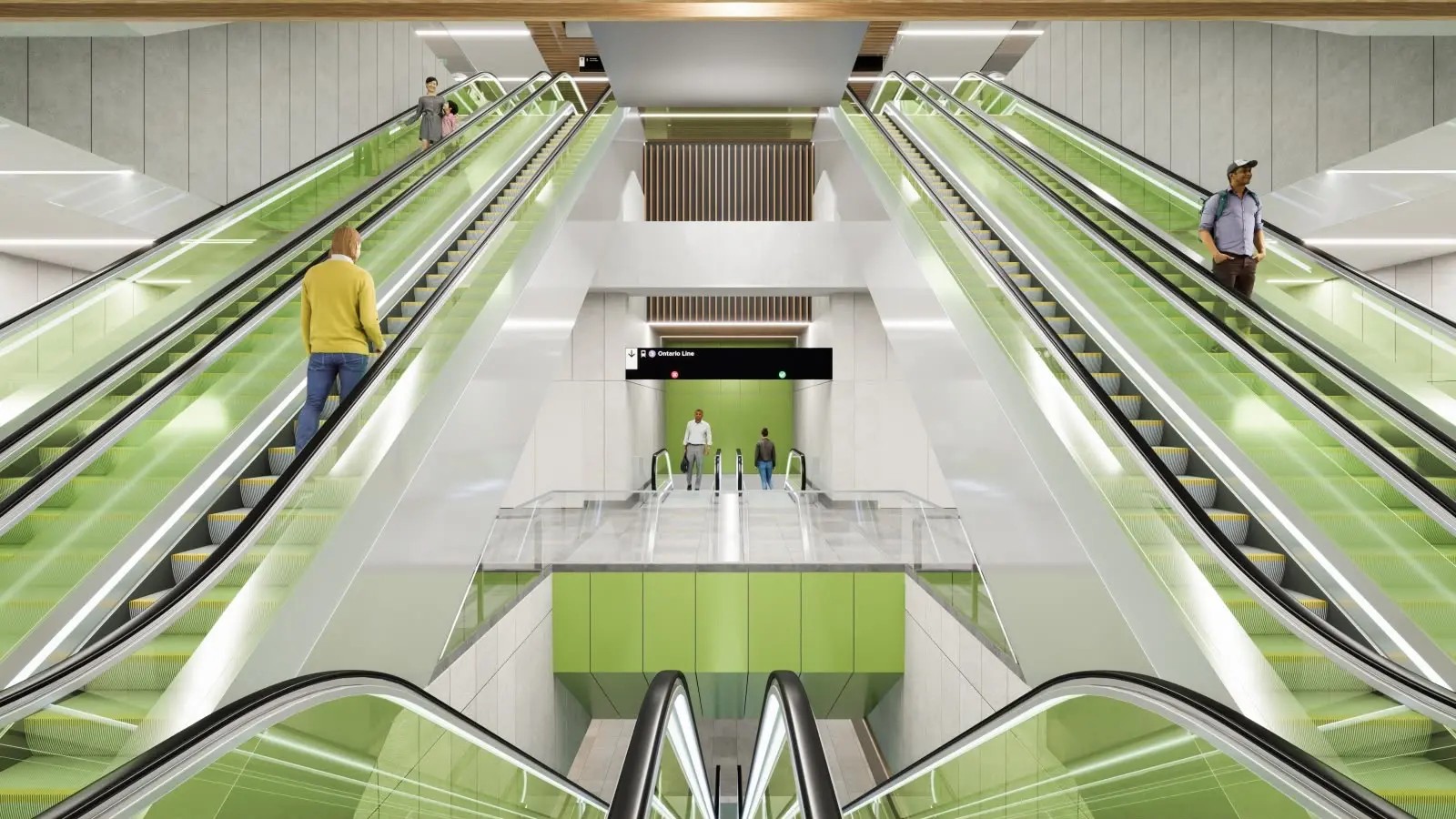
The scope itself is substantial: three kilometres of twin tunnels running beneath Pape Avenue between the Gerrard and Minton portals, two new underground stations at Pape and Cosburn, tunnel portals, emergency exit and service buildings, a rail switch near Pape and Sammon, and a direct interface with the TTC’s Line 2 subway. Delivery falls to a team built for exactly this kind of complexity, including Webuild, Fomento de Construcciones y Contratas Canada, Arcadis and AECOM Canada.
Webuild itself put the challenge plainly, noting that delivering this package will require major excavation and construction in one of Canada’s most complex urban environments, layered with existing infrastructure, underground utilities and traffic above and below ground. That complexity is precisely why this kind of project reshapes a neighbourhood slowly and then all at once. Underground stations do not just move commuters, they anchor decades of intensification decisions around them, from zoning applications to mid-rise and mixed-use proposals that would not have made sense without a subway connection nearby.
A finalized price and a signed contract turn a transit promise into a planning fact, and planning facts are what move land value.
For developers and city planners watching the Pape and Cosburn corridor, this agreement is the kind of milestone that quietly changes feasibility studies. Sites that were marginal without reliable transit access start to make sense once a station box is under construction rather than under debate. It also reinforces a broader pattern in this city: housing supply growth increasingly follows infrastructure commitment, not the other way around. Land near confirmed stations tends to move first, and the confirmation just happened here in the form of a signed, priced contract rather than another planning update.
The construction itself will take years, and the disruption along Pape Avenue will be real. But for anyone thinking in decades rather than headlines, this is the kind of foundational infrastructure decision that determines where the next wave of Toronto’s housing growth actually lands.
Source: ReNew Canada, “$4.32B contract awarded for Ontario Line’s Pape tunnel, underground stations”