

Toronto’s Ontario Line Just Got Real: What a £2.3bn Tunnel Contract Means for the City’s Growth Map
Every so often a construction contract lands that is really a statement about a city’s future. The signing of a £2.2bn (CAD$4.32bn) agreement between Webuild, its joint venture partner FCC, Metrolinx and Infrastructure Ontario for the Pape Tunnel and Underground Stations package is exactly that kind of moment. On paper it is a subway contract. In practice, it is a long term bet on where Toronto grows next.
The PTUS package moves the Ontario Line from design into execution, following a development and advanced design phase that began back in 2024. What is being built is not small: two twin tunnels running roughly three kilometres each, two new underground stations, and a critical connection into the Toronto Transit Commission’s Line 2. That last piece matters more than it might seem. Integrating a new line into an existing network is what determines whether a transit investment actually reshapes travel patterns and, by extension, where people choose to live and where developers choose to build.
This is the part of development that rarely gets enough attention. Land value does not move because a station appears on a rendering. It moves when a delivery model, a contractor, and a construction sequence are locked in, because that is the point at which financing, planning approvals, and adjacent development proposals start to feel real rather than speculative. Toronto has spent years watching transit promises stretch across political cycles. A signed, funded, execution-stage contract of this scale sends a very different signal to the market than a plan on a map.
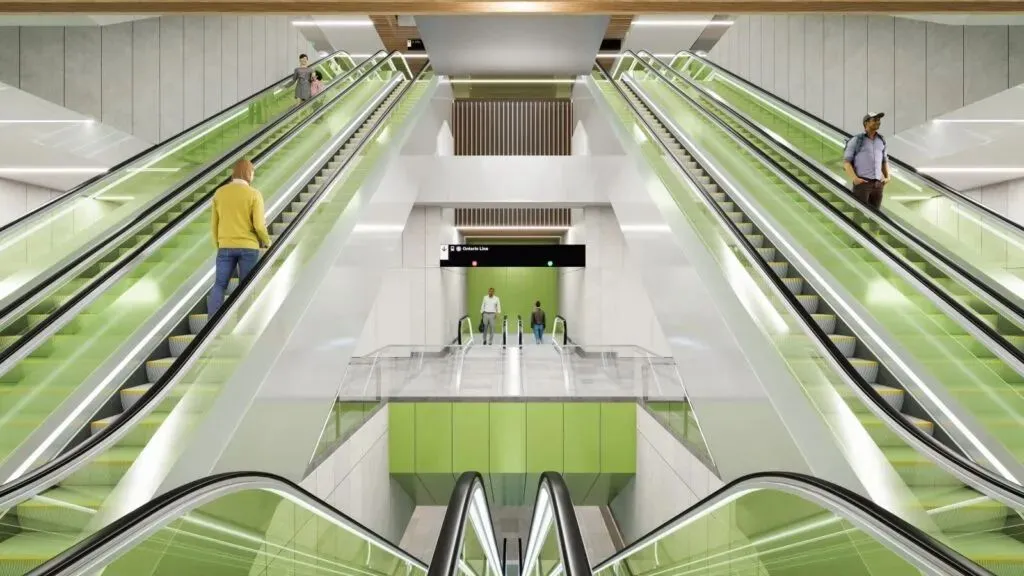
The delivery structure itself is worth noting for anyone tracking how large infrastructure gets built well. The PTUS package uses a Progressive Design-Build model, which brings the client, designers and contractors into structured collaboration from the earliest stages rather than handing over a fixed design and hoping the numbers hold. For a project running through one of the most congested and infrastructure-dense corridors in the country, with existing utilities and traffic layered above and below ground, that kind of coordination is not a nicety. It is the difference between a project that stays on schedule and one that becomes a cautionary tale.
Development is never just about land. It is about timing, access, infrastructure, policy, demand, and the future identity of a community.
For anyone thinking in terms of long term city growth, the real story here is sequencing. Webuild has already secured the RSSOM contract to supply trains and technological systems for the line, meaning the same group of partners is now stitched into the Ontario Line from tunnel to train. That kind of continuity reduces execution risk and tends to accelerate confidence among landowners and developers along the corridor who have been waiting to see whether this line would actually get built before committing capital to sites near future stations.
None of this guarantees a smooth build. Tunnelling through a dense, live urban environment always carries risk, and a project of this complexity will test coordination at every stage. But for those tracking where Toronto’s next wave of density, intensification and transit-oriented opportunity will land, this contract is a marker worth watching closely. Infrastructure of this scale does not just move people. It redraws the map of where a city is willing to grow.
Source: GE Plus, “Webuild signs £2.3bn contract for underground section of Toronto’s Ontario Line”