Oakville’s Data Centre Pause Signals a New Era of Infrastructure-First Planning
Every wave of development eventually forces a city to ask the same question: do we understand what we are approving before we approve it. Oakville just answered that question for itself, becoming the first Ontario municipality to pass a one year moratorium on new data centres. For anyone who studies land use for a living, this is not a story about servers. It is a story about a council choosing to get ahead of a use of land that most planning departments have never had to fully model.
Mayor Rob Burton was careful to frame the pause as proactive rather than reactive, noting the town has no formal applications on the table. That distinction matters to anyone who thinks about development timelines. The strongest planning decisions are made before pressure arrives, not after a shovel is already in the ground. Oakville staff have now been directed to study noise, vibration, emissions and broader land use questions tied to these facilities, which is exactly the kind of feasibility groundwork that should precede any large scale industrial use, not follow it.
The timing is worth noting. A Hive Digital Technologies subsidiary purchased land in Oakville just days before the company announced plans for a 320 megawatt AI facility elsewhere in the Greater Toronto Area, and the councillor representing that Oakville property backed the moratorium without hesitation. That is a textbook example of land value and land use colliding in real time. Whenever a site is acquired ahead of a public announcement, it tells you the market is already pricing in a use case that local infrastructure may not yet be built to support.
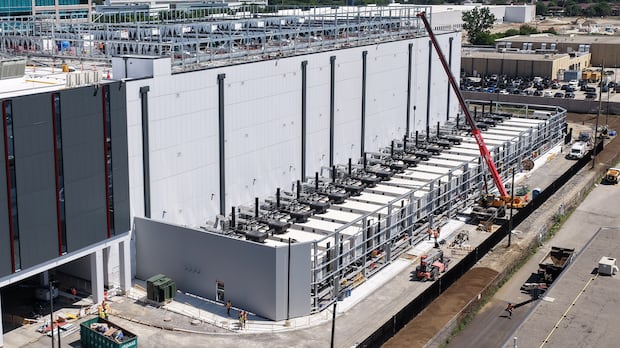
What makes this a development story rather than a technology story is the infrastructure math underneath it. Data centres draw enormous amounts of electricity and, depending on cooling design, significant water. Coun. Tom Adams put it plainly when he said Oakville deserves an evidence based understanding of how these facilities interact with electricity, water, wastewater and telecommunications systems. That is the same due diligence any responsible developer runs before committing capital to a large project, and it is encouraging to see a municipality demand it of itself.
Oakville deserves a clear, evidence-based understanding of how data centres interact with our electricity, our water, our wastewater and our telecommunications infrastructure.
Oakville is not acting alone. Mississauga has a similar vote scheduled next month, Waterloo Region has directed staff to study impacts and push for a provincial framework, and Toronto council passed a comparable motion last month. Hamilton attempted a moratorium and it failed, which shows this is far from settled policy across the region. For developers and municipalities alike, the pattern points to a coming framework where data centres are treated less like a novelty and more like the industrial, energy intensive infrastructure they actually are, with siting, servicing and community impact assessed well before land changes hands.
The municipalities that build clear frameworks now, rather than reacting project by project, will be the ones best positioned to capture the economic upside of this sector without absorbing its hidden infrastructure costs later. That is the long game every serious growth strategy is ultimately about.
Source: CBC News