Why Ontario’s Transit Boom Is Really a Housing Development Story
Every major transit line in the Greater Toronto Area is a land value decision wearing the disguise of a construction project. The Ontario Line, the Scarborough Subway Extension, the Yonge North Subway Extension, GO Expansion, and the rail growth underway in Ottawa, Hamilton and Mississauga are not simply about moving people faster. They are about which parcels of land become viable for density, which neighbourhoods absorb the next wave of population growth, and which municipalities get to compete for the housing supply this province desperately needs.
That is why the delivery challenges now surfacing across this pipeline deserve more attention from developers than they typically get. For decades, Ontario built almost nothing at this scale. The long gap between the Sheppard subway and the Spadina extension left the region without a deep bench of local engineers, planners and project managers who know how to deliver transit infrastructure at pace. The result has been heavy reliance on outside consultants, a dynamic that inflates cost and timeline risk on every project tied to a transit corridor, which in this market is most of them.
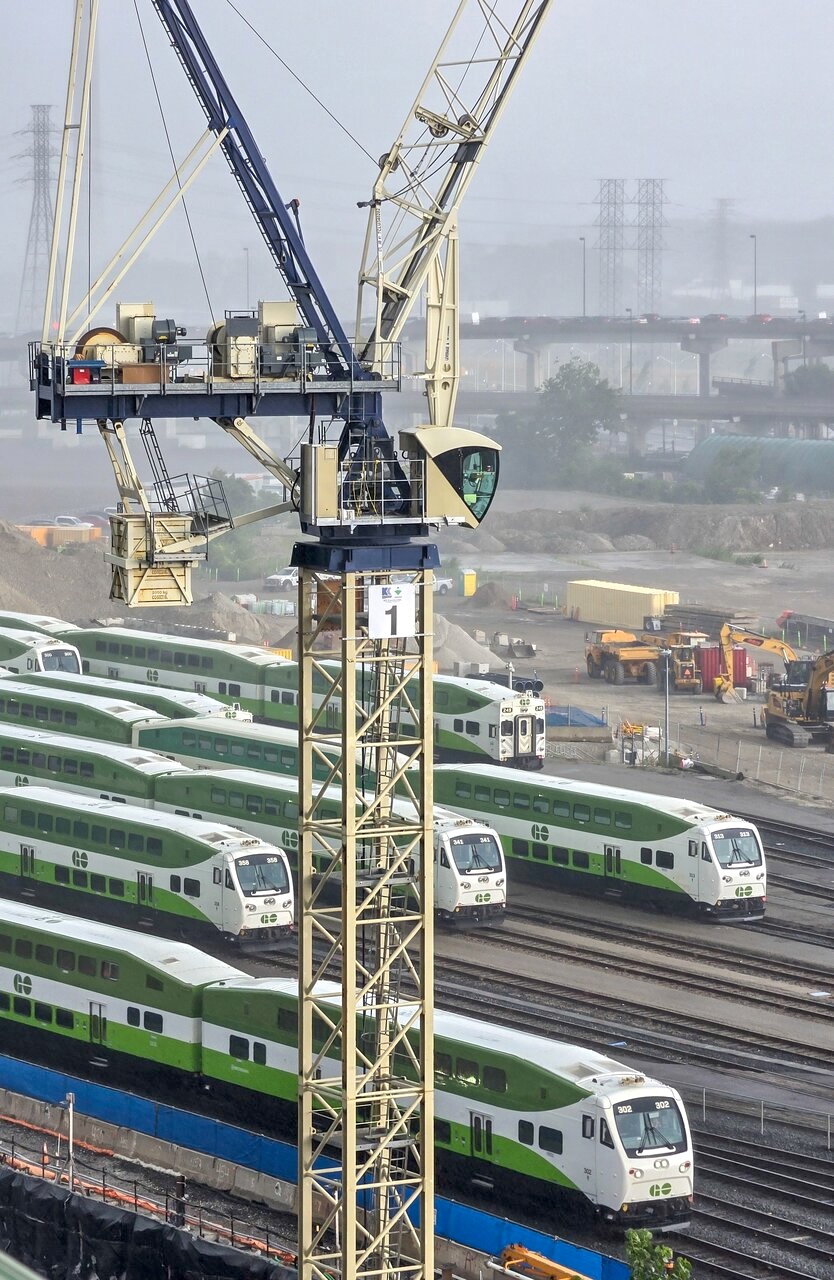
The Eglinton LRT is the cautionary tale developers already know intuitively. A project of that scale, attempted after decades without comparable experience, ran into delays that rippled outward into every adjacent land assembly and pre-construction timeline that had been priced around its opening date. But the lesson from Eglinton has already reshaped how the next generation of projects is structured. The Ontario Line’s decision to split work into smaller contracts rather than one large package, and the revised construction staging now standard across current builds, are direct responses to what went wrong. For anyone underwriting a development near a future station, that shift matters. It changes the confidence level you can reasonably assign to a delivery date.
Strong projects are built from a wider understanding of timing, access, infrastructure, policy and demand. Right now, Ontario’s transit pipeline is that understanding being tested in real time.
The strategic opportunity sits in what comes next. If this current burst of projects holds together rather than becoming another isolated spike followed by another multi decade drought, Ontario builds something more valuable than any single line: a sustained local talent pool and a proven delivery model. That reduces the consultant premium baked into future projects, and it shortens the distance between a line being announced and a line being shovel ready. Extensions already being discussed, including further work on Sheppard Line 4 and Ontario Line 3, along with proposed upgrades to the GO Milton line, are the next test of whether this pipeline stays open or stalls again.
For developers and land strategists, the takeaway is straightforward. Transit corridors with credible, continuous delivery pipelines behind them are worth a different kind of confidence than corridors dependent on a single project succeeding in isolation. The industry gathering hosted in July by Aphex, a UK based construction planning firm now headquartered in Toronto, signals that the people actually building these projects understand this too. Continuity, not any single line, is what will determine which parts of this region absorb the next generation of housing growth.
Source: UrbanToronto, “Ontario’s Infrastructure Pipeline: Delivery Challenges for Transformative Projects”