Halifax’s Housing Math: Why Permits Don’t Equal Progress
Halifax is on pace to beat its Housing Accelerator Fund target, with staff projecting more than 15,460 housing starts across three years against an original goal of 2,600 above baseline. On paper, that looks like a growth story. On the ground, it is a reminder that development timelines and affordability timelines rarely move at the same speed.
A new affordable housing strategy went before the city’s Community Planning and Economic Development committee this past week, and the underlying numbers are worth studying closely for anyone tracking mid-size Canadian markets. Aaron Murnaghan, who manages the HAF program for the municipality, told councillors that starts are strong, but completions are lagging. That gap between permits issued and units delivered is the real story for developers weighing feasibility in this market.
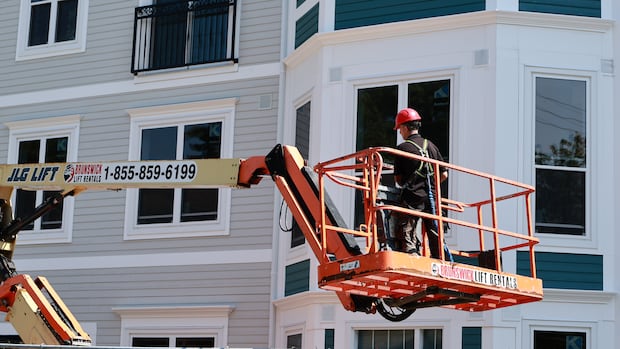
The reasons cited are structural, not incidental. Construction costs, financing conditions, material and labour constraints are familiar across the country, but Halifax carries a geography-specific tax: extensive blasting and excavation through rocky terrain, which adds real time and real cost before a project reaches vertical construction. Murnaghan noted that this can stretch a large development timeline to three or four years. For anyone underwriting a project in the Halifax Regional Municipality, site geology belongs in the feasibility model alongside financing and zoning.
The proposed strategy itself is modest in scope. It maintains existing affordable housing grants, waives permit fees, and offers tax relief to non-profit housing groups, backed by two new staff positions once federal HAF funding winds down, at an estimated average cost of roughly $242,950 annually over the next decade. That is a sustaining measure, not a transformation. Staff were candid that a municipal housing corporation or a formal non-profit partnership model would deliver more impact, but at significantly higher cost and possibly requiring provincial legislative change. Those bigger structural options remain on the table for future council terms to weigh.
It may take several years for that supply to catch up with demand and for affordability to start to come back to a balanced level.
That is the sentence developers and policy watchers should sit with. Halifax has done the enabling work through HAF: zoning reform, encouragement of wood-frame construction for smaller projects, and hundreds of thousands of newly permitted units. But the municipality’s own staff acknowledge that enabling supply and delivering affordability are two different clocks. The private sector, along with provincial and federal governments, still controls the pace of actual construction and completion.
For long-term development strategy, the takeaway is not that Halifax’s approach has failed. It is that the region’s growth story runs on a longer horizon than headline permit counts suggest, and that terrain, labour capacity, and financing conditions will continue to shape when housing actually reaches the market, regardless of how ambitious the policy targets look on a council agenda.
Source: CBC News