What a $3.7 Billion Bet on EliseAI Says About the Automation Layer Now Running Our Buildings
When investors put a multi-billion dollar number on a company, it is rarely about the product alone. It is a signal about where they think an entire industry is headed. That is exactly what is happening with EliseAI, the New York based property and housing management company reportedly in talks to raise new funding at a $3.7 billion valuation, including $300 million in fresh financing led by conversations with Andreessen Horowitz and Bessemer Venture Partners.
I look at rounds like this the way I look at any dataset: not for the headline number, but for what it reveals about the pattern underneath. EliseAI was founded in 2017 and has spent years building AI assistants that handle the operational noise of running housing, apartment tour requests, appointment scheduling, and maintenance requests from tenants and owners. None of that sounds glamorous. That is precisely why it matters. The unglamorous, repetitive layer of property operations is where automation delivers the most measurable return, because it is high volume, rules based, and constantly generating data that a well designed system can learn from.
The trajectory here is the real story for anyone tracking the intelligence layer behind housing. EliseAI raised $250 million at a $2.2 billion valuation in August 2025, backed by Andreessen Horowitz, Bessemer, and Sapphire Ventures. By early 2025, the company had already reached $100 million in annual recurring revenue, the kind of predictable, subscription based income that tells you a tool has moved past novelty and into daily infrastructure. If this new $3.7 billion talk holds, the valuation will have grown substantially in roughly a year, even as the broader AI funding market has become more selective about which use cases actually prove out.
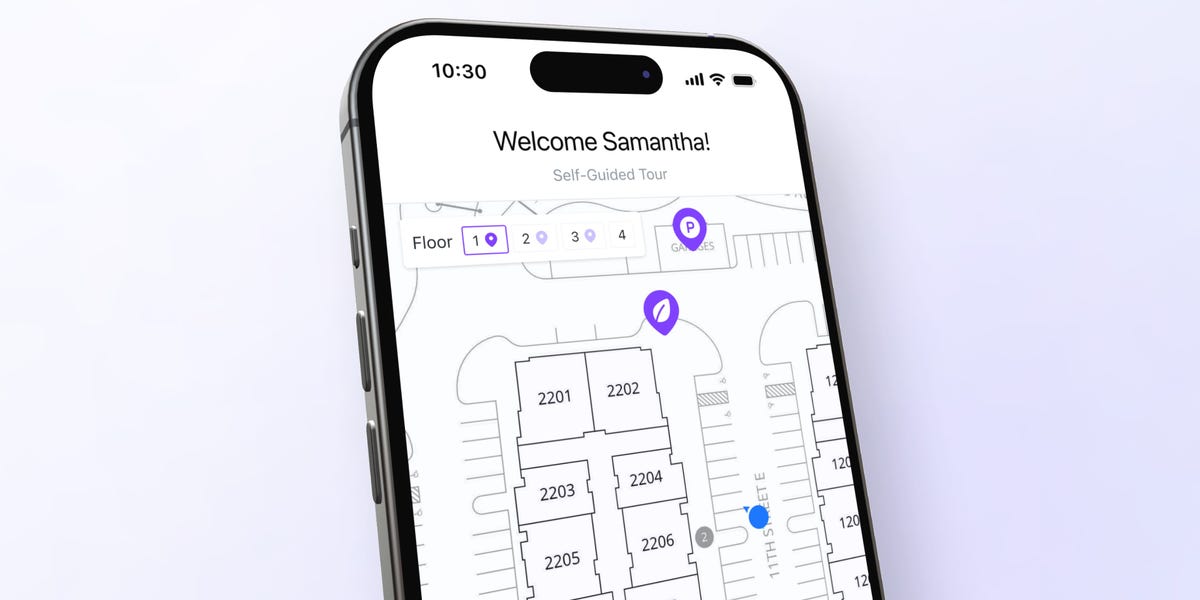
What makes EliseAI worth watching from a data standpoint is that it is not a horizontal chatbot bolted onto real estate. It is a vertical system trained on the specific rhythms of housing operations, and its expansion into healthcare invoicing and patient scheduling suggests the underlying architecture generalizes well to any industry built on recurring, appointment driven communication. For property operators, that cross industry validation is meaningful. It suggests the system is being refined against a wider and more varied dataset than housing alone would provide, which tends to make automation tools sharper over time rather than static.
The unglamorous, repetitive layer of property operations is where automation delivers the most measurable return.
For housing operators and landlords reading the signals rather than the sticker price, the relevant question is not whether AI belongs in property management. That debate is effectively over. The question is how much of the tenant facing communication layer, tours, scheduling, maintenance intake, gets standardized around a small number of dominant systems, and what that means for the data these platforms accumulate about how buildings actually run. A valuation of this size does not just fund product development. It funds the ability to onboard more buildings, generate more operational data, and widen the gap between operators using intelligent systems and those still coordinating everything manually.
Numbers like $3.7 billion invite skepticism, and the terms here are still being finalized, so they could change. But the pattern across two funding rounds in a year, a growing revenue base, and expansion beyond housing into healthcare tells a consistent story. Automation is no longer an experiment layered on top of property management. It is becoming the operating system underneath it.
Source: Business Insider