Ontario’s $1B Infrastructure Bet: Trading Development Charges for Housing Velocity
Every housing strategy eventually runs into the same wall: someone has to pay for the roads, bridges, and water systems that make new homes possible. This week, Ontario and the federal government put real money against that problem, announcing a combined $1 billion for municipalities willing to give up development charges in exchange for infrastructure funding. It is a small line item in a much larger $8.8 billion partnership, but it says a great deal about where housing policy is heading.
The mechanics are straightforward. Ontario and Ottawa are each contributing $500 million to a new stream of the Municipal Housing Infrastructure Program, aimed specifically at the more than 200 of Ontario’s 444 municipalities that currently do not collect development charges. Those fees have long functioned as a growth tax, shifting the cost of new infrastructure onto new home buyers. Removing that friction, in theory, should make projects pencil out faster and bring more supply to market sooner.
From a development strategy standpoint, this is a trade worth watching closely. Toronto has already secured up to $1.5 billion to offset the revenue it loses by cutting its own charges, and Ottawa is planning a 54 per cent reduction to unlock $478 million in return. These are not small municipalities experimenting at the margins. They are the anchor markets where land value, absorption rates, and construction costs matter most to anyone underwriting a project.
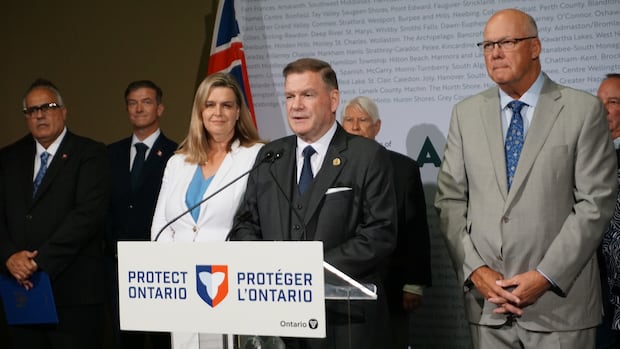
What makes this program more interesting than a typical grant announcement is the demand signal behind it. Premier Doug Ford told municipal politicians at the AMO conference that there are more applicants “in the queue” than money available, and he committed to topping up the fund if needed. That is not the language of a pilot program. It suggests the province sees development charge elimination as a durable policy lever, not a one-time incentive, and that smaller and rural communities are actively repositioning themselves to be development ready.
When I think about the communities that ROMA represents across the province, we’re ready to grow. We’ve got lots of really big plans, but getting there is the tricky part.
That quote from Mississippi Mills Mayor Christa Lowry, chair of the Rural Ontario Municipalities Association, captures the real constraint in Ontario’s housing pipeline. It has rarely been appetite. It has been the capacity to fund the bridges, water lines, and roads that make a subdivision or mid-rise buildable in the first place. Officials also framed the timing around U.S. tariff pressure, positioning infrastructure spending as a way to keep local construction economies moving through external shocks.
Applications for this stream open October 29, with project selections expected in spring. For developers and municipal planners evaluating where to place the next phase of a project, that timeline matters. Communities that secure this funding will have a meaningful cost advantage over neighbours still charging full development fees, and that advantage will show up directly in feasibility studies over the next development cycle.
Source: CBC News