


Camden’s Affordable Housing Retreat Shows the Limits of Planning Promises
Every large housing scheme is a negotiation between what a community needs and what a balance sheet allows. In Camden, that negotiation is being renegotiated in public, and the numbers moving are not small. At the O2 Centre site, affordable homes have been cut from 570 to 330 on an 1,800 unit development. At Camden Goods Yard, a planning inspector’s ruling took a 636 home scheme from 32 percent affordable housing down to 13 percent, a net loss of 120 homes. These are not rounding errors. They are a signal about what happens when land economics shift after approval is already granted.
The developers involved, Landsec and Berkeley St George among them, point to a real and well documented problem. Higher interest rates, construction cost inflation, and tighter regulation have made the original financial models for these projects difficult to sustain. Landsec has said housebuilding across London is running 90 percent below target, and Berkeley notes it is still delivering a higher affordable share than the project’s returns technically support. Those claims deserve to be taken seriously. Viability review mechanisms exist precisely because market conditions change over a project’s life cycle, sometimes across a decade or more.
But viability arguments only hold weight if they run in both directions. Councillor Farrell Monk’s criticism, that developers secure permission with generous affordable housing commitments and later return citing weaker numbers while continuing to report substantial profit, is the recurring tension in large scale housing delivery everywhere, not just Camden. When a borough with 8,380 households on its social housing waiting list starts just 84 affordable homes in a full financial year, the gap between planned supply and delivered supply becomes the real story, more than any single scheme.
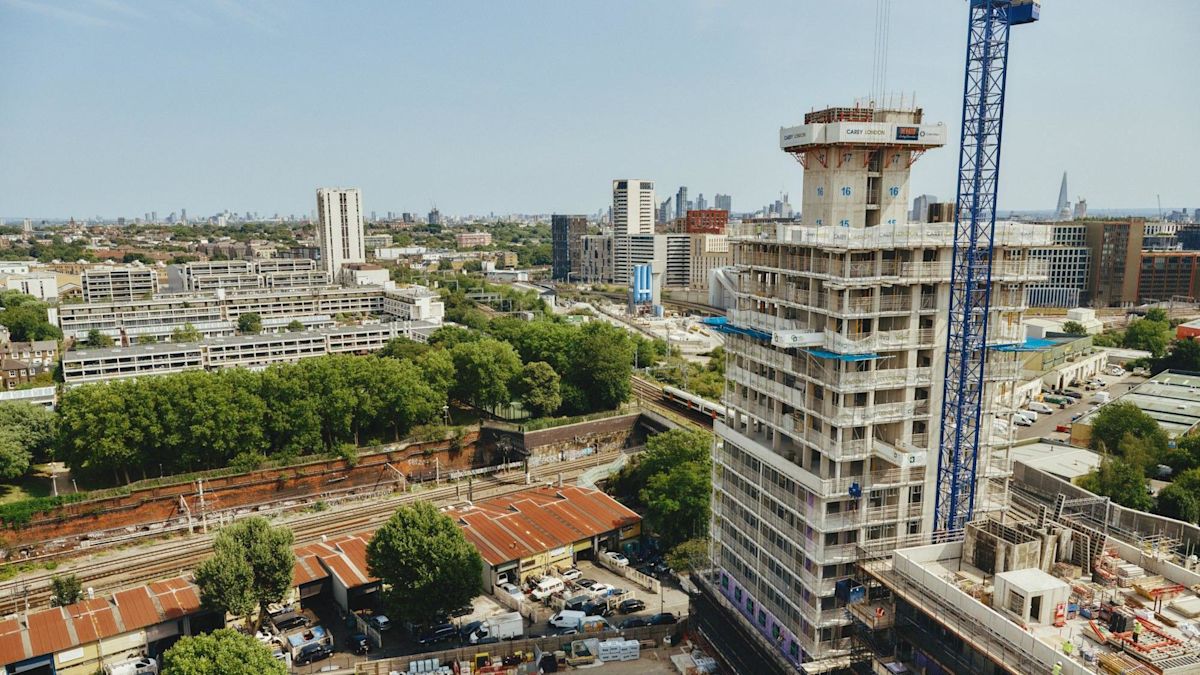
What makes Camden instructive for anyone tracking urban growth strategy is the policy response now underway. The Mayor of London’s decision to replace a single citywide affordable housing threshold with borough specific goals, raising Camden’s target from 20 percent to 35 percent, acknowledges that a flat formula cannot account for land values and delivery realities that vary block by block across the capital. That is a more sophisticated planning instrument, but it only works if enforcement keeps pace. Section 106 agreements and Community Infrastructure Levy payments are the tools boroughs have to lock in commitments, yet Camden’s own experience shows how easily those commitments erode once a scheme is underway and construction costs outrun the original pro forma.
There’s a clear pattern to how Camden’s housing crisis is being managed: developers promise affordable homes to win planning permission, then come back years later saying the numbers no longer work.
For anyone advising on or underwriting a large regeneration project, the lesson is not that affordable housing quotas are unworkable. It is that quotas set at approval without a credible, transparent review mechanism baked in from the start invite exactly this kind of dispute years later. Camden is now trying to tighten that mechanism after the fact. Cities that build stronger review clauses into their planning frameworks before ground is broken will spend less time relitigating their housing targets in public.
Source: Yahoo News / BBC London, “Camden Council at ‘sharp end of the housing crisis'”.