
What “Order to Remedy an Unsafe Building” Really Means: Lessons from the Rogers Stadium Collapse
When the City of Toronto issued a formal order to remedy an unsafe building against Rogers Stadium this week, most people heard it as a scheduling problem for an AC/DC concert. I heard it as something else entirely: a case study in what happens when a structure meets a load it was never designed to take, and what the recovery process actually looks like once the dust settles.
The venue, built just last year in Downsview Park as a temporary five-year structure, took a direct hit from what officials are calling a 100-year storm. According to Councillor James Pasternak, the north stands collapsed outright, and no one is currently permitted on site. Before anything else happens, the operator has to bring in a third-party engineer to assess what went wrong and report back with recommendations. That report is due by September 8, and it will determine whether this building gets patched, rebuilt from the seating up, or something in between.
This is exactly how the process should work, and it’s worth pausing on why. An order to remedy an unsafe building isn’t a punishment. It’s a checkpoint that forces a proper structural review before anyone reoccupies a compromised space. You don’t rebuild a collapsed grandstand on a guess, and you certainly don’t do it under pressure from a concert calendar. As Pasternak put it plainly, this is not something you settle on the back of a napkin.
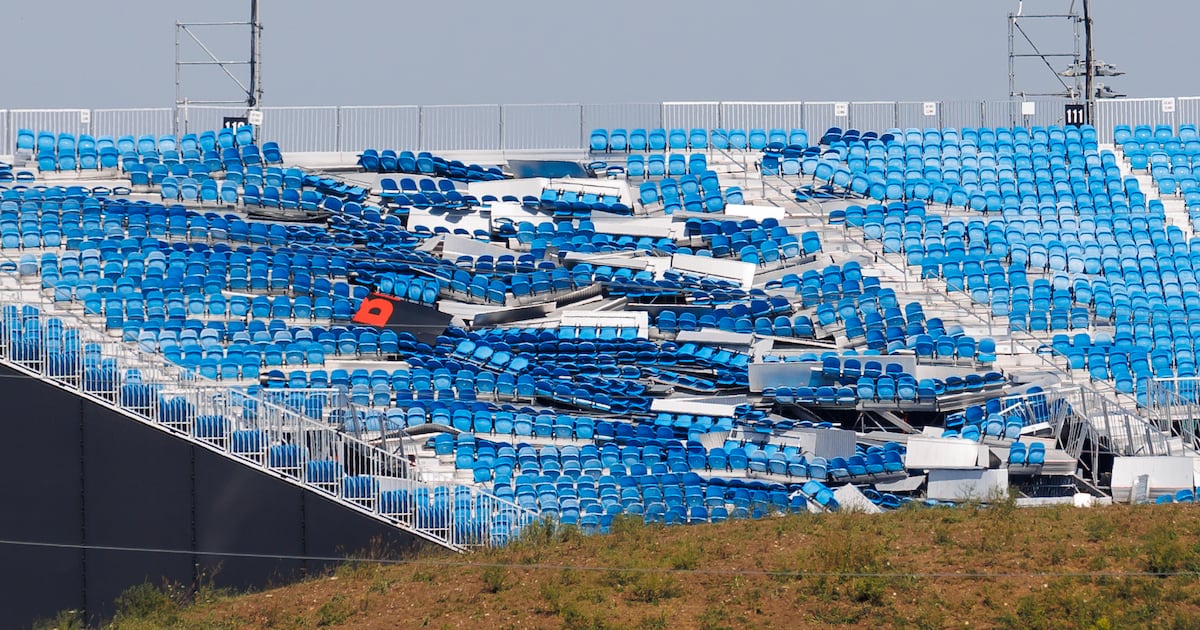
Temporary and semi-permanent structures like this one occupy a strange middle ground in construction. They’re engineered to be assembled quickly, meet code for their intended lifespan, and come down again without leaving much behind. That efficiency is the whole point, but it also means the margins built into the design don’t always match those of a permanent facility meant to stand for fifty years. When an extreme wind event arrives, as this one clearly was, with utility poles snapped and mature trees uprooted across the surrounding neighbourhood, the parts of a build with the least redundancy tend to show it first. Here, that was the north stands.
They have to rebuild those northern stands based on the requirements of a third-party engineer to study safety strategies. That is not something you do on the back of a napkin.
What happens next matters as much as what already happened. A credible remediation isn’t just clearing rubble and bolting new risers into place. It means understanding the actual failure mode, whether it was anchoring, material fatigue, wind loading assumptions, or a combination, and building the fix around that answer rather than around a concert date. Live Nation has said its engineers have worked with the city from the start of the project and remain engaged now. That ongoing relationship, and a willingness to let the timeline follow the engineering rather than the other way around, is what separates a building that gets safely restored from one that gets rushed back into use and fails again.
Whether AC/DC plays on September 16 or the show moves, the more important outcome is a stands structure that’s actually sound the next time a storm like this one comes through, because it will.
Source: CP24/CTV News Toronto