Rate Cuts Won’t Crash Prices: What the Bank of Canada’s Affordability Warning Means for Buyers and Investors
When a central banker tells you not to expect miracles, pay attention. The Bank of Canada’s recent message, delivered through remarks reported by Finimize, was blunt: monetary policy can steady inflation, but it cannot build a single new home, approve a single permit, or extend a single road. For investors tracking where the market goes next, that distinction matters more than any single rate decision.
Here is the mechanism worth understanding. When borrowing costs fall, qualifying for a larger mortgage becomes easier, and buyers who were priced out start bidding again. That is a demand story, not a supply story. If the pipeline of new housing is still constrained by zoning delays, slow approvals, and underbuilt infrastructure, that revived demand runs straight into the same bottleneck that pushed prices up in the first place. The result is not cheaper homes. It is smaller monthly payments on roughly the same price tag, with more buyers competing for the same limited inventory.
For anyone positioning capital in residential real estate, this is the signal to read carefully. A rate-cutting cycle that lands on a supply-constrained market tends to support valuations rather than erode them. Investors waiting on the sidelines for a meaningful price correction driven by rate policy alone may be waiting on the wrong lever entirely. The more productive question is not “where are rates heading,” but “where is supply actually loosening.” Markets where permitting is accelerating and infrastructure investment is catching up to population growth are the ones where affordability pressure could genuinely ease, and where early positioning carries real upside before competition intensifies.
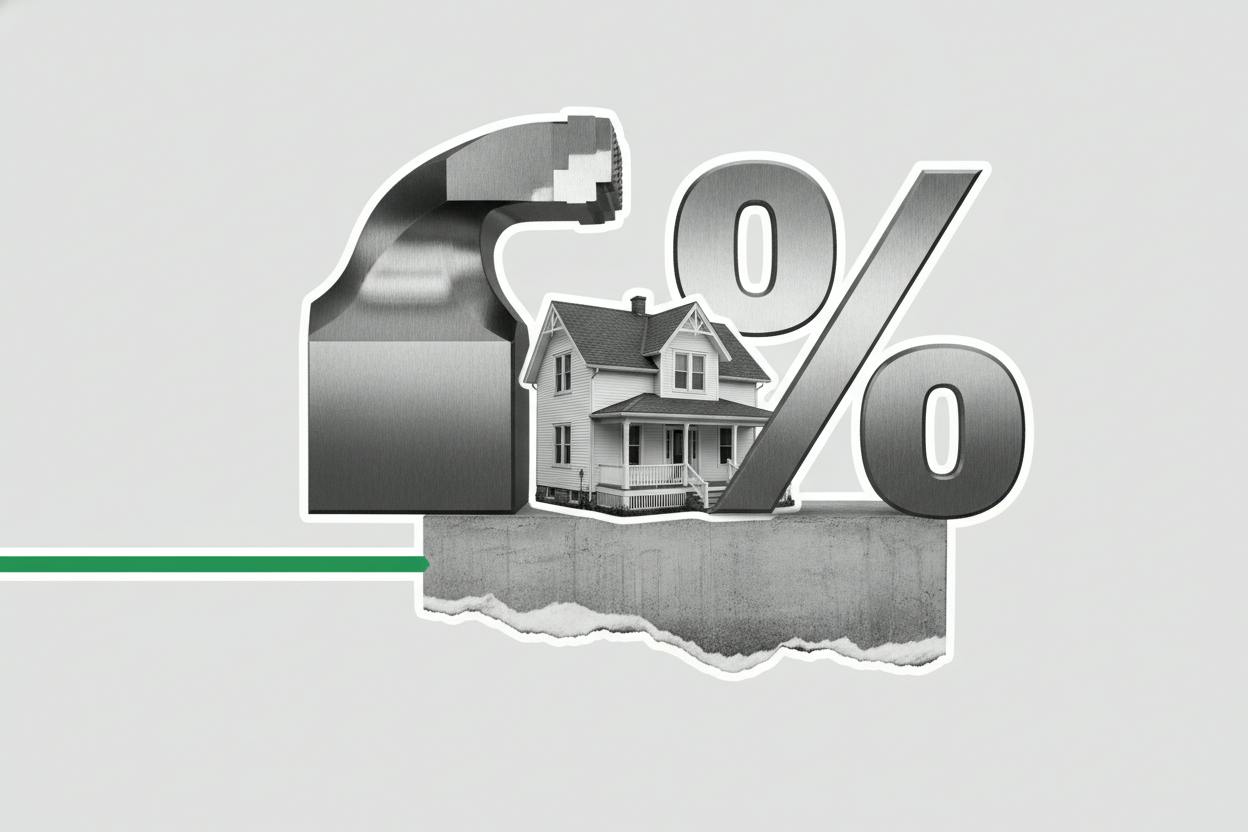
Lower rates may change the monthly payment faster than they change the sticker price.
There is also a timing opportunity embedded in this. If rate cuts restore buying power before new supply arrives, the window between “rates fall” and “inventory catches up” is exactly when competition among buyers tends to sharpen fastest. Investors who move ahead of that renewed demand, rather than after it, are typically the ones who capture the strongest entry points. Rental strategy follows the same logic. If homeownership stays financially out of reach for a meaningful share of buyers even with cheaper borrowing, rental demand holds firm, which supports the income side of the investment case regardless of what happens to purchase prices.
The bigger takeaway for serious capital is this: affordability is ultimately a supply and infrastructure problem, and infrastructure problems get solved on a longer timeline than any central bank’s rate path. That mismatch between fast-moving monetary policy and slow-moving housing supply is precisely where disciplined, well-timed investment decisions tend to outperform those made on headlines alone.
Source: Finimize, “Bank Of Canada Says Rates Can’t Fix Housing Affordability”