Toronto’s Land Transfer Tax Fight: What a Mayoral Tax Cut Pledge Means for Buyers and Investors
Every real estate decision in Toronto carries a cost that rarely makes it into the listing price: the Municipal Land Transfer Tax. A proposal from mayoral candidate Brad Bradford to scrap that tax on home sales up to $1.1 million has reopened a debate that matters enormously to anyone evaluating property in this city, whether they are buying a first home or building a portfolio.
For investors, upfront transaction costs are never a footnote. They are part of the math. The Toronto Regional Real Estate Board has pointed out that the land transfer tax currently adds roughly $36,000 in upfront fees to the purchase of an average home in the city, now priced just over a million dollars. That is capital pulled out of a deal before a single renovation, rent increase, or appreciation cycle has a chance to work in an owner’s favour. Removing or reducing that friction on sales up to $1.1 million would meaningfully change the entry calculation for buyers at the lower end of the market, the very segment that tends to feed rental demand and first-time ownership activity.
But the trade-off is where this gets interesting for anyone thinking in terms of long term value rather than a single transaction. Bradford’s team estimates the policy would cost the city $300 million, a hole that would need to be filled through extended infrastructure financing timelines, a proposed public water company, or, eventually, other revenue tools. Toronto’s land transfer tax currently generates an estimated $850 million a year, down from more than $1 billion in 2021, and has quietly become a core pillar of the city’s operating budget since it was introduced in 2008.
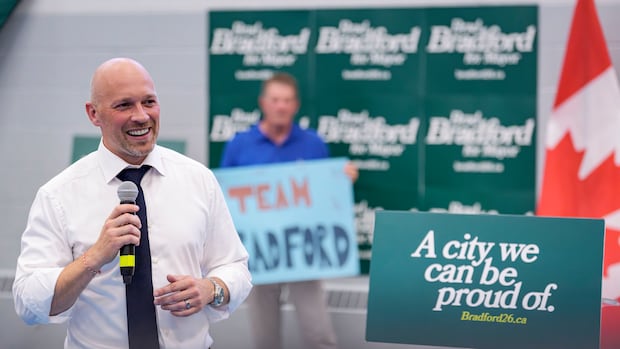
That dependency is not new information to city finance watchers. Former city manager Peter Wallace warned back in 2015 that Toronto had become a “free rider” on a volatile revenue source tied entirely to the health of the housing market. York University policy professor Zac Spicer frames the current proposal as a trade-off question rather than a simple cut: easing the tax could get the housing cycle moving again, pushing buyers from condos toward larger homes, but it leaves the city needing new tools to replace lost revenue, likely through property tax increases that are politically harder to sell.
It is not an insignificant number, and is something that in a lot of cases is prohibiting people from even entering the housing market in the first place.
For investors reading the signal rather than the slogan, the real takeaway is about volatility and timing. A reduced MLTT would lower the cost of acquisition and could unlock transaction volume that has been stalled, which tends to be good for liquidity and for owners looking to exit or reposition. But any serious investor should also be watching the other side of the ledger, since a city facing a structural revenue gap has limited levers, and property tax is one of the few it can pull. Policy promises made during an election are not law, and the gap between a campaign pledge and an implemented budget line can be wide. The prudent move is to track how this debate resolves rather than price it in today.
Source: CBC News, “Bradford’s tax cut pledge raises questions about Toronto’s fiscal footing”