What CREDAI NATCON 2026 Reveals About AI’s Real Foothold in Real Estate
For years, AI in real estate lived mostly in keynote slides. At CREDAI NATCON 2026 in Kolkata, the conversation shifted to something more useful: where the technology actually earns its place on a balance sheet and a job site. That shift matters more than any single feature announcement, because it signals an industry finally asking the right question about intelligence tools, not whether they are impressive, but whether they are measurable.
The three day convention built an entire Innovation Hub around PropTech, construction technology, and smart building platforms, but the comments from developers on the ground were the real signal. Amit Modi of County Group described AI enabled quality checks catching deviations early, paired with robotic and digital monitoring that gives project teams a closer view of work without waiting on periodic inspections. That is a data problem before it is a construction problem. Every flagged deviation, every monitored deviation pattern, is a signal that did not exist in a usable form a decade ago.
What stood out most was how directly executives tied AI back to outcomes rather than novelty. Akhil Saraf of Reloy put it plainly: AI in real estate should deliver higher sales or lower costs, nothing softer than that. He pointed out that construction can represent roughly 30 to 40 percent of a project’s sales value depending on market and project type, which means waste reduction and better planning through data are not side benefits, they are the business case itself. That is the kind of framing I find genuinely useful, because it resists the temptation to treat AI as an aesthetic upgrade rather than a decision making layer.
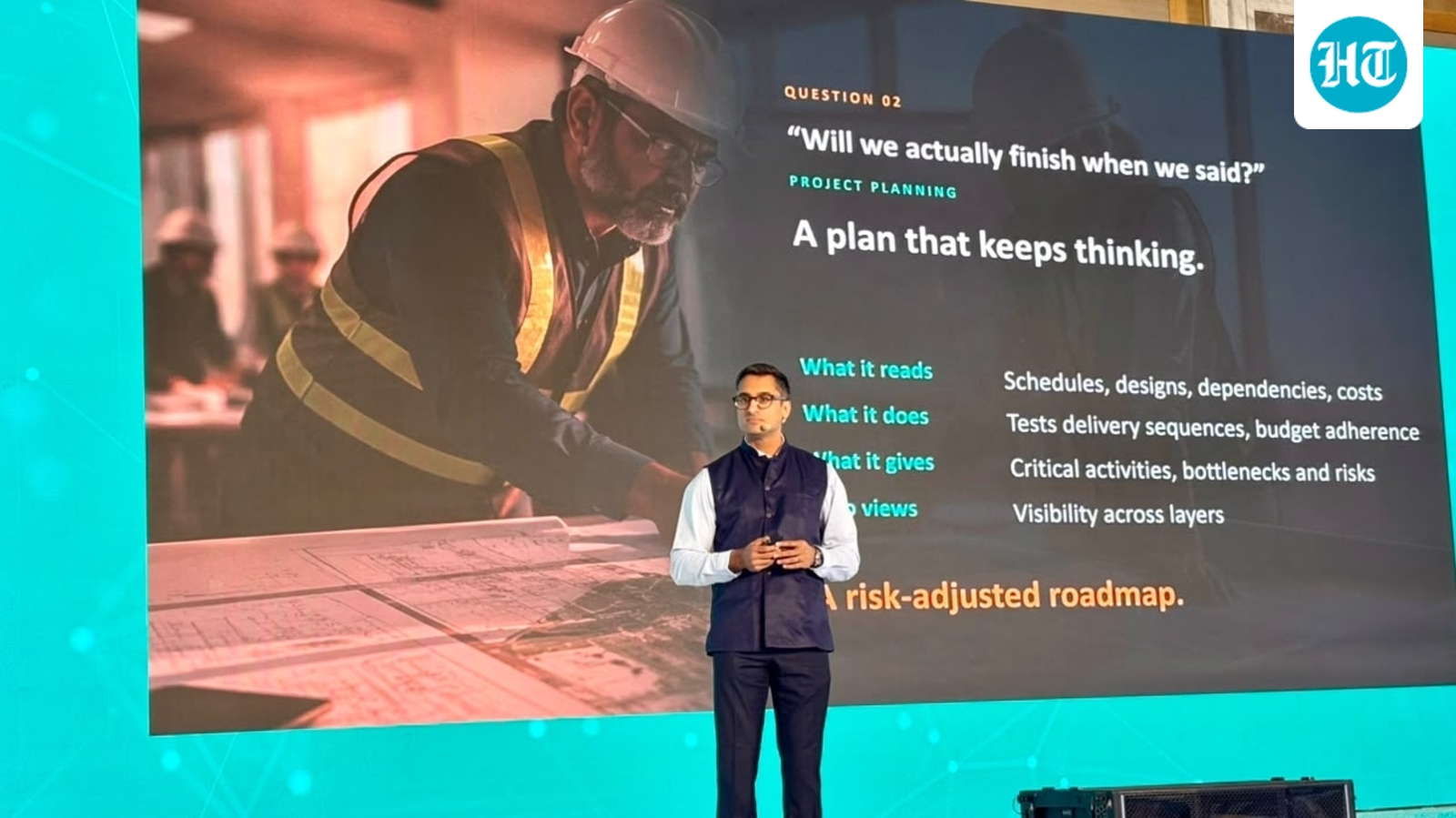
On the customer side, the same discipline is emerging. Developers are analysing enquiry patterns, tracking buying behavior, and identifying the concerns that actually move a sale forward. Govind Rai of Insomniacs Digital described the goal as giving developers a second brain, one that remembers and responds to every customer interaction with more precision than a sales team can manage alone. Strip away the branding and what remains is a straightforward analytics proposition: organized signals about buyer intent convert better than instinct.
What matters is whether it solves a problem on the ground, saves time, or gives the project team information they did not have before.
That line, from Salil Kumar of CRC Group, is close to a thesis for where AI in housing is actually headed. Not every dashboard will matter and not every sensor feed will change a decision. But CREDAI’s own framing, built around India’s urbanisation scaling sharply by 2047, suggests the industry understands the stakes of getting this wrong. When you are planning to build at a scale this country has not attempted before, the ability to read site data, buyer data, and operational data clearly is not a convenience. It is infrastructure of its own kind, one that determines whether quality and efficiency can coexist as volume rises.
The lesson for anyone watching property intelligence trends is simple. AI adoption in real estate is maturing past the showcase stage, and the winners will be the developers who treat data as a planning tool rather than a marketing one.