What a $1.8 Million Price Cut on a Toronto Trophy Home Tells Investors About the Luxury Ceiling
Numbers tell the real story in real estate, and few numbers this season are as blunt as the one attached to 126 Sherwood Ave. in Toronto’s Yonge and Eglinton neighbourhood. The custom-built property, known as The Vagli House, first listed last year at $6,650,000. It now sits on the market at $4,795,000. That is a reduction of $1,855,000, or nearly 28 per cent, on a home that was completed in 2024. For anyone tracking capital allocation in the luxury segment, that is not a rounding error. It is a signal worth reading carefully.
The property itself is not in question. Built by Arklab, it offers more than 4,000 square feet of finished space, imported German windows, European white oak floors, and over 30 slabs of hand-selected Italian marble, including a 15-foot bookmatched island in Calacatta Vagli. On paper, this is the kind of asset that should command a premium. The issue is not quality. It is pricing discipline against comparable sales in the surrounding market.
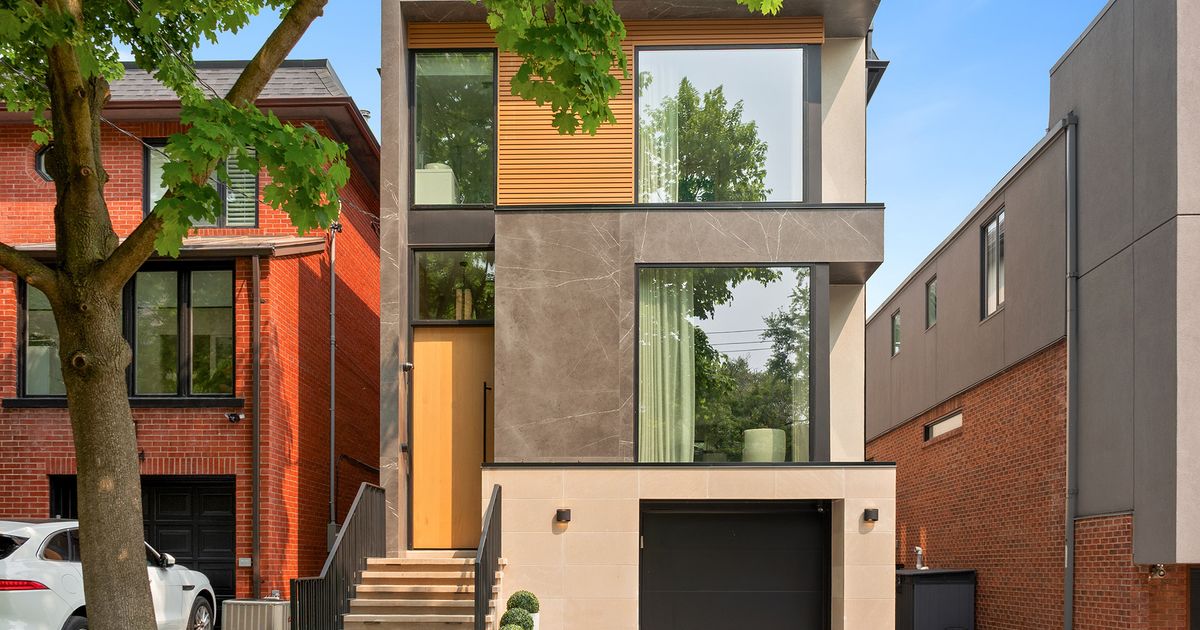
Here is where the opportunity analysis gets interesting. The average home price in this particular stretch of the neighbourhood sits around $2 million, and the highest recorded recent sale in the area is $3,880,000. Even after shaving nearly $1.9 million off the ask, 126 Sherwood Ave. is still pricing itself close to $1 million above the strongest comparable transaction nearby. That gap matters more than the headline discount. A seller can cut price repeatedly, but if the ask remains disconnected from what the local market has actually proven it will pay, the listing stays stuck regardless of the finishes inside.
A price cut only becomes a buying signal once it lands inside the range the neighbourhood has already proven it will pay.
For investors and end users watching the ultra-luxury custom build segment, this is a useful case study in how new-construction trophy properties get mispriced at entry. Builders and early sellers often price to replacement cost, factoring in the imported materials, the architectural fees, and the bespoke millwork. Buyers, meanwhile, price to location and comparable sales. When those two numbers sit nearly $1 million apart even after a steep correction, the listing becomes a waiting game rather than a transaction. The eventual sale price, whenever it lands, will be the real data point worth tracking, since it will help recalibrate what custom new-build quality is actually worth in this specific pocket of Toronto.
The broader lesson for anyone underwriting a luxury acquisition or a custom build for resale is straightforward. Craftsmanship and marble do not override comparable sales data. A disciplined entry price, anchored to what has actually closed nearby rather than what a build cost on paper, will always move faster and preserve more capital than chasing a number down in increments after the fact.
Source: blogTO, “Toronto luxury home slashes asking price by almost $2 million”.