


Housing Starts Tick Up, But Canada’s Supply Math Still Doesn’t Add Up
Every month, CMHC’s housing starts data gives me a snapshot of where this country’s building capacity actually stands, not where policymakers wish it stood. The latest numbers show the seasonally adjusted annual rate of housing starts rose three per cent in September, hitting 248,896 units, up from 242,223 in August. On the surface, that reads as progress. Underneath it, the picture is far more complicated, and anyone working in development knows the difference matters.
Look past the headline figure and the urban numbers tell a different story. Actual monthly starts in centres with populations of 10,000 or more fell 11 per cent year over year, dropping to 19,984 units in September compared with 22,375 a year earlier. That is the number that matters most to the communities where housing demand is most acute. Rural starts, estimated at an annual pace of 18,094 units, cannot make up that gap on their own. When you widen the lens to the six-month moving average, the seasonally adjusted rate is up a modest 0.6 per cent at 250,411 units, which tells me this is not a sustained acceleration. It is noise around a flat trend line.
Aled ab Iorwerth, CMHC’s deputy chief economist, put the structural issue plainly: Canada still faces a long-term housing supply gap, and without a real increase in construction activity, the affordability gains made since 2023 will be difficult to hold onto. I have said versions of this for years, but it bears repeating because the incentives have not shifted enough to change builder behaviour at scale. Land decisions, financing costs, municipal approval timelines, and labour capacity all feed into whether a project actually breaks ground, and none of those pressure points eased meaningfully this quarter.
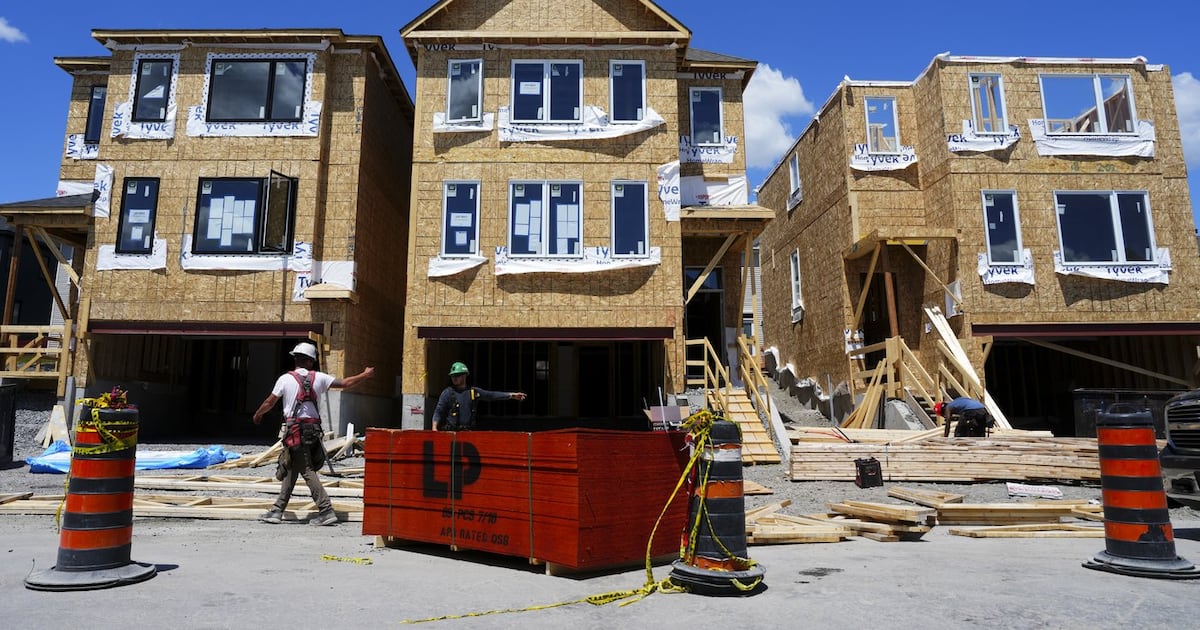
Unless housing construction levels increase, improvements in housing affordability since 2023 will be difficult to sustain.
For developers and municipal planners, this is a timing and feasibility signal, not a reason to celebrate. A three per cent monthly bump dressed up in seasonally adjusted language should not distract from an 11 per cent urban decline, because urban centres are exactly where population growth, immigration targets, and job density are concentrated. Any serious long-term housing vision has to treat urban starts as the core metric, with rural activity as a supplement, not a substitute. The gap between what this market needs annually and what is actually breaking ground remains wide, and closing it requires sustained investment in approvals processes, infrastructure capacity, and construction labour, not a single favourable month.
Strong cities are not built on one good data release. They are built on consistent delivery over years, and that is the standard this market still has to meet.
Source: BNN Bloomberg