What a Seven-Year Listing in Etobicoke Reveals About Luxury Market Liquidity
Price appreciation is the headline number most buyers chase, but the real story in real estate often lives in how long an asset sits unsold. A custom-built home at 1305 Royal York Rd. in Etobicoke has been cycling on and off the market since 2019, and the numbers behind that timeline say more about the top end of Toronto housing than any single sale ever could.
Back in 2019, the four-bedroom, seven-bathroom property listed for $4,958,000. Today it is asking $5,198,000, a gain of roughly $240,000 over seven years. For context, that is a far cry from the appreciation most investors would expect from a prime asset over that stretch, especially one that briefly commanded $5.5 million just last year before being repriced downward. In an asset class where holding costs, carrying costs, and opportunity cost compound quietly in the background, a near-flat valuation curve is a signal worth reading carefully.
The explanation offered by realtor Rose Barroso points to a broader softening in detached properties in the area, which she describes as down roughly 12.7 per cent year-over-year in comparative metrics. That is consistent with what we track across the ultra-luxury segment more generally: a shrinking buyer pool, more cautious financing behavior, and purchasers who are increasingly willing to wait out a market rather than compete for it. At the multi-million-dollar tier, there are simply fewer qualified buyers to begin with, which means price discovery takes longer and sellers carry more risk sitting on the sidelines.
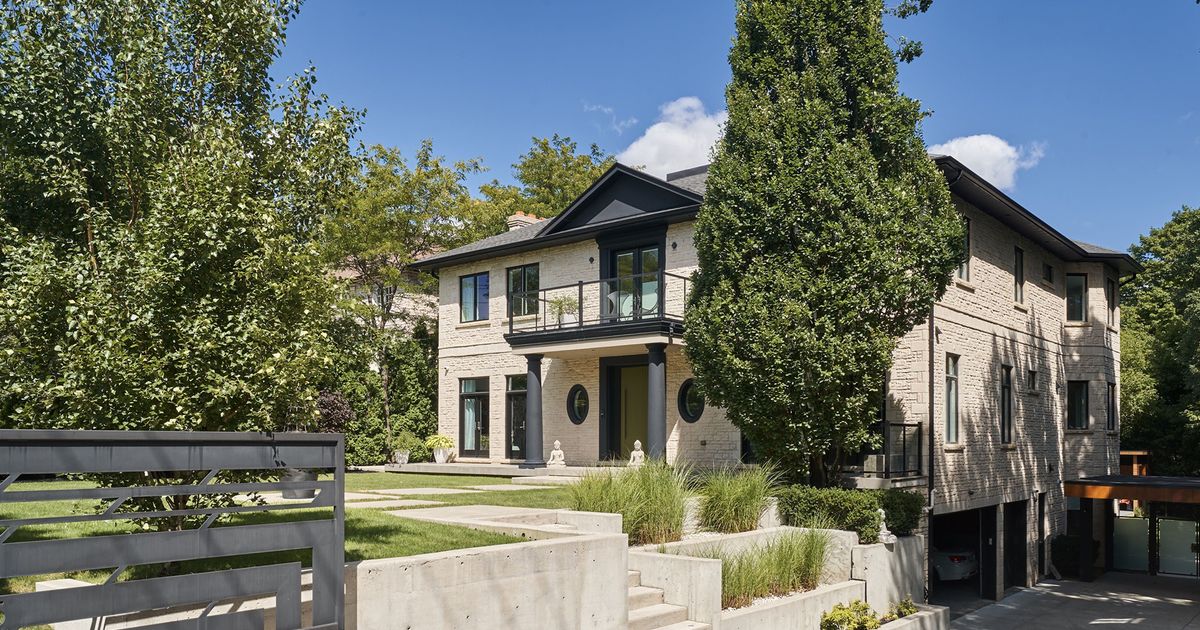
What makes this property interesting from an investment lens is not the finishes, though an 8,300 square foot home on a 91-by-210-foot lot with a pool, cabana, and smart home integration is not short on them. It is the lesson in illiquidity. Luxury real estate behaves differently than the broader market because depth of demand matters as much as sticker price. A home can be exceptional and still take years to transact if the pool of buyers able and willing to deploy eight figures of capital is thin and distracted by economic uncertainty.
Detached properties in the area have recently experienced downward price adjustments, and buyers are holding out for better economic news, which lately is difficult to come by.
For investors watching the luxury segment, the takeaway is not that trophy assets lose value quickly. It is that they can sit stagnant for long stretches, tying up capital that could otherwise be redeployed. That carrying risk belongs in any underwriting model for high-end acquisitions, alongside financing costs and holding period assumptions. A near flat seven-year price curve on a premium asset is a useful data point for anyone pricing risk at the top of the market, not just a curiosity about one stubborn listing.
Source: blogTO