



Transform Your Outdoor Oasis: Elegant DIY Garden Décor Ideas on a Budget
A beautiful garden does not begin with extravagance. It begins with attention. The most memorable outdoor spaces are rarely the ones crowded with costly accessories or grand landscaping gestures. They are the ones that feel composed, personal, and quietly alive with detail. A painted planter placed just so, a gravel path softened by herbs, a handmade lantern glowing at dusk, and a seating corner framed by flowers can transform even the simplest patch of green into an outdoor retreat that feels intentional and deeply welcoming.
Table Of Content
- Begin with a Garden Vision, Not Garden Clutter
- Choose an Elegant Palette That Feels Natural Outdoors
- DIY Planters That Look Curated, Not Crafty
- A Simple Formula for Styling Container Groups
- Create Outdoor Rooms with Handmade Touches
- Build a Trellis or Vertical Feature for Height and Drama
- Handmade Lanterns and Candlelight for Evening Atmosphere
- Use Gravel, Stone, and Edging to Add French Inspired Structure
- Invite Pollinators with Beauty and Purpose
- How to Make a Decorative Pollinator Water Bowl
- Style with Salvaged and Secondhand Pieces Carefully
- Make a Mini Garden Retreat in Small Spaces
- Seasonal Bloom Planning for a Garden That Always Feels Alive
- What Makes a DIY Garden Look Expensive
- A Thoughtful DIY Garden Checklist
- The Most Beautiful Gardens Feel Personal
For anyone dreaming of a refined backyard without undertaking a full renovation, DIY garden décor ideas offer an inspiring path forward. The secret is to think like a stylist rather than a spender. Instead of filling every corner, curate a few meaningful focal points. Instead of chasing trends with no context, choose elements that work with your region, your climate, and your own rhythm of life. In this way, garden décor becomes more than ornament. It becomes atmosphere.
There is also a meaningful shift happening in how North American homeowners and renters approach outdoor design. Recent garden trends increasingly favor outdoor rooms, climate compatible plantings, native grasses, wildflowers, slow gardening, and restorative spaces that feel connected to nature. This means elegance no longer depends on rigid perfection. A garden can feel polished and romantic while still supporting biodiversity, local pollinators, and resilient planting choices. That balance is not only beautiful. It is modern, wise, and lasting.
In Canada especially, the connection between decorative gardening and ecology is impossible to ignore. Health Canada notes that there are more than 800 native bee species in the country, and bees are the most common pollinators. Government guidance also encourages gardeners to use native milkweed and other local flowering species with staggered bloom times to support monarchs and ensure nectar through the season. When you understand this, DIY garden décor becomes even more exciting. You are not simply making something pretty. You are shaping a living environment with grace and responsibility.
This guide will show you how to create an elegant, affordable, and personal garden oasis through handmade décor and thoughtful styling. We will explore materials, layout ideas, color palettes, pollinator friendly choices, and practical projects that feel elevated rather than improvised. Whether you have a compact balcony, a narrow side yard, a suburban lawn, or a modest terrace, these ideas can help you design a space that feels poetic, restful, and beautifully your own.
Begin with a Garden Vision, Not Garden Clutter
Before buying paint, arranging pots, or building decorative features, step back and consider the feeling you want your garden to hold. The most elegant spaces are built around a visual idea. Perhaps you are drawn to French restraint, with symmetry, terracotta, gravel, aged metal, and a soft neutral palette. Perhaps you love a more romantic cottage expression, with woven textures, faded florals, and drifting blooms. Perhaps your dream is a naturalistic oasis that feels slightly wild but still composed. Whatever the answer, that vision will guide every DIY decision you make.
A common mistake in budget garden styling is to treat every empty spot as an opportunity for décor. The result is often visual noise. A more refined approach is to design in layers. Start with the bones of the space, such as pathways, seating, containers, and focal points. Then add softer details, such as lanterns, textiles, climbing structures, and decorative edging. This layered method creates harmony and allows handmade pieces to feel deliberate rather than scattered.
Think of your garden as an extension of your interior space. Just as a beautifully designed room depends on composition, rhythm, and negative space, so does a garden. A simple bench becomes more elegant when framed by two large planters. A gravel corner becomes more atmospheric with one lantern, one low bowl of water, and one gently arching plant. Restraint is not emptiness. It is confidence.
Design note: The most luxurious gardens often rely on a few repeated materials and colors. Repetition creates calm, and calm is a form of beauty.
Choose an Elegant Palette That Feels Natural Outdoors
One of the easiest ways to elevate affordable garden décor is through color discipline. In outdoor styling, too many competing shades can make even expensive elements look disjointed. A cohesive palette allows inexpensive DIY projects to appear thoughtful and refined. Consider colors such as chalky white, warm stone, olive green, muted sage, charcoal, dusty blue, clay, and soft black. These shades echo natural materials and pair beautifully with foliage.
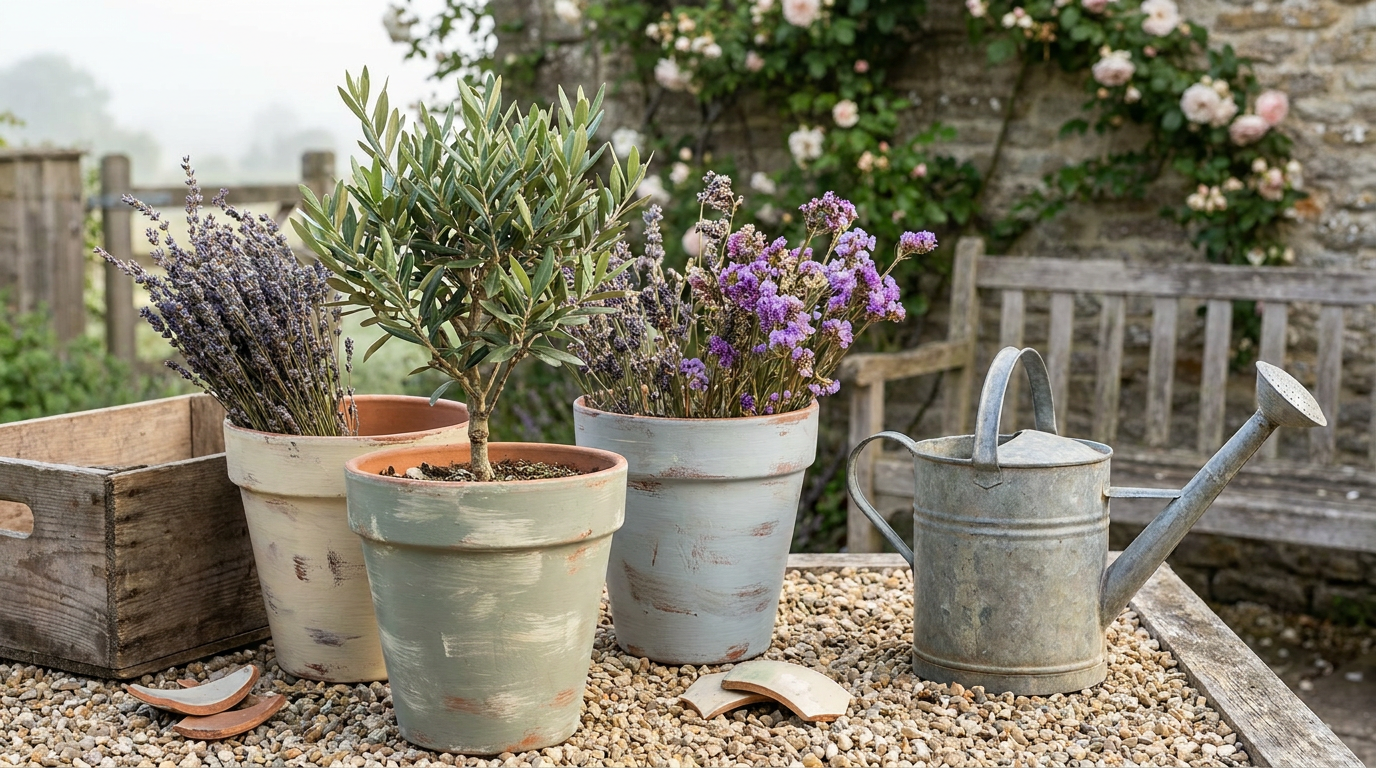
Terracotta is especially effective because it brings warmth and timelessness. It works well with gravel, aged wood, and metal, and it can be customized in simple ways. You might lime wash a pot for a weathered effect, paint a rim in a subtle contrasting tone, or group vessels in varying heights for sculptural interest. When repeated across a garden, terracotta creates continuity without feeling rigid.
Natural materials also contribute to that effortless sophistication many people seek. Woven baskets, cedar, salvaged brick, stone fragments, iron plant stands, and unfinished wood all age gracefully outdoors. They also support the current trend toward climate compatible, naturalistic design rather than synthetic perfection. If your garden already has strong greenery and flower color, let the décor remain understated. This is how you achieve richness without excess.
DIY Planters That Look Curated, Not Crafty
Planters are among the most versatile elements in garden décor because they shape both style and structure. They define entrances, soften hard edges, and help renters or small space dwellers create lushness without digging into the ground. Best of all, they are one of the simplest DIY opportunities. The key is to treat them as a collection, not isolated objects.
Begin with basic terracotta pots, secondhand containers, or plain composite planters. Clean them thoroughly and check for cracks, drainage issues, or signs of residue if they are pre owned. This matters not only for appearance but also for plant health. Used containers can carry pests, old pathogens, or contaminants if left untreated. Wash them well with a gentle cleaning solution, rinse thoroughly, and allow them to dry before painting or planting.
To create a more elevated finish, paint only selected portions rather than coating every surface in bright color. A soft stripe, a tonal wash, or a stenciled botanical motif can add personality while preserving elegance. Another beautiful option is textural layering. Wrap the base of a planter stand with natural rope, raise smaller pots on stacked bricks for height, or place vessels on gravel trays to create a composed vignette. These simple gestures cost very little, yet they immediately make the garden feel styled.
When planting, think beyond decoration alone. Government guidance in Canada encourages native and pollinator friendly species, including flowering plants that bloom at different times throughout the season. This principle works beautifully in container design. Use one planter with spring bloomers, one with midsummer nectar plants, and one with late season flowers. Your arrangement will feel dynamic and graceful, and it will also be more ecologically useful.
A Simple Formula for Styling Container Groups
If you want your container garden to look collected rather than chaotic, use a simple visual formula. Combine a tall element, a mounding element, and a trailing or softening element. Then repeat that structure in varying scales across your space. This mirrors the language of professional planting design while remaining very approachable for beginners.
- Choose one tall anchor, such as an upright grass, a trellis with a climber, or a structured shrub suited to your region.
- Add one fuller plant with body and bloom.
- Finish with a softer edge, such as a trailing plant, an herb, or a spill of foliage.
This composition works equally well on front porches, patios, balconies, and garden entrances. It looks especially elegant when all containers share a related palette and material story.
Create Outdoor Rooms with Handmade Touches
One of the strongest movements in contemporary outdoor design is the idea of the garden as an outdoor room. Rather than treating the yard as one open area, divide it gently into zones for sitting, gathering, and quiet observation. This can be done without construction and without a large budget. A few DIY interventions are enough to suggest intimacy and purpose.
Start with seating, even if it is only a narrow bench or two simple chairs. The placement matters more than the cost. Position seating where it can enjoy morning sun, an evening breeze, or a pleasant planted view. Then frame it with décor that gives the area presence. A pair of painted planters, a low lantern cluster, an outdoor rug made from durable weather resistant material, or a small side table built from a reclaimed crate can immediately create the feeling of a room.
Textiles also play an important role. Outdoor cushions in linen look neutrals, faded stripes, or botanical prints soften the setting and bridge the visual language between house and garden. Choose fabrics designed for exterior use in your climate, especially if you experience moisture or freeze thaw cycles. Storage is part of elegance too. Protecting your handmade details from harsh weather helps them remain beautiful for longer.
Build a Trellis or Vertical Feature for Height and Drama
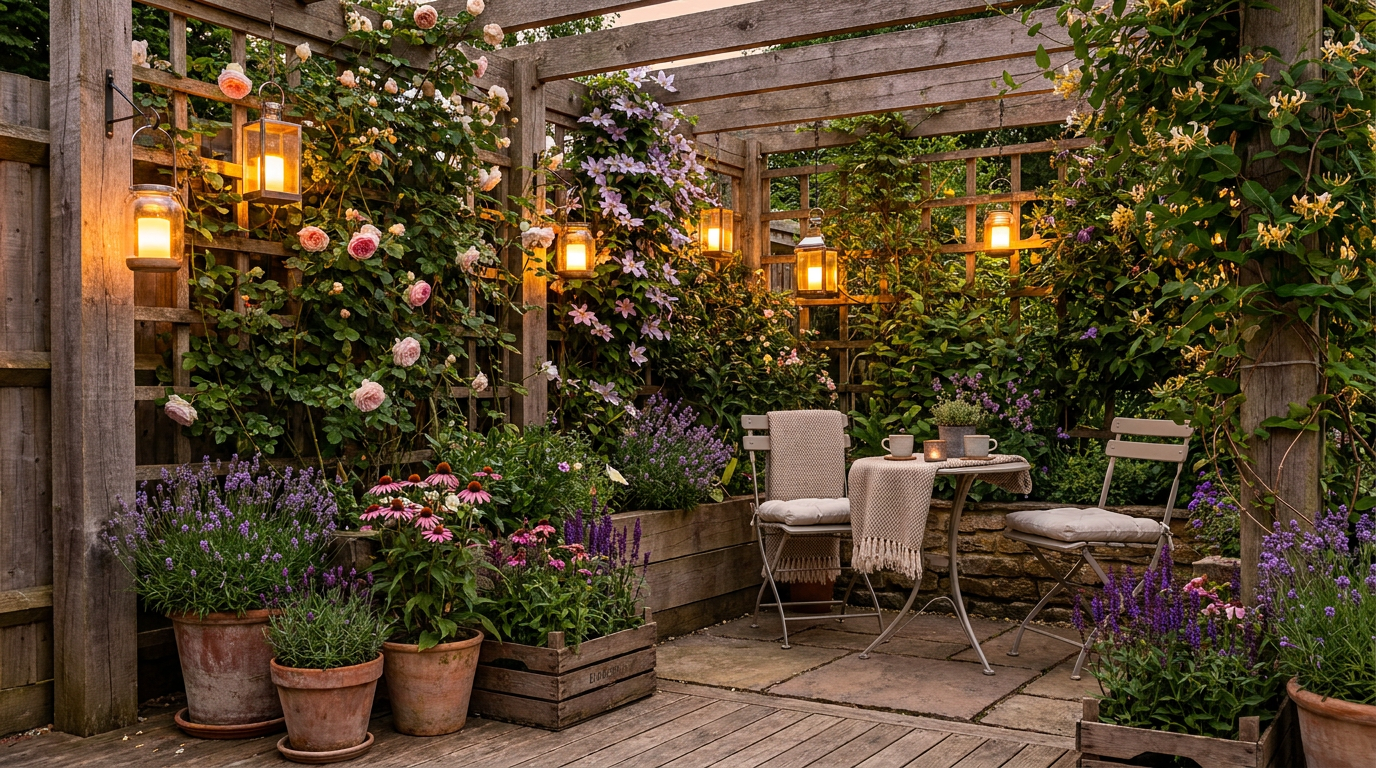
A garden becomes more compelling when the eye has somewhere to travel. Vertical elements provide height, rhythm, and a sense of architecture, which is especially important in small outdoor spaces. A DIY trellis is one of the most effective ways to add instant character while supporting vines, espaliered forms, or decorative hanging pieces. It also speaks beautifully to French inspired styling, where structure and softness often work together.
You can build a simple trellis from wood lattice, narrow cedar slats, or even repurposed branches arranged in a fan pattern. Paint it in muted charcoal, weathered white, or olive green for a sophisticated finish. Lean it against a wall, secure it behind a planter, or use it to visually divide one corner of the garden from another. Once it is in place, the entire space feels more layered and intentional.
Choose climbing plants carefully according to your region. Local extension services, native plant societies, and official planting guides can help you identify suitable species that are not invasive and can handle your local climate. This matters because not all ornamentals are harmless in every landscape. A decorative vine may look charming in a photograph yet cause ecological problems in the wrong place. Elegant gardening is informed gardening.
For those who want a non living vertical detail, consider hanging lanterns, small clay bells, metal frames, or weatherproof art pieces from your trellis. Keep the arrangement sparse. A little negative space around vertical décor allows the structure itself to feel sculptural.
Handmade Lanterns and Candlelight for Evening Atmosphere
Light changes everything in a garden. During the day, it reveals texture and color. In the evening, it creates emotion. One of the simplest ways to bring romance and calm to a backyard is through handmade lanterns and soft illumination. These additions are affordable, practical, and transformative.
Glass jars, perforated metal cans, and secondhand lantern frames can all be repurposed into elegant outdoor lighting. Paint metal in matte black or antique bronze, wrap clear glass with wire for a subtle artisanal look, or place pillar candles inside hurricane style holders on gravel or stone trays. If you prefer low maintenance and extra safety, warm LED candles and solar lights can create a similar mood while requiring little upkeep.
When styling garden lighting, think in clusters rather than isolated points. A trio of lanterns in varied heights beside seating has more visual impact than a single lantern placed alone. Likewise, a row of softly lit jars along a path can guide movement and make the space feel cinematic. Lighting is not only for brightness. It is for intimacy.
For added detail, you might line the interior base of a lantern tray with pebbles, moss, or dried lavender stems. This introduces another sensory layer and makes simple lighting arrangements feel special. Handmade objects often become beautiful not because they are perfect, but because they are considered.
Use Gravel, Stone, and Edging to Add French Inspired Structure
Few materials evoke quiet sophistication as effectively as gravel. It is practical, affordable, and visually grounding. It also supports the French inspired garden language of texture, order, and restraint. Even a very small amount of gravel can transform a previously undefined corner into a finished garden vignette.
Use gravel beneath container groupings, under a bench, around a water bowl, or to define a path leading to a seating area. Its muted surface sets off terracotta, iron, and greenery beautifully. Stone fragments, reclaimed bricks, and simple edging can further reinforce this composed look. If your climate includes freeze thaw cycles, choose materials known for durability and install them over a stable base where possible.
Edging is one of those details that readers often overlook, yet it changes the whole garden. A curved line of reclaimed brick around a herb patch, upright wine bottles sunk into soil for a playful border, or a row of smooth stones around a small bed can make the space feel designed. These projects are approachable even for beginners. They also help define where décor ends and planting begins, which contributes greatly to visual calm.
Invite Pollinators with Beauty and Purpose
There is a persistent misconception that ecological gardens must appear messy or purely functional. In truth, some of the most enchanting gardens are those that welcome bees, butterflies, and birds with intention. This is not only aesthetically rewarding but genuinely important. Health Canada states that the country has over 800 native bee species, and bees are the most common pollinators in Canada. Pollinators are essential to ecosystems and food production, and Canada’s broader biodiversity strategy connects pollinator decline with reduced harvests and wider threats to food security.
Fortunately, a pollinator friendly garden can be deeply elegant. Choose flowering species with staggered bloom times so nectar is available through the season. Blend airy native grasses with clusters of color. Use drifts rather than random scattering so the planting reads as designed. Add herbs such as thyme or bee balm where appropriate for your region, and combine them with local flowering perennials recommended by trusted sources. If you are supporting monarch habitat, official Canadian guidance encourages native milkweed and other local nectar plants.
Pollinator support can also appear through décor itself. A shallow water dish with stones for landing, a tasteful bee hotel mounted in a quiet sunny spot, and seed heads left standing through part of the season can all enhance habitat value. These are not compromises. They are features of a living garden designed with intelligence.
How to Make a Decorative Pollinator Water Bowl
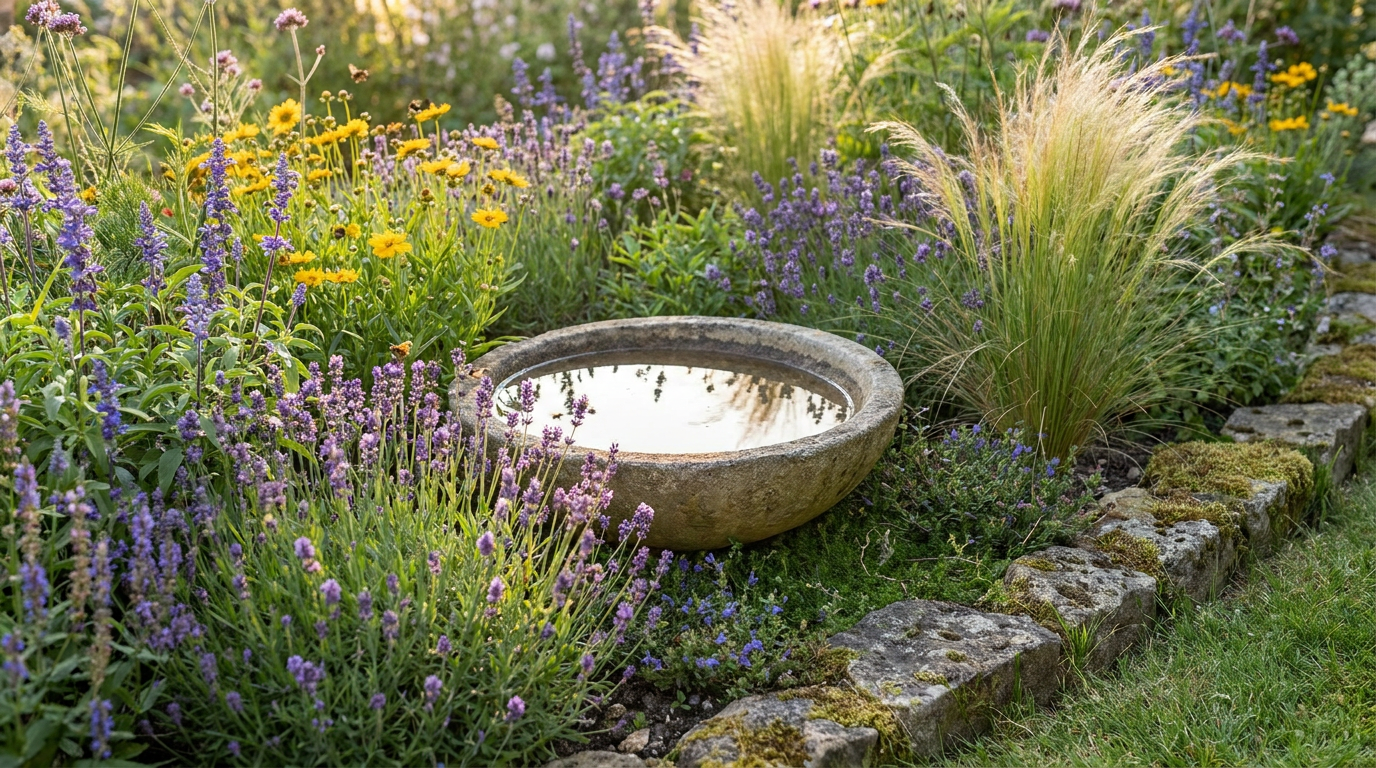
This is one of the simplest and loveliest projects for a DIY garden. Choose a shallow ceramic or stone bowl in a muted tone that complements your containers. Place it on a stable surface or nest it within gravel. Add clean water and a selection of flat stones or pebbles that rise above the surface, giving bees and butterflies a place to land safely.
Refresh the water regularly and keep the bowl clean. Position it near flowers but not directly under heavy leaf drop. Around the bowl, use low fragrant plants or soft grasses to create a peaceful composition. The result is both decorative and useful, bringing motion and life into the garden while maintaining visual elegance.
Style with Salvaged and Secondhand Pieces Carefully
One of the joys of DIY outdoor styling is the hunt for objects with patina and history. Flea markets, thrift shops, salvage yards, and family storage spaces often hold the very things that give a garden soul. An old stool can become a plant stand. A vintage metal tray can hold candles and moss. Wooden crates can become side tables or herb shelves. Worn items often feel more charming outdoors than anything brand new.
However, there is an important practical note here. Secondhand gardening items should be inspected with care. Old containers may harbor residue, pests, or damage. Wood may be rotting. Metal may have sharp corrosion. And when it comes to imported plants, seeds, soil, or produce, caution is even more essential. The Canadian Food Inspection Agency warns gardeners not to bring back plants, seeds, soil, or produce from travel without verifying requirements, because ornamental materials can spread pests and invasive species. A beautiful object should never compromise the health of your landscape.
To style salvaged pieces elegantly, avoid overcrowding. Choose one or two characterful items per zone and let them breathe. Pair weathered objects with simpler forms so they feel curated rather than chaotic. The goal is to create a sense of collected grace, not antique overload.
Make a Mini Garden Retreat in Small Spaces
You do not need a large yard to create an outdoor oasis. Small gardens, balconies, and compact patios can be especially enchanting because they invite intimacy. In a limited area, every detail is more visible, which makes styling feel impactful and satisfying. The same design principles apply. Focus on proportion, layering, and atmosphere.
Use vertical space whenever possible. A trellis, wall shelf, hanging planter, or narrow ladder for pots draws the eye upward and frees the floor. Choose a restrained palette so the space feels airy rather than crowded. One bench with cushions, one small table, and three to five thoughtfully grouped containers can create a complete and elegant scene.
Scent becomes particularly important in compact gardens. A fragrant herb, a flowering climber, or a pot placed near the doorway can make the outdoor experience feel immersive. Add a small lantern for evening warmth and one decorative water bowl or bird dish for movement and reflection. In small spaces, beauty often comes from editing, not adding.
Seasonal Bloom Planning for a Garden That Always Feels Alive
A styled garden should not reach its peak for only one week. One of the most intelligent ways to make a space feel rich and enduring is to plan for succession. This means choosing plants and decorative moments that offer interest from spring through autumn, and in some climates, even into winter. A sequence of bloom, texture, seed heads, foliage color, and evergreen structure gives the garden continuity.
Start by observing your local conditions and selecting regionally appropriate plants. Then map the season in broad strokes. Spring may bring bulbs, flowering shrubs, and fresh herb growth. Summer offers fuller blooms, climbing vines, and fragrant containers. Late season can feature ornamental grasses, asters, seed pods, berries, or rich foliage tones. This kind of planning not only supports pollinators with consistent nectar but also keeps your décor from feeling static.
Decorative objects can shift seasonally too. In spring, terracotta and pale linen feel fresh. In midsummer, lanterns and relaxed seating become more important. In autumn, dried botanical arrangements, weathered baskets, and glowing candlelight add warmth. A garden designed this way always feels attended to, yet never overworked.
What Makes a DIY Garden Look Expensive
There is a difference between a garden that is inexpensive and a garden that looks inexpensive. The distinction lies in composition and consistency. Handmade décor looks elevated when materials repeat, finishes are restrained, and spacing feels intentional. A mix of five unrelated styles can undermine even the prettiest plants. A simple set of coordinated choices can make modest projects feel luxurious.
Scale is another secret. A few larger gestures are often more effective than many tiny ones. One oversized pot has more presence than six miniature ones. One strong trellis creates more drama than several flimsy supports. One elegant seating nook feels more complete than decorations scattered thinly across the whole yard. If you have a limited budget, spend visual energy on focal points.
Maintenance also matters. A sophisticated garden is not necessarily formal, but it is cared for. Sweep gravel, trim dead stems selectively, wipe outdoor furniture, refresh water bowls, and repaint weathered décor when needed. Patina is lovely. Neglect is not. The garden should feel lived in and loved.
A Thoughtful DIY Garden Checklist
As you begin your project, it helps to review a few practical principles that balance beauty, budget, and ecological responsibility. These are simple, but they shape a better result.
- Choose a clear visual direction before buying materials.
- Limit your palette to a few harmonious tones and textures.
- Use durable outdoor materials suited to your local climate.
- Verify that plants are appropriate for your region and not invasive.
- Support pollinators with native or locally recommended flowering species.
- Clean and inspect secondhand containers before reuse.
- Create one or two focal areas instead of decorating every inch.
- Include lighting, seating, and vertical structure for atmosphere.
- Plan for bloom succession so the garden has seasonal rhythm.
- Maintain handmade details so the space continues to feel refined.
The Most Beautiful Gardens Feel Personal
Trends may introduce us to new possibilities, but the gardens we remember are the ones with feeling. A hand painted planter inspired by a trip, a salvaged chair that belonged to family, herbs cut for summer meals, and flowers chosen because they remind you of childhood are the details that give an outdoor space emotional resonance. When décor carries meaning, it becomes more than styling. It becomes identity.
This is perhaps the true luxury of DIY garden design. It allows beauty to emerge through care rather than through expense. It invites you to notice the light at different hours, to think about scent and shadow, to choose materials that age gracefully, and to welcome birds and pollinators into daily life. It encourages restraint, but never sterility. It celebrates elegance, but always with humanity.
In a time when outdoor living is increasingly valued as a source of calm, wellness, and connection, even a modest garden can become something profound. A few handmade objects, a few thoughtful plant choices, and a clear artistic eye are enough to transform a space. The result is not just a prettier yard. It is a retreat composed around your own way of living.
If you approach your garden as a composition rather than a collection, your efforts will always look more graceful. Let texture replace clutter. Let local plants and seasonal bloom bring life. Let handmade pieces express your taste with subtle confidence. Then step outside in the evening, light a lantern, and enjoy the quiet reward of a garden that feels both beautiful and deeply, unmistakably yours.



No Comment! Be the first one.