



Transform Your Patio: The Ultimate DIY Guide to Outdoor Furniture Styling for Elegant Seasonal Living
A beautifully styled patio has a special kind of power. It extends the home beyond its walls and invites daily life into the open air, whether that means morning coffee in gentle sun, long summer dinners with friends, or a quiet autumn evening under a throw. In Canada and across North America, outdoor living has become more than a seasonal extra. It is now an intentional part of how people relax, gather, and design their homes.
Table Of Content
- Why Outdoor Furniture Styling Matters More Than Ever
- Start with a Vision: How Do You Want the Patio to Feel?
- Plan the Layout Before You Buy Anything
- Create Outdoor Zones Like an Interior Designer
- The lounge zone
- The dining zone
- The accent zone
- Choose Materials That Are Elegant and Weather Smart
- The Best DIY Styling Approach: Mix, Layer, and Edit
- Comfort Is a Design Decision, Not an Afterthought
- Design for Accessibility and Ease of Movement
- Style by Season So the Patio Stays Beautiful All Year
- Lighting, Greenery, and the Final Decorative Layers
- Common Patio Styling Mistakes to Avoid
- A Simple DIY Patio Styling Plan You Can Follow This Weekend
- Conclusion: Style for the Life You Actually Want Outdoors
Yet truly successful outdoor styling is never only about appearance. The most appealing patios balance atmosphere with resilience, comfort with maintenance, and elegance with practical use. Recent outdoor furniture trends show growing interest in lounge oriented seating, modular arrangements, sustainable materials, and flexible pieces that support both entertaining and everyday living. That tells us something important. A good patio does not simply look curated in a photograph. It performs beautifully through changing weather, shifting needs, and real household routines.
This guide is designed to help you create that balance. You will learn how to choose outdoor furniture that feels refined but sensible, how to arrange pieces so the space remains accessible and welcoming, and how to add the personal layers that make a patio feel complete. If you are styling a compact balcony, a suburban deck, or a generous backyard terrace, the same principles apply. Thoughtful materials, clear layout, and seasonal adaptability will always lead to a more graceful result.
For many homeowners, the idea of a DIY patio makeover can feel overwhelming because there are so many furniture categories, finishes, cushions, covers, and accessories to consider. The key is to think like a designer rather than a shopper. Instead of buying a matching set and hoping everything falls into place, begin with how you want the space to function. Once purpose is clear, style becomes far easier to shape with confidence.
In the sections that follow, we will explore how to create outdoor zones, choose weather smart materials, mix beauty with utility, and style your patio for all seasons. The goal is not perfection. The goal is an outdoor space that feels elevated, easy to use, and deeply suited to your way of living.
Why Outdoor Furniture Styling Matters More Than Ever
Outdoor furniture demand continues to grow across North America, and with good reason. People increasingly want their patios, porches, and decks to feel like true extensions of the interior. That shift has encouraged a more layered approach to furniture styling, one that draws from indoor design language such as zoning, texture, scale, and visual harmony. It is no longer enough for a patio to hold a few chairs and a table. Homeowners want spaces that feel composed, restful, and ready for multiple kinds of use.
Another reason styling matters is that outdoor spaces now need to work harder. A patio may need to host a family meal one day, provide a sunny reading corner the next, and welcome extra guests on the weekend. Modular seating, accent tables, benches, and moveable pieces support that flexibility. Trend research has shown strong interest in loungers, chaises, seating sets, and accent furniture such as plant stands, hammocks, swings, and bar carts. The larger design lesson is clear. A well styled patio is built through layers and zones rather than a single rigid arrangement.
In colder climates especially, outdoor styling also becomes an issue of planning and longevity. Severe weather, freeze thaw cycles, humidity, strong summer UV exposure, and winter snow all place pressure on furniture materials. When styling is approached thoughtfully, beauty and durability support one another. Choosing resilient finishes, breathable storage, easy care textiles, and sensible layouts means the patio will not just look lovely in June. It will continue to feel well considered year after year.
Beautiful outdoor design is not decoration alone. In northern climates, it is a form of functional styling that respects weather, comfort, movement, and maintenance.
Start with a Vision: How Do You Want the Patio to Feel?
Before selecting a single chair or cushion, pause to define the mood you want to create. A patio can feel serene and minimal, lush and layered, relaxed and family friendly, or refined enough for evening entertaining. Your vision should guide every later choice, from furniture silhouettes to color palette. If this first step is skipped, outdoor spaces often end up feeling cluttered or disconnected because each item was purchased separately without a unifying idea.
An elegant patio usually begins with a restrained foundation. Neutral furniture frames in black, charcoal, soft taupe, white, or natural wood tones provide a timeless base that can adapt across seasons. From there, accessories can introduce character through woven textures, cushions, ceramics, greenery, and lighting. This approach is especially useful for DIY styling because it allows gradual updates without replacing major pieces.
Think also about emotional atmosphere. Do you imagine deep seating where conversations can stretch into the evening, or do you prefer a café like arrangement suited to quick breakfasts and intimate dinners. Is the patio meant to feel airy and open, or softly enclosed by planters and textiles. By naming the feeling first, you create a quiet design discipline that makes every later decision easier.
It can help to describe your patio in three words before you begin. Perhaps you want it to feel calm, natural, and inviting, or modern, sociable, and warm. Those words become a practical filter. If an item is too bulky, too bright, or too delicate for that vision, you will know immediately.
Plan the Layout Before You Buy Anything
One of the most common DIY mistakes is purchasing furniture before understanding the patio’s proportions and circulation. Even beautiful pieces can feel awkward when they interrupt movement or overwhelm a small footprint. Layout should always come first. Measure the space carefully, noting door swings, steps, railings, grills, planters, and any existing architectural elements such as posts or built in benches.
Accessibility guidance for outdoor spaces reminds us that furniture supports core activities such as sitting and eating, which makes usability essential. In a residential patio, this means maintaining comfortable circulation paths and avoiding arrangements that force people to squeeze sideways around chairs or navigate unstable surfaces. Clear movement is not only practical. It also creates visual calm, making the patio feel more open and graceful.
Rather than centering everything around one matching set, divide the patio into intentional zones according to use. This might include a lounge area, a dining area, and a small accent zone for plants, a side chair, or a serving cart. Zoning instantly makes a patio feel more curated because each area has a purpose. It also allows you to furnish the space gradually, beginning with the most important function and adding layers over time.
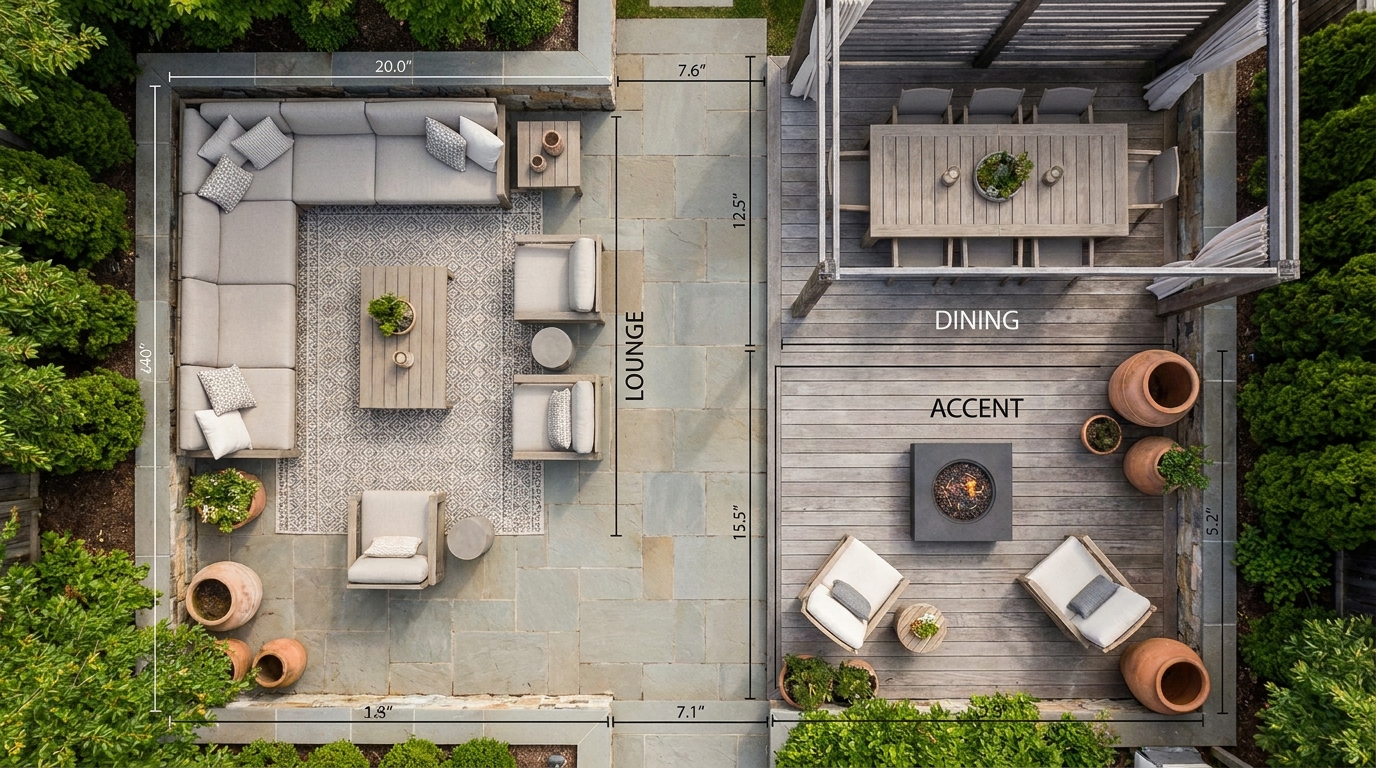
If you are unsure how to translate measurements into a real layout, use painter’s tape or cardboard to mark furniture footprints directly on the patio surface. This simple DIY step reveals whether a sectional is too deep, whether dining chairs have enough pull back room, and whether there is still space to circulate comfortably. It is one of the easiest ways to avoid costly styling regrets.
Try using these layout priorities as a starting point:
- Entry flow first, so doors and major pathways stay open and natural.
- Largest function second, whether that is lounging or dining.
- Accent pieces last, added only after circulation remains comfortable.
- Sightlines in mind, so the arrangement feels balanced when viewed from inside the home.
Good patio design should feel effortless to move through. When people can sit, stand, dine, and cross the space without friction, the entire setting appears more polished. Often, what looks luxurious is simply what has been arranged with care.
Create Outdoor Zones Like an Interior Designer
The most sophisticated patios borrow from the logic of interior design. Instead of scattering furniture randomly, they compose the space into zones that support different moods and activities. This approach is especially effective in North America, where consumers are increasingly drawn to lounge style outdoor living. It also helps smaller patios feel more intentional because each square foot is given a role.
The lounge zone
The lounge zone is often the emotional heart of the patio. It may consist of a small sofa, two deep chairs, a modular sectional, or a pair of loungers with a table between them. According to recent consumer trend reporting, lounge chairs and chaises remain among the most desired outdoor pieces, which reflects a broader desire for comfort and slow living outdoors. To style this area well, think in terms of conversation and rest. Seating should face inward enough to feel connected, with a reachable surface for drinks, books, or candles.
An outdoor rug is often what completes this zone visually. It anchors the furniture, softens harder patio surfaces, and gives the arrangement the identity of an outdoor room. Choose a rug large enough for at least the front legs of major seating pieces to rest on it. That proportion creates cohesion and prevents the lounge area from appearing fragmented.
The dining zone
If your patio accommodates meals, the dining zone should feel easy rather than crowded. The right table depends on how you live. Round tables encourage intimacy in smaller spaces, while rectangular tables serve larger families or guests more efficiently. Leave enough room around chairs so people can sit and rise comfortably without colliding with adjacent furniture or planters.
For households that entertain occasionally rather than constantly, a compact dining set combined with flexible accent seating often works better than an oversized table. Stools, benches, and foldable side chairs can be brought in when needed and stored away later. This preserves openness while still supporting hospitality.
The accent zone
The accent zone is where personality enters. This area may include a bench under a wall light, a bar cart, a hammock, a porch swing, a sculptural planter cluster, or a small bistro set in a quiet corner. Trend research shows strong consumer interest in accent furniture, and for good reason. These pieces break up predictability and make the patio feel collected rather than purchased in a single transaction.
Even the smallest patio can hold an accent moment. A stool used as a plant stand, a narrow console against a wall, or a lantern grouping by the entry can add dimension and charm. These details are often what transform a functional setup into a memorable one.
Choose Materials That Are Elegant and Weather Smart
Material selection is where practicality becomes non negotiable. Outdoor furniture should suit your climate as much as your style. In Canada and northern U.S. regions, changing temperatures and severe weather can shorten the life of poorly chosen pieces. That does not mean your patio must look purely utilitarian. It means refined styling begins with a realistic understanding of performance.
Powder coated metal is a favorite for contemporary patios because it offers clean lines and strong resistance to corrosion when properly maintained. Aluminum is especially appealing because it is lighter than steel, often rust resistant, and easier to move for seasonal rearranging or storage. If you love a modern aesthetic, metal frames in matte black, warm bronze, or soft greige can create an elegant architectural base.
Wood brings warmth that few materials can rival. Teak is especially admired for outdoor use because it ages beautifully and has natural oils that help it resist the elements. Other hardwoods can also perform well, but they require more attentive care depending on finish and exposure. The important point is to understand that even quality wood is not maintenance free. It needs periodic cleaning and sometimes treatment if you want to preserve a particular tone.
Resin wicker remains popular because it introduces texture and softness without the vulnerability of natural fibers outdoors. High quality synthetic wicker over a sturdy aluminum frame can offer a classic, inviting look that works across traditional and transitional patios. Look for tightly woven construction and UV resistant materials so the finish remains attractive through repeated sun exposure.
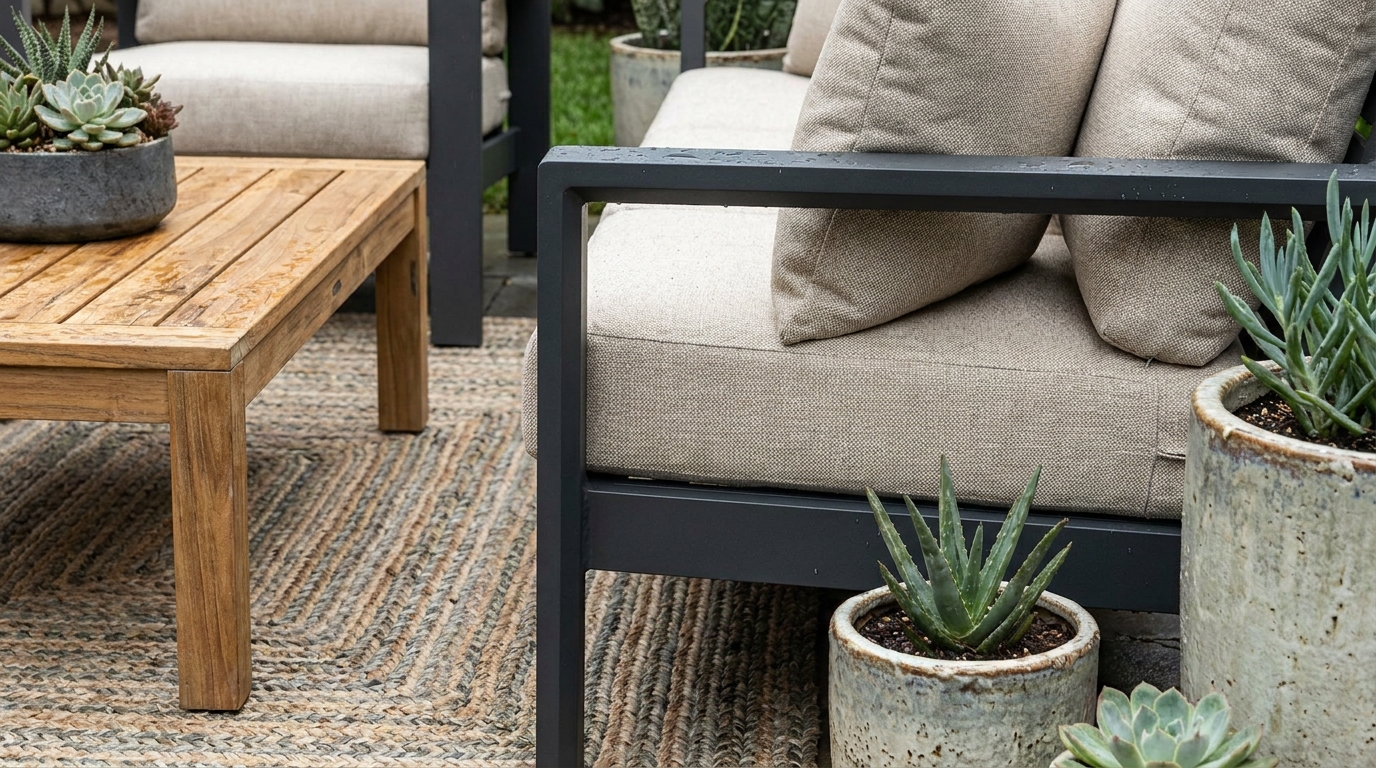
Fabrics deserve just as much scrutiny as frames. Performance textiles with UV resistance, moisture tolerance, and removable covers make a significant difference in both appearance and upkeep. Cushions in durable neutrals can be refreshed seasonally through smaller accents such as patterned pillows or lightweight throws. This strategy is sustainable as well as stylish because it reduces the need for full furniture replacement.
When comparing materials, keep these practical questions in mind:
- Will this finish tolerate strong summer sun without obvious fading or cracking?
- Can the piece withstand humidity and occasional rain, or does it need deep cover every time weather changes?
- Is it light enough to move if needed, but stable enough to feel secure in use?
- Will cleaning and seasonal maintenance fit realistically into your routine?
- Can cushions or fabric elements be replaced instead of replacing the whole item?
Lasting style is not about choosing the trendiest material. It is about choosing materials that age with dignity in your specific climate.
The Best DIY Styling Approach: Mix, Layer, and Edit
One of the enduring misconceptions in patio design is that matching sets always look better. In reality, a fully matched outdoor arrangement can feel flat, especially if every frame, cushion, and side table repeats the same shape and finish. A more elegant DIY approach is to build harmony through color, scale, and texture while allowing individual pieces to differ slightly. This is what gives a patio a lived in, editorial quality.
Start with a unifying palette. A base of stone, sand, charcoal, olive, black, or weathered wood tones creates quiet cohesion. Then add contrast through one or two secondary materials, such as woven lanterns against metal frames or ceramic stools beside teak seating. The goal is not visual noise. It is refined variation.
Layering matters just as much outdoors as it does indoors. Cushions, throws, rugs, planters, and lighting all contribute softness and depth. Yet restraint remains important. If every surface holds an accessory, the patio will lose its sense of ease. Leave breathing room around furniture so texture and shape can be appreciated.
A good editing rule is to style in stages. Begin with essential furniture, then add one layer at a time. First anchor the lounge with a rug and coffee table. Next bring in greenery. Then add textiles. Finally introduce decorative accents such as lanterns, trays, or a bar cart. This sequence prevents overbuying and makes it easier to stop when the patio already feels complete.
For homeowners who want a more sustainable path, mixing secondhand or inherited pieces with a few new weather resistant items can produce an especially distinctive result. A vintage bench may sit beautifully beside new modular seating, while a refreshed side table can gain new life with outdoor paint or a sealant suited to exterior use. DIY styling does not require a total replacement. Often it requires a better eye.
Comfort Is a Design Decision, Not an Afterthought
Beautiful outdoor furniture should invite use. If seating is too upright, tables are at the wrong height, or cushions feel flimsy, the patio may look polished but remain largely unused. Comfort is one of the clearest signs that a space has been designed around real living rather than quick aesthetics. It deserves careful attention from the beginning.
Seat depth should align with purpose. Lounge chairs and sofas intended for lingering can be deeper and more relaxed, while dining chairs should support upright posture during meals. Side tables should be close enough to reach without awkward leaning. If you enjoy reading outside, think about where a book, drink, and soft light will sit in relation to the chair. These small ergonomic choices shape the experience of the entire patio.
Cushions are not simply decorative. Quality fill, supportive construction, and washable covers affect both longevity and daily pleasure. Choose neutrals for larger cushions if you want a timeless look, then bring personality through smaller pillows that can be switched as seasons change. This keeps the patio feeling fresh without constant reinvestment.
Shade is another dimension of comfort that is often forgotten during styling. A patio can be perfectly furnished and still feel inhospitable if strong afternoon sun makes it difficult to sit there. Umbrellas, pergolas, privacy screens, and tall planters all contribute to a more sheltered atmosphere. They also create visual architecture, which can make the patio feel more complete.
Design for Accessibility and Ease of Movement
Accessibility is not only for public or commercial spaces. At home, it translates into thoughtful planning that makes a patio easier for everyone to enjoy, from children to older adults to guests carrying food or drinks. A graceful outdoor setting should never require people to navigate avoidable obstacles. Practical ease is one of the most generous forms of design.
Start by maintaining clear paths between the door and main activity zones. Dining chairs should pull back without blocking passage. Coffee tables should leave enough leg room around seating. If the patio has steps or level changes, furniture should not crowd those transitions. Stable placement also matters. Wobbly tables, overly lightweight chairs in windy spots, and rugs that shift underfoot can quickly undermine both safety and elegance.
Universal design principles can also influence furniture choice itself. Benches with backs, chairs with supportive arms, and table heights that work comfortably with seating all improve usability. If one family member has mobility concerns, create at least one especially easy seating position close to entry points and stable surfaces. These measures do not make a patio look clinical. On the contrary, they often result in calmer, more intelligent arrangements.
When styling around accessibility, remember that less crowding usually means more beauty. Spaciousness communicates confidence. A patio that breathes feels more luxurious than one packed with too many competing pieces.
Style by Season So the Patio Stays Beautiful All Year
Seasonal outdoor living is one of the defining realities of Canadian patio design. A truly successful patio must be able to shift gracefully from spring through autumn and then transition into protection during winter. This is where many homeowners misunderstand the phrase outdoor furniture. Weather tolerant does not mean invincible. Even durable materials benefit from covers, cleaning, and sheltered storage during long periods of non use.
In spring, focus on a fresh reset. Clean frames thoroughly, wash cushion covers if possible, inspect for rust or wear, and replace any accessories that did not winter well. Spring styling can lean airy and light, with soft neutrals, young greenery, and simple table settings that celebrate the return outdoors. This is also the ideal moment to reevaluate layout before daily use begins again.
Summer calls for comfort and hospitality. Add shade solutions, extra side tables, serving pieces, and lighting for long evenings. During this season, the patio often functions as a second living room, so make sure there is enough flexible seating for guests. A small bar cart or movable stool can be surprisingly useful without consuming much space.
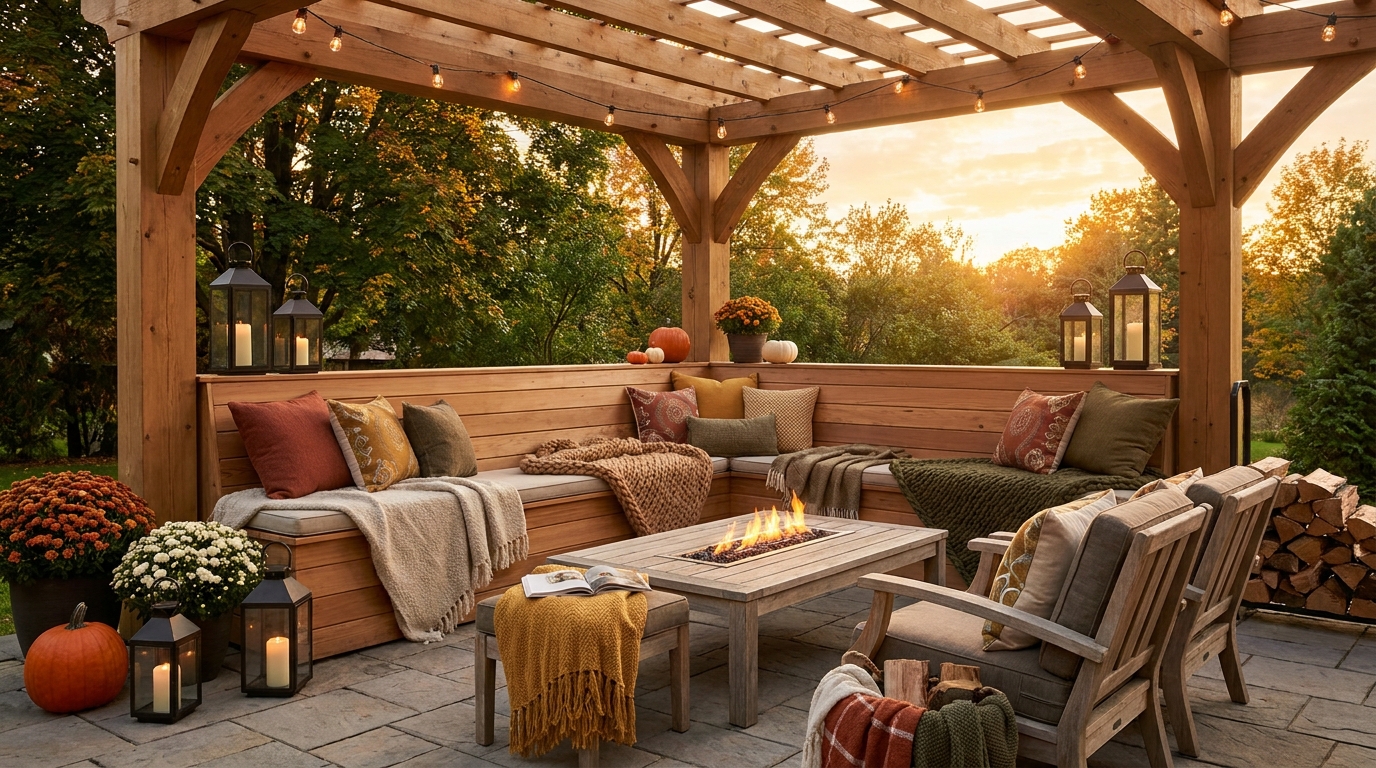
Autumn invites warmth and texture. This is the moment for richer textiles, lanterns, deeper cushion accents, and perhaps a storage bench that can hold throws when temperatures drop at night. Because weather becomes less predictable, quick protection matters more. Keep breathable covers nearby and store delicate textiles when not in use for extended stretches.
Winter preparation should be taken seriously in colder climates. Manufacturer care guidance commonly recommends storing furniture indoors or in dry, ventilated areas when possible during winter or prolonged non use. Cushions should be fully dry before storage to prevent mold. Covers should fit properly and allow airflow rather than trapping moisture against surfaces. If some pieces must remain outdoors, choose items designed for exposure and elevate them slightly if necessary to reduce contact with standing water or ice.
Seasonal styling can be organized simply:
- Spring for cleaning, rearranging, and refreshing.
- Summer for entertaining, shade, and everyday lounging.
- Autumn for warmth, layering, and protection readiness.
- Winter for storage, covers, and preserving long term quality.
When a patio is designed with these transitions in mind, it remains attractive and manageable rather than becoming a burden at the end of every season.
Lighting, Greenery, and the Final Decorative Layers
Furniture establishes function, but finishing details create atmosphere. Lighting is one of the most transformative additions a patio can receive. It softens architectural edges, extends use into the evening, and gives the entire setting a sense of occasion. Lanterns, string lights, rechargeable table lamps, and wall mounted fixtures all have a place depending on the scale and style of the patio.
The most elegant lighting plans mix ambient glow with task support. Overhead string lights can create softness, while a small lamp or lantern on a side table helps with reading or serving after dark. Avoid relying on a single harsh source. Multiple lower points of light almost always feel more intimate and visually layered.
Greenery is equally important because it mediates between furniture and landscape. Even on a compact patio, planters can frame seating, soften corners, and provide seasonal color. Vary plant height so the eye moves naturally through the space. Tall grasses or shrubs can suggest enclosure, while trailing plants and herbs add life closer to hand. Choose planters that relate to your furniture palette, whether that means matte black cylinders, warm stone vessels, or textured terracotta.
Decorative accessories should support life outdoors rather than merely occupy space. Trays, outdoor safe candles, storage baskets, and weather suitable tabletop objects can all add beauty if used selectively. The finest patios often feel lightly styled rather than heavily decorated. Every object should seem to belong there.
Common Patio Styling Mistakes to Avoid
Many patio frustrations come not from poor taste but from a few predictable missteps. The first is choosing furniture based only on appearance without considering local climate. Delicate finishes, low quality fabrics, and poorly protected metals may look attractive initially but age quickly in harsh weather. The result is a patio that feels tired long before it should.
The second mistake is overcrowding. In an effort to make the space feel complete, homeowners sometimes add too many seats, planters, and accessories. This leaves little room to move and strips the patio of visual calm. A smaller number of well chosen pieces almost always looks more luxurious than an excess of mediocre ones.
Another common error is ignoring storage. Cushions, throws, and small decorative items need a place to go during storms and at season’s end. Without storage planning, the patio quickly drifts into disorder. A deck box, storage bench, or nearby indoor solution can preserve both beauty and practicality.
Finally, many people assume maintenance can be postponed because furniture is labeled for outdoor use. In reality, routine care protects the investment and keeps styling looking intentional. Simple habits such as brushing off debris, wiping surfaces, laundering covers, and using winter protection all contribute to a patio that remains refined over time.
A Simple DIY Patio Styling Plan You Can Follow This Weekend
If your patio feels neglected and you want a manageable place to begin, simplify the process into one weekend plan. Start by removing everything from the space that does not belong there or no longer serves a purpose. Sweep, wash surfaces, and take inventory of what you already own. You may find that a few good pieces are hidden beneath clutter and only need a better arrangement.
Next, define your primary zone. For most households, this is the lounge zone. Arrange seating so it feels connected and add one central anchor such as a rug or coffee table. Then decide whether there is space and need for a secondary zone, such as dining or an accent corner. Work from largest to smallest rather than attempting to style every detail at once.
After layout, evaluate comfort. Replace flat cushions, add a side table where needed, and make sure circulation remains easy. Only then should you begin layering decorative elements such as pillows, planters, lanterns, and serving pieces. This order matters because it prevents decorative enthusiasm from obscuring functional issues.
A simple action sequence might look like this:
- Clear and clean the patio.
- Measure and map the layout.
- Create a main zone for lounging or dining.
- Add one or two flexible accent pieces.
- Layer textiles, lighting, and greenery.
- Set up storage and weather protection.
By the end of this process, the patio should feel more open, more coherent, and more inviting without requiring a complete redesign.
Conclusion: Style for the Life You Actually Want Outdoors
The most memorable patios are not necessarily the most expensive ones. They are the spaces where beauty has been aligned with daily life, climate realities, and personal rhythm. An elegant outdoor setting emerges when furniture is chosen for both durability and charm, when circulation remains effortless, and when every layer from the rug to the lanterns serves a larger mood.
In Canada and across North America, seasonal living asks more of outdoor design. It asks us to think ahead, to choose weather smart materials, and to build spaces that can adapt from bright summer afternoons to cool autumn evenings and winter storage. Happily, these practical decisions do not diminish style. They deepen it. A patio that lasts well often looks better because it has been composed with intelligence from the start.
If you are approaching your space as a DIY project, let refinement come from clarity rather than complication. Define how you want the patio to feel, shape it into zones, invest in comfort, and edit with a careful hand. Add the textures, lighting, and greenery that make it personal. Protect what you choose so it continues to reward you over time.
When outdoor furniture styling is done thoughtfully, the patio becomes more than a backdrop. It becomes a true room under the sky, ready for coffee, conversation, celebration, and stillness in equal measure. And that, perhaps, is the most beautiful transformation of all.


No Comment! Be the first one.