



Creating Cozy Pet-Friendly Spaces in Your Home Without Sacrificing Style
Living with pets changes the rhythm of a home in the loveliest ways. There is more movement, more softness, more personality, and usually a little more mess. Yet a home that welcomes dogs and cats does not have to feel cluttered, overly practical, or disconnected from your design style. In fact, some of the most comfortable homes are the ones that quietly support every member of the household, including the four-legged ones.
Table Of Content
- Why Pet-Friendly Design Matters More Than Ever
- Start with a Layered View of the Home
- Choose Durable Surfaces That Still Feel Warm
- Design an Entryway That Handles Real Weather
- Create Dedicated Pet Zones That Feel Like Part of the Room
- Choose Upholstery and Textiles That Invite Relaxed Living
- Support Indoor Air Quality for a Healthier Home
- Pet-Proof with the Same Care You Give Child-Proofing
- Hide the Clutter Without Hiding Your Pet
- Make Comfort Visible in Small, Thoughtful Ways
- Room-by-Room Ideas for a Stylish Pet-Friendly Home
- Living Room
- Kitchen
- Bedroom
- Bathroom or Laundry Room
- Entryway or Mudroom
- Simple Habits That Keep the Space Feeling Beautiful
- The Emotional Value of Designing for Everyone
- Quick Priorities to Focus on First
Creating cozy pet-friendly spaces is really about designing for real life. It means choosing materials that can handle paws, claws, shedding, and damp entryways while still feeling beautiful under your feet and pleasing to the eye. It means paying attention to indoor air quality, safety, comfort, and storage so that pet essentials blend into the home instead of taking over it. When these details are considered from the start, your home feels more harmonious, more relaxed, and much easier to maintain.
This matters to many households across Canada and North America. Statistics Canada reported that 58% of Canadian households owned at least one dog or cat in 2020, with cats estimated at 8.1 million in Canadian homes. Pet ownership is not a niche lifestyle anymore. It influences the way many people think about flooring, furniture, entryways, cleaning routines, and even the atmosphere they want to create in shared family spaces.
The good news is that pet-friendly design has evolved beautifully. Today, washable rugs come in sophisticated patterns, performance fabrics feel soft instead of stiff, and built-in feeding stations can disappear into cabinetry with ease. There is also a growing awareness that a healthy home for pets and people includes good ventilation, cleaner surfaces, thoughtful storage, and fewer hidden hazards. The result is not a home that looks like it was designed around pet accessories. It is a home that feels polished, cozy, and truly lived in.
A stylish pet-friendly home is not about hiding the fact that you live with animals. It is about making space for them so thoughtfully that comfort and beauty feel completely natural together.
Why Pet-Friendly Design Matters More Than Ever
Pets shape the way a home functions every day. Dogs need convenient places for leashes, towels, and post-walk cleanup. Cats need secure resting spots, quiet litter arrangements, and vertical territory that helps them feel calm. Both benefit from comfortable surfaces, stable routines, and spaces that do not create unnecessary stress. When these needs are ignored, the home often ends up feeling more chaotic because supplies drift into every room and problem-solving becomes reactive instead of intentional.
There is also a wellness layer that deserves more attention. According to the EPA, pets can contribute to indoor biological pollutants, including allergens carried through dander and other particles. AAAAI guidance makes an important distinction that many people still misunderstand: pet allergy symptoms are triggered primarily by proteins found in dander, saliva, and urine, not by pet hair itself. That means a pet-friendly home is not simply about sweeping up fur. It is about reducing buildup, improving ventilation, and creating cleaner, easier-to-maintain environments.
Design can support that beautifully. When floors are easier to clean, fabrics can be washed, and surfaces do not trap as much dust and residue, the whole home becomes simpler to care for. A calmer cleaning routine often leads to a calmer emotional atmosphere too. Instead of constantly reacting to spills, odors, and wear, you can enjoy a space that feels resilient and welcoming.
Another reason this topic matters is that people increasingly want homes to support multiple needs at once. Family life, relaxation, entertaining, work, and wellness often happen under one roof. A pet-friendly approach fits naturally into that broader vision. It overlaps with child-friendly design, healthier-home design, and practical luxury, all of which center on making beautiful spaces function better in everyday life.
Start with a Layered View of the Home
One of the most helpful ways to think about pet-friendly design is to see your home as a layered system rather than a collection of separate decorating choices. Flooring, upholstery, air quality, storage, layout, and cleaning habits all work together. If one layer is beautiful but hard to maintain, the whole room can feel less comfortable over time. If every layer supports real life, the home feels easy, soft, and settled.
Begin with your biggest surfaces. Floors, rugs, and sofas take the most wear and set the tone for how your home feels. Then look at support systems such as ventilation, filtration, and humidity control, which are less visible but deeply important. Finally, think about behavior and routine. Where do wet paws enter the house. Where do toys collect. Where does a cat prefer to perch. The smartest design often comes from observing what your pet already loves and refining it in a more elegant way.
This is also where aesthetics and functionality can genuinely meet. A washable rug in a warm natural tone may feel more inviting than a precious one you are constantly protecting. A slipcovered chair can look relaxed and elevated while still being practical. A storage bench by the door can hold pet towels and grooming tools while making the room feel more organized. Thoughtful layering helps every design choice work a little harder.
Choose Durable Surfaces That Still Feel Warm
Materials matter enormously in pet households, but practical does not have to mean cold. Hard, nonporous flooring is generally easier to clean, especially when you are dealing with muddy paw prints, tracked-in salt, accidents, or shedding. In many North American homes, this can mean wood-look luxury vinyl, sealed tile, stone, or well-finished hardwood in lower-risk rooms. These surfaces make daily cleanup faster and help reduce the lingering buildup that can settle into porous materials.
That said, hard flooring alone is not the full answer. Pets need traction, comfort, and warmth too. Slippery surfaces can be difficult for older dogs, nervous pets, or animals recovering from injury. A home that is technically easy to mop but uncomfortable to move through is not truly pet-friendly. The best approach is to balance durable flooring with strategically placed washable rugs and runners that soften the room and give pets confidence underfoot.
Rugs are one of the easiest places to blend style with resilience. Look for low-pile or flatweave options that are easier to vacuum and less likely to trap debris. Patterns are often more forgiving than solid pale tones, especially in high-traffic zones. Washable rugs are especially helpful in entryways, kitchens, family rooms, and under feeding areas. They can add warmth and design interest without creating unnecessary stress when life gets messy.
Wall finishes and trim deserve some thought too. In busy family spaces, wipeable paint finishes can make a big difference near feeding areas, beds, and doorways where brushing, shaking, or splashing tends to happen. If your dog likes to rest near a sunny wall or your cat claims a particular corner, subtle adjustments such as durable trim paint or a well-placed washable mat can preserve the beauty of the room without making it feel obviously pet-centered.
Design an Entryway That Handles Real Weather
In Canada and colder parts of North America, the entryway is one of the most important pet-friendly spaces in the home. Snow, slush, rain, mud, and road salt can all arrive on your floors within seconds. If there is no transition zone, mess travels quickly into the rest of the house and cleanup becomes a constant source of friction. A thoughtful entry setup can prevent that while making everyday routines feel calmer.
An ideal pet-friendly entryway includes easy-clean flooring, an absorbent mat, a place to hang leashes, and hidden storage for waste bags, towels, and grooming wipes. If space allows, a bench is useful for removing boots and drying paws without feeling rushed. Closed cabinetry or woven bins can keep these essentials nearby while still preserving a polished look. The mood should feel collected and welcoming rather than utilitarian.
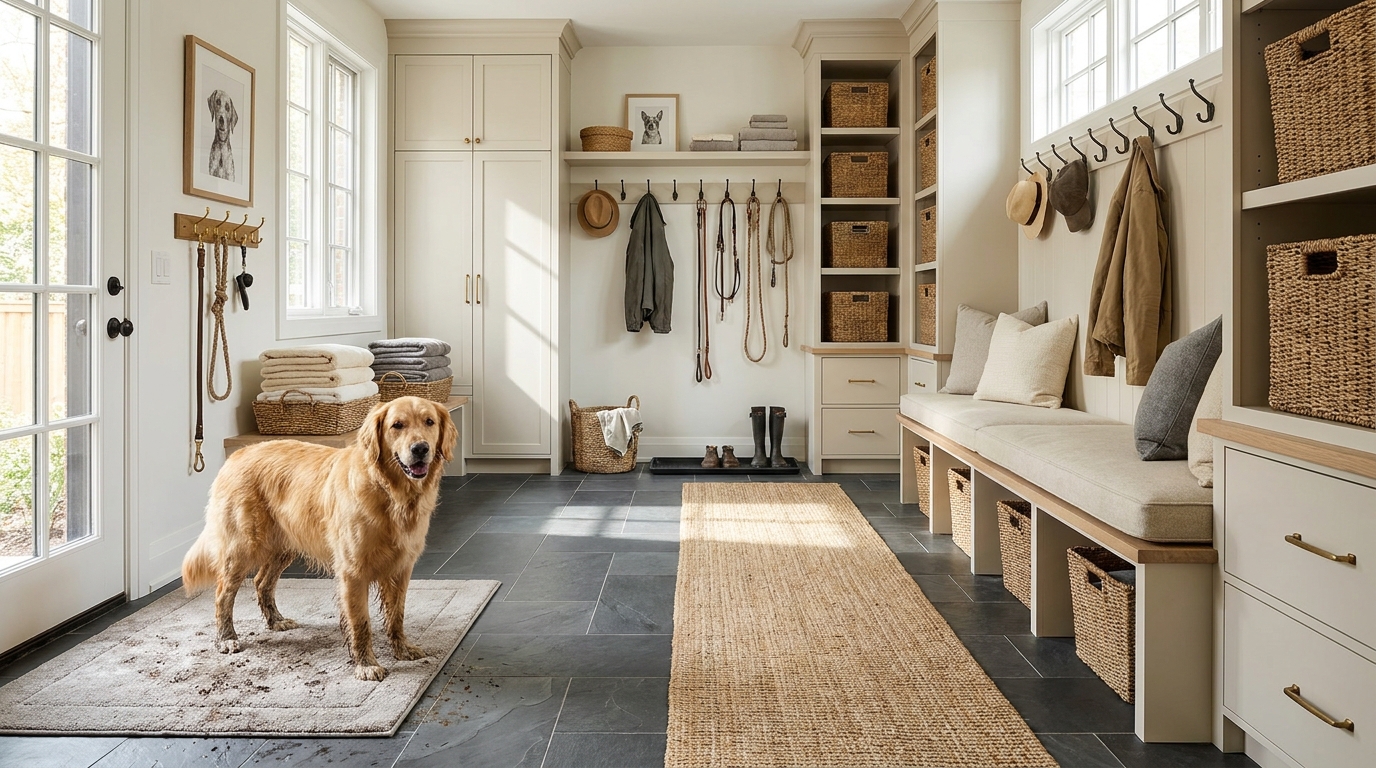
For homes without a formal mudroom, you can still create a compact transition zone. A tray for boots, a slim cabinet, and a set of hooks near the door can make a surprising difference. Even a lidded basket for pet towels and a designated mat for wiping paws can help protect the home and create a more settled routine after walks. These solutions do not need to be large to be effective. They simply need to be intentional.
This area is also a perfect place to think about scent and moisture management. Damp textiles should be easy to wash and rotate. Floors should dry quickly. If humidity tends to rise in this part of the home, ventilation matters. The EPA recommends maintaining indoor relative humidity around 30% to 50% to help limit the growth of biological contaminants such as mold and dust mites, and that guidance becomes especially relevant in homes where wet gear and wet paws are a daily reality.
Create Dedicated Pet Zones That Feel Like Part of the Room
One of the simplest ways to make a home feel more stylish with pets is to stop scattering pet items randomly and start giving them a place. A dedicated pet zone does not need to be elaborate. It simply means that your dog bed, feeding station, litter setup, or cat perch has been chosen and positioned as part of the room rather than as an afterthought. This makes the space feel calmer for you and more secure for your pet.
For dogs, this may look like a bed tucked into a quiet corner of the living room where the family naturally gathers. Choose materials and colors that work with your larger palette, just as you would with any accent piece. A textured neutral cover, a washable cushion, and a spot near a side table or console can make the area feel integrated rather than separate. Dogs often like to rest where they can see household activity without being in the direct path of movement, so those slightly sheltered corners tend to work well.
Cats often prefer a different kind of zone. Vertical territory is especially valuable because it allows them to observe, retreat, and feel secure without using more floor space. Built-in shelves, window perches, and climbing routes can be surprisingly elegant when finished in materials that complement the room. This approach supports natural feline behavior while preserving a clean visual line throughout the home.
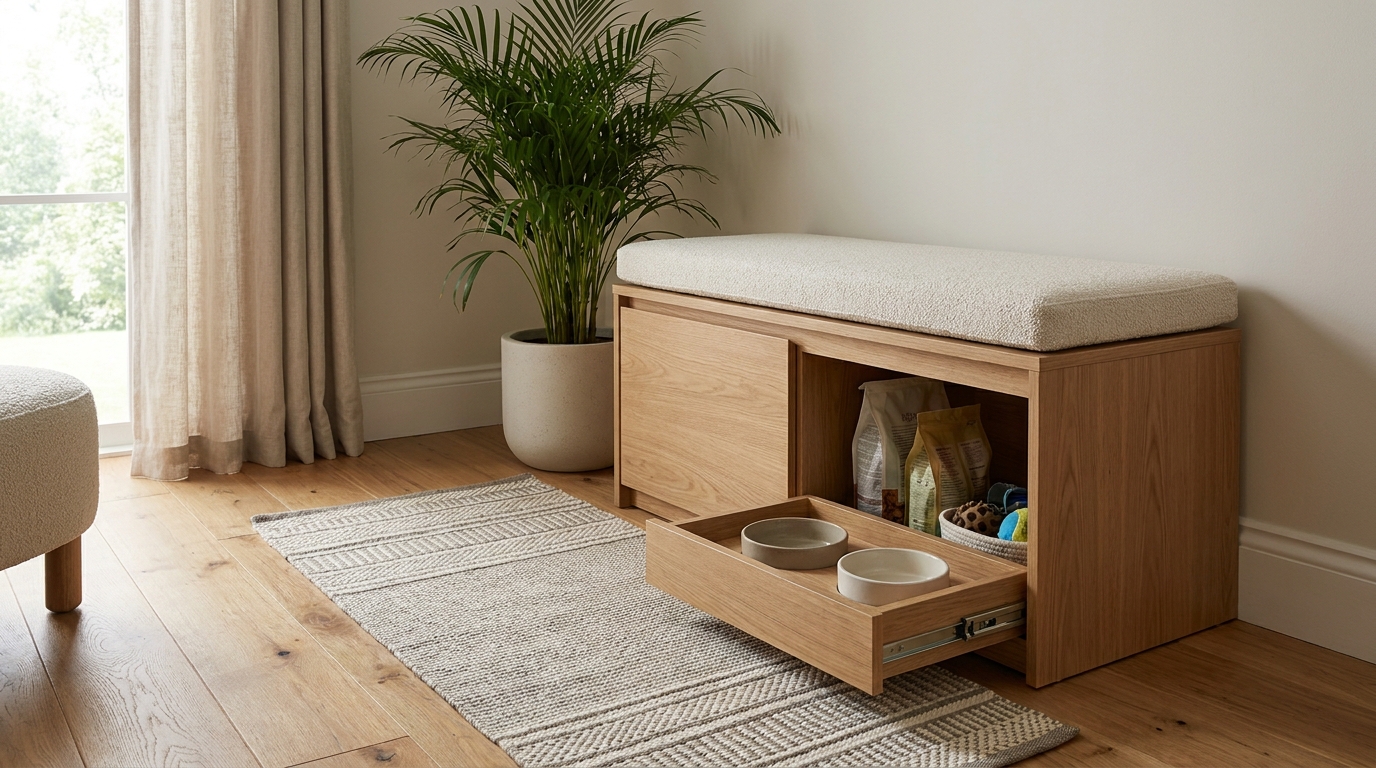
Feeding stations are another opportunity to blend function with design. Integrated cabinetry, a pullout drawer, or a dedicated nook in the kitchen, mudroom, or laundry room can keep bowls and food storage in one tidy place. This is not only visually pleasing. It also supports routine and helps reduce clutter on counters and floors.
Concealed litter box setups can also be handled thoughtfully, though ventilation and cleaning should never be compromised for appearance. If you use an enclosed cabinet design, make sure it is easy to access and sanitize, and place it in a quiet but practical location. Cats are sensitive to stress, and a litter arrangement that is difficult, cramped, or noisy can quickly become a behavioral issue. Stylish solutions only work when they remain genuinely comfortable for the animal using them.
Choose Upholstery and Textiles That Invite Relaxed Living
A cozy home depends on softness, but softness should not mean fragility. Today’s performance fabrics, washable slipcovers, and stain-resistant upholstery have made it much easier to keep living spaces feeling inviting even with pets on the furniture. This is one of the most welcome shifts in home design because it allows comfort and elegance to exist together in a more realistic way.
If your pet shares the sofa, choose tightly woven fabrics that are easier to clean and less likely to snag. Medium-tone fabrics often perform better visually than very dark or very pale ones because they disguise lint, dust, and minor marks more gracefully between cleanings. Removable covers are especially helpful in family homes, where laundering a section of fabric can feel much easier than tackling the entire piece at once.
Throws can also be useful, but they should feel intentional. Instead of draping random blankets over every seat, choose one or two textured washable throws that complement your room. Fold them neatly or style them in a basket nearby when not in use. This keeps the look relaxed and layered rather than improvised. It also creates a habit of protecting favorite seating areas without making the room feel temporary.
When selecting curtains, pillows, and other textiles, think about maintenance as much as visual impact. Fabrics that can be washed or vacuumed easily will stay fresher over time. In homes where allergies are a concern, reducing excessive dust-trapping layers can be helpful. You do not need to strip the room of all softness. You simply want each element to be easy to care for and worth the upkeep it requires.
Support Indoor Air Quality for a Healthier Home
Pet-friendly design should always include indoor air quality because comfort is not only about how a room looks. It is also about how it feels to breathe, sleep, and relax in that space. The EPA identifies source control, ventilation, and filtration as the main strategies for improving indoor air quality, and those principles are especially relevant in homes with pets. Fur may be the visible part of pet life, but allergens and particles can linger in less obvious ways.
AAAAI guidance is especially useful here because it reminds us that pet allergies are driven by proteins in dander, saliva, and urine rather than the hair itself. That means simply brushing away visible fur is not enough. Good air quality comes from a combination of regular cleaning, thoughtful material choices, and cleaner airflow throughout the home. This is one reason durable hard surfaces and washable textiles can be so valuable. They help reduce what settles and stays trapped in the environment.
If allergies or asthma are part of your household picture, one of the most consistently recommended strategies is to keep pets out of bedrooms. That may feel emotionally difficult at first, especially if a pet is used to sleeping with you, but the bedroom is the place where the body ideally gets its deepest rest and longest exposure. Creating a calm sleeping environment with fewer allergens can make a meaningful difference for sensitive individuals.
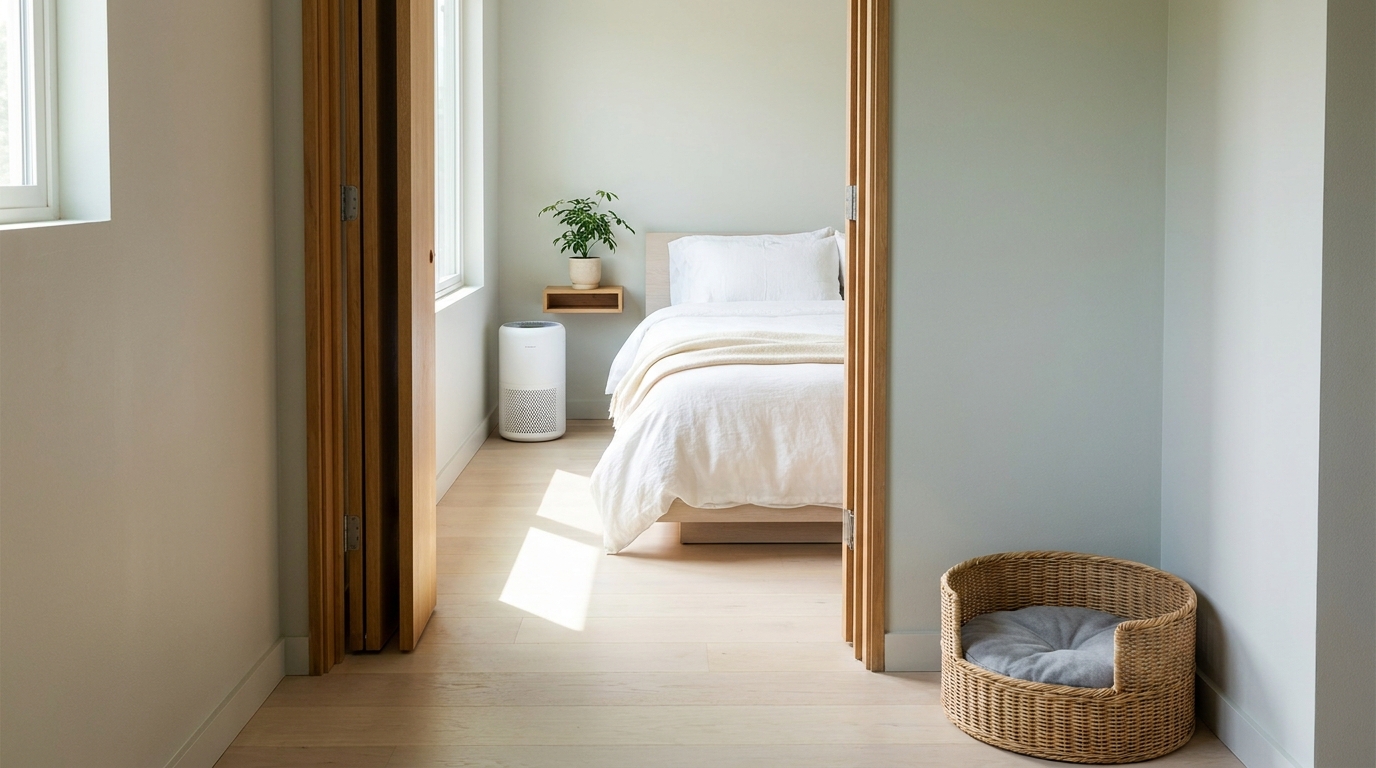
HEPA filtration is another frequently recommended strategy and can fit neatly into a wellness-minded home. A well-placed air purifier in main living areas or bedrooms can support cleaner air, especially when paired with regular vacuuming and ventilation. If possible, open windows when weather and outdoor air quality allow, use exhaust fans where appropriate, and stay attentive to humidity levels. Again, aiming for indoor humidity around 30% to 50% can help limit the growth of other biological contaminants that may compound overall air quality concerns.
Odor control also improves when you focus on the full environment instead of masking scents with fragrance. Low-porosity materials, frequent washing of pet bedding, prompt cleanup of accidents, and better airflow all help reduce buildup over time. A home with pets can absolutely smell fresh and neutral. It simply requires a little consistency and a design approach that makes cleaning less of a burden.
Pet-Proof with the Same Care You Give Child-Proofing
Beautiful spaces should also be safe spaces. ASPCA and AAHA guidance both emphasize the importance of pet-proofing from the animal’s perspective, which is a useful reminder that pets experience rooms differently than we do. A stylish basket of decorative objects may look harmless to you but could be a tempting chew toy for a puppy. A trailing electrical cord may disappear visually into a room while remaining a serious hazard on floor level.
Start by scanning your home low to the ground and at nose height. Look for loose cords, unstable objects, toxic cleaning products, medications, small items that could be swallowed, and access points to areas that should remain off-limits. Cord management solutions, closed storage, and secure cabinets can make a room look neater while also reducing risk. This is one of the happy moments where safety and aesthetics genuinely support each other.
Houseplants deserve special caution. Many homeowners assume that if a plant is sold for indoor styling, it must be harmless. That is not always the case. Some common houseplants can be toxic to pets if chewed or ingested, so it is worth verifying each plant before bringing it indoors. If you love greenery, there are plenty of pet-safer options, and elevated planters or shelves can provide additional protection when needed.
Finishes and decorative materials should be chosen thoughtfully too. Avoid assuming that all natural materials are automatically pet-safe. If a surface is likely to be chewed, licked, or scratched by a curious animal, durability and non-toxicity both matter. The same goes for diffusers, candles, and room scents. A calm, healthy atmosphere is usually better created through ventilation, cleanliness, and natural light than through heavily fragranced products.
Hide the Clutter Without Hiding Your Pet
One reason pet homes can start to feel visually busy is that supplies multiply quickly. Food bags, litter accessories, grooming tools, toys, medications, blankets, and walking gear all need a place. If these items live on countertops, by the door, and in random corners, even a beautiful room can start to feel unsettled. Storage is not a glamorous topic, but it is one of the strongest tools for making a pet-friendly home feel serene.
Closed storage works especially well because it keeps daily essentials nearby without adding visual noise. A bench with compartments, a shallow cabinet in the entryway, built-ins around a feeding station, or baskets inside a larger console can all do this beautifully. Labeling containers may not sound luxurious, but it creates a smoother routine and helps everyone in the household maintain the space more consistently.
Toy rotation can help too. Instead of leaving every pet toy in the middle of the living room, keep a smaller edited selection out and store the rest. This reduces clutter and can actually renew your pet’s interest when toys are swapped in and out. A lidded basket or low bin in a family room can hold current favorites while still looking intentional.
It can also be helpful to create storage by activity rather than by item. Keep walking gear near the door, feeding supplies near the kitchen, and grooming tools in the laundry room or bathroom. This mirrors the way people naturally move through the home and prevents every task from beginning with a search. Homes feel more restful when routines are supported gently in the background.
Make Comfort Visible in Small, Thoughtful Ways
Coziness is not just softness and warm colors. It is the feeling that a home cares for the people and animals who live there. Pets respond strongly to comfort details that are easy to overlook. Room temperature, access to daylight, quiet resting places, and surfaces that feel supportive all influence how settled they are. When pets feel secure, the whole household often feels calmer too.
Think about where your pet naturally chooses to rest. Is it near a window, by the sofa, in a corner of the kitchen, or just outside your bedroom door. Those instincts are helpful design cues. Rather than fighting them completely, refine them. Add a bed that blends with the room, a perch that frames the view, or a washable runner that makes a favorite lounging route more comfortable. This approach respects your home’s style while acknowledging the emotional life happening inside it.
Senior pets may need especially thoughtful support. Rugs with grip, orthopedic beds, easy access to favorite rooms, and minimized slipping hazards can make daily movement more comfortable. Young pets may need more boundaries, more durable surfaces, and more opportunities for supervised play. Designing with life stage in mind helps the home evolve gracefully instead of feeling static.
Comfort also includes sensory calm. Pets often do well in environments that are not too noisy, cluttered, or overstimulating. A visually balanced room with clear pathways and gentle textures can benefit animals and people alike. In that sense, cozy pet-friendly design is really a form of emotional design. It creates a backdrop that supports ease.
Room-by-Room Ideas for a Stylish Pet-Friendly Home
Living Room
The living room is often the heart of the pet-friendly home because it is where togetherness happens. Choose seating with cleanable fabrics, place a washable rug in the main conversation area, and carve out a pet resting spot that feels connected but not disruptive. If your cat enjoys observation, a window perch or a nearby shelf can become a beautiful part of the room’s architecture. Keep a basket for toys and a washable throw nearby so practical needs are met quietly.
Kitchen
The kitchen benefits from feeding zones that feel intentional. Bowls can sit in a tucked-away corner, under a built-in shelf, or in a cabinetry niche to reduce visual clutter and tripping. Store food in sealed containers to preserve freshness and reduce odors. If your pet tends to splash, choose a mat that can be washed and that complements the floor rather than fighting with it visually.
Bedroom
If allergy management is important, the bedroom is ideally a pet-free retreat. Use this room as a wellness space with simpler textiles, regular laundering, and perhaps a HEPA purifier if recommended for your household. If your pet is used to sleeping nearby, create a cozy transition by placing a supportive bed just outside the room or in an adjacent nook. That way the emotional connection remains without bringing as much exposure into the sleeping environment.
Bathroom or Laundry Room
These rooms can quietly support grooming and cleanup. Store brushes, shampoo, towels, and cleaning cloths in one place so they are easy to grab when needed. A laundry room is also a practical location for a hidden feeding station or a utility shelf for pet supplies, especially if you are working with a smaller kitchen. Because these spaces already support maintenance, they are natural places to tuck in some of the less decorative aspects of pet care.
Entryway or Mudroom
This is your defense against the outdoors. Include mats, storage, hooks, and easy-to-clean flooring, and think about where damp items can dry without creating disorder. In winter climates, this area deserves extra care because salt and slush can be hard on both floors and paws. A little attention here can protect the rest of the home in a very noticeable way.
Simple Habits That Keep the Space Feeling Beautiful
Design sets the stage, but habits keep the home feeling good. A pet-friendly home becomes much easier to maintain when a few routines are built into daily life. Wiping paws at the door, vacuuming high-traffic areas regularly, laundering pet bedding, rotating washable covers, and refreshing water and feeding zones all help preserve the atmosphere you have created. When these actions are easy, they happen more consistently.
It is also worth revisiting your setup with the seasons. Spring may bring more shedding. Autumn may bring more dirt and leaves. Winter often increases moisture, salt, and the need for quick entryway cleanup. A home that adjusts gently with the weather tends to stay more comfortable year-round. You do not need to redesign constantly. You just need to let the home respond to the way life actually unfolds.
If something in your space repeatedly irritates you, treat that annoyance as a design clue. Maybe the leash storage is too far from the door, the litter zone is hard to access, or the living room rug is too precious for daily use. A stylish home is not one that ignores inconvenience. It is one that solves inconvenience so elegantly you can relax.
The Emotional Value of Designing for Everyone
There is something deeply reassuring about a home that has room for everyone’s needs. When pets are considered thoughtfully, they do not feel like a disruption to the design story. They become part of it. A dog bed by the fire, a cat curled on a perch in afternoon light, a tidy mudroom ready for the next walk, these are not compromises. They are signs of a home that is alive and well loved.
The most inviting homes are rarely the ones that look untouched. They are the ones that feel cared for. They anticipate movement, comfort, cleanup, rest, and connection. Pet-friendly design, at its best, supports all of that while still allowing beauty to lead. It creates a sense of ease that guests can feel and family members depend on.
If you are updating your space, begin with what would make daily life gentler. Maybe it is a rug you can actually wash, a better place for pet supplies, a safer plant choice, or an air purifier in a room where everyone gathers. These changes may seem small, but they shape the emotional texture of home in lasting ways. Comfort and style were never meant to compete. In a truly cozy pet-friendly home, they work together quietly every day.
Quick Priorities to Focus on First
- Choose forgiving materials such as washable rugs, easy-clean flooring, and durable upholstery in the rooms your pet uses most.
- Create one dedicated pet zone for rest, feeding, or play so supplies feel integrated instead of scattered.
- Improve indoor air quality with regular cleaning, ventilation, and HEPA filtration where appropriate.
- Make the entryway work harder with mats, towels, and storage that support muddy or wet paws.
- Pet-proof decor choices by checking plants for toxicity, securing cords, and storing chemicals safely.
- Support comfort with traction, warmth, and quiet resting places tailored to your pet’s habits and age.
When those priorities are in place, the rest becomes much easier. Your home does not need to be perfect to feel beautiful. It simply needs to be designed with care, so that every day with your pets feels a little more comfortable, a little more graceful, and a lot more like home.


No Comment! Be the first one.