



Creating a Cozy Outdoor Oasis: DIY Fire Pit Styling Guide for Elegant, Safe Backyard Living
There is something timeless about gathering around a fire outdoors. The glow softens the evening, conversation slows into something more intimate, and even a simple backyard begins to feel like a destination. A well-styled fire pit does more than offer warmth. It creates a mood, defines a gathering place, and gives the landscape a sense of purpose. When designed thoughtfully, it can feel at once rustic and refined, practical and romantic, relaxed and beautifully composed.
Table Of Content
- Begin with the Rule That Matters Most: Design for Compliance
- Choosing the Right Fire Pit Style for Your Backyard
- How to Plan the Space Like an Outdoor Room
- Material Choices That Feel Elevated and Last Well
- Three Budget Tiers for a Beautiful DIY Fire Pit
- Budget-Friendly: The Clean and Simple Fire Circle
- Mid-Range: Pavers, Stone, and a More Defined Gathering Space
- Refined and Elevated: The Backyard Fire Pit Room
- Wood Versus Propane: Which Atmosphere Fits Your Life?
- Styling the Seating Area with Warmth and Grace
- Lighting That Extends the Evening
- How to Keep the Space Safe Without Losing Its Beauty
- Common Mistakes That Undermine a Fire Pit Oasis
- A Simple Step-by-Step Planning Framework
- The New Meaning of Cozy Outdoor Luxury
Yet the most successful DIY fire pit spaces are not built on charm alone. They work because they balance aesthetics with function. The fire feature itself must suit the size of the yard, the habits of the household, and the regulations of the area. The surrounding materials should look graceful while withstanding heat, weather, and repeated use. Seating must feel inviting, though still positioned with safety in mind. In other words, the outdoor oasis people imagine is not only about style. It is about designing responsibly so the space can be enjoyed with ease.
For homeowners across Canada and North America, that balance has become even more important. Municipal rules for backyard fire pits can vary widely by city, season, and weather conditions. Some areas regulate size, enclosure, fuel type, permits, setbacks from structures, and when a fire may be lit. Public health guidance also reminds us that smoke is not just an inconvenience. Wood smoke contains harmful pollutants, and wildfire season has changed how many households think about outdoor burning. A beautiful backyard fire pit in 2026 should therefore feel inviting, but it should also feel informed.
This guide is designed to help you create exactly that kind of space. We will explore how to choose a fire pit style, how to think about layout and materials, how to design for different budgets, and how to bring the entire area together with comfort, lighting, and atmosphere. The goal is not simply to build a fire pit. It is to shape a setting that feels intentional, elegant, and safe enough to enjoy all season long.
Begin with the Rule That Matters Most: Design for Compliance
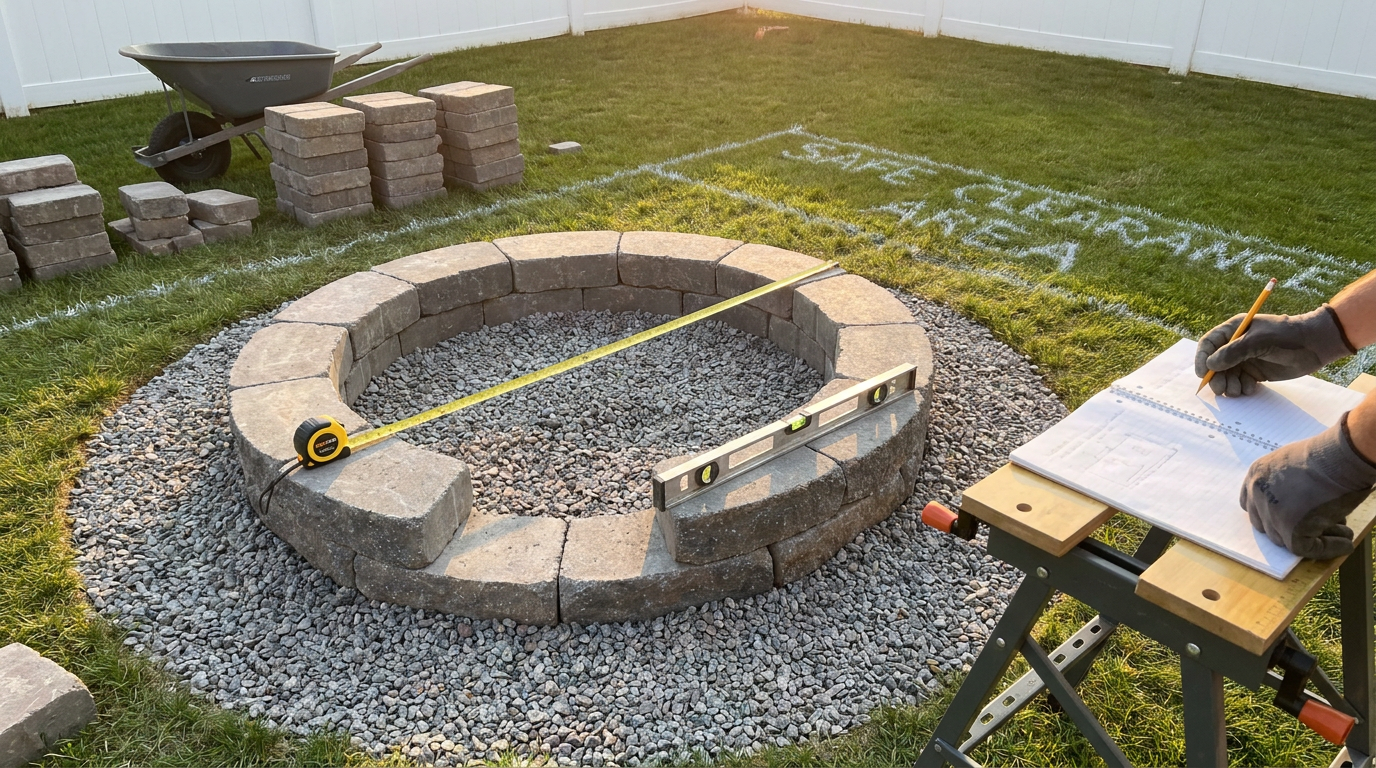
Before choosing stone, chairs, or a favorite style on inspiration boards, begin with the least glamorous and most essential step. Confirm what is legally allowed where you live. Many homeowners assume that if a fire pit sits in a private backyard, it is automatically permitted. That is one of the most common misconceptions. In reality, municipalities may classify backyard fire pits as contained open-air fires and regulate them accordingly.
Your local rules may address whether a permit is needed, which fuels are allowed, how large the fire feature can be, what kind of enclosure is required, and how far the fire pit must sit from buildings, fences, sheds, trees, overhead structures, and property lines. Some places also impose restrictions during certain seasons, during dry spells, or when wind exceeds a threshold. In practical terms, a fire pit that is acceptable one week may not be acceptable the next if weather or fire danger changes.
For this reason, the most elegant approach is a disciplined one. Design around the regulations instead of trying to force a vision into a space that cannot support it. A smaller fire feature with better placement often feels more luxurious than an oversized one that leaves everything too close for comfort. When your layout respects setbacks and local conditions, the backyard tends to look calmer and more resolved. The space breathes better, circulation improves, and the fire feature becomes a destination rather than an obstacle.
As you plan, verify current bylaws and seasonal restrictions with your municipality or fire authority. If you are considering a manufactured propane or gas fire feature, look for recognized certification marks commonly used in North America, such as UL-listed or comparable safety approvals. These markings do not replace safe operation or local compliance, but they can help signal that a product meets recognized standards. If you are unsure whether your installation crosses into permit territory, ask before you build. That small step is often what protects the beauty of the project from becoming a problem later.
Beautiful outdoor design begins with peace of mind. A fire pit feels truly luxurious when it is as responsible as it is inviting.
Choosing the Right Fire Pit Style for Your Backyard
Once compliance is clear, the next decision is the character of the fire feature itself. Fire pits can feel rustic, tailored, contemporary, or almost architectural depending on their shape and finish. The right choice depends on how you want the yard to function and what kind of atmosphere suits the home. Some families want a casual gathering circle for marshmallows and conversation. Others want a polished outdoor room that supports entertaining, quiet evening drinks, and year-round visual appeal.
Wood-burning fire pits appeal to those who love the sensory experience of real flame, crackling sound, and that primal sense of outdoor ritual. They can feel wonderfully authentic in larger yards, especially in suburban or rural settings where neighbors are not close by. However, they also create smoke, ash, and more cleanup. Health Canada warns that wood smoke contains harmful pollutants, including particulate matter, carbon monoxide, volatile organic compounds, polycyclic aromatic hydrocarbons, nitrogen oxides, and chlorinated dioxins. Even a small fire can affect air quality and comfort for both your household and nearby neighbors.
Propane fire pits and natural-gas-style fire features are increasingly popular because they tend to be lower smoke, easier to ignite, and simpler to maintain. In dense urban settings, they often feel more appropriate because they reduce the impact of drifting smoke and help keep the atmosphere more controlled. Their visual language can also be exceptionally elegant. A clean-lined fire bowl on a stone patio, for example, can create a serene and modern focal point with very little visual clutter. This is one reason smoke-conscious, low-maintenance fire features continue to grow in popularity.
Gel-fuel and liquid-fuel products sometimes appear attractive because they seem portable and decorative. Yet they require caution. Health Canada has warned that refilling liquid- or gel-fuel fire products while they are hot or lit can lead to dangerous flame jetting, which has caused serious injuries and deaths in Canada. If you choose any such product, follow manufacturer instructions exactly, never refill when hot, and consider whether a more stable and better-regulated option would offer greater peace of mind.
From a styling perspective, shape matters almost as much as fuel. Round pits encourage conversation and soften the landscape. Square and rectangular designs feel more structured and architectural, often pairing well with contemporary homes and formal patios. A low-profile steel ring surrounded by gravel can feel charmingly understated, while a masonry structure with capstone edging introduces permanence. What matters most is proportion. A fire pit should feel grounded in the scale of the yard and in harmony with the hardscaping around it.
How to Plan the Space Like an Outdoor Room
The most inviting fire pit areas are rarely just a pit with chairs dropped around it. They are composed in layers, much like an interior room. This layered approach gives the space both beauty and logic. It helps define where the flame belongs, where people gather, where lighting supports the mood, and where practical items such as tools or extinguishing equipment can be kept discreetly nearby.
Start with the fire feature as the center. Then create a distinct safety zone around it using noncombustible or low-combustibility materials. Gravel, pavers, stone, decomposed granite, and concrete all offer visual neatness while reducing risk near the flame. This inner ring should feel intentional rather than barren. Think of it as a frame that gives the fire a dignified stage and visually separates it from furniture, rugs, and planting beds.
Beyond that inner zone, establish the seating area. Chairs should be close enough for warmth and conversation, yet comfortably outside the heat intensity of the flame. The exact distance will vary based on the pit size, fuel type, and local guidance, but in design terms you want enough room for people to move naturally without feeling crowded. Side tables are especially useful here. They make the arrangement feel gracious and practical, offering a place for drinks, books, or a lantern without requiring guests to balance everything in their lap.
Then comes the outer layer, the one that often transforms a basic setup into an oasis. This can include path lighting, surrounding planting, a bench wall, blanket storage, a nearby deck edge, or an adjacent dining area. These secondary elements support the life around the fire. They also make the area feel integrated with the rest of the yard rather than isolated as a single feature. The outdoor room becomes more legible, more polished, and far more likely to be used.
Think carefully about movement as well. You should be able to approach the fire pit comfortably, circulate around seating without squeezing, and access water, an extinguisher, or tools without confusion. Good design always supports instinctive behavior. When a layout works well, people settle in naturally, and safety routines become easier because the space itself encourages order.
Material Choices That Feel Elevated and Last Well
Materiality is where many DIY outdoor projects either become memorable or begin to feel temporary. A fire pit area should withstand heat, weather, moisture, and repeated use, but it should also contribute to the larger visual identity of the home. The most attractive spaces tend to limit the number of materials and repeat them with intention. This creates harmony and helps even modest projects appear more expensive than they are.
Stone is a classic choice because it offers texture, permanence, and visual depth. Natural stone can feel organic and luxurious, especially when echoed in garden edging or retaining walls nearby. Cast concrete blocks and pavers offer a more accessible route while still providing clean lines and durability. If your home leans modern, smooth concrete or large-format pavers can look beautifully composed around a streamlined fire bowl. If your house has a traditional or cottage character, tumbled pavers and softly varied stone tones often feel more at home.
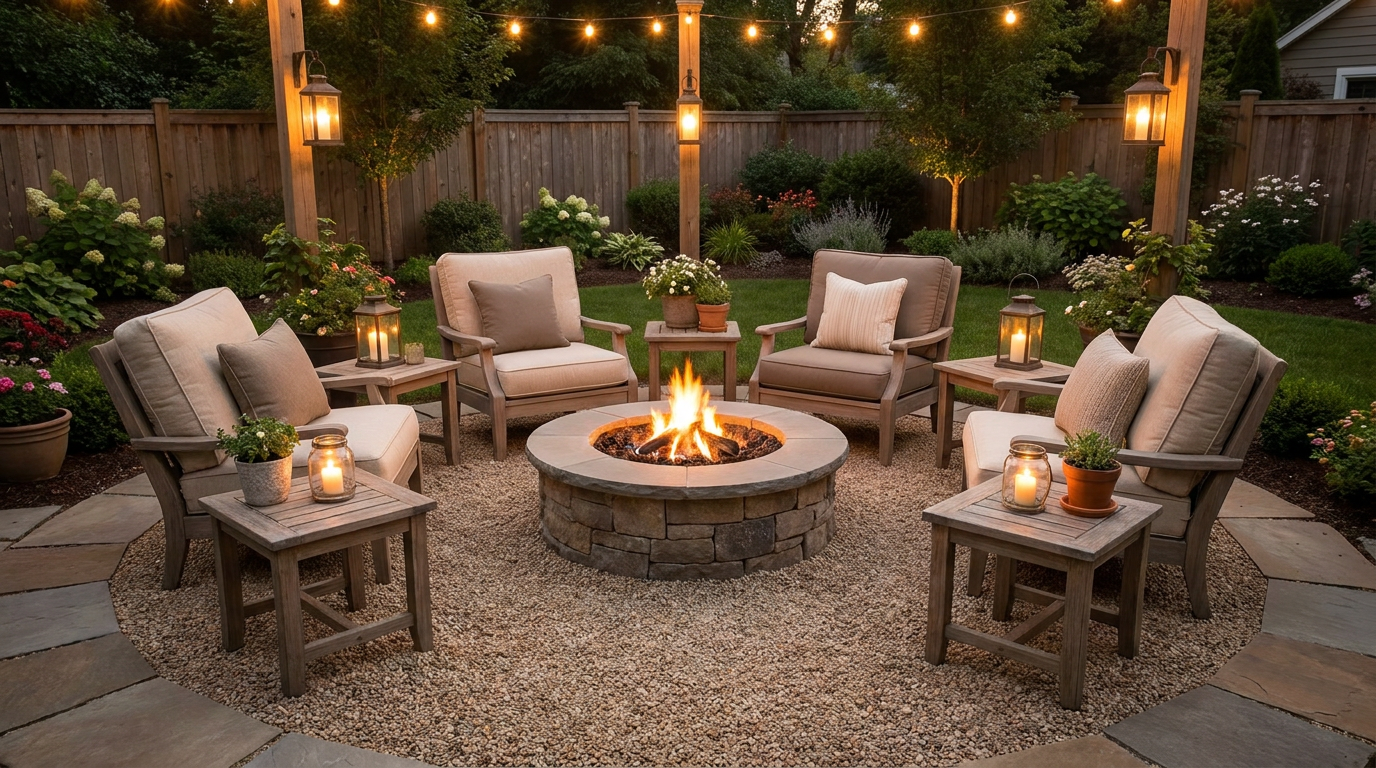
Gravel is one of the most useful budget-friendly materials in a fire pit setting. It drains well, defines the zone clearly, and can be installed with relative ease compared with full hardscaping. It also creates a lovely visual contrast against timber fencing, green lawn, or structured planting. A simple steel fire ring sitting in a carefully edged gravel circle can feel understated, crisp, and highly intentional if the proportions are right.
Metal fire pits, especially steel and cast iron designs, have their own expressive quality. They can introduce an industrial edge, a sculptural presence, or a subtle rusticity depending on finish and shape. Over time, certain metals develop a patina that can be quite beautiful. The key is to pair them with complementary materials. A warm corten-style finish might glow against pale gravel and weathered cedar, while black powder-coated steel can look elegant against concrete and charcoal pavers.
What should be avoided near the flame zone are fragile or highly combustible finishes that place beauty ahead of function. Timber decking immediately adjacent to a fire pit, delicate fabrics too close to sparks, and decorative accessories crowding the perimeter can all undermine the serenity of the space. A refined outdoor setting is not one that is over-decorated. It is one where every finish has been chosen for both appearance and endurance.
Three Budget Tiers for a Beautiful DIY Fire Pit
Luxury is often mistaken for cost, but in outdoor styling it is more accurately a matter of coherence. A modest fire pit area can look wonderfully refined when the materials are consistent, the layout is considered, and the accessories are restrained. If you are planning your project around a specific budget, it helps to think in tiers. This allows you to focus resources where they matter most and create a space that feels complete rather than half-finished.
Budget-Friendly: The Clean and Simple Fire Circle
At the most accessible level, a steel fire ring or manufactured fire pit paired with a gravel surround can be immensely successful. Begin by selecting a location that complies with local setbacks and sits on stable, noncombustible ground treatment. Define the space with landscape edging, pea gravel or crushed stone, and a neat circle or square large enough to support seating around the perimeter. Add a few weather-resistant chairs, perhaps in matching finishes, and one or two small side tables.
The styling secret at this level is discipline. Keep the palette limited to two or three tones, such as charcoal, sand, and warm wood. Choose outdoor cushions in durable neutral fabrics and add texture through one or two folded blankets kept at a safe distance until in use. Solar path lights can softly frame the approach without making the space feel overworked. The result is affordable, but if carefully edited, it can still feel serene and intentional.
Mid-Range: Pavers, Stone, and a More Defined Gathering Space
A mid-range fire pit project often includes a more substantial base, such as a paver patio or masonry ring, with stronger visual integration into the yard. This level may introduce built-in bench seating, low retaining walls, or a shaped patio zone that extends beyond the pit itself. It is ideal for families who want the area to function as a true gathering destination rather than a seasonal corner of the lawn.
Here, the opportunity is to create stronger architecture in the landscape. A circular paver court around the fire pit can feel deeply inviting, while a square hardscape with a centered fire element reads more contemporary. Consider adding planters or surrounding beds with drought-aware, low-maintenance plantings that can soften the hard surfaces. The sense of luxury comes from structure, repetition, and comfort. Even a simple bench wall can make the entire area feel custom.
Refined and Elevated: The Backyard Fire Pit Room
At the highest tier, the fire pit becomes part of a larger outdoor room. This may include integrated lighting, built-in seating with cushions stored safely when not in use, adjacent dining or lounge zones, concealed storage for tools, and carefully coordinated hardscape materials throughout. Landscape design plays a stronger role here. The fire feature might anchor the composition, while stepping stones, low garden lighting, sculptural grasses, and privacy planting lend atmosphere and enclosure.
This kind of project feels luxurious because every detail serves both form and function. A dedicated storage bench keeps blankets dry. A paved path improves access after dusk. Side surfaces make entertaining more graceful. The fire feature itself may be propane-based for a cleaner urban experience or a code-compliant wood-burning pit positioned to minimize smoke disruption. It is less about excess and more about completeness. The space feels considered from every angle.
Wood Versus Propane: Which Atmosphere Fits Your Life?
The wood-versus-propane question is not only technical. It is emotional and lifestyle-based. Wood has romance, sound, and scent, but it also demands tolerance for smoke, ash, fuel storage, and changing air-quality conditions. Propane offers immediacy, lower smoke, easier shutdown, and often a tidier visual experience. In many urban or closely spaced neighborhoods, that convenience and consideration can make propane the more elegant choice.
There is also the matter of public health and seasonal awareness. Wildfire smoke can travel hundreds or even thousands of kilometres, which means air quality in your area may already be strained even when local skies appear only lightly hazy. In those moments, adding wood smoke from a backyard fire is not always wise. Increasingly, outdoor burning decisions are being understood as part of a larger air-quality picture. Choosing when not to light a fire can be just as important as choosing the right design.
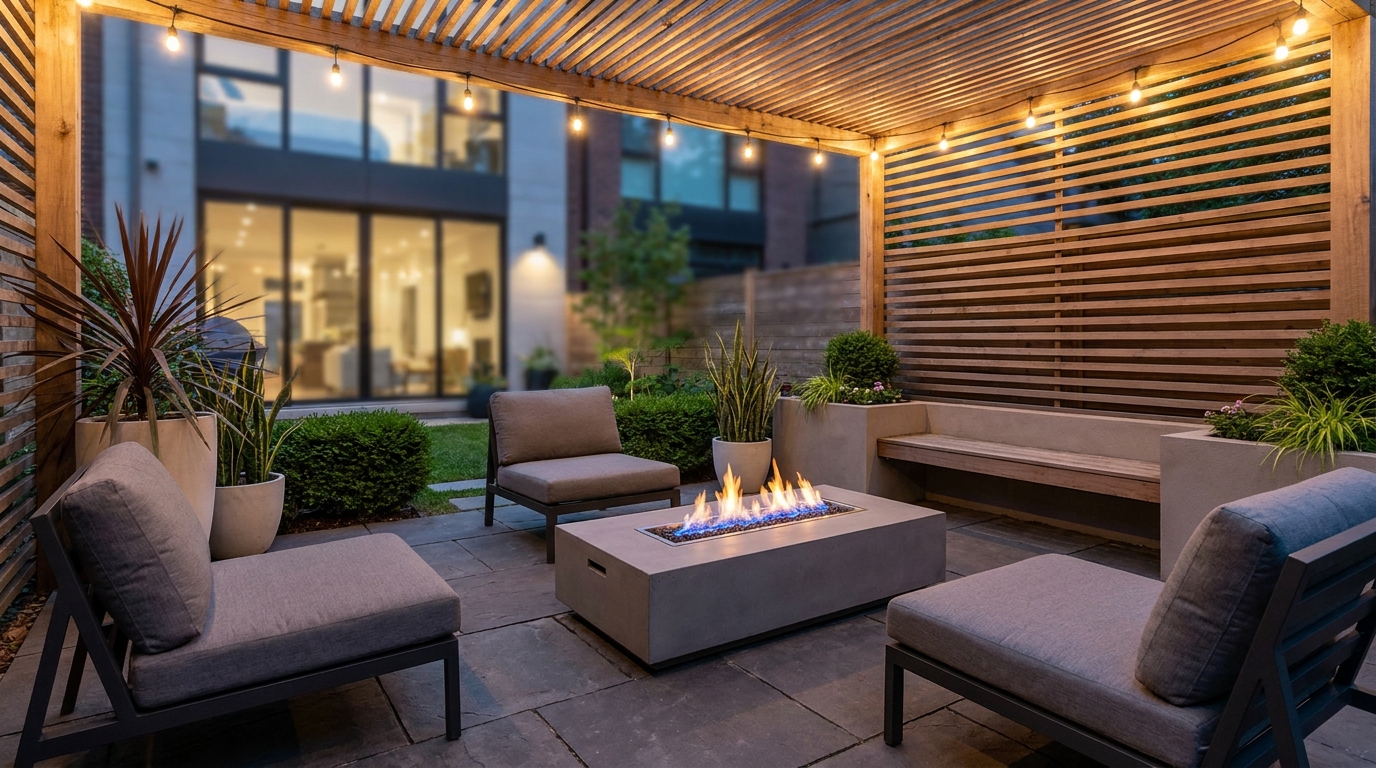
If you love the look of flame but want a more controlled experience, propane fire bowls and tables can be a compelling alternative. They often complement modern and transitional landscapes beautifully, and they are well suited to households that entertain often and prefer quick use without extensive cleanup. If you choose wood, be especially attentive to airflow, smoke direction, and the comfort of those around you. The more closely homes are spaced, the more relevant that consideration becomes.
Styling the Seating Area with Warmth and Grace
If the fire pit is the heart of the space, the seating is its expression. This is where the backyard begins to feel personal. The best seating arrangements are comfortable enough to invite people to linger, but visually light enough to preserve openness around the flame. Avoid crowding the pit with too many pieces. It is better to have fewer, well-proportioned seats than a dense arrangement that feels cluttered and difficult to navigate.
Adirondack chairs, woven lounge chairs, powder-coated metal frames, and simple teak seating can all work beautifully depending on the style of the home. Outdoor sectionals are possible in larger setups, though they should be positioned with care and outside the immediate heat zone. Fabrics should be rated for exterior use, and cushions should be easy to store or protect during rain. The goal is softness without fragility.
Layering is what creates the sense of invitation. Cushions in muted earth tones, ivory, faded olive, charcoal, or warm clay can echo the surrounding landscape while keeping the atmosphere sophisticated. Outdoor rugs may be used farther from the flame if they are suitable for exterior conditions and positioned safely. Side tables, perhaps in ceramic, concrete, or metal, add both convenience and polish. A single lantern or rechargeable lamp on a nearby surface can be enough to make the space feel curated.
Blankets are perhaps the loveliest finishing touch, though they should be handled with obvious caution around open flame. Store them in a lidded bench, weatherproof cabinet, or basket kept away from the fire zone, then bring them out as needed. This simple gesture gives the setting hospitality. It tells guests that the evening is meant to stretch gently onward.
Lighting That Extends the Evening
A fire pit already provides a natural glow, but thoughtful lighting around it gives the space depth and practical usability. Instead of flooding the area with brightness, aim for layers of low, warm illumination. Path lights can guide movement to and from the seating area. Step lights improve safety on level changes. Soft uplighting on nearby planting or a tree canopy can create a sense of enclosure and quiet drama.
String lights can be charming in the right setting, but they should be used with restraint and only where safe and appropriate. In more refined landscapes, discreet fixtures often feel more elegant. A pair of subtle wall lights, low bollards along a path, or lantern-style portable lights near seating can all create atmosphere without visual noise. The fire should remain the luminous focal point. Lighting exists to support it, not compete with it.
Where possible, keep cords, power sources, and decorative lighting away from the immediate heat zone. Rechargeable outdoor lamps are especially useful because they are flexible and reduce the need for visible wiring. When lighting is layered correctly, the yard gains not only beauty but structure. Guests can move comfortably, edges are easier to read, and the fire pit area becomes usable long after sunset.
How to Keep the Space Safe Without Losing Its Beauty
Safety should never feel like an afterthought hidden behind styling decisions. In the best outdoor spaces, safety is built into the design so naturally that it supports the beauty of the setting. Start with clearances and fuel-appropriate materials. Keep combustible furniture, textiles, décor, and planting outside the immediate flame zone. Have water, a hose, or approved extinguishing equipment nearby depending on local recommendations and the type of fire feature you use.
Supervision is essential. A fire pit should not be left burning unattended, even for a short period. Wind and dryness deserve special attention as well. Many municipalities restrict backyard fire use during high wind, burn bans, or elevated fire danger. This means the most polished fire pit owner is not the one who lights a fire every possible evening, but the one who understands when the conditions do not support it safely.
It is also important to remember that noncombustible materials do not eliminate risk. A stone patio can still become hazardous if furniture is too close, if fuel is mishandled, or if smoke gathers where people are seated. Good ventilation, calm judgment, and routine maintenance all matter. Clean ash carefully, inspect the fire feature for wear, and replace damaged components promptly. If you use propane, follow the manufacturer instructions for tanks, fittings, and shutoff procedures.
For households with children or pets, spatial planning becomes even more valuable. A slightly wider safety zone, a more stable seating layout, and simple routines for access can make the area feel calmer for everyone. Safety in these cases is not about making the space severe. It is about giving the fire the respect that allows the rest of the environment to remain relaxed.
Common Mistakes That Undermine a Fire Pit Oasis
One of the most frequent design mistakes is focusing exclusively on the fire feature and ignoring its surroundings. A beautiful pit placed on an awkward patch of lawn with no clear access, poor seating, and no sense of framing will rarely feel complete. Another mistake is choosing materials that are attractive in photographs but impractical in weather. Outdoor spaces need resilience. If every cushion must be rushed indoors and every finish stains or shifts after one season, the elegance quickly fades.
Another common error is underestimating smoke and overestimating legality. A fire pit may technically fit in a backyard while still causing discomfort to neighbors or becoming unusable during dry, windy, or smoky conditions. The assumption that smaller fires are harmless is especially misleading. Even compact wood fires release pollutants, and in certain air-quality conditions that matters more than many homeowners realize.
Over-decorating the perimeter is also worth avoiding. Excessive lanterns, rugs pushed too close to the flame, too many planters, and decorative objects clustered around the pit can make the area feel anxious rather than elegant. Fire pit spaces are at their most beautiful when they are edited. Let the materials, the flame, and a few well-chosen comfort pieces do the work.
A Simple Step-by-Step Planning Framework
If the process feels overwhelming, reduce it to a sequence. Begin by confirming what is permitted where you live. Then choose a fuel type and fire pit style that suit your yard, household habits, and tolerance for maintenance. Next, map the required setbacks and determine the safest location. Only after those choices are settled should you move on to materials, seating, and decorative details.
- Verify local rules including permits, seasonal burn bans, approved fuel types, setbacks, and wind restrictions.
- Select the fire feature based on lifestyle, whether wood-burning, propane, or another code-compliant option.
- Design the layout in layers with a fire zone, safety ring, seating zone, and access path.
- Choose durable materials such as gravel, stone, pavers, or concrete near the flame.
- Add comfort thoughtfully through weather-resistant seating, side tables, and controlled textiles.
- Incorporate lighting and storage so the space functions gracefully after dark.
- Plan for emergency readiness with supervision, extinguishing tools, and clear operating routines.
This framework helps separate the emotional excitement of styling from the practical steps that make the space viable. Once the foundation is right, aesthetic decisions become easier. The oasis begins to reveal itself not as a fantasy but as a carefully assembled environment.
The New Meaning of Cozy Outdoor Luxury
Today, cozy outdoor luxury is not defined by extravagance alone. It is defined by intelligence, comfort, and restraint. A backyard fire pit area feels elevated when it suits the rhythms of the people who use it and responds gracefully to the realities of climate, regulation, and maintenance. The most memorable spaces are not necessarily the largest or most expensive. They are the ones where every choice, from gravel underfoot to the angle of a chair, contributes to ease.
That may mean embracing a humble steel ring in a beautifully edged gravel circle. It may mean investing in a more structured paver court with built-in seating. It may mean choosing a low-smoke propane feature because urban life and air-quality awareness demand a different kind of sensitivity. None of these decisions diminish the romance of the space. In fact, they deepen it. The atmosphere becomes more believable, more sustainable, and more likely to be enjoyed often.
A fire pit is, in essence, an invitation. It invites people to linger a little longer, to gather after dinner, to watch the evening settle over the garden. When the design honors both beauty and practicality, that invitation becomes effortless. The backyard no longer feels like leftover outdoor space. It becomes a room with soul.
So as you plan your DIY fire pit oasis, think beyond the flame itself. Consider the materials that frame it, the seating that softens it, the regulations that guide it, and the seasonal judgment that protects it. Build for code compliance, style for comfort, and edit with confidence. The result can be wonderfully simple or quietly luxurious, but above all it will feel intentional. And that is what true outdoor elegance has always been.

No Comment! Be the first one.