



Creating Your Perfect Home Gym: A Step-by-Step Guide for Any Space and Budget
There is something deeply satisfying about having a place at home that supports your health in a natural, everyday way. A home gym does not have to feel intense, cold, or overly technical to be effective. In fact, the best home gyms usually feel inviting and personal, more like a wellness corner you want to step into than a room full of intimidating machines. When the space is designed around your routines, your comfort, and your real goals, it becomes much easier to move consistently and enjoy the process.
Table Of Content
- Start With the Life You Actually Live
- Choose the Right Space, Even if It Is Small
- Step 1: Define Your Fitness Goals Clearly
- Step 2: Measure Your Space and Plan Safe Movement Zones
- Step 3: Choose Essential Equipment First
- Best Starter Equipment by Budget
- Step 4: Design a Layout That Feels Easy to Use
- Step 5: Make the Space Comfortable, Inspiring, and Personal
- Step 6: Choose Flooring That Supports Stability and Comfort
- Step 7: Prioritize Safety From the Beginning
- Step 8: Build an Inclusive Space for Beginners, Families, and Older Adults
- Step 9: Use Technology Thoughtfully
- Step 10: Create a Routine That Makes the Gym Worth Keeping
- Common Home Gym Mistakes to Avoid
- A Simple Sample Plan for Three Types of Home Gyms
- Why a Home Gym Is Really an Investment in Daily Life
- Final Thoughts
That idea matters because most people do not need a commercial style gym to improve their fitness. Public health guidance in both Canada and the United States recommends that adults aim for about 150 minutes of moderate to vigorous physical activity each week, along with muscle strengthening work on multiple days. For older adults, balance focused movement is also important. That means even a small setup can make a meaningful difference if it helps you show up regularly for strength, mobility, cardio, stretching, or recovery.
A well planned home gym also supports more than fitness. It can improve sleep, mood, energy, and the emotional rhythm of your day. It can become the place where you start your morning with a stretch, reset in the afternoon with a quick walk or bike ride, or reconnect with your body after a long day. When you think of a home gym as part of your overall home wellness environment, it becomes easier to design a space that is useful, attractive, and genuinely lived in.
This guide will walk you through the process step by step. You will learn how to define your goals, choose the right location, select smart equipment for your budget, and create a layout that feels motivating and safe. Whether you have a spare room, a garage wall, a basement corner, or only a few feet beside the bed, you can create a home gym that feels personal, practical, and inspiring.
Start With the Life You Actually Live
The most successful home gym is not built around fantasy habits. It is built around the way you really live. Before you shop for anything, take a quiet moment to think about what kind of movement you are most likely to return to consistently. If you love guided classes, your gym should support streaming and visibility. If you want to build strength, you need room for controlled lifting and progressive resistance. If your goal is to feel better in your body, a simple setup for mobility, walking, light strength work, and stretching may be more valuable than a large cardio machine.
This is where many people overspend. They imagine a future version of themselves who trains for an hour every day using complicated equipment, then buy for that imagined identity. A better approach is to match your setup to your current season of life. Parents with young children may need short workout options and clear storage. Beginners may need flexibility, simplicity, and visual calm. Older adults may want stable supports, clear walkways, and balance tools. A shared family gym might need adjustable equipment that works for multiple ages and abilities.
Think about your ideal weekly pattern. Do you want to do three strength sessions, two cardio days, and short mobility work each morning. Do you need a place where your teenagers can stretch after sports. Are you recovering from a long period of inactivity and simply want to move more often. These answers should guide every decision that follows, from flooring to storage to which items deserve your budget first.
The best home gym is not the one with the most equipment. It is the one that fits your body, your schedule, and your home well enough to be used again and again.
Choose the Right Space, Even if It Is Small
You do not need a dedicated room to create an effective home gym. One of the biggest misconceptions is that home fitness only works if you can renovate a basement or buy large machines. In reality, a compact and well organized setup can support an impressive range of workouts. A bedroom corner, a section of the garage, a den, an office wall, or even part of the living room can become a functional exercise zone when it is planned with care.
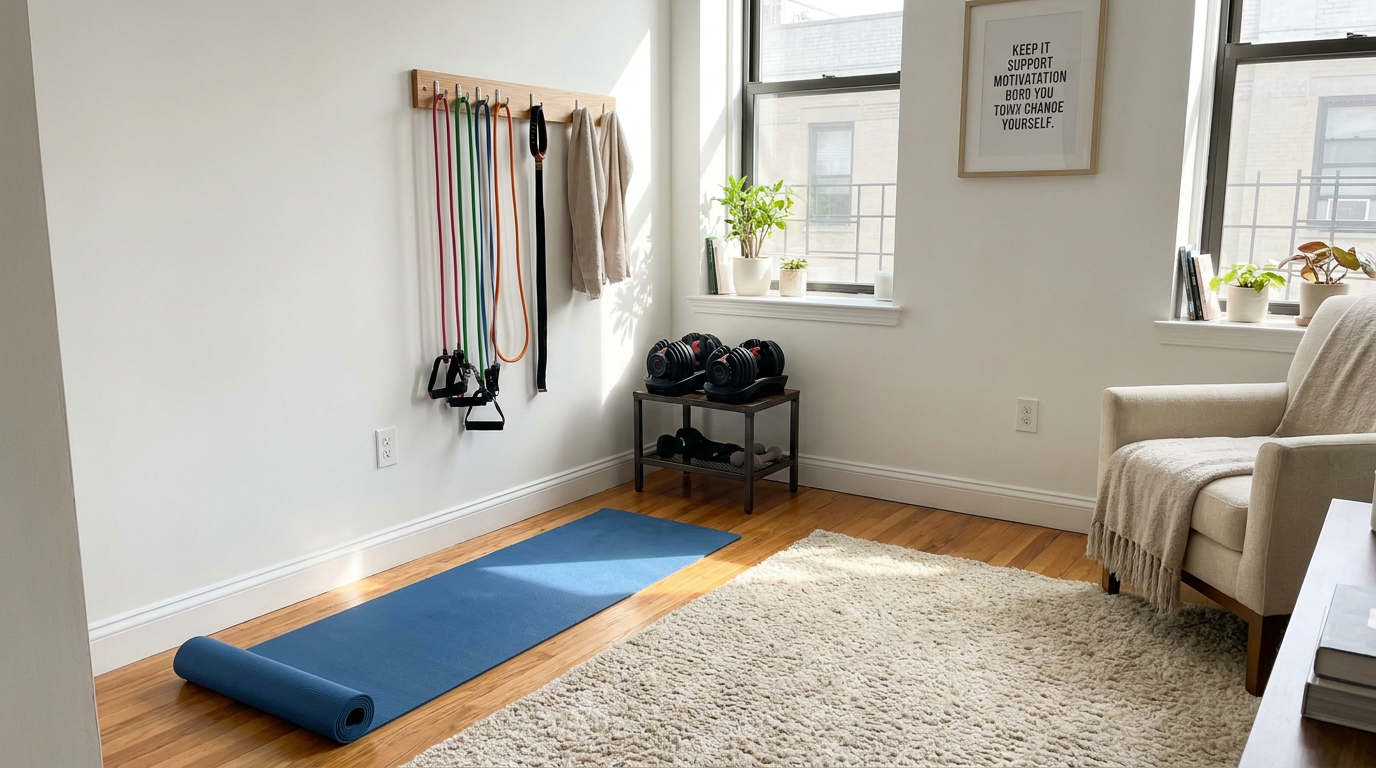
Start by walking through your home and identifying spaces that feel underused but practical. Good options usually have enough floor area to move your arms and legs safely, a relatively level surface, and a sense of visual separation from busy household traffic. This does not mean the space has to be hidden. Sometimes a visible setup actually helps you stay consistent because the equipment acts as a gentle cue to move. A yoga mat in sight can be more motivating than a treadmill stored in a forgotten room.
Light and atmosphere matter more than people expect. Natural light, if possible, makes a huge difference in how a home gym feels. A dim, cluttered corner can quickly become a place you avoid. A brighter space with a clean floor, fresh air, and a small sense of intention feels completely different. If your chosen area has limited daylight, warm layered lighting can still make it feel energizing and welcoming.
It is also wise to think about noise and household flow. If you enjoy jumping, cycling, or strength training early in the morning, you may want a location that will not disturb sleeping family members. If your space is part of a shared room, choose equipment that can be tucked away or folded when needed. A home gym should support your life, not create daily friction in the rest of the house.
Step 1: Define Your Fitness Goals Clearly
Every smart home gym begins with goal setting. This does not need to be formal or complicated, but it should be honest. Ask yourself what you want this space to help you do. Your answers might include building strength, increasing energy, improving mobility, supporting healthy aging, adding more movement to family life, or making cardio more convenient. Once you identify your priorities, the right equipment becomes much easier to choose.
It often helps to group your goals into five simple categories: cardio, strength, mobility, recovery, and family friendly movement. Cardio might include walking, cycling, dancing, or interval training. Strength could mean dumbbells, resistance bands, and bodyweight training. Mobility may involve stretching, yoga, and balance work. Recovery could include a mat, foam roller, and calming design details that encourage you to slow down. Family friendly movement may call for open floor space, easy storage, and versatile tools that are simple to use.
If your main goal is consistency, choose equipment that allows very low effort entry. A mat, bands, and a pair of adjustable dumbbells can make it easy to do a 15 minute session without changing rooms or setting up a machine. If your goal is cardiovascular endurance, you may prioritize a stationary bike, a walking pad, or a jump rope. If you are supporting an older adult or planning for long term wellness, balance focused movement and stable support surfaces deserve attention from the beginning.
Be specific about your daily reality. It is much more helpful to say, “I want a space where I can do 20 minute strength workouts before work and stretch at night,” than simply, “I want to get in shape.” A clear vision keeps the project grounded and makes every design decision feel purposeful.
Step 2: Measure Your Space and Plan Safe Movement Zones
Once you know your goals, start measuring. You do not need architectural plans, but you do need a realistic sense of how much floor space is actually usable. Measure the width and depth of the area, note ceiling height, and pay attention to doors, windows, radiators, shelves, and furniture that affect movement. Remember that workout equipment is not only about storage footprint. You also need clearance around it for safe use.
Think in terms of zones rather than objects. A central movement zone is the open area where you stretch, lunge, squat, and move through bodyweight exercises. Around that zone, you can place storage, weights, a mirror, and any cardio equipment. If you are using dumbbells or a bench, make sure there is enough space to pick up weights and put them down without twisting around obstacles. If you are using a bike or walking pad, make sure there is a clean path to get on and off comfortably.
Safety is especially important in family homes and multi generational households. Clear walkways reduce trip hazards, and non slip flooring helps everyone feel more stable. If children will be in the area, heavy equipment should be stored securely and not left where it can roll or tip. If older adults will use the space, leave enough room for careful transitions and avoid clutter around the feet. A little extra open floor can matter more than an extra piece of equipment.
Many people discover during this phase that less truly is more. A calm, usable space with three high value tools often supports better workouts than a crowded room packed with barely used items. The goal is not to maximize purchases. The goal is to maximize ease, comfort, and movement quality.
Step 3: Choose Essential Equipment First
If you are building your home gym from scratch, begin with the most versatile essentials. Consumer experts consistently point to a few pieces that deliver strong value without taking over the house: a good exercise mat, resistance bands, and adjustable dumbbells. These tools can support warm ups, strength sessions, mobility work, and accessory exercises across a wide range of fitness levels. They are also easy to store, which makes them ideal for smaller homes.
A mat creates a defined place to move. That sounds simple, but it is psychologically powerful. When you unroll a mat, the room shifts into a different mode. Bands are excellent because they offer scalable resistance while staying light, affordable, and compact. Adjustable dumbbells can replace multiple fixed weight pairs and support everything from beginner exercises to more advanced strength training. Together, these three items create a surprisingly complete foundation.
From there, you can add selectively. A jump rope is a compact cardio tool if your flooring and ceiling allow it. A stationary bike or bike trainer can be a strong investment if you enjoy low impact cardio and want something easy to hop on regularly. A foldable bench expands your strength options without permanently consuming space. A mirror can help with form and also makes the area feel brighter and more intentional. A device stand supports streamed classes, timers, playlists, and guided programs.
The key is to choose equipment that matches your goals and your likelihood of use. Ask yourself whether each item does at least one of three things: supports your primary form of movement, saves time, or makes the space more inviting. If it does none of those, it may not need to come home with you.
Best Starter Equipment by Budget
You can build a helpful home gym at almost any spending level. A modest budget can still create a deeply functional setup if you stay focused on versatility. Mid range budgets allow for more comfort and variety. Higher budgets can layer in digital features, aesthetics, and dedicated wellness touches without losing practicality.
- Low budget setup: a mat, resistance bands, a jump rope, and one or two basic weights or adjustable dumbbells. This level works well for bodyweight training, mobility, cardio intervals, and beginner strength work.
- Mid range setup: everything above, plus adjustable dumbbells, a foldable bench, a foam roller, mirror, and storage rack or baskets. This creates a more polished routine with better support for progressive strength training and recovery.
- Higher budget setup: a stationary bike or walking pad, premium adjustable weights, upgraded flooring, digital coaching tools, dedicated storage, and design details that make the room feel like a complete wellness retreat.
What matters most is not the total number of items. It is how easily those items support your habits. A beginner who uses bands and dumbbells four times a week is building a better home gym than someone who buys expensive machines that become decorative storage.
Step 4: Design a Layout That Feels Easy to Use
Once your equipment is chosen, the next job is making the room flow well. Layout affects motivation more than people realize. If you have to drag items out from behind furniture, clear a pile of laundry, or shift chairs every time you want to work out, your brain reads movement as a chore. If your essentials are visible, tidy, and easy to reach, the path into exercise feels smoother.
Place your most frequently used tools closest to your main movement area. Keep your mat, bands, and weights within arm’s reach so you can begin quickly. If you have a cardio machine, position it where it does not block walkways and where the view feels pleasant. Facing a window, a mirror, or a simple screen for guided classes can make a cardio session feel much shorter and more enjoyable. If your space is multi use, folding or vertical storage can help preserve openness.
Mirrors can be useful both functionally and visually. They help you check form during strength and balance exercises, and they also bounce light around the room. You do not need a wall of mirrors to get the benefit. One thoughtfully placed mirror can make a compact home gym feel more spacious and complete. Just be sure it is installed securely and does not create glare that feels distracting.
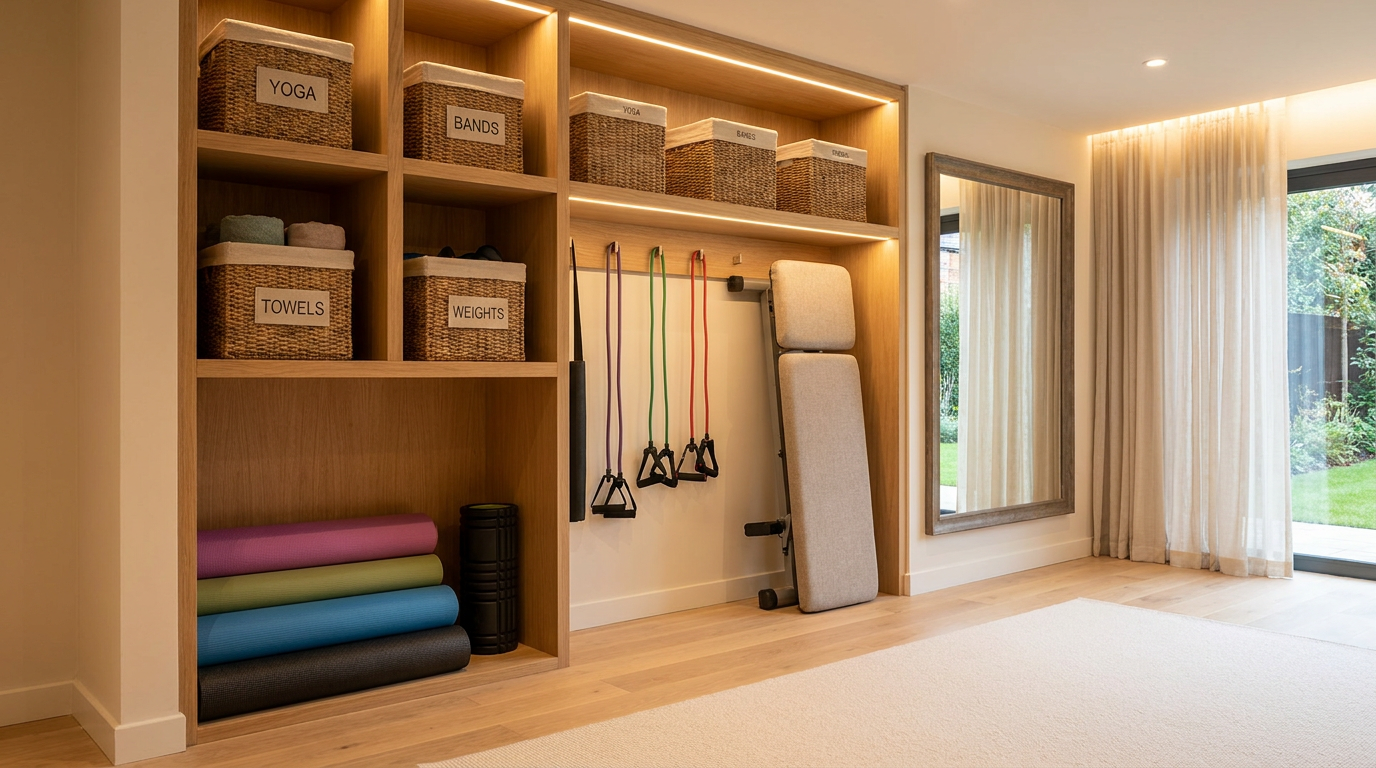
Storage is one of the quiet heroes of a beautiful home gym. Baskets, shelves, hooks, and low racks make it easier to keep the area calm. When every item has a place, you spend less time cleaning up and more time moving. That sense of order often becomes part of the room’s motivation. A tidy space gently says that wellness belongs here.
Step 5: Make the Space Comfortable, Inspiring, and Personal
A home gym should work well, but it should also feel good. This is where your personal style matters. If the room feels cold or improvised in a stressful way, you may avoid it even if the equipment is technically useful. A few thoughtful design choices can shift the emotional tone completely. Consider paint color, lighting, scent, storage texture, and even the music setup. These are not extras if they help you return to the space more often.
Start with lighting. Bright natural light is ideal during the day, but layered lighting can make early mornings and evenings much more inviting. Overhead lighting paired with a lamp or warm wall light can create energy without harshness. Ventilation is equally important. Fresh air matters during movement, especially in smaller rooms or basement spaces. If windows are limited, a fan or air purifier can improve comfort.
Think about how you want to feel in the room. Energized, calm, focused, supported, playful, or restored are all valid directions. If your workouts are your stress relief, a soothing palette and soft textures around the edges may help. If you need motivation, bolder color or a stronger soundtrack setup may suit you. Plants, a small bench, a tray for water, and a simple towel hook can make the room feel complete rather than makeshift.
This is also a good place to include personal cues. A framed quote, a calendar that tracks your consistency, a corkboard with your goals, or a visible class schedule can all help the room feel alive. Motivation is not only internal. Often, it grows from environments that quietly support your intentions.
Step 6: Choose Flooring That Supports Stability and Comfort
Flooring shapes how secure and enjoyable the room feels underfoot. In many homes, the existing floor may be perfectly usable, especially if you are doing light strength work, stretching, and bodyweight movement on a mat. But if your gym will include weights, cardio, or frequent standing work, it is worth thinking about shock absorption, grip, and durability.
Non slip surfaces are especially important in wellness spaces used by beginners, older adults, or families. You want to feel confident stepping, pivoting, and balancing without worrying about sliding. A stable exercise mat can provide a good starting point. Interlocking gym tiles or rubber based flooring can create a more finished feel if you are working in a garage, basement, or dedicated room. The ideal surface supports movement without feeling overly soft or unstable.
Keep your goals in mind here too. Jumping, cycling, lifting, stretching, and balance work all place different demands on the floor. If your home gym is part of a living area, you may want a solution that looks more integrated and less industrial. The right flooring should disappear into the experience, offering support without visually overpowering the room.
It is also smart to think about maintenance. Choose something easy to clean and resilient enough for the kind of routine you plan to build. A home gym that is simple to wipe down and reset after use is much easier to keep welcoming over time.
Step 7: Prioritize Safety From the Beginning
Safety deserves a central place in any home gym conversation. It is easy to get excited about equipment and aesthetics, but the room should support healthy movement first. If you have been inactive, live with a chronic condition, have a disability, or want to begin vigorous exercise, it is wise to check with a clinician before starting. This is not about discouragement. It is about making sure your plan fits your body well and supports long term progress.
In day to day use, safe home gym habits begin with gradual progression. Start lighter than you think you need, warm up before more challenging sessions, and build intensity over time. Good technique matters, especially with strength exercises and balance work. If you are using online classes, choose instructors who offer clear cues and modifications for different levels. In a home setting, where no one is physically present to correct your form, clarity is especially valuable.
Equipment placement also matters. Leave enough space around your main workout area, keep heavy items stable, and store accessories where they will not create trip hazards. Be cautious with improvised equipment such as door frame attachments, weighted household items, or furniture used for support. These tools can sometimes work, but only if they are stable, appropriate for the exercise, and used carefully. Cheap does not automatically mean unsafe, but makeshift should never mean careless.
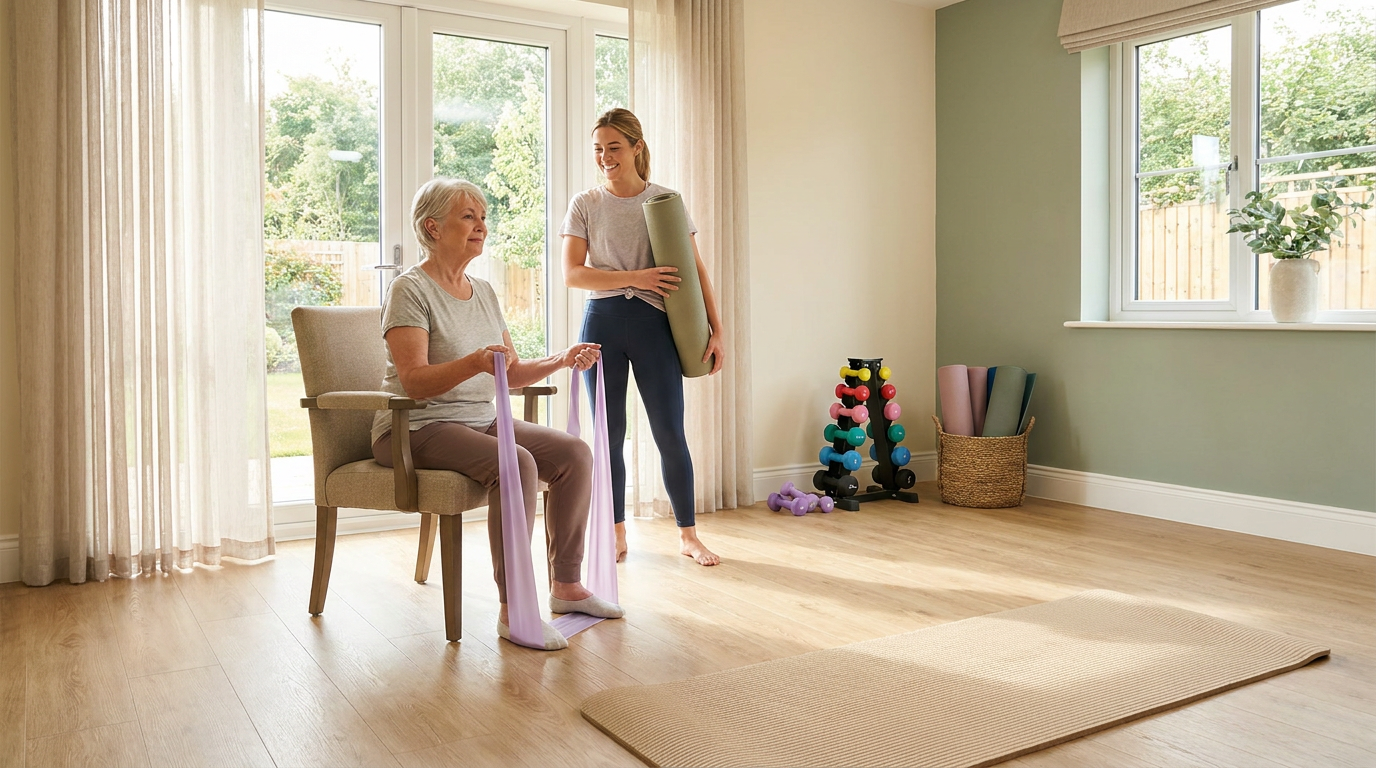
If your household includes older adults, safety details become even more meaningful. Stable seating, nearby support for balance exercises, and uncluttered pathways can support confidence and reduce fall risk. Thoughtful home gym design should help people feel more capable, not more anxious.
Step 8: Build an Inclusive Space for Beginners, Families, and Older Adults
One of the loveliest things about a home gym is that it can be designed for real life and real people, not just idealized athletes. Home fitness spaces can absolutely support beginners, children, teenagers, older adults, and people with different mobility needs. Inclusivity begins by choosing adaptable tools and creating enough physical and emotional ease that everyone feels welcome using the room.
Resistance bands, light to moderate dumbbells, chairs for support, open floor space, and clear visual cues all help make a gym feel accessible. Adjustable equipment is especially useful in shared households because it allows one area to serve many bodies and ability levels. A foldable bench, a stable chair, and a set of bands with multiple resistance levels can work for both simple rehab style movement and more challenging strength sessions.
For older adults, public health guidance emphasizes not only aerobic activity and muscle strengthening but also balance challenging movement. A home gym can support this beautifully when it includes stable surfaces, room for controlled stepping, and simple tools for practice. Even a short daily routine that includes balance work, light strength, and mobility can be valuable. The room does not need to look clinical to support healthy aging. It can still feel warm, elegant, and fully part of the home.
Families may benefit from thinking of the gym as a wellness room rather than a strict workout zone. This shift opens the door to stretching, breathing exercises, dance breaks, post sport recovery, and active play. When the room welcomes a range of movement styles, it often gets used more often and by more people.
Step 9: Use Technology Thoughtfully
Digital coaching has become one of the most practical home fitness tools, especially for people who want structure without commuting to a gym. Apps, streamed classes, workout mirrors, connected bikes, and simple tablet stands can all help create a more guided and engaging experience. The best technology is the kind that reduces friction and supports consistency, not the kind that adds complexity for its own sake.
If you enjoy variety, a basic device stand may be enough. It gives you access to guided strength sessions, yoga, mobility work, and cardio classes using equipment you already own. If you prefer immersive coaching, a more advanced screen or connected machine may be worth the investment. There is no single correct level of technology. The right choice depends on how you like to move and what helps you follow through.
It is also worth setting boundaries with screens. A home gym can be energizing without feeling digitally overwhelming. Sometimes the ideal setup includes tech for workouts and a quiet shelf or basket to tuck it away afterward. If your space also supports stretching, mindfulness, or recovery, preserving a sense of calm can make the room more versatile and restorative.
In many homes, technology works best when it is integrated simply. A charging station, good speaker, tidy cord management, and a clear place for your device often matter more than having the newest hardware. Ease of use is part of good design.
Step 10: Create a Routine That Makes the Gym Worth Keeping
The most beautiful home gym in the world will not change your life if it is not woven into your habits. Once the room is ready, the final step is building a rhythm that makes it useful. Start by linking the space to specific times or cues in your day. A 15 minute strength session after coffee, a lunchtime bike ride, or a short evening stretch on the mat can create a routine that feels grounded rather than aspirational.
Remember that all movement counts. Public health guidance continues to emphasize that some movement is better than none, and that short sessions still have value. This can be freeing, especially if your life is full. A home gym is powerful because it makes it easier to move in smaller pockets of time. You do not have to earn the room with an hour long workout. You can step into it for ten minutes and still support your health.
Consider keeping a simple weekly structure so the room serves multiple needs. For example, you might use it for strength three days a week, cardio two days a week, and mobility most mornings. Or you may alternate between more active days and lighter recovery days. The exact schedule matters less than the feeling that the room is part of your normal life. When the gym belongs to your routine, it becomes a useful part of your home rather than a neglected project.
Small rituals help too. Rolling out the mat, opening a window, turning on a playlist, or wiping down equipment after use can create a satisfying sense of completion. These tiny actions teach your body and mind that this is a space for care, not punishment.
Common Home Gym Mistakes to Avoid
As you build your setup, it helps to know what tends to go wrong. The first common mistake is buying too much too soon. It is easy to confuse excitement with clarity and end up with equipment that does not match your habits. Start with essentials, live with them for a while, and let your needs reveal themselves before expanding the setup.
The second mistake is treating cardio equipment as the only meaningful investment. For many people, strength, mobility, and recovery tools are just as valuable, if not more so. Adjustable dumbbells, bands, and a quality mat can support a much broader routine than a single large machine. Another mistake is assuming that short or light movement does not count. In reality, consistent smaller sessions are often what make a home gym successful.
People also overlook the emotional side of the room. A cluttered, poorly lit, or awkward space can quietly discourage use. Organization, lighting, and comfort are not superficial details. They are part of the behavior design that helps a room become active. Finally, be careful not to assume improvised equipment is automatically safe just because it is inexpensive. Stability, load tolerance, and correct setup always matter.
- Avoid buying for an imaginary future routine and build for the life you actually live right now.
- Avoid overcrowding the room when open floor space would serve you better.
- Avoid poor storage because clutter adds friction and discourages quick workouts.
- Avoid skipping safety basics such as warm ups, gradual progression, and stable supports.
- Avoid forgetting recovery because stretching, mobility, and rest are part of wellness too.
A Simple Sample Plan for Three Types of Home Gyms
Sometimes it helps to picture how all of this comes together in real homes. A micro gym in an apartment might use a bedroom corner with a mat, bands, adjustable dumbbells, a mirror, and a basket for accessories. This setup supports strength, stretching, short cardio intervals, and streamed classes while still allowing the room to function normally.
A shared family wellness room might live in a basement or den and include non slip flooring, a bike, a foldable bench, bands, dumbbells, a foam roller, and visible storage. The design would prioritize clear walkways, easy cleanup, and tools that work for adults, teens, and older family members. A whiteboard or schedule wall could help everyone use the room with less overlap and more intention.
A premium but still realistic setup might include upgraded flooring, a connected cardio machine, adjustable weights, a bench, a stretching zone, layered lighting, and thoughtful styling details such as plants and closed storage. The key difference is not only the budget. It is the way the room supports a wider range of movement and feels fully integrated into the home’s overall design story.
Why a Home Gym Is Really an Investment in Daily Life
Over the past several years, many households have started to see home based wellness as a lasting part of everyday living rather than a temporary substitute for going elsewhere. That shift makes sense. When movement is close at hand, it becomes easier to protect it. You remove travel time, weather excuses, scheduling complications, and some of the emotional resistance that can come with public workout spaces. You create a gentle invitation to move inside the life you already have.
The benefits go far beyond appearance or athletic performance. Regular physical activity supports cardiovascular health, strength, mobility, sleep, mood, and long term independence. The World Health Organization has also highlighted that a significant portion of adults worldwide do not meet recommended activity levels, which increases health risks over time. A home gym can help close that gap by making movement feel more reachable, more private, and more flexible.
That is why it is worth designing the space with care. You are not just arranging equipment. You are shaping an environment that can support your energy, resilience, and well being for years to come. Even a tiny gym corner can become a meaningful place if it helps you reconnect with your body consistently and kindly.
Final Thoughts
Creating your perfect home gym is less about square footage and more about alignment. When your space reflects your goals, your routines, your budget, and your sense of comfort, it becomes much easier to use. A mat in the right corner, a few versatile tools, and a layout that feels calm and safe can do far more for your wellness than a room filled with expensive equipment chosen without intention.
Start small if you need to. Focus on the movement you want more of in your life. Build around what feels supportive and realistic. Then let the room grow with you over time. The most beautiful home gym is not necessarily the largest or most luxurious one. It is the one that quietly helps you care for yourself, day after day, in the home you already love.


No Comment! Be the first one.