



How to Effectively Check and Optimize Your Thermostat for Seasonal Changes
Checking your thermostat may seem like a small household task, but it is one of the most practical ways to improve comfort, reduce energy waste, and support a more efficient home. Many homeowners focus on large upgrades first, yet the thermostat is the daily control point for one of the biggest energy demands in the house. When heating and cooling are working harder than necessary, utility costs rise quietly in the background. A thoughtful seasonal thermostat check helps make sure your HVAC system is responding to real needs rather than avoidable errors or outdated settings.
Table Of Content
- Why Seasonal Thermostat Checks Matter
- Start With a Basic Thermostat Inspection
- Quick Inspection Checklist
- Check the Thermostat’s Location Before You Trust the Reading
- Set Realistic Winter Thermostat Temperatures
- A Simple Winter Schedule Example
- Adjust Cooling Settings Thoughtfully in Summer
- Understand Setback, Setup, and Why Small Adjustments Work
- Review Your Programmed Schedule Every Season
- When a Smart Thermostat Can Help
- Know Your HVAC System Type Before Making Big Changes
- Pay Attention to Humidity and Air Movement
- Support Thermostat Efficiency With Simple Home Upgrades
- Helpful Habits That Work Well With Thermostat Optimization
- Common Thermostat Mistakes to Avoid
- A Beginner-Friendly Seasonal Thermostat Routine
- Final Thoughts
This matters more than many people realize. Natural Resources Canada notes that heating and cooling can account for nearly two-thirds of home energy costs, which means even modest thermostat improvements can have a meaningful impact over time. In practical terms, that could mean lower monthly bills, less strain on your equipment, and a home that feels more stable from room to room. From a sustainability perspective, reducing unnecessary HVAC runtime also helps lower emissions tied to electricity use and fossil-fueled heating.
The encouraging part is that thermostat optimization is accessible to beginners. You do not need advanced tools or deep technical knowledge to make better seasonal adjustments. What you do need is a simple process, an understanding of what your thermostat can and cannot do, and a realistic approach to comfort. The goal is not to create perfect conditions every minute of the day. The goal is to align your settings with how your household actually lives.
In this guide, we will walk through how to check your thermostat, how to adjust it for winter and summer, and how to avoid common mistakes that reduce efficiency. We will also look at how smart and programmable thermostats fit into the picture, why thermostat placement matters, and when your HVAC system type changes the advice. Small seasonal steps can lead to significant savings, especially when they are repeated consistently year after year.
Why Seasonal Thermostat Checks Matter
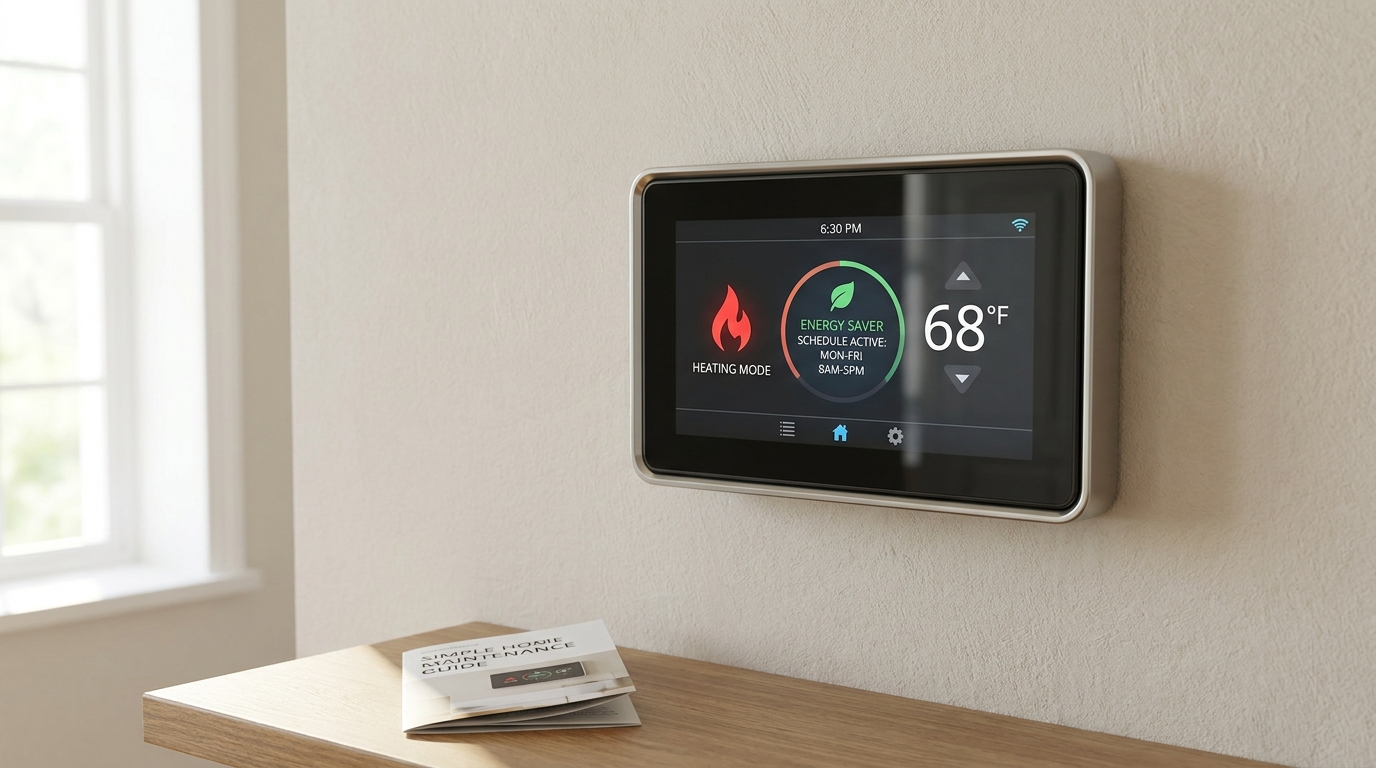
Your thermostat is the command center for indoor comfort, but it only works well when it reflects both the season and the way your home is used. As temperatures shift outdoors, the ideal indoor settings often change too. A winter schedule that feels comfortable in January may be wasteful in spring, and a summer cooling pattern may need to be updated once evenings become milder. Seasonal checks help prevent your system from running on old assumptions.
There is also a direct financial case for paying attention. According to U.S. EPA guidance, reducing your winter heating setting by 1 degree Fahrenheit can save about 3 percent of heating energy use. Raising your summer cooling setting by 1 degree Fahrenheit can save about 6 percent of cooling energy use. Those are simple adjustments, but over the course of a season they can add up in a meaningful way, especially in climates with long heating or cooling periods.
Comfort is another reason to review thermostat settings regularly. If your home feels too warm in one season and too cool in another, many people respond by making large manual changes that create more fluctuation. In reality, aggressive swings often increase discomfort instead of improving it. A steadier, more intentional schedule usually delivers better results because it works with your routine rather than reacting to each moment.
Seasonal checks can also reveal hidden problems. If the thermostat is not reading accurately, if the batteries are low, or if the mode is set incorrectly, your equipment may appear to be underperforming when the real issue is with the control itself. That makes the thermostat a smart place to begin before assuming there is a larger HVAC fault.
Start With a Basic Thermostat Inspection
Before adjusting temperatures, begin with a physical and functional check. This step is often overlooked, but it can prevent a great deal of confusion. A thermostat should be clean, responsive, and clearly displaying the current setting and mode. If pressing buttons or using the touchscreen feels delayed or inconsistent, that may point to battery issues, wiring concerns, or an aging device.
If your thermostat uses batteries, replace them seasonally or at least according to the manufacturer’s guidance. Weak batteries can cause the display to dim, settings to reset, or programmed schedules to fail unexpectedly. It is a simple maintenance task, but one that can spare you an uncomfortable night or a needless service call. If the thermostat is hardwired and acting erratically, it may need professional evaluation.
Next, confirm the system mode is correct. This sounds obvious, but it is common for homes to remain in the wrong setting during shoulder seasons. A thermostat left in cooling mode during a cool spring morning, or in heating mode on a warm fall afternoon, can create confusing results. Check whether it is set to heat, cool, or auto, and make sure the fan setting is where you intend it to be.
Take a moment to compare the displayed temperature with how the room actually feels. If the thermostat says the house is at your desired temperature but the space feels noticeably too hot or too cold, there may be a placement issue, airflow problem, or calibration concern. The thermostat measures conditions in one spot, not the entire house, so its reading is only part of the comfort picture.
Quick Inspection Checklist
- Make sure the display is clear, bright, and responsive.
- Replace batteries if your thermostat uses them.
- Confirm the mode is correct for the season: heat, cool, or auto.
- Check the fan setting and verify it matches your preference.
- Review any programmed schedule to ensure it still suits your routine.
- Compare the displayed temperature with how the room actually feels.
Check the Thermostat’s Location Before You Trust the Reading
One of the most common causes of poor comfort and unnecessary HVAC runtime is bad thermostat placement. Natural Resources Canada advises keeping thermostats away from direct sunlight, drafts, supply vents, fireplaces, and heat-producing appliances. If the sensor is influenced by any of these conditions, it can get a false picture of the room and tell the HVAC system to run when it is not really needed.
For example, a thermostat in direct afternoon sun may think the home is warmer than it truly is. In summer, that can cause overcooling and excess energy use. In winter, a thermostat near a drafty exterior door may think the house is colder than it really is, triggering more heating cycles than necessary. In both cases, comfort declines because the system is responding to a distorted signal.
Placement matters just as much in open-plan homes or houses with uneven temperatures. If your thermostat is in a warmer hallway or near a ceiling that traps heat, bedrooms or basement rooms may feel cooler than expected. This is not always a thermostat defect. It is often a reminder that one sensor cannot represent every room equally well.
If you suspect placement is affecting performance, make a note of what happens at different times of day. Does the home feel off in the afternoon but fine at night? Does a nearby vent blow directly toward the thermostat? These observations are useful if you decide to upgrade to a remote sensor system or ask a technician whether relocating the thermostat would improve control.

Set Realistic Winter Thermostat Temperatures
Winter thermostat settings work best when they balance comfort with modest setbacks. U.S. Department of Energy and EPA guidance commonly recommend a setting around 68 to 70 degrees Fahrenheit while people are home and awake. That range is a practical starting point for many households, though the right number depends on clothing, humidity, sunlight, and personal comfort preferences. If 68 feels cool, consider starting at 69 or 70 rather than jumping much higher.
When you are asleep or away for several hours, lowering the setpoint can save energy without sacrificing much comfort. Common guidance suggests reducing the temperature by about 8 to 10 degrees Fahrenheit for roughly eight hours. This is where programmable schedules become particularly useful, because they let the home coast gently during low-occupancy periods rather than heating to the same level all day.
It is important not to confuse bigger changes with better results. Turning the thermostat far up does not heat the house faster. Your system warms the home at the rate it is designed to deliver. Setting the thermostat significantly above your target temperature often leads only to overshooting and then feeling too warm later.
If you are new to setbacks, begin gradually. Try lowering the overnight setting by a few degrees first and see how the home feels by morning. Observe how long the system takes to recover and whether comfort remains acceptable. A small adjustment that your household can sustain is usually more effective than an aggressive schedule that gets overridden every day.
A Simple Winter Schedule Example
A very practical winter schedule follows the natural rhythm of the day. You might keep the home at 68 to 70 degrees Fahrenheit while everyone is awake and active, then lower it overnight and during work or school hours. This pattern reflects how people use space rather than conditioning the home equally when no one is benefiting from it. It is a quiet form of efficiency, but over a season it can be substantial.
For households with variable schedules, the idea is still the same even if the exact times change. Focus on blocks of time when comfort is less critical and ask whether the home can drift slightly cooler without inconvenience. If yes, your thermostat can help you capture those savings consistently.
Adjust Cooling Settings Thoughtfully in Summer
In cooling season, the most efficient strategy is usually to set the thermostat as high as comfortably possible when people are home, then raise it further when the house is empty. This reduces how often the air conditioner runs and lowers overall energy use. Because EPA guidance estimates that each 1 degree Fahrenheit increase in cooling setpoint can save about 6 percent of cooling energy use, even small upward adjustments are worth considering.
Comfort in summer is not determined by temperature alone. Humidity, sun exposure, air movement, and nighttime cooling all play a role. A home at a moderate temperature with ceiling fans, closed blinds during peak sun, and decent humidity control often feels better than a colder home with stale or damp air. That is why thermostat optimization works best as part of a broader comfort strategy rather than as a stand-alone number.
As with heating, avoid dramatic manual changes. Turning the thermostat much lower does not cool the home faster. It simply tells the system to keep running until it reaches that lower target, which may leave the house colder than necessary and increase energy use. A steady, measured approach is more comfortable and more efficient.
If your household leaves home during the day, create a cooling setup that lets temperatures rise by several degrees while no one is there. Then schedule the system to return to a comfortable level before people come home. That way, the house feels pleasant when needed without spending the entire day being cooled at full comfort settings.
Understand Setback, Setup, and Why Small Adjustments Work
Two helpful thermostat terms are setback and setup. A setback usually refers to lowering the temperature in winter when less heating is needed. A setup usually refers to raising the temperature in summer when less cooling is needed. Both strategies reduce HVAC runtime during periods of low occupancy or lower comfort demand.
These ideas are effective because homes lose or gain heat gradually over time. If you allow the indoor temperature to drift moderately during sleeping hours or when the house is empty, the system does not need to maintain peak comfort continuously. The exact savings depend on insulation levels, outdoor temperatures, system type, and schedule length, but the underlying principle is well established.
That said, there is a difference between modest and aggressive changes. The most practical advice for beginners is to use sensible adjustments that fit the home’s behavior. A house with good insulation may coast gently and recover well. A draftier house may still save energy with setbacks, but comfort could drop faster. The only reliable approach is to test and observe.
Thermostat optimization is less about finding a perfect universal number and more about matching your settings to your home, your climate, and your daily routine.
This is why a calm, iterative approach works so well. Set a schedule, live with it for a few days, notice what feels good or inconvenient, and then refine. Over time, the thermostat becomes a tool for steady efficiency rather than a source of constant adjustment.
Review Your Programmed Schedule Every Season
Programmable thermostats can absolutely save energy, but only if the schedule reflects real life. ENERGY STAR materials often describe schedules built around wake, leave, return, and sleep periods. That structure is simple, practical, and easy for most beginners to understand. It also creates a useful reminder that your thermostat schedule should change when your daily pattern changes.
Many homes are running schedules that made sense years ago but no longer match current routines. Remote work, school schedules, travel, caregiving, and seasonal activities all affect when the home needs full comfort. If the thermostat is still set for an empty house from 8 a.m. to 5 p.m. but someone now works from home every day, the result may be frustration and frequent manual overrides.
A seasonal review is a good time to correct that. In the spring and fall, check each programmed period and ask whether the home truly needs to be conditioned to that level at that time. You may discover opportunities to trim runtime in ways that do not affect comfort at all. This is also a good moment to update vacation settings or temporary schedules if your thermostat offers them.
Consistency matters. A well-designed schedule that is ignored every day is not efficient. If people in the home constantly override the thermostat, the answer may not be more discipline. It may be that the schedule needs to be simpler, more realistic, or better timed around actual habits.
When a Smart Thermostat Can Help
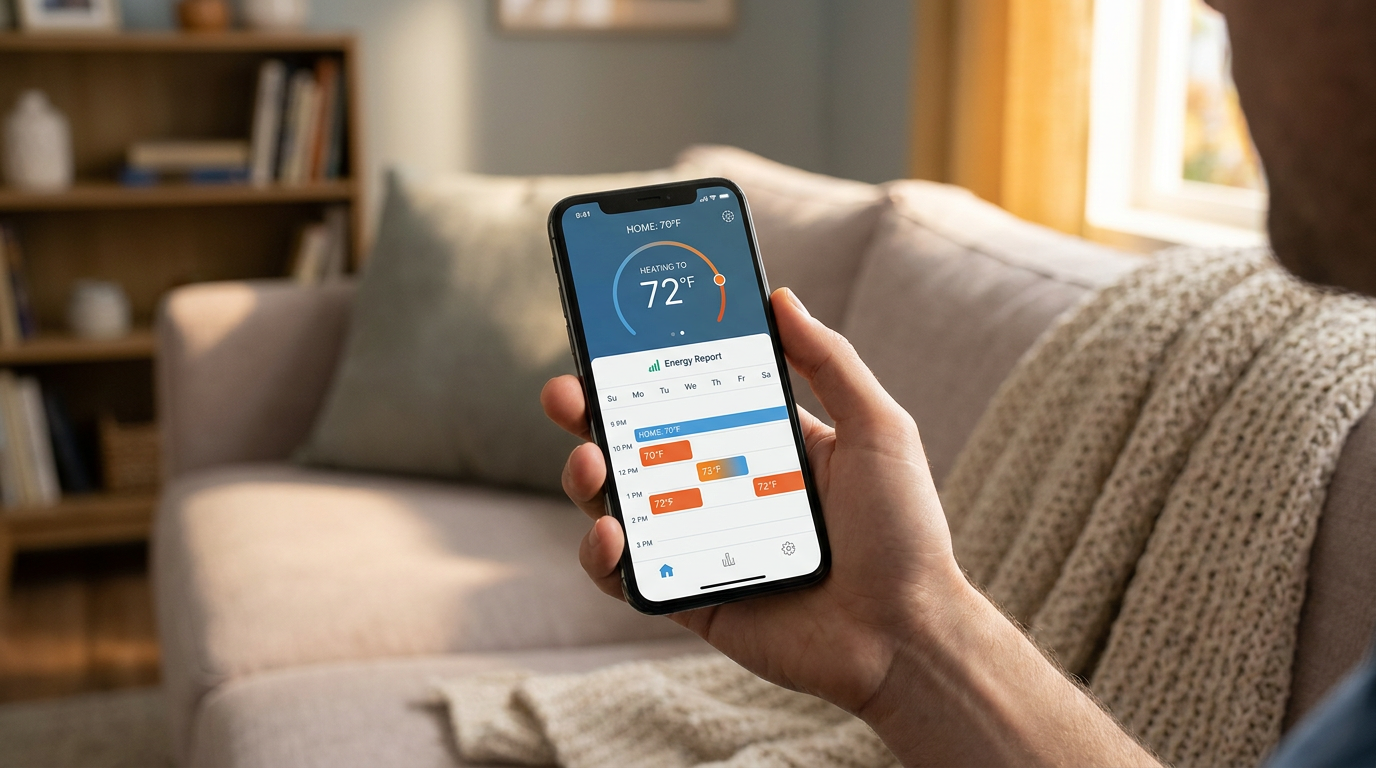
Smart thermostats have become a popular upgrade because they can automate many of the seasonal adjustments that people forget to make manually. Some models offer learning features, occupancy detection, remote access, and energy use reports. ENERGY STAR certified smart thermostats are evaluated using field-tested performance data, which reflects a broader move toward real-world energy savings rather than just theoretical claims.
For many households, the main value of a smart thermostat is not that it is more advanced, but that it is more consistent. If your schedule changes often, remote access can be especially useful. You can raise or lower settings when plans change, check whether the system is running unnecessarily, and review patterns over time. This kind of visibility makes energy use feel less abstract and more manageable.
Smart features can also support better awareness. Energy reporting may show when your system runs longer than expected, which can prompt useful questions about insulation, weather, or equipment performance. Some thermostats also remind you about maintenance tasks such as filter changes, helping the control system connect to broader HVAC care.
Still, it is worth being realistic. A smart thermostat is not automatically a savings machine. If it is installed on an unsuitable system, programmed poorly, or overridden constantly, the benefits may be limited. The best outcomes happen when the technology supports a thoughtful strategy rather than replacing one.
Know Your HVAC System Type Before Making Big Changes
One reason thermostat advice can seem contradictory is that not all HVAC systems respond the same way. A forced-air furnace in a reasonably insulated home may recover quickly from setbacks and show clear savings. A heat pump or slow-response hydronic system may behave differently. Natural Resources Canada notes that programmable setback thermostats are useful for many homes, but there are important exceptions, especially for some heat pumps and slower systems.
Heat pumps deserve special attention because aggressive setbacks can sometimes trigger less efficient auxiliary heat during recovery, depending on the equipment and control strategy. In those cases, dramatic overnight reductions may not produce the expected savings. A smaller adjustment, or even a steadier setpoint, may be the better approach. The right answer depends on how the system is configured and how quickly the home regains comfort.
Hydronic systems can also respond more slowly because they often rely on gradual heat delivery. If the home takes a long time to recover from a setback, frequent changes may feel inconvenient and provide less benefit. Multi-stage equipment introduces another layer, because it may operate more efficiently when allowed to run steadily at lower stages rather than cycling aggressively.
If you are unsure what system you have or how it responds, start conservatively. Make small changes and monitor the results rather than assuming all equipment behaves the same. If comfort becomes inconsistent, or if the system seems to run unusually long during recovery, it may be worth asking an HVAC professional what thermostat strategy suits your setup best.
Pay Attention to Humidity and Air Movement
Temperature is only one part of seasonal comfort. In summer, high humidity can make a room feel warmer than the thermostat reading suggests. In winter, very dry air can feel chilly and uncomfortable even when the temperature is technically adequate. This is one reason homeowners sometimes chase comfort by changing the thermostat repeatedly when the deeper issue is moisture or air movement.
Before making large seasonal adjustments, consider whether humidity might be affecting your perception. In cooling season, a well-functioning air conditioner should remove some indoor moisture, but in very humid climates additional dehumidification may help. In heating season, balanced humidity can make moderate indoor temperatures feel more comfortable, though it should always be managed carefully to avoid condensation issues.
Air movement also matters. Ceiling fans, portable fans, and gentle circulation can make warm-weather settings feel more comfortable without lowering the thermostat. In winter, identifying cold drafts near windows, doors, and baseboards can reduce the temptation to overheat the house. Thermostat optimization is often most effective when these surrounding conditions are addressed too.
Support Thermostat Efficiency With Simple Home Upgrades
A thermostat can only manage the home you have. If that home leaks air, has poor insulation, or struggles with strong solar gain, the best schedule in the world will still face an uphill battle. That does not mean you need a major renovation before adjusting thermostat settings. It simply means that seasonal thermostat checks are even more effective when paired with a few practical home performance habits.
Air sealing is one of the most useful examples. Sealing drafts around windows, doors, attic hatches, and utility penetrations helps the indoor temperature stay closer to the target setting. In winter, this can reduce heat loss and make setbacks more manageable. In summer, it can slow heat infiltration and reduce the cooling load.
Window coverings are another easy tool. Closing blinds or curtains during hot sunny hours can reduce cooling demand. Opening them on sunny winter days can provide passive warmth in some homes. These small actions support the thermostat rather than forcing it to solve every comfort issue on its own.
Routine HVAC maintenance matters just as much. Dirty filters, blocked vents, and neglected equipment reduce airflow and can make the system seem less responsive. If your thermostat settings look sensible but comfort remains uneven, inspect the basics before assuming you need more extreme temperature settings.
Helpful Habits That Work Well With Thermostat Optimization
- Replace or clean HVAC filters on schedule.
- Keep supply and return vents unobstructed by furniture or rugs.
- Seal drafts around windows and doors where practical.
- Use blinds, curtains, or shades to manage seasonal sun exposure.
- Run ceiling fans appropriately to support comfort.
- Schedule professional HVAC maintenance when needed.
Common Thermostat Mistakes to Avoid
Many efficiency problems come not from neglect, but from understandable misconceptions. One common mistake is believing that setting the thermostat far above or below the desired temperature will heat or cool the house faster. In most systems, it does not. It simply tells the equipment to keep running until that lower or higher target is reached, often causing discomfort and wasted energy.
Another mistake is assuming a programmable thermostat is automatically saving money. If the programmed schedule does not match your life, or if it is overridden constantly, savings can disappear quickly. The same is true of smart thermostats. They are helpful tools, but they still need sensible setup and occasional review.
People also sometimes treat the thermostat reading as if it represents the entire home. In reality, one hallway sensor cannot capture the comfort of every room. If one bedroom is always warmer or cooler than the rest of the house, the issue may involve ductwork, insulation, solar exposure, or zoning rather than the thermostat setting alone.
Finally, some households avoid setbacks because they have heard that keeping one constant temperature is always most efficient. In many homes, modest setbacks do save energy with little comfort loss. The key word is modest. Good thermostat strategy is rarely extreme. It is careful, tailored, and steady.
A Beginner-Friendly Seasonal Thermostat Routine
If you want a simple way to put all of this into practice, think in terms of a repeating seasonal routine. At the start of each heating or cooling season, inspect the thermostat, review its schedule, and confirm the mode and fan settings are correct. Replace batteries if needed and pay attention to whether the reading seems reasonable for that area of the home. These checks take only a few minutes, but they create a more reliable starting point.
Next, choose one or two practical setpoint changes rather than a complete overhaul. In winter, that might mean lowering the overnight setting by a few degrees. In summer, it might mean raising the daytime away setting slightly. Live with those changes for several days and notice how the home feels. If comfort remains good, consider refining further.
Then look beyond the thermostat itself. Check for drafts, adjust window coverings, and make sure filters and vents are in good condition. This broader view is often what turns a decent thermostat strategy into an effective one. The thermostat is not an isolated device. It is part of a larger system that includes your building envelope, your equipment, and your habits.
Most importantly, remember that progress counts even when it is incremental. You do not need a perfect smart home setup or an engineering background to make responsible, climate-conscious decisions. A well-reviewed thermostat schedule, a few seasonal adjustments, and a more attentive approach to comfort can make your home feel better while quietly reducing energy use.
Final Thoughts
Checking and optimizing your thermostat for seasonal changes is one of the simplest ways to care for your HVAC system and reduce unnecessary energy use. It asks very little in terms of cost or complexity, yet it can improve comfort, trim utility bills, and support a lower-impact home. For beginners, that combination is hard to beat.
The most effective approach is measured rather than dramatic. Start with a basic inspection, verify the thermostat is in the right location and mode, and make seasonal temperature adjustments that are realistic for your household. Use setbacks and setups thoughtfully, review schedules as routines change, and be mindful of how your specific HVAC system responds. Over time, these small steps add up.
There is also something encouraging about this kind of maintenance. It reminds us that sustainability does not always begin with a major renovation or an expensive upgrade. Often, it starts with noticing how a home operates day to day and making smarter long-term choices within that reality. A thermostat check may be a modest task, but it is a meaningful one, and it can be an elegant part of living more efficiently in every season.



No Comment! Be the first one.