



The Art of Caring for Your Wallpaper: A Practical Guide to Elegant, Lasting Walls
Wallpaper has always carried a certain magic in interior design. It can soften a room, heighten its architecture, introduce rhythm through pattern, and bring a sense of intimacy that paint rarely achieves on its own. Whether it appears as a delicate botanical print in a bedroom, a dramatic mural in a dining room, or a textured grasscloth in a serene study, wallpaper becomes part of the atmosphere of a home. That is precisely why caring for it well matters so much. A beautifully chosen wallcovering deserves maintenance that is intelligent, measured, and tailored to its material.
Table Of Content
- Why wallpaper care begins with identification
- The quiet value of routine maintenance
- How to clean wallpaper safely without sacrificing its finish
- A practical step by step cleaning approach
- Material specific care for today’s most common wallcoverings
- Vinyl and vinyl-coated wallpaper
- Non-woven wallpaper
- Traditional paper wallpaper
- Grasscloth and natural fiber wallcoverings
- Textile and specialty wallcoverings
- The modern wallpaper rule that changes everything: control moisture
- Signs that moisture may be affecting wallpaper
- What to do if mold appears on or behind wallpaper
- Preventing stains, scuffs, and everyday wear
- Why installation quality determines future maintenance
- Common wallpaper care mistakes to avoid
- A room by room approach to wallpaper longevity
- When to call a professional
- Conclusion: preserving beauty through intelligence and restraint
One of the most common mistakes homeowners make is assuming that all wallpaper can be treated the same way. In reality, wallpaper care is a study in nuance. Some modern wallcoverings are designed to be washable or even scrubbable, while others require a dry and almost ceremonial gentleness. Vinyl, non-woven, paper, grasscloth, textile, embossed, and specialty finishes each respond differently to moisture, pressure, and cleaning products. The most elegant approach is not the most aggressive one. It is the one that respects what the material is designed to do.
Modern wallpaper care also extends beyond appearance. Today, the conversation includes indoor air quality, hidden moisture, mold risk, and the quality of the installation beneath the visible surface. According to guidance echoed by the Wallcoverings Association as well as public health sources such as the EPA and CDC, preserving wallpaper is not simply about wiping away marks. It is about understanding how walls live within a building, how humidity behaves, how leaks travel, and how a surface can reveal problems that go deeper than décor.
This guide brings together classic wallpaper care wisdom and modern best practices. It is designed to help you maintain elegance while avoiding the kinds of damage that often begin with innocent intentions. If you have ever wondered how to clean wallpaper safely, how to prevent peeling seams, how to treat stains without dulling a finish, or when wallpaper damage may indicate moisture behind the wall, this comprehensive guide will help you move with confidence and care.
Why wallpaper care begins with identification
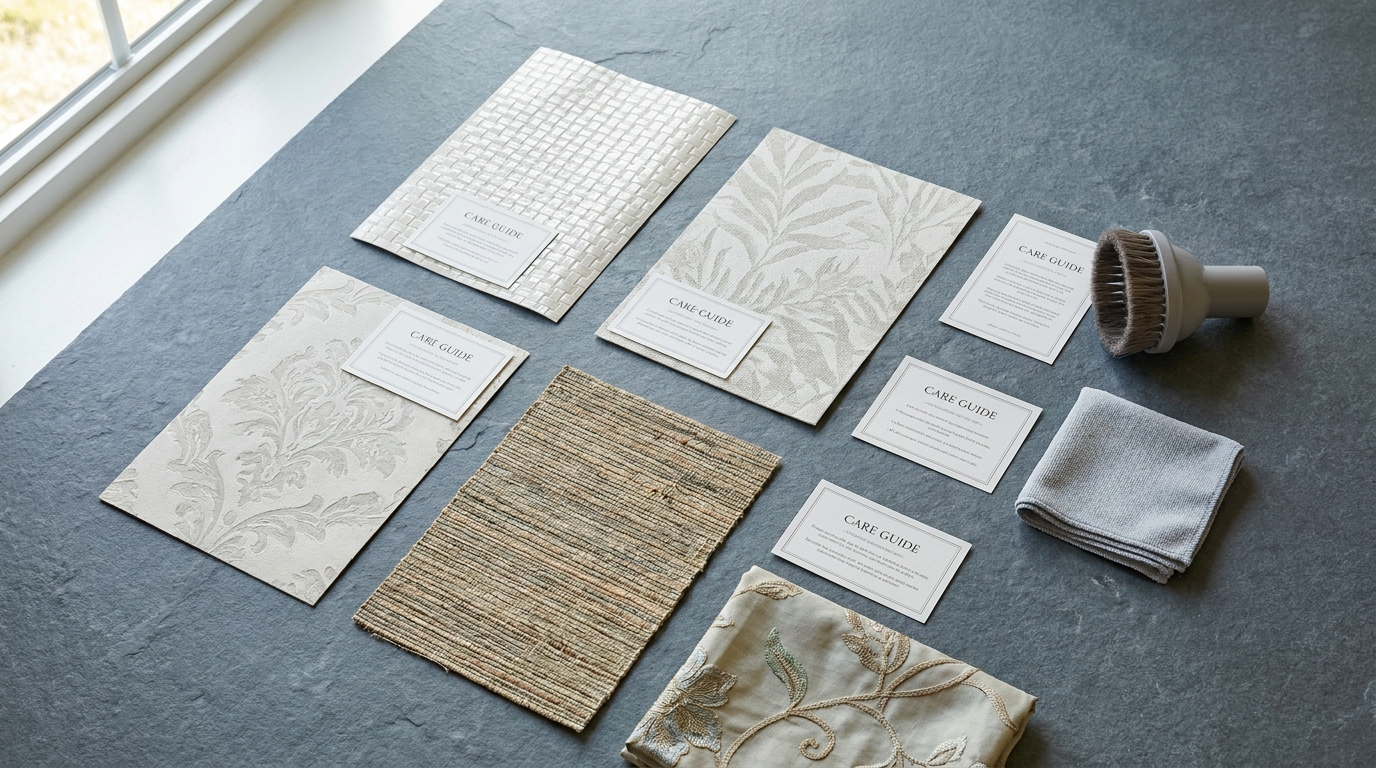
The first and most important principle in wallpaper maintenance is deceptively simple. Before you clean anything, identify the wallcovering. This step matters because the correct method for one surface can permanently damage another. A washable vinyl wallpaper may tolerate a damp sponge and mild soap, while a natural grasscloth can stain or darken from the same treatment. A scrubbable contract wallcovering may be built for heavy use, while a handmade paper may require little more than careful dusting.
Manufacturer instructions should always be your first reference point. Many contemporary products are now labeled with clear care guidance such as washable, scrubbable, wipe-clean, or damp-cloth-cleanable. These distinctions are not cosmetic marketing phrases. They describe how the surface has been engineered and what level of moisture or abrasion it can accept. In older homes, or where wallpaper records are unavailable, visual clues can help, though they are not a substitute for formal instructions. Smooth vinyl surfaces tend to be more resilient than fibrous, matte, woven, or deeply textured coverings.
If you are uncertain, begin with the least invasive approach. A soft dry cloth, a feather-light pass with a vacuum brush attachment, or a small test in an inconspicuous area can reveal how the wallpaper responds. Care should be adjusted gradually rather than boldly. Wallpaper is rarely damaged by restraint, yet it is often damaged by speed, pressure, and overconfidence.
It is also useful to understand that wallpaper has become increasingly performance driven, especially in North American interiors. Vinyl and synthetic wallcoverings are often selected for busy households, hospitality spaces, schools, and healthcare settings because they offer superior stain resistance and easier cleaning. Non-woven products are widely appreciated for dimensional stability and more predictable installation and removal. This shift means that wallpaper care today is far more material specific than it was in the past.
The quiet value of routine maintenance
The most effective wallpaper maintenance is often the least dramatic. Rather than waiting for grime to become visible, create a gentle routine that prevents buildup from settling into the surface. Dust, cooking residue, airborne particles, and hand oils accumulate gradually. On many wallpapers, especially those with texture, that buildup can become embedded and far more difficult to remove later.
Dry maintenance remains one of the oldest and best practices. A microfiber cloth used with a light hand can remove surface dust from smoother wallpapers. A vacuum fitted with a soft brush attachment can be especially helpful for textured, embossed, or fabric-like surfaces, provided the pressure remains low and the motion stays controlled. In dining rooms, hallways, and stair landings, where traffic naturally increases contact with walls, regular attention can preserve clarity of color and crispness of pattern.
There is a quiet luxury in this kind of prevention. Caring for wallpaper in small, measured intervals helps preserve its finish without forcing it through repeated deep cleanings. It also gives you the opportunity to notice subtle changes such as seam edges lifting, faint discoloration near a baseboard, or minor scuffs that can be addressed before they become structural concerns. In design, as in conservation, close looking is often as valuable as active intervention.
Routine maintenance should also respect the room itself. A powder room wallpaper near a sink may need more frequent spot checks than a formal sitting room. A child’s bedroom may require regular inspection at hand height. A hallway wallpaper near door frames and switches will collect contact marks more quickly than the upper walls of a library. Maintenance works best when it follows the actual life of the space.
How to clean wallpaper safely without sacrificing its finish
When ordinary dirt or a minor mark appears, the goal is not to scour the wall back to perfection. The goal is to remove the soil while preserving the finish, adhesive bond, and visual consistency of the wallpaper. The Wallcoverings Association recommends removing stains as soon as possible and cleaning ordinary dirt with mild soap and warm water, then rinsing thoroughly and drying with a soft lint-free towel. This guidance reflects an important truth. Most wallpaper responds best to gentle, prompt action rather than delayed and forceful cleaning.
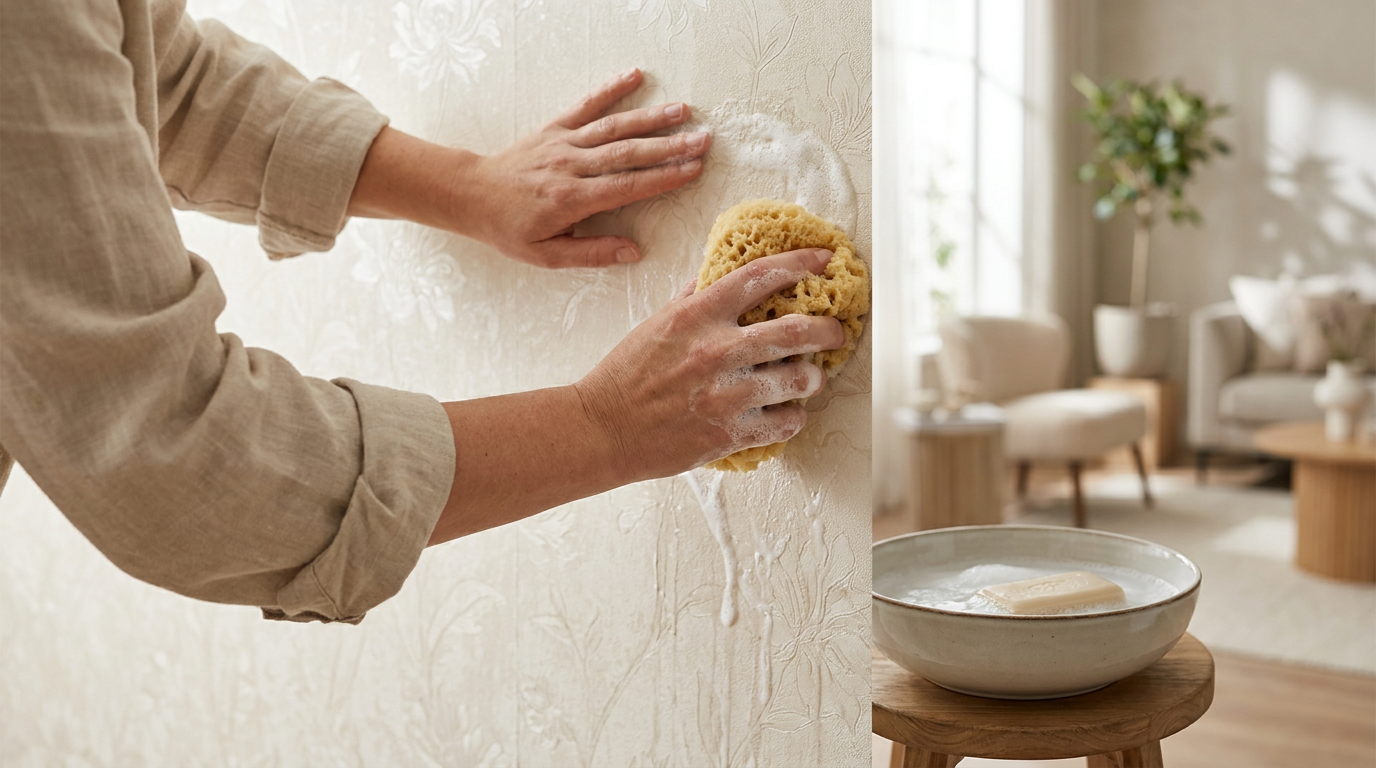
For many washable or vinyl-coated wallcoverings, a soft sponge or cloth dampened, not dripping, with mild soapy water is usually appropriate. Work in a careful, contained manner, keeping moisture controlled and avoiding oversaturation at seams. It is wise to clean from the bottom upward when appropriate to help avoid streaking on some surfaces, then follow with a clean damp cloth to remove any soap residue. Drying matters just as much as cleaning. Leaving moisture on the wall can invite staining, swelling, or seam stress over time.
Delicate wallpapers require more restraint. Traditional paper wallcoverings, grasscloth, silk, linen, flocked designs, and other natural or artisanal finishes can react poorly to water. On these surfaces, a dry cleaning method such as light dusting or specialized wallpaper sponge use may be the safer choice. Rubbing, pressing, or repeatedly passing over the same area can flatten texture, lift fibers, or create a shine in matte finishes that cannot be undone.
There are also cleaning methods that should generally be avoided unless a manufacturer specifically allows them. Steel wool, powdered cleaners, and solvent-based spot removers are not suitable for standard wallpaper care. Steam cleaning is another common misconception. While it may seem like a powerful way to sanitize or refresh, the combination of heat and moisture can soften adhesive, distort the material, and weaken seams. Wallpaper is not a tiled shower wall, and it should never be treated as though brute force equals cleanliness.
A practical step by step cleaning approach
If your wallpaper is approved for damp cleaning, the process should feel controlled and simple. Begin by dusting the surface so that loose particles do not become abrasive once moisture is introduced. Prepare a bowl of warm water with a small amount of mild soap, avoiding strong fragrances, bleach, or harsh degreasers unless the product instructions explicitly permit them. Dampen a soft sponge or cloth and wring it well.
Test the solution in an inconspicuous area first, such as behind furniture or near a lower corner. Observe for any color transfer, darkening, texture change, or seam response. If the surface remains stable, clean a small section at a time with gentle motions. Do not scrub aggressively. Follow immediately with a separate cloth lightly dampened with clean water to remove soap residue, then dry with a soft lint-free towel.
This sequence matters because residue left behind can attract future soil or create a dull film. Drying the area prevents moisture from lingering at edges and seams. In refined interiors, maintenance is often less about product strength and more about methodical pacing. Patience preserves surfaces better than intensity ever will.
Material specific care for today’s most common wallcoverings
Material awareness transforms wallpaper care from guesswork into stewardship. Different wallcoverings are designed with distinct fibers, coatings, backings, and installation expectations. Understanding these differences will help you preserve each finish on its own terms.
Vinyl and vinyl-coated wallpaper
Vinyl and vinyl-coated wallpapers are among the most forgiving options for everyday life. They are often chosen for kitchens, bathrooms with proper ventilation, family rooms, children’s rooms, and high traffic areas because they offer good stain resistance and wipeability. Many are clearly labeled washable or scrubbable, though the level of durability varies by product. Even here, moderation remains wise. A soft cloth, mild soap, and careful rinsing are generally preferable to harsh cleaners or stiff brushes.
Because these wallpapers are more resilient, homeowners sometimes become overly confident and clean them too aggressively. The finish may survive, but seams and edges can still suffer from repeated wetting or vigorous pressure. Keep moisture controlled around joints, especially near windows, baseboards, and outside corners where expansion and contraction may already place stress on the installation.
Non-woven wallpaper
Non-woven wallcoverings have become popular for their stability, ease of installation, and often easier removability. Many are suitable for light wiping, though this depends on the surface finish applied to the product. Their performance can be excellent, but they should still be cared for according to the manufacturer’s directions. The backing may behave differently from the face material, so treating all non-woven products as equally washable would be a mistake.
In design practice, non-wovens are appreciated for balancing practicality with elegance. They can carry sophisticated prints and textures while remaining more user friendly than some traditional papers. This makes them ideal for households seeking beauty that can tolerate realistic daily care, provided that cleaning stays measured and moisture remains under control.
Traditional paper wallpaper
Paper wallpapers tend to require a gentler hand. They can be vulnerable to water spotting, surface abrasion, and color disturbance, especially if they are uncoated or printed with sensitive finishes. For these walls, regular dusting may be the primary method of care, with very limited spot attention if approved by the manufacturer. Any temptation to wash the entire surface should be resisted unless the product is specifically designed for it.
Paper wallcoverings often reward careful placement in lower impact rooms where atmosphere matters more than rugged performance. In bedrooms, formal dining rooms, and sitting rooms, they can retain their grace beautifully when protected from repeated contact, splashing, and excessive humidity. Their maintenance is less demanding when the room itself supports their nature.
Grasscloth and natural fiber wallcoverings
Grasscloth, jute, sisal, raffia, and similar natural fiber coverings are loved for their irregular beauty and tactile depth. They also require some of the greatest caution. These materials are usually not suited to wet cleaning, and they can show water marks, uneven darkening, or distortion if exposed to moisture. Their seams are often visible by design, and their tonal variation is part of their charm, so maintenance should focus on preservation rather than perfect uniformity.
Dry dusting and light vacuuming with a brush attachment are typically the safest methods. Because natural fibers can absorb airborne oils and stains, placement is important. They are best kept away from areas where splashes, steam, and frequent touch are likely. In the right room, however, their warmth is incomparable, and thoughtful care allows them to age with dignity rather than distress.
Textile and specialty wallcoverings
Silk, linen, flocked, embossed, and other specialty wallpapers bring extraordinary depth to an interior, but they are rarely candidates for casual cleaning. Many should be treated almost like fine fabric or decorative art. Dust prevention, soft handling, and room level protection such as UV control and humidity management are often more important than active cleaning. If staining occurs on a particularly valuable specialty wallcovering, professional advice may be the best course.
It is worth noting that many textile, paper, and polymeric wall or ceiling coverings used as interior finishes are also evaluated for surface burning characteristics under standards such as ASTM E2404, particularly in commercial and code sensitive settings. While this does not affect daily cleaning directly, it reminds us that wallpaper is not only decorative. It is also a specified interior finish with performance implications that should be respected from installation through maintenance.
The modern wallpaper rule that changes everything: control moisture
If there is one maintenance principle that rises above all others, it is moisture control. The EPA has been clear that the key to mold control is moisture control, and that wet surfaces should be dried within 24 to 48 hours whenever possible. This guidance is especially relevant to wallpaper because mold can grow on or behind it when dampness persists. A stained patch, bubbling panel, or musty smell may be more than a surface issue. It may be the wall’s quiet warning that something behind the finish is not right.
The CDC likewise notes that mold can grow in wallpaper and that simply covering or cleaning the visible area does not solve the problem if the moisture source remains. This is where modern wallpaper care becomes inseparable from building health. A beautiful interior should never be preserved at the expense of hidden deterioration. If moisture is entering through a roof leak, plumbing issue, condensation point, or unventilated room, no amount of wiping will create a lasting solution.
Bathrooms, laundry rooms, basements, exterior walls, and poorly ventilated bedrooms can all develop wallpaper issues if humidity remains too high. Window condensation can travel downward and affect seams. Minor plumbing leaks can slowly stain and soften wallcoverings near vanities or kitchens. Air conditioning imbalances can create cool surfaces that attract moisture in humid climates. Wallpaper often reveals these conditions sooner than painted drywall does.
Elegant wallpaper care is not only about surface beauty. It is about reading the wall for signs of moisture, responding early, and protecting the health of the interior as carefully as its appearance.
Signs that moisture may be affecting wallpaper
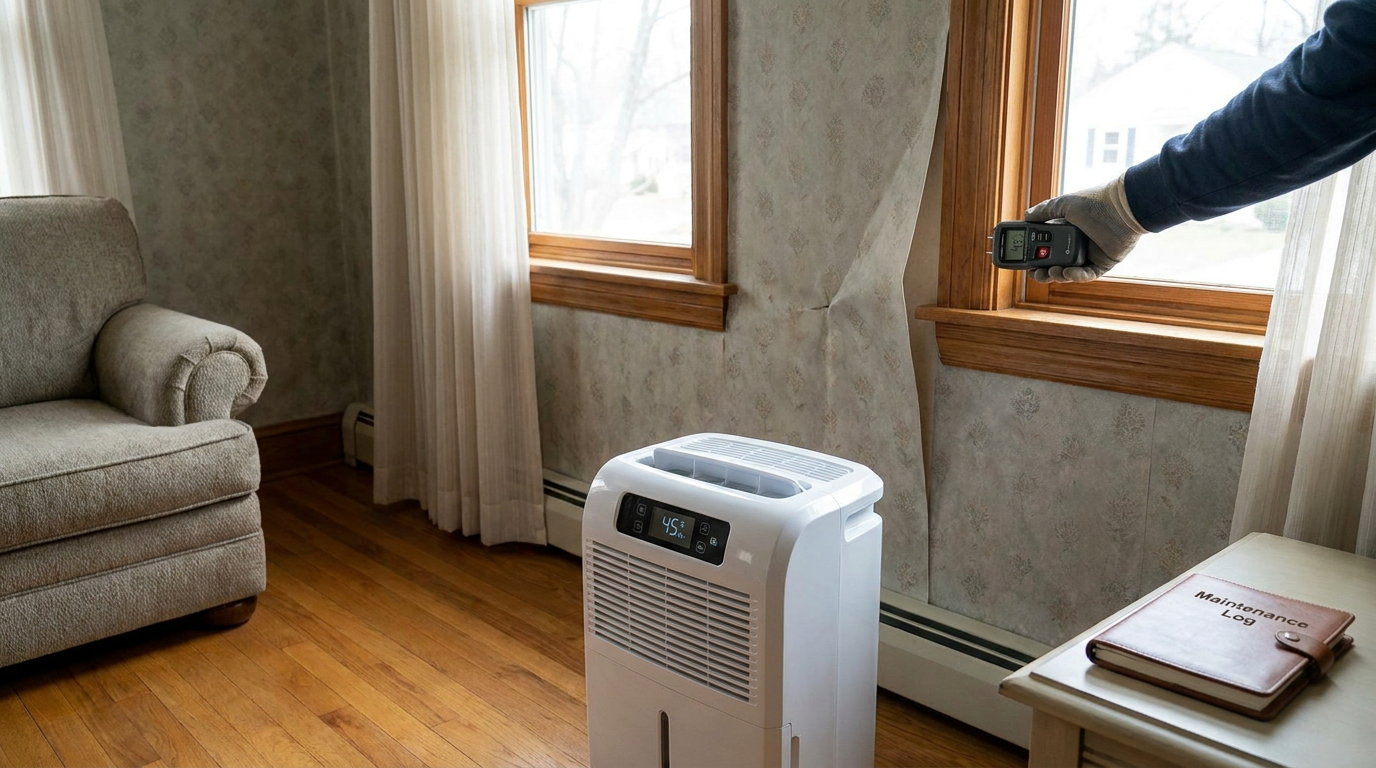
Learning to recognize early symptoms can prevent a decorative issue from becoming a structural one. Watch for bubbling, blistering, curling edges, seam separation, recurring stains, mildew odor, discoloration, or a surface that feels unexpectedly cool and damp. In some cases, mold may appear as speckling or shadowy spotting, but hidden growth behind wallpaper can remain invisible for some time. The visual clue may simply be a repeated failure in the same area.
If you notice these signs, begin by investigating the moisture source rather than cleaning immediately. Check nearby plumbing, window seals, roof conditions, exterior wall exposure, and room ventilation. In homes with chronically high humidity, a hygrometer can help track conditions, and a dehumidifier may offer meaningful support. The ideal maintenance response is corrective, not cosmetic.
What to do if mold appears on or behind wallpaper
Mold on wallpaper should always be treated seriously. Small, surface-level issues in limited areas may be manageable if the material and substrate are not deeply affected, but only after the moisture source is corrected. Protective measures such as gloves and appropriate cleaning precautions may be necessary. However, porous wallcoverings that are extensively contaminated often cannot be restored successfully and may require removal.
Large areas of growth, repeated recurrence, or signs that mold extends behind the wallcovering call for more than household cleaning. Professional assessment may be needed, especially if there are occupant health concerns or hidden moisture within the wall assembly. Wallpaper damage is not always merely cosmetic. It can point to broader building envelope problems that deserve immediate attention.
Preventing stains, scuffs, and everyday wear
The loveliest maintenance strategy is often prevention. Wallpaper lasts longer when the room is arranged and lived in with awareness. Chairs that scrape walls, bedside tables pressed too tightly into corners, coat hooks mounted over delicate paper, and strong cooking vapors in adjacent spaces all create preventable strain. A small shift in furniture placement can do more for wallpaper longevity than a cabinet full of cleaning products.
High touch areas deserve thoughtful planning. Around light switches, door casings, children’s play zones, and narrow corridors, wallpaper may benefit from extra vigilance or a more durable material choice from the beginning. In households with pets or young children, lower wall sections are especially vulnerable to abrasion and oils. In these cases, choosing a wallcovering with strong cleanability can be a practical expression of good design, not a compromise of style.
Sunlight is another subtle but powerful factor. Even beautifully maintained wallpaper can fade if it receives harsh, prolonged UV exposure. Window treatments, UV filtering films, and mindful placement of sensitive materials can help preserve depth of color and crispness of pattern. This is especially important for richly pigmented papers, natural fibers, and rooms with dramatic southern or western light.
Kitchen and bath proximity should also be considered. While many modern wallcoverings perform well in these spaces when ventilation is strong, steam and airborne grease can still alter surfaces over time. Exhaust fans, prompt wiping of splashes, and controlling humidity after showers are simple habits that protect both the wallpaper and the room’s broader finish palette.
Why installation quality determines future maintenance
Wallpaper care begins before the first roll is ever hung. The Wallcoverings Association emphasizes that wall surfaces should be clean, dry, sound, and free of grease, mildew, and contamination before installation. ASTM F1141 also covers performance, quality, packaging, marking, wall preparation, and installation procedures for flexible wall coverings. These standards and guidelines point to a practical reality. Even the best wallpaper will struggle if it is installed over an unstable or poorly prepared substrate.
Improper surface preparation can lead to seam failure, visible irregularities, staining, adhesion issues, and difficult removal later. If grease, dust, or moisture remains in the wall before installation, the finish may never truly perform as intended. If the wrong primer or adhesive is used, the wallpaper can become more vulnerable to lifting, bubbling, or discoloration. Homeowners often notice these symptoms later and assume the wallpaper itself is low quality, when in fact the issue began beneath the surface.
A well prepared wall gives wallpaper the best chance at a long and graceful life. Priming creates a more stable bond and often supports future strippability. Wall repairs and liners can improve the visual result and reduce stress on the finish. Correct adhesive selection matters because the chemistry of the wallcovering and the wall surface must work together. Good maintenance, in this sense, is partly an installation legacy.
If you are planning new wallpaper, think ahead to care. Ask about washability, scrubbability, stain resistance, seam visibility, removability, and room suitability. A dramatic paper in a formal room may prioritize beauty over ruggedness, and that can be entirely appropriate. But in a mudroom, family hallway, or breakfast nook, choosing a more durable product may preserve both appearance and peace of mind.
Common wallpaper care mistakes to avoid
Many wallpaper problems begin with well meaning but unsuitable methods. The belief that all wallpaper can be washed the same way is perhaps the most widespread misconception. Another is the assumption that stronger cleaners produce better results. In truth, harsh products often damage the finish, alter color, or weaken adhesive without fully solving the underlying issue.
Bleach is frequently misunderstood as a universal answer to marks or mildew. On many wallcoverings it is far too aggressive and can lead to fading, spotting, or material breakdown. Unless a specific product and manufacturer guidance allow its use, it is better left out of routine wallpaper care. Likewise, solvent-based spot removers can be far too strong for decorative surfaces, even when they are effective on hard materials elsewhere in the home.
Steam cleaning is another mistake worth repeating. Heat and moisture can both compromise wallpaper. What feels like a deep cleaning treatment can actually trigger seam lifting, adhesive softening, and texture distortion. Overwetting with even mild soap is also a risk, especially when moisture lingers at seams or enters absorbent papers.
Finally, do not assume that a recurring mark is simply a stubborn stain. Reappearing discoloration often signals moisture migration from behind the wall, adhesive issues, or contamination in the substrate. Surface cleaning alone may only delay a necessary repair. Elegant maintenance always asks why before asking how.
A room by room approach to wallpaper longevity
Each room places its own demands on wallpaper, and care should respond to those realities. In living rooms and bedrooms, dusting and visual inspection may be the primary tasks. These spaces often have less moisture and fewer impact marks, making them ideal for delicate papers and richly textured finishes. Here, the focus is on preserving color, surface quality, and overall atmosphere.
In dining rooms, wallpaper may collect more airborne particles from candles, cooking, or regular use. Gentle dry cleaning and prompt attention to splashes matter more in these settings. Hallways and staircases demand special awareness because repeated passing contact can produce subtle abrasion over time. A beautiful pattern in transit spaces can still thrive, but it must be paired with realistic maintenance expectations.
Bathrooms and laundry areas require vigilance. Even washable wallpaper needs proper ventilation to remain stable in a humid room. Use exhaust fans consistently, address leaks immediately, and monitor corners and seams for early signs of stress. In kitchens, keep wallpaper away from direct splash zones unless the material is specifically designed for that use, and remove surface residue before it becomes sticky or discolored.
Children’s rooms and family spaces call for a thoughtful balance between beauty and resilience. Durable, easy clean surfaces often perform best here. The right wallpaper can absolutely be both stylish and practical, but caring for it means acknowledging the active life of the room rather than expecting decorative perfection under all conditions.
When to call a professional
There are moments when wallpaper care moves beyond routine upkeep. If a valuable or delicate wallcovering has been stained, if seams are failing across a broad area, if bubbling suggests concealed moisture, or if mold may be present behind the paper, professional help can protect both the finish and the wall beneath it. Restoration is not only about cleaning skill. It is also about diagnosis.
A professional installer or wallcovering specialist can determine whether a section can be repaired, whether an adhesive issue is involved, or whether the substrate itself has been compromised. In the case of hidden moisture or suspected mold, building and remediation expertise may be just as important as decorative knowledge. The sooner such problems are assessed, the more likely it is that damage can be contained.
Calling a professional should not be viewed as a failure of care. On the contrary, it reflects a mature understanding that good maintenance includes knowing the limits of household intervention. Wallpaper may be a surface finish, but it belongs to a larger architectural and environmental system. Respecting that system is part of caring for it beautifully.
Conclusion: preserving beauty through intelligence and restraint
Wallpaper has the power to transform a room with softness, character, and visual memory. It frames daily life with texture and mood, and when chosen well, it becomes one of the most expressive finishes in the home. Caring for it properly is not complicated, but it does ask for attention, sensitivity, and an understanding that different materials deserve different responses.
The most enduring approach combines classic gentleness with modern awareness. Dust regularly. Clean only as the wallcovering allows. Use mild soap and warm water for ordinary soil when the material is suitable, rinse thoroughly, and dry with a soft lint-free towel. Avoid abrasive tools, harsh chemicals, and over-wetting. Watch carefully for subtle signs of seam stress, discoloration, or dampness.
Most importantly, remember that wallpaper maintenance is inseparable from moisture control. The beauty on the surface can only last when the wall behind it remains dry, sound, and healthy. Fix leaks promptly, ventilate humid rooms, dry wet surfaces within 24 to 48 hours, and investigate mold or recurring damage as a building issue rather than a decorative inconvenience. That perspective is what elevates wallpaper care from routine cleaning to true stewardship.
In the end, the art of caring for wallpaper is the art of preserving atmosphere. It is a practice of restraint, observation, and respect for materials. Treated thoughtfully, wallpaper can remain polished, elegant, and deeply charming for many years, giving your interiors not only visual richness but the quiet assurance of lasting care.



No Comment! Be the first one.