



The Art of Surface Cleaning: How Pristine Finishes Elevate Your Home’s Aesthetic
There is a particular beauty to a well kept home that cannot be attributed to furniture alone. Light lingers more softly across a clean table, cabinetry appears more tailored when free of fingerprints, and even the quiet line of a windowsill gains presence when dust no longer softens its profile. Surface cleaning, when approached with care, is not simply a chore hidden behind domestic routine. It is part of the visual language of interior design, a practice that protects material integrity while allowing every room to feel brighter, calmer, and more composed.
Table Of Content
- Why Clean Surfaces Matter to Interior Design
- Understanding the Difference Between Cleaning, Sanitizing, and Disinfecting
- When routine cleaning is enough
- When sanitizing or disinfecting makes sense
- The New Elegance of Gentle Cleaning
- Reading the Surface Before You Clean It
- Material by Material Care for a More Beautiful Home
- Natural stone surfaces
- Wood tables and cabinetry
- Glass and mirrors
- Stainless steel and metal fixtures
- Painted walls, trim, and millwork
- Acrylic, laminate, and composite surfaces
- The Role of High Touch Surfaces in a Beautiful and Healthy Home
- How to Build a Surface Cleaning Routine That Feels Refined, Not Exhausting
- Common Mistakes That Quietly Diminish Luxury Finishes
- Streak Free Technique: The Difference Between Clean and Truly Polished
- Surface Cleaning by Room
- The kitchen
- The bathroom
- The living room and bedroom
- The Emotional Elegance of a Well Kept Home
- Final Thoughts: Preserving Beauty in the Details
In elegant interiors, surfaces perform as a kind of background architecture. They reflect daylight, support texture, frame decorative objects, and set the tone for how a space is experienced. When stone is cloudy, wood is sticky, or metal is filmed with residue, the room loses clarity. The effect is subtle but unmistakable. Clean surfaces restore definition, making a home feel intentional rather than neglected, refined rather than rushed.
There is also an important practical side to this subject. Public health guidance has consistently emphasized that routine cleaning of household surfaces helps reduce the spread of germs, especially on high touch areas such as counters, switches, and door hardware. Just as importantly, authorities such as the CDC and Canadian public health agencies note that cleaning comes before sanitizing or disinfecting. Soil, grease, and residue can reduce the effectiveness of stronger products, which means the most sophisticated routine is often the most restrained one. In a design conscious home, this principle matters deeply because overusing aggressive chemicals can dull stone, strip wood finishes, cloud acrylic, and damage carefully selected metals.
This guide explores surface cleaning as both a maintenance practice and an aesthetic ritual. It is designed for homeowners who want their interiors to look polished without becoming over processed, hygienic without feeling clinical, and luxurious without requiring unrealistic effort. The goal is not a harsh shine that erases material character. The goal is visual clarity, tactile freshness, and a sense that each finish has been cared for according to its nature.
Beautiful interiors are not sustained by decoration alone. They endure through quiet maintenance, where every clean surface allows texture, proportion, and light to speak more clearly.
Why Clean Surfaces Matter to Interior Design
A clean surface does more than appear neat. It changes the way a room receives and returns light. Glass feels brighter, stone reveals veining with greater depth, painted millwork looks crisper, and brushed metals recover their subtle luster. Interior design depends on these fine visual relationships. Dust, grease, and residue interrupt them, creating a dull film that softens contrast and weakens material expression. In this sense, surface care is not separate from design. It is what allows design to remain legible.
Cleanliness also contributes to atmosphere. Rooms with carefully maintained finishes tend to feel calmer because the eye does not catch on disorder at close range. Countertops become more serene when appliances are wiped down, bedside tables look more deliberate when rings and smudges are removed, and a dining surface becomes more welcoming when it carries the natural beauty of wood rather than the memory of prior meals. Surface maintenance shapes emotional experience as much as visual impression.
There is a wellness dimension as well. Health guidance in both the United States and Canada has stressed the value of regular cleaning, especially on shared hard surfaces and frequently touched points in the home. Dust control through wet cleaning of hard floors and surfaces can also help reduce resuspension into the air, which supports a fresher indoor environment. The result is a home that is not only visually polished but also more comfortable to inhabit.
Understanding the Difference Between Cleaning, Sanitizing, and Disinfecting
One of the most common misconceptions in home care is the idea that disinfecting is always the superior option. In reality, routine household maintenance usually begins and often ends with cleaning. According to the CDC, cleaning with soap or detergent removes dirt and many germs from surfaces. This simple step is foundational because grime can limit the effectiveness of any product used afterward. If a surface has not been properly cleaned, stronger chemicals may not perform as intended.
Sanitizing and disinfecting are related but not identical. Sanitizers generally reduce bacteria on surfaces to levels considered safe by public health standards, while disinfectants are regulated to kill specific pathogens when used exactly as directed. Agencies such as the EPA note that product labels determine what organisms a disinfectant is approved to target and on which surfaces it can be used. Health Canada similarly advises choosing approved products with a valid Drug Identification Number and respecting the listed contact time. In other words, strength alone is not what matters. Precision matters.
For most homes, this creates a simple hierarchy. Clean regularly, sanitize when appropriate, and disinfect when a specific situation calls for it, such as illness in the household or contamination in a food preparation area. This approach is not only safer for many finishes but also more consistent with an elegant interior maintenance philosophy. It prioritizes what is needed rather than what is strongest.
When routine cleaning is enough
Routine cleaning is usually sufficient for dining tables, shelving, sideboards, painted trim, decorative cabinetry, and many floors, provided they are maintained consistently. The purpose here is to remove dust, smudges, fingerprints, and ordinary household residue before buildup alters the finish. High touch surfaces such as handles, switches, and counters should be cleaned more frequently, while less used surfaces can be attended to as needed or when visibly soiled.
When sanitizing or disinfecting makes sense
Food preparation zones deserve more careful attention. The CDC recommends cleaning countertops with hot, soapy water and sanitizing surfaces that have come into contact with raw meat, poultry, or their juices. If someone at home is ill, or if a surface has been exposed to potentially harmful contamination, a suitable disinfectant may be appropriate. The key is to choose one that is approved for the specific surface and to follow the label exactly, including dwell or contact time. Spraying and wiping instantly may smell clean, but it does not necessarily count as effective disinfection.
The New Elegance of Gentle Cleaning
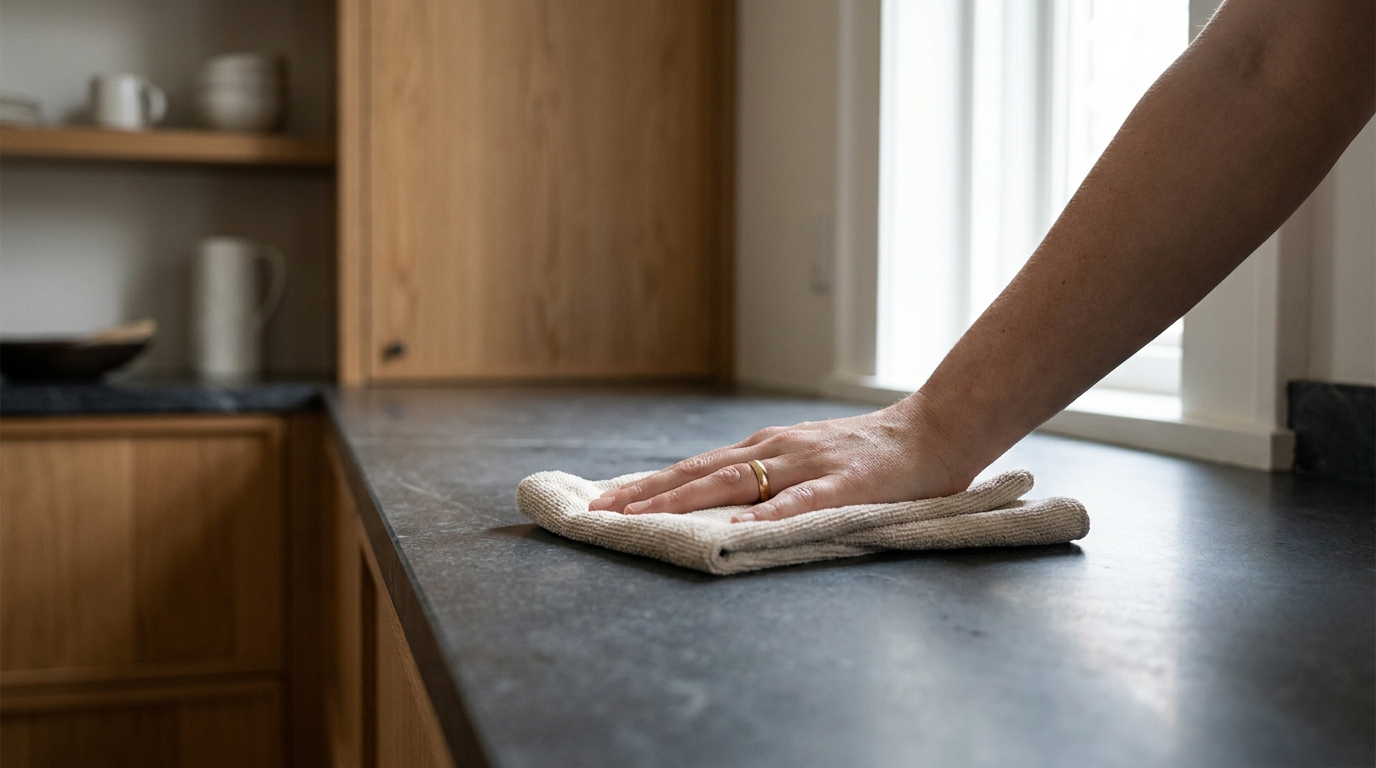
Modern interior maintenance has moved away from the idea that more product, more fragrance, and more shine must equal better care. In design conscious homes, the most appealing results often come from low residue cleaners, microfiber cloths, and product choices that preserve natural or matte finishes rather than coating them. This is especially relevant today, when many interiors feature honed stone, satin paint, brushed metals, pale oak, and softly textured surfaces that can easily be compromised by harsh formulas.
Microfiber remains especially valuable because it captures dust and fine particles effectively with less reliance on chemical sprays. Used correctly and kept clean, it allows homeowners to remove surface haze without scratching delicate materials or leaving lint behind. This supports a polished look that feels crisp instead of over treated. The visual difference is meaningful. A gently cleaned matte countertop looks calm and architectural, while one covered in residue can appear greasy or uneven under changing light.
There is also a growing preference for label driven cleaning routines. Rather than improvising with one universal product, more homeowners are learning to match cleaner to material and to purpose. This protects finishes and reduces unnecessary indoor chemical exposure. It is a practical trend, but it also aligns with a more refined design sensibility. When a home is maintained with intention, materials age more gracefully and preserve their original character.
Reading the Surface Before You Clean It
Every beautiful interior is a composition of materials, and each material responds differently to moisture, friction, and chemistry. Before reaching for any product, it is wise to identify what the surface actually is and how it is finished. A sealed marble counter, a quartz slab, a lacquered cabinet, and a waxed wood sideboard may all appear smooth, yet they should not be treated in the same way. The artistry of surface cleaning lies in observation first, action second.
Start by asking a few simple questions. Is the finish porous or nonporous. Is it natural or coated. Is the look glossy, satin, matte, brushed, polished, or textured. Does the manufacturer provide care guidance. These distinctions matter because the wrong cleaner can alter sheen, produce streaks, dry out protective layers, or etch the surface itself. A careless attempt at quick cleanliness can create long term visual damage that no decorative styling can hide.
It is also worth considering how a surface functions within the room. A kitchen counter experiences grease, water, and food contact. A living room console may collect only dust and occasional fingerprints. A bathroom vanity must contend with soap, splashes, and cosmetics. Matching the cleaning method to both the material and its lifestyle role ensures a more elegant result and avoids unnecessary wear.
Material by Material Care for a More Beautiful Home
Natural stone surfaces
Natural stone offers one of the most luxurious presences in a home, but it is often misunderstood. Marble, limestone, travertine, and some granites can react poorly to acidic or abrasive products. This means all purpose cleaners, vinegar based solutions, and rough pads may dull the finish or etch the surface. For daily care, a soft cloth with warm water and a pH appropriate stone cleaner is usually the most reliable choice. The objective is to lift residue without disturbing the stone’s quiet depth.
Drying stone after cleaning is equally important. Water left to evaporate can create a hazy appearance, especially on darker or polished slabs. A dry microfiber pass brings back clarity and helps the surface read as crisp under natural and artificial light. If the counter is used for food preparation, clean it first thoroughly, then use an appropriate sanitizer only if needed and only if suitable for the stone and permitted by the manufacturer.
Wood tables and cabinetry
Wood carries warmth unlike any other material, yet it is vulnerable to oversaturation and harsh chemistry. Daily maintenance should be simple. Dust with a dry or barely damp microfiber cloth, then follow immediately with a dry one if needed. Sticky marks can be addressed with a small amount of mild soap diluted in water, applied carefully to the cloth rather than poured onto the wood. The aim is controlled contact, never soaking.
Different wood finishes respond differently. Oiled wood may need products formulated to replenish the surface gently, while lacquered or sealed finishes may prefer a neutral cleaner. Excess polish is a common mistake because it leaves buildup that catches fingerprints and attracts dust, making the surface look less elegant over time. A beautiful wood table should feel clean and tactile, not waxy or slippery.
Glass and mirrors
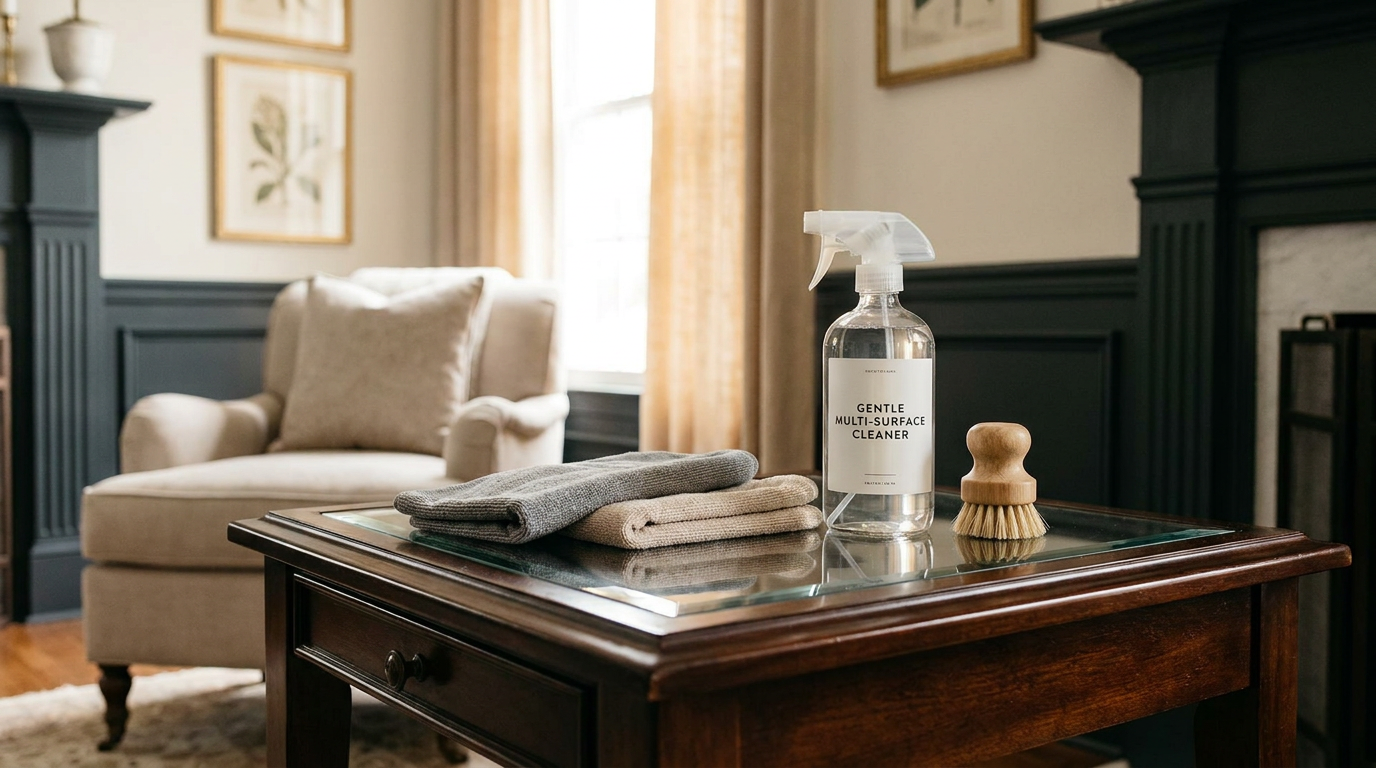
Glass contributes brightness and expansion to interior spaces, but it reveals streaks mercilessly. Successful cleaning depends on restraint. Too much product often creates more smearing, especially when mixed with existing residue from cosmetics, cooking particles, or dust. Spray cleaner onto the cloth when possible rather than saturating the glass, then work methodically in overlapping passes. Finish with a dry lint free cloth for a more refined, streak free result.
Mirrors deserve particular attention because they amplify whatever is around them. A cloudy vanity mirror makes the whole bathroom feel less fresh, while a spotless one enhances light and order. Avoid letting cleaner seep behind mirror edges or onto vulnerable frame materials. Careful technique preserves both reflection and surrounding detail.
Stainless steel and metal fixtures
Brushed steel, chrome, brass, and blackened metals add sophistication through reflection and tone. They also show water spots, fingerprints, and product residue quickly. In most cases, a damp microfiber cloth followed by a dry buff is sufficient for routine care. For stainless steel, wiping with the grain helps maintain a consistent appearance. Strong abrasives should be avoided, as they can scratch or unevenly brighten the finish.
Metal is especially vulnerable to the residue left by overused sprays. Handles and faucets can appear dull not because they are dirty but because cleaner has dried on them. A minimalist approach often produces the best aesthetic result. Clean precisely, rinse if appropriate, and dry fully so the metal keeps its intended character rather than developing a cloudy film.
Painted walls, trim, and millwork
Painted surfaces bring architecture into focus. Door casings, baseboards, wainscoting, and cabinetry all depend on clean lines to look intentional. Yet they are often treated as background and left to accumulate fine dust and hand marks. Start with dry dusting, then use a lightly damp cloth with a mild detergent solution only when needed. Test in an inconspicuous area first, particularly with matte paints, which can mark more easily than satin or semi gloss finishes.
Trim around light switches and door frames benefits from regular attention because it collects oils from hands. These details may seem small, but they strongly influence how well maintained a room appears. Freshly cleaned millwork creates a tailored edge that elevates the entire interior.
Acrylic, laminate, and composite surfaces
Many contemporary homes include acrylic accessories, laminate cabinetry, quartz composites, and engineered materials that require gentle but specific care. These surfaces may resist staining well, yet they can scratch or cloud if cleaned with abrasive powders or rough sponges. Soft cloths and cleaners approved by the manufacturer are the safest path. The advantage of these materials lies in their sleek consistency, and careful cleaning preserves that visual precision.
The Role of High Touch Surfaces in a Beautiful and Healthy Home
Some of the most important surfaces in the home are also the ones most often overlooked because they are small and utilitarian. Light switches, door knobs, pulls, appliance handles, remotes, railings, and faucet levers gather frequent contact throughout the day. Public health guidance recommends regular cleaning of these high touch points because they are more likely to transfer germs. From a design perspective, they also affect first impressions. A gleaming brass pull or clean matte black switch plate quietly signals care.
Because these areas are handled so often, product choice matters. Strong chemicals used too frequently can wear down finishes, especially on decorative hardware or coated metals. In many cases, regular cleaning with a gentle product is the ideal baseline, reserving disinfection for periods of illness or other clear need. This preserves both hygiene and material beauty.
It can help to create a subtle rhythm in the home. Wipe kitchen handles while waiting for tea to steep, clean switch plates during weekly dusting, and tend to bathroom fixtures after vanity care. These brief rituals prevent buildup and support an atmosphere of effortless order, which is often the hallmark of truly elegant interiors.
How to Build a Surface Cleaning Routine That Feels Refined, Not Exhausting
The most sustainable cleaning routine is one that respects the way you actually live. Rather than attempting occasional deep resets that require heavy products and immense effort, it is far more effective to practice small, regular acts of maintenance. A quick daily wipe of the kitchen counter, a weekly pass over bathroom mirrors, and consistent dust removal from horizontal surfaces can transform the visual quality of the entire home. Cleanliness, in this sense, is cumulative.
Begin by dividing surfaces according to frequency of use and visual impact. Counters, dining tables, bathroom vanities, and high touch points generally benefit from more regular care. Shelving, decorative consoles, and upper trim can be addressed on a slower schedule. This simple hierarchy mirrors public guidance, which emphasizes regular cleaning of frequently touched surfaces and cleaning other areas as needed or when visibly dirty.
A practical routine might include three layers of attention.
- Daily: wipe kitchen counters, dining surfaces, bathroom sink areas, and any visible spills or fingerprints before they settle into residue.
- Weekly: dust and damp wipe high touch hardware, mirrors, tables, shelving, and painted trim in active spaces.
- Seasonally: address overlooked details such as inside cabinet fronts, decorative stone pieces, vented covers, baseboards, and deeper care for specialty finishes following manufacturer guidance.
This structure keeps maintenance light and visually effective. It also reduces the temptation to attack surfaces with stronger chemicals after neglect, which is often when damage occurs.
Common Mistakes That Quietly Diminish Luxury Finishes
Many homes do not suffer from too little cleaning, but from the wrong kind. One frequent mistake is assuming that any cleaner can be used on any surface. This is rarely true. Stone, wood, lacquer, acrylic, and metal all respond differently, and generic formulas may leave haze, remove protective layers, or alter color. Surface compatibility should always guide the choice.
Another common error is using too much product. Excess cleaner does not make a surface cleaner. More often, it leaves a residue that attracts dust and creates streaking. The visual effect is especially noticeable on dark cabinetry, mirrored surfaces, stainless steel, and satin painted walls. A measured amount paired with the right cloth and proper technique is far more effective.
Bleach is also often treated as a universal answer, when it is not suitable for many decorative finishes and must be diluted and used precisely when appropriate. Likewise, fogging or spraying the air is not the standard method for routine home surface care. Targeted wiping is the preferred approach because it is more controlled, more material conscious, and more aligned with public guidance.
Restraint is one of the great luxuries in home maintenance. Use only what the surface needs, and it will keep its dignity for years.
Streak Free Technique: The Difference Between Clean and Truly Polished
A surface can be technically clean and still fail to look beautiful. This is where technique becomes essential. Cloth quality, motion, drying, and timing all influence the final visual result. Always begin by removing loose dust before applying any moisture. Otherwise, dust turns to muddy residue and is spread rather than lifted. Work from cleaner areas toward dirtier ones, and from top surfaces downward so particles do not fall onto freshly finished areas.
Use one cloth to clean and another to dry or buff when necessary. This two cloth approach is particularly effective for glass, stone, stainless steel, and glossy paint. It prevents uneven evaporation and leaves a more luminous finish. In bright rooms, inspect surfaces from different angles because side light often reveals streaks that overhead light conceals.
It is also wise to respect contact time when using sanitizers or disinfectants. Many people wipe the product away too soon. If the label requires the surface to remain visibly wet for a certain duration, that instruction is part of the product’s effectiveness. Here again, less improvisation and more precision lead to better results, both visually and functionally.
Surface Cleaning by Room
The kitchen
The kitchen is where aesthetics and hygiene are most visibly intertwined. Counters should be cleaned regularly with soap and water or a suitable surface cleaner to remove grease, crumbs, and daily residue. Areas that come into contact with raw meat, poultry, or juices deserve extra attention, including appropriate sanitizing after cleaning, in line with food safety guidance. Appliance fronts, cabinet pulls, and backsplashes should be wiped often enough that buildup never hardens into a film.
A beautiful kitchen does not rely on constant sparkle but on freshness and order. Matte fronts should remain free of handprints, stone should retain depth, and metal hardware should feel crisp to the touch. These small signals make the room appear expensive and well loved.
The bathroom
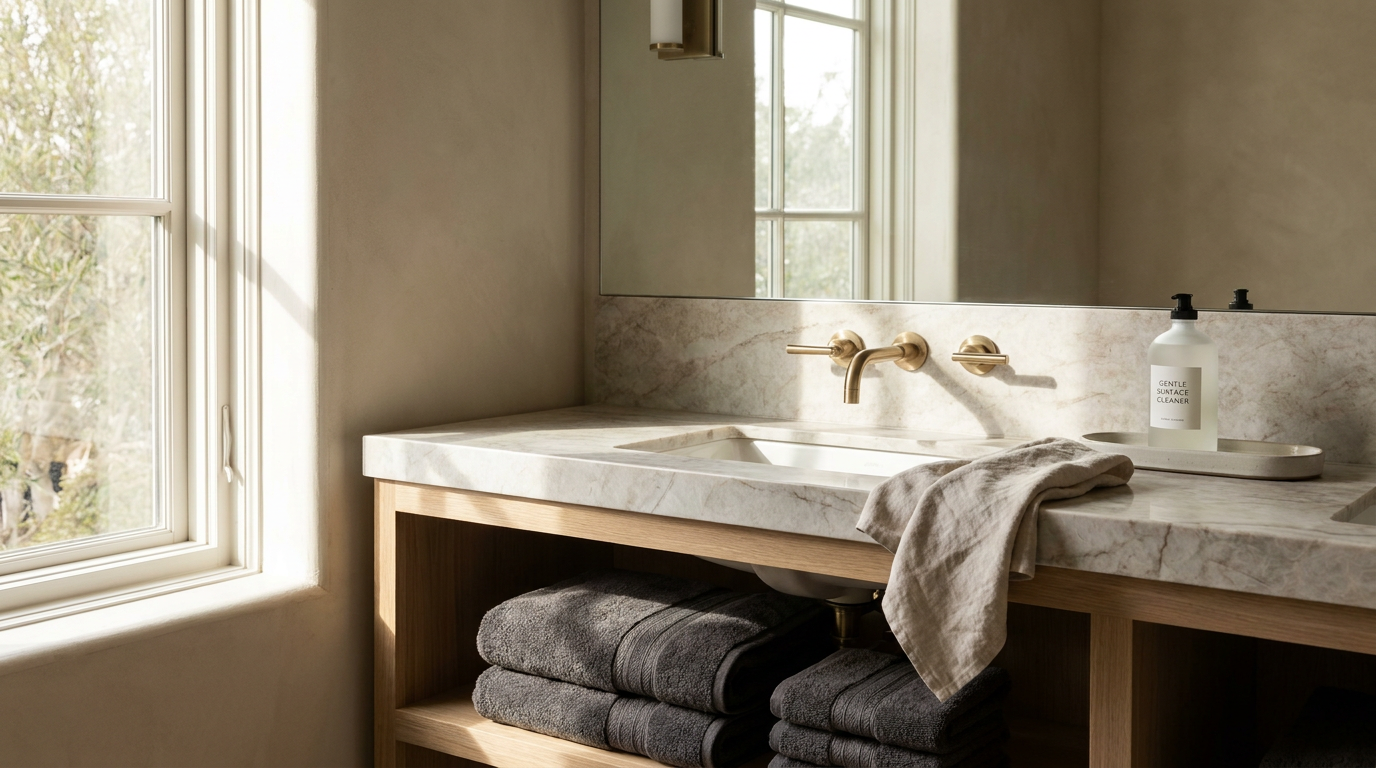
Bathrooms benefit greatly from regular, gentle care because moisture can leave spots and cosmetic products quickly create residue. Vanity countertops, mirrors, faucet bases, and cabinet fronts should be attended to frequently. Hard water marks are easier to prevent than to remove, so drying surfaces after cleaning helps preserve brilliance. Because bathrooms are also high touch spaces, thoughtful cleaning of handles, switches, and flush mechanisms supports hygiene without sacrificing finish quality.
In a refined bathroom, cleanliness should read as serenity. Reflective surfaces should not feel sterile, only clear. Towels, stone, glass, and metal all seem more luxurious when the surrounding surfaces are immaculate.
The living room and bedroom
These rooms often require less chemical cleaning and more careful dust management. Shelves, side tables, nightstands, lamps, headboards, and painted trim accumulate fine particles that soften visual edges. Wet cleaning hard surfaces periodically helps control dust without sending it back into the air. A well dusted room feels lighter, especially when morning or late afternoon sunlight reveals every surface.
Decorative objects should also be considered part of the surface story. Trays, books, ceramics, and frames look more intentional when their supporting planes are clean. The goal is not emptiness but clarity, allowing every chosen object to sit within a properly maintained setting.
The Emotional Elegance of a Well Kept Home
There is a reason clean surfaces feel restorative. They offer visual quiet. They remove the subtle friction of stickiness, haze, and cluttered residue that the body notices even when the mind is busy. A home with well maintained finishes feels more breathable, more luminous, and more settled. It invites slower gestures and more attentive living.
This kind of maintenance is not about perfection. It is about stewardship. Every material in a home, whether humble or luxurious, responds to care. A painted shelf can look as considered as marble when it is handled properly. A simple glass table can feel elegant when it reflects light without streaks. Surface cleaning becomes an act of respect for the architecture of everyday life.
Final Thoughts: Preserving Beauty in the Details
The art of surface cleaning lives in the balance between discipline and softness. It asks us to understand materials, to choose products carefully, and to clean with enough consistency that harsh correction is rarely needed. Public health guidance reinforces this wisdom by reminding us that regular cleaning is foundational, that cleaning should precede sanitizing or disinfecting, and that stronger interventions should be reserved for the moments that truly require them.
When this approach is applied thoughtfully, the home rewards it immediately. Stone regains clarity, wood recovers warmth, mirrors expand light, and metal reflects with grace. More importantly, the atmosphere of the home changes. Rooms feel calmer, better composed, and quietly luxurious. Clean surfaces are not merely evidence of effort. They are part of the aesthetic itself.
To care for surfaces well is to preserve the poetry of the interior. In the grain of a table, the sheen of a faucet, the calm plane of a countertop, and the clean edge of painted trim, elegance survives through attention. The most beautiful homes are often not those with the most decoration, but those where every surface has been allowed to remain true to its material, its purpose, and its light.



No Comment! Be the first one.