



Crystal Clear Views: Your Guide to Effective Window Cleaning for a Brighter Home
There is something quietly transformative about clean windows. When the glass is clear, daylight seems softer and stronger at the same time, rooms feel more open, and the whole home takes on a cared for glow that is difficult to create any other way. It is one of those simple household tasks that can feel surprisingly emotional because the result is not just visual cleanliness, but a deeper sense of freshness, comfort, and calm in the spaces where daily life unfolds.
Table Of Content
- Why clean windows matter more than you think
- When to clean windows for the best results
- The best tools for streak free window cleaning
- What to avoid before you begin
- Step by step: how to clean windows effectively
- Step 1: Clear the area and protect nearby surfaces
- Step 2: Dust the frames, sill, and tracks first
- Step 3: Apply cleaner lightly and evenly
- Step 4: Work from top to bottom
- Step 5: Dry and detail the edges
- How to handle stubborn spots and hard water marks
- Interior windows vs exterior windows
- Safety first: ladders, heights, and smart boundaries
- Window covering safety and family friendly care
- Cleaning different window areas the right way
- Tracks and sliding door channels
- Screens
- Frames and trim
- Common reasons windows end up streaky
- A realistic seasonal window cleaning routine
- The emotional payoff of clean windows
- When it is time to call a professional
- Final thoughts: a small task with a big effect
Windows play a meaningful role in how a home feels to live in. Research on residential windows has identified three important ways they affect health and well being through light exposure, the quality of the view, and the architectural beauty they bring to a space. In everyday terms, that means windows shape mood, atmosphere, and our sense of connection to the outdoors. When they are clouded by dust, smudges, pollen, and mineral residue, that relationship with natural light becomes a little dimmer.
The good news is that effective window cleaning does not have to be complicated. With the right tools, a clear order of steps, and a few smart techniques, you can get beautiful streak free results without turning the process into an all day project. This guide will walk you through everything you need to know, from preparing the frames and sills to perfecting the final wipe, while also keeping safety, family life, and seasonal maintenance in mind.
If you have ever cleaned a window only to step back and see streaks in the afternoon light, you are not alone. Many people use too much product, clean in direct sun, or skip the dusty tracks and frames that can immediately transfer grime back onto clean glass. Once you know what actually works, the job becomes easier, faster, and much more satisfying.
Clean windows are not just a finishing touch. They are a quiet home upgrade that can make rooms feel brighter, larger, and more welcoming from the inside out.
In this article, we will cover the practical side of window cleaning in detail, but we will also talk about the payoff. A home with clean windows feels lighter, more polished, and more open to the day ahead. For many homeowners, that emotional lift is what turns a routine chore into one of the most rewarding forms of home care.
Why clean windows matter more than you think
At a practical level, clean windows improve visibility, preserve the appearance of your home, and reduce the buildup of dust, pollen, and everyday grime. Seasonally, that buildup can become surprisingly noticeable, especially after rain, wind, road dust, or high pollen periods. Inside the home, fingerprints, cooking residue, and pet nose marks can collect faster than many people realize, leaving glass dull and hazy even when the rest of the room is spotless.
At a lifestyle level, the effect is even more meaningful. Clean glass allows natural light to travel farther into a room, which can make spaces feel larger and more cheerful. It also sharpens your view of the garden, street, trees, or sky, and that simple visual clarity can subtly improve the mood of a room. Wellness focused design conversations increasingly treat daylight and view quality as important parts of a healthy home, and windows sit at the center of that experience.
There is also the matter of curb appeal. From the outside, clean windows make a house look more loved and maintained, which matters whether you are hosting guests, enjoying your own exterior spaces, or thinking about long term value. Curb appeal has been linked to home value in real estate discussions, and while window cleaning is not a renovation, it is one of the easiest ways to make a home look fresher and more cared for.
For households managing allergies or asthma, window care can connect to comfort as well. Dust and pollen can gather around sills and tracks, and while opening windows may bring welcome fresh air, it can also allow outdoor allergens and pollutants inside. That does not mean windows should stay shut, but it does mean routine cleaning is part of keeping the area around them healthier and more pleasant.
When to clean windows for the best results
One of the smartest window cleaning tips is also one of the simplest. Choose a cloudy day. Consumer guidance consistently recommends avoiding direct sun because it causes the cleaning solution to dry too quickly, which often leaves streaks behind. A mild, overcast day gives you more time to work and creates a more forgiving surface for an even finish.
For most homes, a seasonal rhythm works well. Many people clean windows in spring to remove winter residue and again in fall as part of seasonal maintenance. Depending on your location, weather exposure, landscaping, pets, or nearby traffic, you may prefer touch ups in between. Interior glass often needs more frequent attention than exterior glass in busy family homes, especially around patio doors, kitchen windows, and rooms where children or pets spend time.
A good rule is to clean when you notice the glass looking dull or smudged rather than waiting until it becomes deeply dirty. Light maintenance is usually easier than a major cleanup, and quick seasonal attention helps prevent stubborn buildup. This is especially true in homes with hard water, where dried droplets can leave mineral spots that become tougher to remove over time.
The best tools for streak free window cleaning
You do not need a large collection of specialty products to clean windows well, but the tools you choose do matter. Today, the most reliable setup is refreshingly simple and far more effective than old myths like using newspaper. Microfiber cloths, a good rubber squeegee, a soft brush or vacuum attachment for tracks, and a gentle glass cleaner or suitable diluted solution are the essentials that make the biggest difference.
Microfiber cloths are preferred because they lift dirt well, absorb moisture, and leave less lint behind than many other fabrics or paper products. A quality squeegee is especially helpful for large panes because it removes solution cleanly and evenly, reducing the chance of streaks. If you are cleaning a small interior window, a lint free cloth may be enough, but once glass surfaces get larger, a squeegee saves time and gives a more polished finish.
A spray bottle is useful for applying cleaner lightly and evenly. Some guidance also suggests spraying the cleaner onto the cloth rather than directly onto the glass in certain situations, especially if you want to avoid getting too much product on frames and sills. This can be helpful with painted surfaces or wood trim that you do not want to oversaturate.
To keep your routine organized, gather everything before you begin. This makes the process flow more smoothly and helps you avoid dripping solution across the room while looking for a towel or cloth halfway through the job.
- Microfiber cloths for washing and drying
- A rubber squeegee for larger panes
- A bucket of warm water if needed
- A glass cleaner or suitable diluted cleaning solution
- A soft brush, dry cloth, or vacuum attachment for tracks and sills
- A small detail brush or old soft toothbrush for corners
- A stable step stool or ladder only if necessary and safe
What to avoid before you begin
Some of the most common window cleaning mistakes come from good intentions. Using too much cleaner, scrubbing with rough materials, or trying to clean in full sun can all work against you. Excess product often leaves residue, and abrasive tools can scratch glass or damage surrounding finishes. If the glass has specialty coatings, always check any manufacturer care guidance before using stronger solutions.
Newspaper is another tool that belongs more to cleaning folklore than modern best practice. It can tear easily, leave lint or ink, and create more mess than clarity. Microfiber and squeegees consistently outperform it while being gentler and more predictable to use.
It is also important not to ignore the non glass areas. If tracks, sills, and frames are dusty, the dirt can quickly move back onto freshly washed glass. Starting with the surrounding surfaces gives you a cleaner foundation and a noticeably better final result.
Step by step: how to clean windows effectively
The most successful window cleaning methods follow a simple order. Start dry, move from top to bottom, and finish with careful drying. This sequence keeps loose dirt from turning into muddy streaks and helps you work with gravity instead of against it. Once you get into the rhythm, it feels more satisfying than laborious.
Step 1: Clear the area and protect nearby surfaces
Begin by moving nearby decor, fabric items, and any furniture that sits directly under the window. If you are cleaning interior windows with curtains or drapes, tie them back so they stay dry and clean. Lift blinds fully if possible, and take a moment to notice whether there are dangling cords that need to be secured away from children.
This is also a good time to lay down a towel on the sill or floor if you are concerned about drips. A little preparation makes the job feel calmer and protects your finishes. In family homes, this small step can make window cleaning far less disruptive.
Step 2: Dust the frames, sill, and tracks first
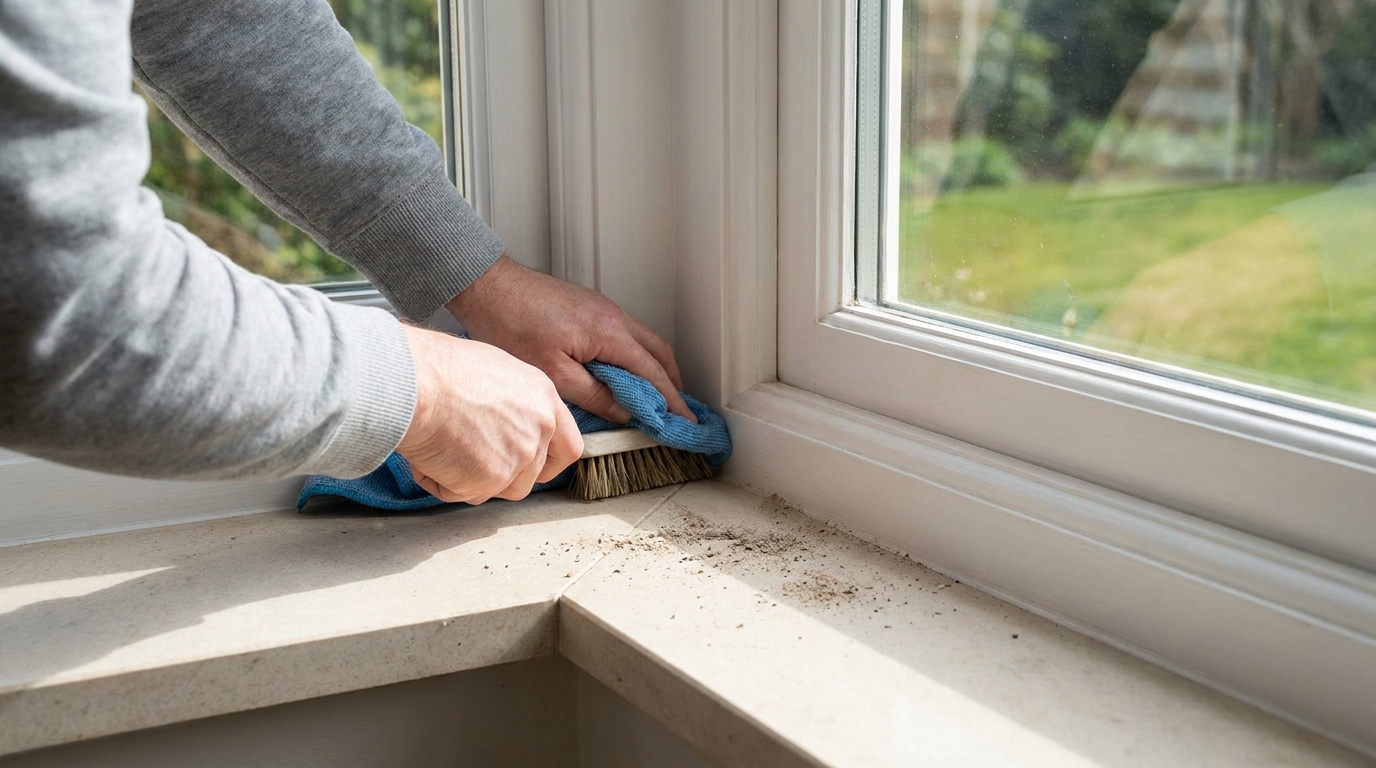
Before touching the glass, remove dust and debris from the frame, sill, and tracks. This is one of the most important recommendations from cleaning authorities, and it makes immediate sense once you do it. Dry dirt mixed with cleaner creates grime, while dry removal first keeps the process cleaner and more efficient.
Use a vacuum with a brush attachment, a soft brush, or a dry microfiber cloth to lift out loose dust, dead insects, pollen, and bits of outdoor debris. For corners and track channels, a small soft brush can help loosen buildup. If the tracks are particularly dirty, wipe them with a damp cloth after the loose material is removed, then dry them well.
On wood frames or painted trim, avoid soaking the surface. A lightly damp cloth is usually enough. The goal is to leave the surrounding structure clean and dry before you begin washing the glass itself.
Step 3: Apply cleaner lightly and evenly
Once the surrounding surfaces are clean, apply your glass cleaner or suitable diluted solution to the window. You can spray directly onto the glass in a light mist, or spray onto a cloth if you want more control and less overspray. More product is not better here. A thin, even layer is easier to remove and much less likely to streak.
If you are using a homemade solution, keep it simple and gentle. Many people use diluted vinegar for certain cleaning tasks, but effectiveness depends on the concentration and the surface. If you are unsure, especially with specialty materials or finishes, a standard glass cleaner can be the easiest low stress option.
Step 4: Work from top to bottom
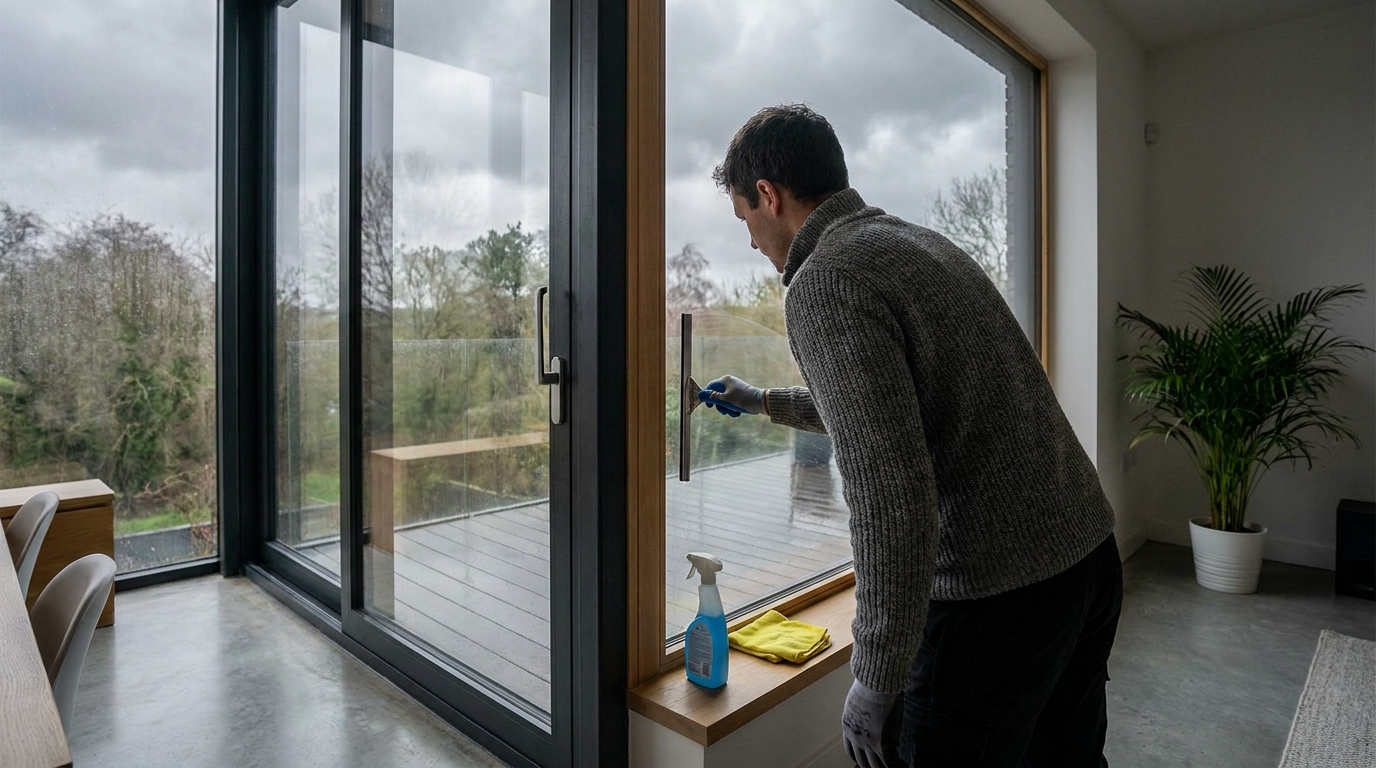
Always clean from the top of the window downward. This prevents drips from falling onto areas you have already finished and helps you keep track of your progress. If you are using a cloth, wipe in smooth overlapping passes. If you are using a squeegee, start at the top and pull downward in straight, controlled strokes.
Wipe the squeegee blade with a clean cloth after each pass so you are not redistributing moisture and dirt. This simple habit can make an enormous difference in the clarity of the final result. On very large windows, slightly overlap each stroke to avoid leaving thin wet lines between passes.
Step 5: Dry and detail the edges
After the main glass is cleaned, use a dry microfiber cloth to catch any remaining moisture around the edges and corners. These border areas often hold the small beads of water that later become visible streaks. A careful edge wipe gives the window that crisp, finished look.
Stand back and check the glass from a few angles. Sometimes what looks perfect from one side reveals a missed spot when viewed in changing light. A quick final inspection helps you catch any smudges before they dry fully.
How to handle stubborn spots and hard water marks
Not every window cleans up with a simple spray and wipe. Exterior glass may develop hard water spots from sprinklers, rain runoff, or mineral rich water that dries on the surface. These marks can create a cloudy or speckled appearance that regular cleaner does not fully remove.
When dealing with mineral residue, patience matters more than force. Start with your regular cleaning method first, then address the remaining spots with an appropriate approach for hard water buildup. Gentle repeated treatment is safer than aggressive scrubbing, which may damage the glass or nearby trim. Rinsing and drying thoroughly afterward helps prevent new deposits from forming.
If a spot does not respond easily, it may be wise to pause before trying a stronger method. Some stains are bonded more deeply or are on sensitive surfaces. In those cases, professional advice or service can be the smarter route, especially on older windows or specialty glass.
Interior windows vs exterior windows
Interior window cleaning is usually simpler because the dirt is lighter and easier to control. Smudges, fingerprints, pet marks, and light household residue are the main concerns. These windows benefit from a gentle approach, minimal product, and careful attention to surrounding furnishings.
Exterior windows tend to collect heavier dirt from weather, wind, pollen, pollution, bird residue, and mineral spotting. They often require more prep and a more thorough rinse or repeated passes. If exterior access is difficult, especially on upper floors, safety should guide every decision more than the desire to finish the task in one day.
Many homeowners find it helpful to clean inside and outside on separate days. This makes the process less tiring and allows you to focus properly on each side. It can also help you identify whether a streak or mark is indoors or outdoors when the light changes.
Safety first: ladders, heights, and smart boundaries
Window cleaning should make your home feel better, not put your safety at risk. Ladder falls remain a serious hazard both at home and at work, and they are far more common than many people assume. If a window is difficult to reach, think carefully before deciding to handle it yourself. Convenience is never worth a preventable injury.
If you do use a ladder, make sure it is placed on stable, level ground and that you maintain secure footing at all times. Avoid overreaching. It is much safer to climb down and reposition the ladder than to lean too far to one side. Keep three points of contact whenever possible, and never use an unstable object like a chair, decorative stool, or stacked items as a substitute for proper equipment.
Outdoor conditions matter too. Wet ground, soft soil, wind, and uneven surfaces all increase risk. If the task involves significant height, difficult angles, or awkward access, hiring a professional is often the best decision. Responsible home care includes knowing when a job is better left to someone with the right training and equipment.

Window covering safety and family friendly care
Window cleaning is also a natural time to look at the area around the window more holistically. For families with young children, corded blinds and window coverings deserve special attention. Health authorities in Canada have highlighted the serious strangulation risk posed by blind cords, and window care routines are a good opportunity to make sure coverings are secure, modern, and child safe.
As you clean, check that cords are out of reach, untangled, and not looped in a way that could create danger. If you are updating your window treatments, cordless options can offer both a cleaner visual line and more peace of mind. This is one of those simple home choices that supports both beauty and safety, which is always a worthwhile pairing.
Family friendly window care also means using products thoughtfully. Keep sprays and solutions away from children and pets, ventilate the room when appropriate, and store all cleaning supplies securely once the job is done. A bright, healthy home is built through these small, consistent habits.
Cleaning different window areas the right way
Tracks and sliding door channels
Window tracks and sliding door channels often collect the most stubborn debris in the least visible place. Because they sit low and trap outdoor dust, they can become gritty quickly. Start by vacuuming loose dirt, then loosen compacted buildup with a soft brush before wiping with a damp cloth.
Dry the tracks afterward so they do not remain damp and attract new dirt. Clean tracks help windows operate more smoothly and keep the whole opening feeling fresher. It is a small maintenance task that makes a surprising difference.
Screens
If your windows have screens, do not forget them. A dirty screen can make a clean window still look dingy because the layer between you and the outdoors remains dusty. Remove screens carefully if possible, brush away loose dust, and wash gently according to the manufacturer guidance before allowing them to dry fully.
Even a light cleaning can improve airflow and visibility. This is especially worth doing in spring and early summer when windows are more likely to be opened regularly.
Frames and trim
The best method for frames depends on the material, but the principle is the same. Be gentle, avoid excess moisture, and clean regularly so grime never builds into a larger problem. Painted wood, vinyl, and composite finishes all benefit from a soft cloth and a restrained approach rather than heavy soaking or harsh abrasives.
Clean trim frames the glass beautifully. It is the detail that makes the whole window look intentional rather than merely washed.
Common reasons windows end up streaky
Streaks usually come down to a few repeat issues. The cleaner dries too fast because the sun is too strong. Too much product was used and left a film behind. The cloth was dirty, the squeegee blade was not wiped between passes, or the frame and sill were skipped and transferred dust back onto the glass.
Sometimes the problem is not the glass at all but residue from previous cleanings. If a window has been cleaned for years with too much product or with a method that leaves buildup, the surface may need a more careful reset. In that case, using less product and changing to a microfiber and squeegee method can dramatically improve results over time.
If you are consistently getting streaks, simplify your routine rather than adding more steps. Fewer products, cleaner tools, and calmer timing usually produce better results than overcomplicating the process.
A realistic seasonal window cleaning routine
A beautiful home rarely depends on perfection. More often, it comes from having a manageable rhythm that keeps things feeling fresh. Window cleaning works especially well when it becomes part of seasonal care instead of a once a year marathon.
- In spring, clean interior and exterior glass, wash screens, and clear winter debris from tracks and sills.
- In summer, do quick touch ups on high traffic glass like patio doors and kitchen windows.
- In fall, remove seasonal dust and residue before colder weather arrives, and inspect frames and seals.
- In winter, focus mainly on interior smudges and track maintenance as needed.
This kind of routine keeps every task lighter and more approachable. It also allows you to enjoy the reward more often, especially during seasons when natural light feels especially precious.
The emotional payoff of clean windows
There are many chores that make a home cleaner, but window cleaning has a unique ability to make a home feel different. It changes the atmosphere in a visible, immediate way. The room looks brighter, yes, but it also feels more awake, more open, and more peaceful.
That shift matters because our homes shape our daily routines and state of mind. Morning coffee near a sparkling kitchen window feels more uplifting. A family room with clear afternoon light feels warmer and more inviting. Even the act of looking out into the garden or street feels more restorative when the view is crisp rather than clouded.
In that sense, window cleaning is about more than maintenance. It is a form of care for the experience of home itself. It supports comfort, beauty, and ease in one of the simplest ways possible.
When windows are clean, the whole house seems to exhale. Light enters more generously, views feel closer, and everyday rooms become a little more joyful to be in.
When it is time to call a professional
Some homes have windows that are simply not practical to clean without help. Upper stories, hard to access exteriors, oversized panes, storm windows, or stubborn mineral staining can all make professional service worthwhile. There is no failure in outsourcing a task that requires more reach, more equipment, or more time than you can comfortably give.
A professional can also be helpful if your windows remain cloudy after repeated cleaning attempts. Sometimes the issue is not dirt but damage, failed seals, or residue that needs a different treatment. Getting a clear diagnosis can save effort and protect the material in the long run.
For many households, the ideal solution is a blend of both. Handle easy interior touch ups yourself, then book a professional for difficult exterior work once or twice a year. That approach keeps the home looking bright while respecting your time and safety.
Final thoughts: a small task with a big effect
Window cleaning may not be the most glamorous part of home care, but it is one of the most rewarding. It improves the way light moves through your rooms, refreshes your home from the inside and outside, and creates a sense of clarity that is both practical and emotional. Best of all, it does not require a complicated system to get right.
Choose a cloudy day, start with the frames and sills, use a microfiber cloth or squeegee, work from top to bottom, and stay thoughtful about safety. Those core habits are enough to transform the task and the result. With regular attention, your windows can stay bright, clear, and inviting through every season.
And once you finish, take a moment to enjoy it. Open the curtains, let the light in, and notice how much fresher the room feels. Sometimes the smallest acts of care create the most lasting sense of home.



No Comment! Be the first one.