


The Art of Glass Cleaning: Elegant Techniques for a Clearer, Brighter Home
In a beautifully kept home, glass does something almost magical. It draws daylight further into a room, sharpens reflections, lightens visual weight, and gives furniture and architecture a more finished expression. A mirror without haze feels brighter and more deliberate. A window without streaks softens the boundary between interior and landscape. A glass tabletop free from fingerprints and film allows every surrounding material, from linen to marble to wood, to appear more composed.
Table Of Content
- Why Clean Glass Changes the Feeling of a Room
- Cleaning Versus Disinfecting: A Distinction Worth Understanding
- The Foundation of Streak Free Glass
- Choosing the Right Cleaner with Greater Care
- The Essential Preparation: Dust First, Then Clean
- How to Clean Windows Beautifully
- A Simple Window Cleaning Sequence
- How to Clean Mirrors Without Overspray and Foggy Residue
- How to Clean Glass Tabletops and Decorative Glass Surfaces
- How to Restore Shower Glass with Restraint and Patience
- An Elegant Shower Glass Routine
- Specialty Glass Requires a Softer Intelligence
- Indoor Air Quality, Ventilation, and the Modern Cleaning Mindset
- The Tools That Truly Matter
- Common Mistakes That Dull the Finish
- A Refined Weekly and Seasonal Routine
- Step by Step: A Complete Glass Cleaning Method for the Home
- When Professional Help May Be Worthwhile
- Final Thoughts: Clarity as a Design Gesture
For that reason, glass cleaning belongs to more than housekeeping. It sits quietly within the language of design. Clear glass supports elegance because it allows light, proportion, and texture to speak without interruption. When neglected, however, even the most refined room can feel dulled by smudges, water spots, overspray, or a cloudy residue that catches the eye at exactly the wrong moment.
The good news is that impeccable glass does not require harsh effort or an arsenal of products. The finest results usually come from restraint, good timing, and a method tailored to the surface. Consumer testing has shown that while many cleaners can remove visible soil, some dedicated glass formulations achieve a streak free, polished finish with less work. That distinction matters when the goal is not simply cleanliness, but clarity with grace.
This guide explores the art of glass cleaning through a practical and elegant lens. You will learn how to clean windows, mirrors, glass tabletops, and shower doors with less streaking and less residue, while also protecting indoor air quality and respecting more delicate surfaces. The aim is simple. To make glass care feel less like a chore and more like part of a thoughtful home ritual.
Beautiful glass is not created by excess. It is created by thoughtful product choice, minimal moisture, patient technique, and an awareness of how each reflective surface contributes to the atmosphere of a room.
Why Clean Glass Changes the Feeling of a Room
Glass is one of the few materials in the home that can appear invisible and expressive at the same time. A spotless pane of glass lets daylight travel without interruption. A polished mirror doubles depth and reflects decorative details with precision. A clean shower enclosure turns a functional bathroom into something closer to a private spa. Because glass is reflective, any imperfection is amplified, and because it is transparent, residue can linger more visibly than many people realize.
In design terms, clean glass contributes to luminosity. It makes small rooms feel less confined and grand rooms feel more intentional. It also improves the way materials read. Brass appears crisper beside a gleaming mirror. Upholstery appears richer beside a glass side table that has no haze. Stone, tile, and painted surfaces benefit from the visual quiet that clear glass creates.
This is why glass cleaning deserves a place within furniture and decor care rather than being treated as a separate chore. It is part of preserving the visual identity of a home. When done well, it supports the atmosphere of calm, refinement, and order that many homeowners seek. When done carelessly, it can leave drips, lint, and chemical odors that work against that feeling.
Cleaning Versus Disinfecting: A Distinction Worth Understanding
One of the most useful shifts in modern home care is understanding the difference between cleaning and disinfecting. According to public health guidance, cleaning generally means removing dust, dirt, smudges, and other soils from a surface. Disinfecting is a separate step used when there is a specific need to kill germs. In most homes, many decorative or low touch glass surfaces do not need routine disinfection.
This matters because people often reach for stronger chemicals than a surface actually requires. A living room mirror, a decorative cabinet door, or a picture frame with glass usually benefits more from regular gentle cleaning than from repeated chemical disinfection. Overusing aggressive products can create unnecessary fumes, more residue, and, in some cases, a less beautiful finish.
There are certainly moments when disinfection makes sense. High touch glass surfaces such as frequently handled interior doors, some appliance panels, or bathroom areas with contamination may need more than ordinary cleaning. Even then, it is wise to confirm that the product is appropriate for the material and to follow the label carefully. In daily decor care, however, clean first and disinfect only when truly needed is both sensible and elegant.
The Foundation of Streak Free Glass
Streaks rarely happen because glass is difficult. They happen because of a handful of very common mistakes. Too much product leaves residue. Cleaning in direct sun causes liquid to evaporate too quickly. Dirty cloths move soil around instead of lifting it away. Skipping the dusting step turns light soil into muddy smears. Using the same technique on every type of glass also invites disappointment, especially when specialty surfaces are involved.
Consumer guidance consistently recommends a few basics that make a visible difference. Clean windows on a cloudy day rather than under hot direct sunlight. Work from the top down so drips do not fall over sections you have already finished. Use dedicated glass cleaners when needed for more consistent results, especially if improvised mixtures have left film behind in the past. Most importantly, use less liquid than you think you need.
The cloth itself matters as much as the cleaner. Microfiber and lint free cloths remain the gold standard because they trap fine particles without leaving fibers behind. A quality squeegee is especially helpful on larger panes and shower glass, where it removes solution cleanly and minimizes the need for repeated wiping. These are not extravagant tools. They are simply the quiet instruments of a more polished result.
Choosing the Right Cleaner with Greater Care
The market is full of sprays that promise brilliance, but not every glass cleaner behaves the same way on every surface. Consumer testing has found that while all tested glass cleaners can clean glass surfaces, some require notably less effort to leave a shiny, streak free finish. That supports what many homeowners discover through trial and error. A dedicated glass cleaner can outperform improvised methods when consistency matters.
That said, more strength is not always better. Certain ammonia based formulas, though common and effective in many situations, can leave streaks or film on some windows or prove too strong for a delicate setting. Routine household use of ammonia based cleaners is generally considered low risk when used properly, but concentrated ammonia and poor ventilation can create hazardous exposure. A beautifully maintained home should not smell harsh or feel stuffy after a cleaning session.
Indoor air quality deserves attention here. Environmental guidance notes that cleaning products can release volatile organic compounds during use, which may affect the air inside the home. It also notes that labels such as no VOC or low VOC do not always mean a product is entirely free from volatile organic chemicals. For readers who prefer lower odor options, greener purchasing frameworks such as EPA Safer Choice style criteria can offer a useful starting point when comparing products.
In practical terms, a wise cleaner selection follows four principles.
- Match the product to the surface. Standard glass cleaners work well on many mirrors and windows, but delicate or specialty glass may need something gentler or manufacturer approved.
- Favor low residue performance. A cleaner that requires fewer passes often gives a more elegant final finish.
- Consider ventilation and scent. Lower odor products can feel more comfortable in bedrooms, bathrooms, and small spaces.
- Use moderation. Even an excellent cleaner can create streaks if oversprayed.
The Essential Preparation: Dust First, Then Clean
Before any spray touches the surface, remove loose dust and debris. This small step is often what separates a polished result from a disappointing one. Dust on glass may seem harmless, but once dampened it turns into a fine slurry that spreads across the surface and lodges in corners, edges, and frame details. A dry microfiber cloth, feather duster with care, or soft vacuum brush around tracks and frames can save considerable effort later.
Preparation is especially important around windows. Window frames collect a soft line of dust that can blend into wet cleaner and transfer back onto the pane. Tracks hold grit that becomes muddy if ignored. Even a beautiful clean pane will look less refined when the surrounding trim is dusty. Treat the whole composition rather than the glass in isolation.
For mirrors and decorative glass, preparation should be gentle. Remove surface dust lightly so you do not grind particles across the finish. If there is makeup, toothpaste mist, or hairspray residue nearby, note these areas before cleaning. They may need a slightly more patient touch, but not necessarily more product. Most of the time, precision wins over force.
How to Clean Windows Beautifully
Windows ask for a calm method and favorable conditions. The ideal time to clean them is on a cloudy day, when the glass remains cool enough for the cleaner to stay workable. In direct sun, even a good formula can evaporate too quickly, leaving the familiar veil of streaks that seems to appear moments after you thought the job was done. Choosing the right time can reduce labor immediately.
Begin by dusting the window frame, sill, and track. Then apply a modest amount of cleaner. Some people prefer spraying directly onto the glass, while others prefer spraying onto a cloth first in smaller indoor spaces. Either approach can work, provided you avoid saturating the pane. Too much liquid tends to run downward, settle in corners, and dry unevenly.
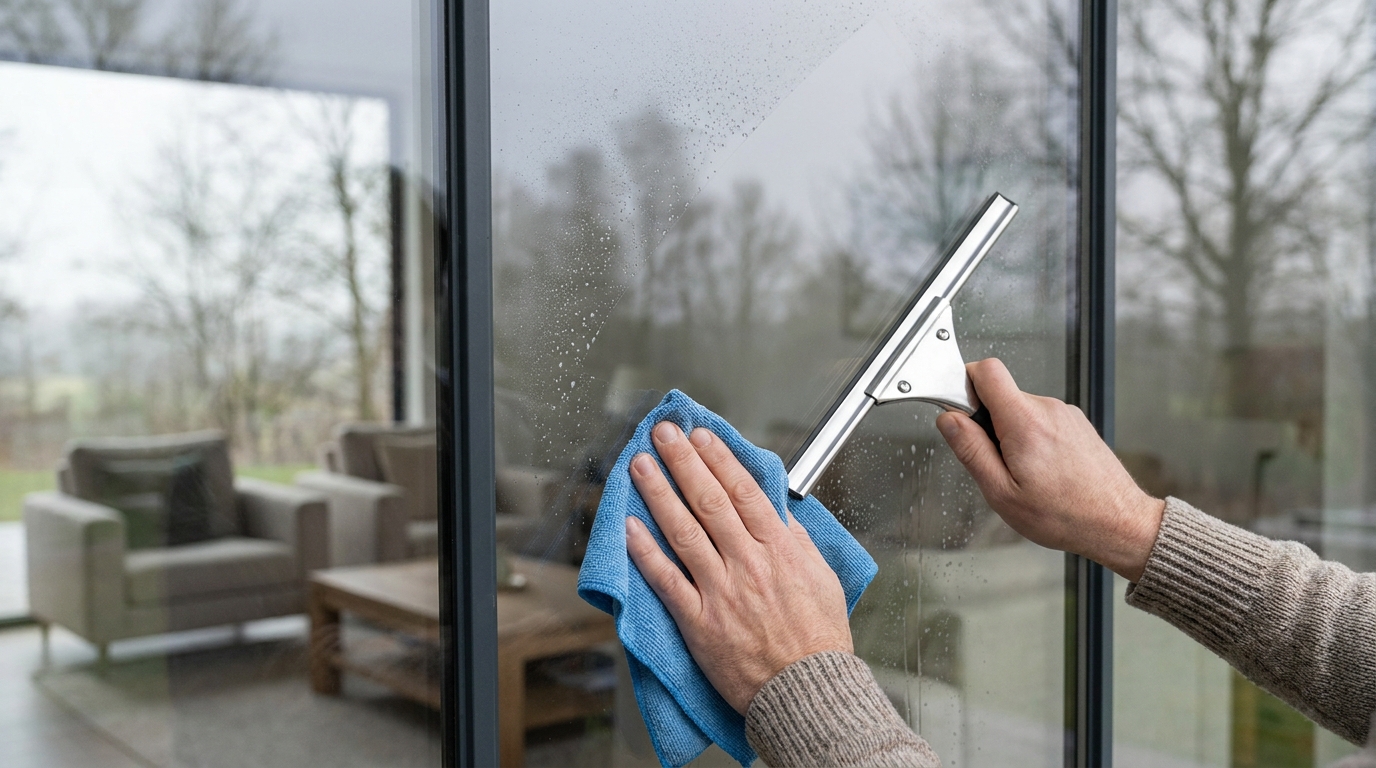
Wipe from the top down in overlapping strokes. This allows gravity to work with you rather than against you. If you are using a cloth only, keep folding to a clean section so you are always polishing with a dry, fresh side. If you are using a squeegee, start at the top and draw it across the surface with consistent pressure, wiping the blade after each pass. Finish by detailing the edges and corners with a dry microfiber cloth.
Interior windows often respond well to this restrained approach. Exterior windows may require more frequent rinsing or a separate wash step if pollen, dust, or city residue is heavy. Yet even outdoors, the same principles apply. Work methodically, minimize residue, and finish with a clean dry tool. The result is not merely clearer glass. It is a room that feels more open and luminously connected to the world outside.
A Simple Window Cleaning Sequence
- Choose a cloudy day or a cool time of day.
- Dust frames, tracks, and adjacent trim.
- Apply a small amount of cleaner.
- Wipe or squeegee from top to bottom.
- Dry the edges and corners thoroughly.
- Step back and inspect from different angles in natural light.
How to Clean Mirrors Without Overspray and Foggy Residue
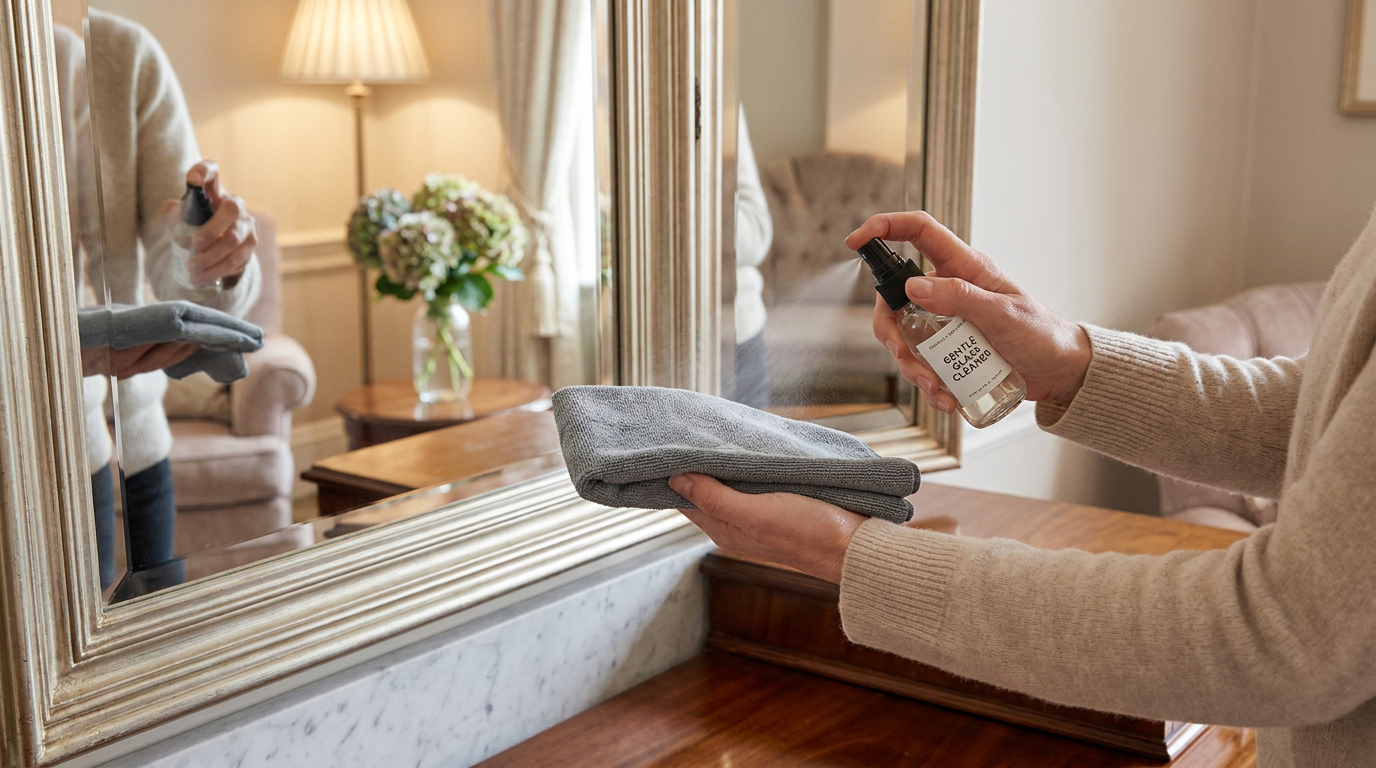
Mirrors reward a lighter hand than many people expect. Because they sit at eye level and reflect direct light, every droplet pattern and cloth mark becomes visible. The most elegant method is often to spray cleaner onto a microfiber cloth rather than onto the mirror itself. This reduces overspray onto frames, paint, wallpaper, stone, and nearby fixtures, all of which can be affected by repeated exposure to cleaner.
Start with a dry pass to remove dust. Then wipe gently with the slightly dampened cloth, focusing on fingerprints, splashes, or toothpaste mist. Follow immediately with a dry lint free cloth to buff the surface. This second cloth is not an unnecessary extra. It is the finishing gesture that removes any faint moisture film before it has a chance to settle into streaks.
Pay special attention to the edges. Cleaner that seeps behind a mirror or lingers along the perimeter can compromise the appearance over time, especially in humid rooms. Fine detailing around corners creates that tailored finish associated with luxury interiors. A mirror that appears effortlessly clear is usually the product of quiet precision.
How to Clean Glass Tabletops and Decorative Glass Surfaces
Glass tabletops, shelves, and cabinet fronts occupy a slightly different category because they collect fingerprints, dust, food residue, and decorative film from daily life. They are often touched more than windows and seen more closely than mirrors. Here, the goal is not only clarity but also preserving the sense of refinement around the objects they display.
Clear the surface completely before cleaning. Decorative objects should be lifted, not dragged, to avoid scratches and to allow you to clean the full pane. Dust first, then address smudges with a small amount of glass cleaner and a microfiber cloth. Use a second dry cloth to polish away the final traces of moisture. If the table has metal, wood, or lacquered trim, keep overspray controlled so each material receives the care it deserves.
For dining and cocktail tables, inspect at a low angle rather than only from above. Overhead viewing can miss subtle films that become obvious once lamp light falls across the surface in the evening. This habit of changing perspective is one of the simplest ways to achieve a more editorial finish at home. You are not only cleaning. You are reading the surface as light will read it.
How to Restore Shower Glass with Restraint and Patience
Shower glass presents a different challenge because residue here is often mineral based, mixed with soap scum, and exposed to constant humidity. The common mistake is to attack it with too much product or abrasive force. In reality, successful shower glass care begins with regular light maintenance and occasional deeper cleaning, rather than last minute scrubbing after buildup has become stubborn.
Start by identifying the issue. Fresh water marks and light soap film may come away with a suitable glass or bathroom product and a microfiber cloth. Heavier soap scum or hard water stains may require a product designed for that purpose. The key is still to respect the surface. Not every shower enclosure is identical, and some coated or treated glass may have manufacturer specific guidance that should always take priority.
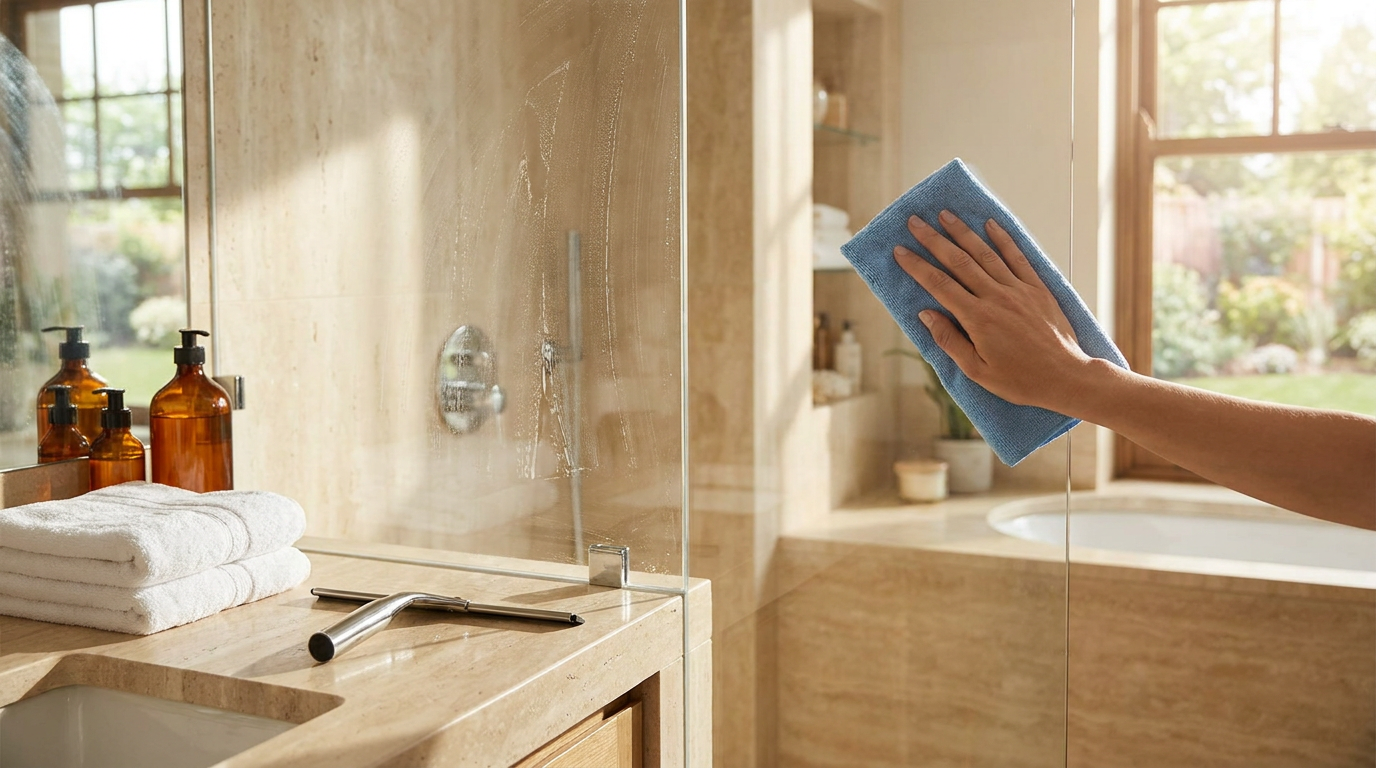
Apply the appropriate cleaner, allow it to dwell according to instructions if needed, then wipe methodically. A non scratching sponge may help on more persistent film, followed by a thorough rinse if the product requires it. Finish with a squeegee to remove remaining moisture. This leaves the glass clearer immediately and also slows the return of spotting. With shower glass, the squeegee is not simply a tool. It is preventive care disguised as simplicity.
An Elegant Shower Glass Routine
- After each shower, run a squeegee over the glass to reduce water spotting.
- Ventilate the bathroom so moisture does not linger unnecessarily.
- Clean lightly each week before buildup thickens.
- Use a deeper soap scum or mineral treatment only when needed.
- Check for manufacturer guidance if the glass has a protective coating.
Specialty Glass Requires a Softer Intelligence
Not all glass should be treated as interchangeable. Tinted windows, stained glass, painted glass, antique mirrors, and coated architectural glass often require gentler care or manufacturer approved products. This is where many well intended cleaning routines go wrong. A product that performs beautifully on a bathroom mirror may not be the right choice for decorative or technically treated surfaces.
Tinted and coated windows can be particularly sensitive. Some standard cleaners may interfere with the coating or leave a residue that is difficult to remove. Painted glass and stained glass may be vulnerable to excess moisture, edge saturation, or overly aggressive wiping. Antique mirrored surfaces may have backing or finish conditions that demand caution. In each case, the wisest course is to consult the manufacturer or specialist guidance before proceeding.
This surface awareness is an important part of elegant home care. Refinement is never only about appearance. It is also about discernment. Knowing when to use less, when to pause, and when to seek specific instructions preserves the integrity of the object. In the long term, this is always more luxurious than fast but careless cleaning.
Indoor Air Quality, Ventilation, and the Modern Cleaning Mindset
Today, many homeowners want their cleaning rituals to support wellness as much as aesthetics. That means considering not just what the glass looks like afterward, but also how the room feels while you are cleaning it. Certain cleaning products can release VOCs during use, which may affect indoor air quality. This does not mean you must fear every glass cleaner, but it does invite more mindful use.
Open a window when possible, especially in bathrooms and smaller rooms. Avoid spraying heavily in enclosed areas. Choose products whose performance suits your needs without creating excessive odor or residue. If you are sensitive to scents, lower odor formulas or products aligned with recognized greener ingredient frameworks may be worth exploring. Such options can make a cleaning session feel lighter and more comfortable without compromising the finish.
It is also wise to store products clearly and safely. Glass cleaner should not be treated as a universal solution for every glossy surface in the house. Labels matter. Compatibility matters. Moderation matters. The most modern version of elegance includes not only visual beauty, but also cleaner air, quieter routines, and a respect for the chemistry we bring indoors.
The Tools That Truly Matter
In many homes, better glass care begins not with a new spray bottle, but with better tools. A few well chosen essentials can transform the process from repetitive wiping into a cleaner, more predictable routine. Chief among them is a quality microfiber cloth. It lifts dust, absorbs moisture efficiently, and leaves behind far less lint than paper towels or worn cotton rags.
A second indispensable tool is the squeegee, especially for larger windows and shower enclosures. It removes cleaner and water with controlled pressure, reducing the chance of streaks and making the final buffing step much easier. Keeping a dry detailing cloth nearby for edges and corners completes the set. If you clean tracks or frames regularly, a soft brush or vacuum attachment is also useful.
These tools should themselves be kept clean. A cloth loaded with detergent residue, fabric softener, or prior cleaning chemicals can leave smears on glass. Wash microfiber separately when possible and avoid anything that diminishes its absorbency. There is a certain poetry in this. The tools of clarity must be clear themselves.
Common Mistakes That Dull the Finish
Many frustrating glass cleaning results come from habits that seem harmless. Using too much spray is one of the most common. Excess product often leads to drips, repeated wiping, and residue that catches the light later. Another mistake is cleaning hot windows in direct sun, where evaporation outpaces your ability to polish evenly. The result is often a patchy surface that looks worse once it dries.
Using dirty or unsuitable cloths is another frequent problem. Paper towels can leave lint, while some recycled paper products may shed or smear. Household rags washed with softener can deposit a faint film. There is also the tendency to ignore the edges, where cleaner gathers and dries into visible lines. On mirrors, spraying too close to the frame or backing can create unnecessary wear over time.
A more subtle mistake is assuming that all cloudiness is dirt. Sometimes the issue is residue from previous products. Sometimes it is hard water. Sometimes it is a damaged coating or an etched surface that will not polish away with ordinary cleaner. Learning to identify the true cause prevents endless wiping and helps you choose the right next step.
A Refined Weekly and Seasonal Routine
One reason glass cleaning can feel laborious is that it is often delayed until every surface visibly needs attention. A lighter routine is more elegant and, in truth, much easier. Weekly care might include wiping bathroom mirrors, polishing a glass coffee table, and squeegeeing shower glass regularly. These small gestures prevent buildup and preserve a steady sense of order.
Monthly or seasonal care can go deeper. Interior windows can be cleaned more thoroughly, frames dusted, tracks vacuumed, and decorative glass cabinet fronts detailed carefully. Exterior windows may be scheduled with the change of seasons or whenever pollen, rain residue, or city dust becomes noticeable. By spacing care rhythmically, you avoid the need for intense correction later.
This rhythm aligns well with the way elegant homes are maintained. They do not achieve beauty through occasional frenzy. They achieve it through continuity. Glass, perhaps more than any other material, responds generously to that philosophy. A few deliberate minutes at regular intervals can keep an entire room looking fresher, lighter, and more composed.
Step by Step: A Complete Glass Cleaning Method for the Home
If you want a single method you can adapt across most common glass surfaces, this is the one to remember. Begin by assessing the surface. Is it a standard window, a mirror, a tabletop, or a specialty glass item that needs manufacturer guidance. Once you know what you are working with, gather the correct cleaner, two microfiber cloths, and a squeegee if the surface is large or in a shower.
Next, dust thoroughly. Remove loose particles from the glass itself and from the surrounding frame, sill, or fixture area. Apply a modest amount of cleaner, always remembering that more liquid usually creates more work. Wipe methodically from top to bottom or in controlled overlapping passes. If using a squeegee, wipe the blade after each stroke. Then buff dry with a fresh cloth, paying close attention to edges and corners.
Finally, inspect the surface from multiple angles. Look in natural light, then from the side, where streaks often reveal themselves. If needed, make a small corrective pass with a dry section of cloth rather than rewetting the entire surface. This last moment of observation is what elevates functional cleaning into polished care. It is where technique becomes finish.
When Professional Help May Be Worthwhile
Some glass issues lie beyond ordinary maintenance. High exterior windows, extensive mineral buildup, damaged coatings, or specialty antique glass may justify professional attention. The same is true when a surface remains cloudy despite repeated proper cleaning, suggesting etching, film from incompatible products, or structural wear rather than surface soil.
Hiring help is not a sign that home care has failed. On the contrary, it can be a sign of discernment. Protecting valuable materials sometimes means recognizing the limits of routine methods. A refined home is not maintained by doing everything personally at all costs. It is maintained by making wise choices for preservation and appearance alike.
Final Thoughts: Clarity as a Design Gesture
There is a quiet luxury in clean glass. It does not announce itself loudly, yet it changes everything around it. Rooms appear brighter. Reflections sharpen. Decorative details feel more deliberate. Even the mood of a space can shift when windows are clear and mirrors are free of haze. In that sense, glass cleaning is one of the most understated ways to elevate a home.
The artistry lies in method rather than force. Choose the right product for the surface. Work on cool glass, preferably on a cloudy day for windows. Dust first, clean with restraint, ventilate thoughtfully, and remember that not every glass surface needs disinfection. Specialty glass deserves specific care, while everyday glass rewards consistency and a light hand.
Ultimately, elegant glass care is about seeing maintenance as part of design. When clarity is preserved, light moves more beautifully, proportions feel calmer, and the home expresses itself with greater ease. A streak free pane, a polished mirror, a luminous shower enclosure, all are small acts of refinement. Together, they create a house that feels not only clean, but truly composed.



No Comment! Be the first one.